
What to Eat in Loose Motion: Complete Diet Guide
Loose Motion Diet help manage loose motion by supporting hydration, digestion, and gut recovery. Learn what foods to eat, what to avoid, and how dietary choices can help during loose motion.
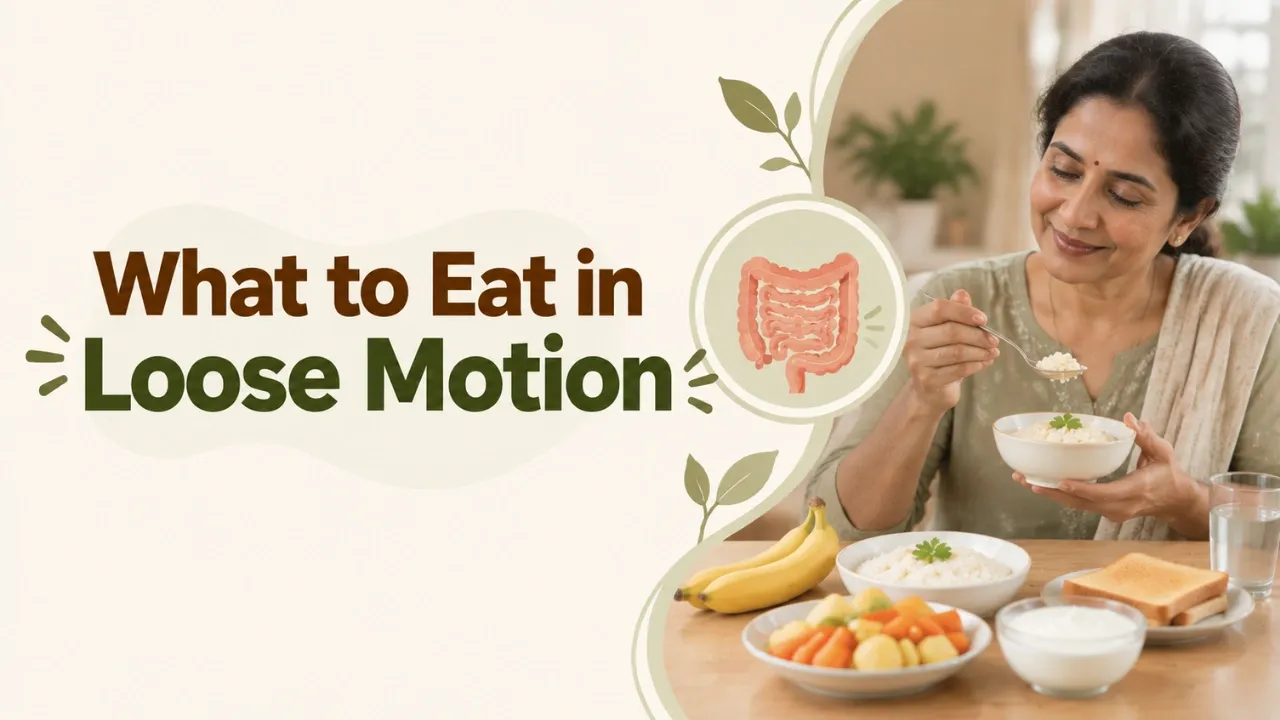
Quick Answer
During loose motion, eating the right foods can reduce stool frequency, restore lost fluids, and support gut recovery within 24 to 48 hours. The best foods to eat during loose motion are bland, low-fibre, easily digestible options , such as rice, bananas, curd, and toast. Avoid spicy, oily, or high-fibre foods until symptoms fully resolve.
- Eat bland foods like plain rice, banana, toast, curd, khichdi, boiled potatoes, and plain idli.
- Drink fluids such as water, coconut water, clear broth, and ORS to prevent dehydration.
- Avoid spicy, oily, fried, raw, high-fibre, and high-sugar foods until stools settle.
- If loose motion comes with vomiting, start with fluids first and add soft foods slowly.
- During pregnancy or in children, monitor dehydration closely and consult a doctor if symptoms persist.
What Is Loose Motion and Why Does Diet Matter?
Loose motion, also called diarrhoea, is a condition where stools become watery or unformed and bowel movements occur more than three times in 24 hours. It occurs when the intestines cannot absorb water properly, or when the gut moves contents too quickly for absorption to take place.
Diet directly affects how fast loose motion resolves. According to Mool Health's gut health team, the foods you eat during loose motion either speed up gut irritation or support the intestinal lining in recovering. Bland, binding foods slow intestinal transit and reduce fluid loss, while irritants like spice or dairy can worsen cramping and frequency.
Loose motion typically resolves within 2 to 3 days with proper dietary management. Without it, dehydration , the most serious risk , can develop within hours, especially in children and older adults.
Key terms used in this article:
- Loose motion / diarrhoea: Watery or liquid stools occurring 3 or more times per day
- Binding foods: Foods that firm up stool consistency by slowing gut transit
- Electrolytes: Minerals (sodium, potassium) lost through watery stools that must be replaced
- Gut flora: Beneficial bacteria in the intestine that support digestion and immunity
How the Right Diet Stops Loose Motion: The Mechanism
Eating the correct foods during loose motion works through three distinct mechanisms:
- Slowing intestinal transit , Binding foods such as white rice and bananas contain starch and pectin that slow the movement of contents through the colon, giving the intestinal wall more time to absorb water.
- Reducing gut irritation , Bland foods contain minimal oils, acids, or spices that trigger intestinal contractions. Fewer contractions mean less urgency and lower stool frequency.
- Restoring electrolyte balance , Watery stools expel sodium, potassium, and chloride. Foods like bananas (potassium), coconut water (sodium + potassium), and ORS (oral rehydration salts) replace these minerals and prevent dehydration-linked complications.
- Supporting gut flora recovery , Probiotic-rich foods such as plain curd (yogurt) introduce Lactobacillus bacteria that help restore the natural gut microbiome disrupted by infection or antibiotic use.
Mool Health's nutritionists emphasise that no single food stops loose motion on its own. The combination of hydration, binding foods, and electrolyte replacement works together to reduce symptoms within 24 to 48 hours in most adults.
What to Eat in Loose Motion: Best Foods to Choose
The following foods are clinically recommended for loose motion. You can also compare this with our guide on what to eat in diarrhea. Each works because it is easy to digest, low in irritants, and helps restore normal gut function.
Binding and Starchy Foods
- Plain white rice , Low in fibre, easy to digest, and binding. Preferred over brown rice during loose motion.
- Boiled potatoes (no skin) , Provide starch and potassium without gut irritation.
- Plain toast or crackers , Dry, starchy, and bland; help absorb excess fluid in the gut.
- Plain idli or plain khichdi , Common in Indian households; gentle on the stomach and easy to digest.
Fruits
- Bananas , One of the most recommended fruits for loose motion. They contain pectin (a soluble fibre that helps firm stools) and potassium that replaces electrolytes lost through watery stools.
- Cooked or stewed apples (without skin) , Contain pectin when cooked. Raw apples may irritate the gut due to their fibre content.
- Raw papaya (boiled) , Has digestive enzymes and is traditionally used in Indian diets to calm gut inflammation.
Probiotic and Light Protein Foods
- Plain curd (yogurt, no sugar) , Contains live Lactobacillus cultures that restore gut flora. Studies suggest probiotics may shorten the duration of infectious diarrhoea by approximately one day.
- Boiled eggs (plain) , Provide protein without fat or fibre that could irritate the gut.
- Boiled chicken (skinless, no spices) , Light protein source suitable for adults once initial symptoms begin to ease.
Fluids and Hydration
- ORS (Oral Rehydration Solution) , The single most important intervention during loose motion. Replaces sodium, potassium, and glucose lost through watery stools.
- Coconut water , Natural source of electrolytes; typically well-tolerated during loose motion.
- Clear vegetable broth , Provides sodium and warmth without fat or spice.
- Boiled and cooled water , Plain water is essential; aim for at least 2 to 3 litres per day during loose motion.
Mool Health recommends: Start with ORS or coconut water in the first 4 to 6 hours of loose motion before introducing solid foods. Hydration is the first priority.
What Indian Foods Are Safe to Eat During Loose Motion?
For people following Indian dietary patterns, the following foods are safe and recommended during loose motion:
| Food | Why It Helps |
|---|---|
| Plain rice (chawal) | Binding, easy to digest |
| Moong dal khichdi | Soft, low-fibre, protein-rich |
| Plain curd (dahi) | Probiotic, gut-flora supportive |
| Banana (kela) | Pectin + potassium |
| Plain idli (no chutney) | Fermented, gentle on gut |
| Boiled potatoes | Starchy, electrolyte-rich |
| Coconut water | Natural electrolyte replacement |
| Sabudana (tapioca) porridge | Starchy, easily digestible |
Plain dal (without tadka/tempering with spices) and plain chapati (no ghee) may be introduced after 24 hours once symptoms begin to settle, according to Mool Health's dietary guidelines.
What Not to Eat in Loose Motion: Foods to Avoid
Avoiding certain foods is as important as eating the right ones. The following foods can worsen loose motion or delay recovery.
Foods That Worsen Loose Motion
- Spicy foods , Capsaicin in chillies directly stimulates intestinal contractions, increasing stool frequency.
- Oily or fried foods , Fat slows digestion and can trigger cramping, nausea, and increased bowel urgency.
- Dairy (milk, paneer, butter, cheese) , Loose motion can cause temporary lactase enzyme depletion, making lactose-containing foods harder to digest. Plain curd is an exception due to its live cultures.
- Raw vegetables and salads , High insoluble fibre content accelerates gut transit, worsening watery stools.
- High-fibre fruits (mango, grapes, pears, watermelon) , These draw water into the colon and may increase stool looseness.
- Caffeinated drinks (tea, coffee, energy drinks) , Caffeine stimulates intestinal motility, speeding up bowel movements.
- Carbonated drinks , Can cause bloating, cramping, and gas, which may worsen discomfort.
- Alcohol , Directly irritates the intestinal lining and has a diuretic effect, worsening dehydration.
- Artificial sweeteners (sorbitol, xylitol) , Found in sugar-free products; known to cause loose stools even in healthy individuals.
- Beans and lentils (in large quantities) , Gas-producing; may increase cramping during active loose motion.
Do's and Don'ts During Loose Motion
Do's
- Drink ORS immediately , Begin oral rehydration within the first hour of symptoms to prevent dehydration.
- Eat small, frequent meals , 5 to 6 small meals per day place less load on the irritated gut than 2 to 3 large ones.
- Choose plain, bland, soft foods , White rice, bananas, boiled potatoes, and plain curd are your safest choices.
- Stay consistently hydrated , Drink at least 200 to 250 ml of fluid after every loose stool to replace losses.
- Eat bananas daily , One to two bananas per day provide pectin and potassium; both directly address stool consistency and electrolyte loss.
- Include plain curd , One to two servings per day may shorten recovery time by supporting beneficial gut bacteria.
- Rest your digestive system , Allow 2 to 4 hours between meals to avoid overloading the gut.
- Wash hands before eating , If loose motion is due to a gut infection, hygiene prevents worsening and cross-contamination.
Don'ts
- Don't skip meals entirely , Fasting does not speed recovery and deprives the gut of the nutrients it needs to repair.
- Don't drink full-fat milk , The lactose in milk may not be properly digested during acute loose motion.
- Don't eat spicy food , Even mild spice can stimulate the gut and increase stool frequency.
- Don't rely on packaged juices , High sugar content draws water into the intestines and can worsen diarrhoea.
- Don't delay ORS , Many people wait to "see if it passes." Dehydration can become dangerous within 6 to 12 hours in vulnerable individuals.
- Don't self-medicate with antibiotics , Most cases of loose motion are viral or dietary; antibiotics are only appropriate if a bacterial cause is confirmed.
- Don't eat heavy protein like red meat , Difficult to digest and high in fat; not appropriate until symptoms fully resolve.
A Sample Diet Plan for Loose Motion (Day-by-Day)
Day 1 (Acute Phase)
- Morning: ORS + 1 banana
- Mid-morning: Coconut water or plain boiled water
- Lunch: Plain white rice with watery moong dal (no spices, no tempering)
- Afternoon: ORS or clear vegetable broth
- Evening: 1 banana + plain curd (small portion)
- Dinner: Plain rice porridge (congee) or plain khichdi with minimal salt
Day 2 (Recovery Phase)
- Morning: ORS + banana or plain toast
- Lunch: Moong dal khichdi with a small amount of ghee (once stools firm slightly)
- Evening: Plain idli (no chutney) + plain curd
- Dinner: Plain rice + boiled potato (lightly salted)
Day 3 (Transition)
- Gradually reintroduce cooked vegetables (carrots, pumpkin)
- Add a boiled egg if tolerated
- Continue curd with every meal
- Avoid spice, fried food, and raw vegetables for at least 2 more days
Mool Health recommends continuing a low-spice, probiotic-supported diet for 5 to 7 days after loose motion fully resolves to allow complete gut flora restoration.
What Stops Loose Motion Quickly: Fastest-Acting Options
When you need relief quickly, these interventions work fastest:
- ORS (Oral Rehydration Solution) , Begins replacing electrolytes within 30 minutes of consumption.
- Bananas , The pectin in bananas begins binding stools within a few hours of eating.
- Plain rice (especially rice water / kanji) , Rice water is a traditional, evidence-supported remedy; starchy fluid helps firm stools and is absorbed quickly.
- Plain curd , Probiotics begin re-establishing gut flora within hours; clinical studies show measurable reduction in diarrhoea duration within 24 hours.
- Fenugreek seeds (methi) , Mucilaginous seeds that coat the intestinal lining; traditionally used in Indian households for quick stool firming.
Note from Mool Health: If loose motion is severe (more than 8 stools in 24 hours), contains blood or mucus, or is accompanied by high fever, seek medical attention immediately. Dietary management alone is not sufficient in these cases.
Loose Motion in Special Groups: What to Eat
Children (Under 5 Years)
Children are at higher risk of dehydration than adults. According to WHO guidelines, children with loose motion should continue breastfeeding if applicable and receive ORS after every loose stool. Suitable solid foods include: mashed banana, plain rice, dal water, and plain curd. Avoid fruit juices and sweet drinks.
Elderly Individuals
Older adults may have slower gut recovery and higher risk of electrolyte imbalance. Plain soups, ORS, khichdi, and curd are well-tolerated. Ensure adequate hydration , elderly individuals often do not feel thirst even when dehydrated.
Pregnant Women
Loose motion during pregnancy requires careful monitoring. Hydration is the priority. Safe foods include: plain rice, curd, bananas, and coconut water. Avoid any home remedies involving herbs or supplements without consulting a doctor first.
Loose Motion vs. IBS-Related Diarrhoea: Key Dietary Differences
| Factor | Acute Loose Motion | IBS-Related Diarrhoea |
|---|---|---|
| Duration | 1 to 3 days typically | Recurrent, weeks to months |
| Cause | Infection, bad food, stress | Gut motility disorder, food triggers |
| Best diet approach | BRAT diet, ORS, bland foods | Low-FODMAP diet, trigger food elimination |
| Probiotics helpful? | Yes, shortens duration | Yes, but takes weeks to show effect |
| Dairy restriction needed? | Temporarily, during acute phase | Possibly long-term depending on triggers |
| When to see a doctor | If > 3 days or blood in stool | If recurrent and impacting quality of life |
Mool Health's gut health team notes that IBS-related diarrhoea and recurrent or chronic loose stools require a different dietary approach than acute episodes. If you experience loose motion more than twice a month, a gut health assessment is advisable.
Evidence Behind Diet and Loose Motion Recovery
Several studies support the dietary recommendations in this guide:
- Probiotic efficacy: A Cochrane systematic review of 63 trials found that probiotics reduced the duration of diarrhoea by approximately 25 hours compared to placebo. Lactobacillus-containing yogurt is one of the most accessible probiotic sources.
- ORS effectiveness: The WHO-recommended ORS formula (sodium 75 mEq/L, potassium 20 mEq/L, glucose 75 mmol/L) has been shown to reduce diarrhoea-related mortality in children by over 93% in clinical settings.
- Pectin and stool binding: Pectin, found in bananas and cooked apples, has been shown to reduce stool frequency in children with acute diarrhoea in multiple controlled trials. It works by forming a gel in the intestinal tract that slows transit.
- Zinc supplementation: WHO and UNICEF recommend 20 mg of zinc daily for 10 to 14 days in children with diarrhoea, as zinc deficiency impairs intestinal recovery. Zinc-rich foods (though in lower amounts) include boiled eggs and lentils.
According to Mool Health's clinical advisors, the evidence most clearly supports two interventions: ORS for hydration and probiotics for gut flora restoration. Everything else is supportive.
Best Practices for Managing Loose Motion at Home
For more natural support options, you can also read our guide on diarrhea home remedies.
- Start ORS within the first hour , Do not wait. Every loose stool loses 200 to 400 ml of fluid and electrolytes.
- Eat every 3 to 4 hours in small amounts , Regular small meals maintain gut motility without overloading it.
- Do not stop eating , The gut lining needs nutrition to repair itself. "Starving out" loose motion is a myth.
- Introduce solids gradually , Begin with liquids, then semi-solids (banana, rice porridge), then soft solids (khichdi), then normal diet.
- Continue curd daily for 5 days post-recovery , Gut flora normalisation takes several days after symptoms stop.
- Avoid raw food for at least 5 days , Uncooked vegetables and fruits can reintroduce pathogens or irritate a recovering gut lining.
- Monitor urine colour , Dark yellow urine indicates dehydration risk and the need to increase fluids.
Mool Health's Perspective
Food choices can help most short-term loose motion settle faster, but repeated loose stools, loose motion with vomiting, or symptoms linked with IBS need a deeper gut assessment. Diet, hydration, stress, sleep, infections, food triggers, and gut microbiome balance can all affect bowel patterns.
Mool Health looks at digestion, gut microbiome balance, food triggers, stress, sleep, and Ayurvedic constitution together. This helps identify whether your loose motion is a temporary episode or part of a repeated gut pattern that needs personalised care.
What This Means for You
Loose motion usually improves faster when you focus on hydration, bland foods, and avoiding gut irritants. Start with fluids, then add small portions of rice, banana, toast, curd, or khichdi as tolerated.
If loose motion keeps coming back, lasts more than 3 days, or comes with blood, fever, severe weakness, repeated vomiting, or dehydration signs, do not rely only on diet. Get medical advice.
Key Takeaways
Loose Motion Diet help manage loose motion by supporting hydration, digestion, and gut recovery. Learn what foods to eat, what to avoid, and how dietary choices can help during loose motion.
Your gut is unique your healing should be too.

Disclaimer
The content provided by Mool Health is for educational and informational purposes only and should not be considered a substitute for professional medical advice, diagnosis, or treatment.