
What to Eat in Diarrhea: Best Indian Foods, What to Avoid & Recovery Plan
What to eat in diarrhea includes rice, khichdi, banana, curd, rice water, and ORS. Learn safe foods, drinks, foods to avoid, and recovery tips.
Quick Answer
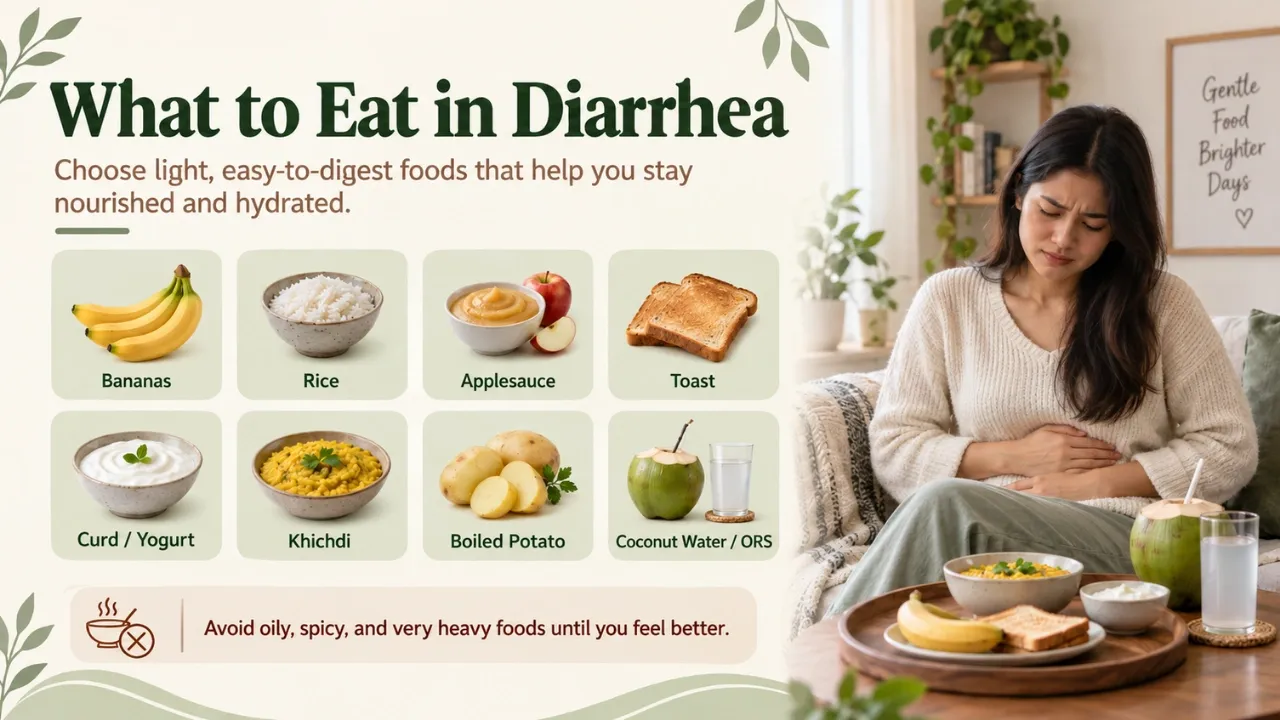
What to eat in diarrhea: plain white rice, soft khichdi, ripe banana, fresh curd (if mild), rice water (kanji), boiled potatoes, plain rusk, and coconut water. ORS is essential. Avoid milk, oily food, spicy curries, raw vegetables, and sugary drinks until stools normalise for 24–48 hours.
Diarrhea is uncomfortable, draining, and sometimes worrying. You may feel weak, dehydrated, embarrassed to step out, or anxious about eating anything at all. Many people ask the same question during this phase: "If everything is loose, what should I even eat?"
The good news is—food can help. The right foods calm your gut, reduce stool frequency, and help your body recover faster. The wrong foods can make diarrhea last longer.
This article explains what to eat in diarrhea, why those foods work, what to avoid, and how to slowly return to normal eating—using simple Indian foods and medically sound gut logic.
Why Does Food Matter So Much During Diarrhea?
Diarrhea usually happens when:
- The gut lining is irritated or inflamed
- Digestion is rushed, so water is not absorbed
- Gut bacteria are temporarily imbalanced
- Infections, food poisoning, stress, or antibiotics disrupt the system
During this time, your digestive fire (agni) is low, not strong. Heavy, spicy, oily, or sugary foods overwhelm the gut and pull more water into stools.
So the goal of eating during diarrhea is to:
- Reduce gut irritation
- Absorb excess water
- Provide easy energy
- Restore gut bacteria gently
- Prevent dehydration and weakness
What to Eat in Diarrhea — What Is Good to Eat in Diarrhea
1) Plain White Rice or Soft Khichdi
Why it helps: White rice is low fibre, bland, and easy to digest. It binds stool and slows down bowel movement.
How to eat:
- Plain boiled rice with a pinch of salt
- Soft moong dal khichdi (very thin, minimal ghee)
- Avoid spices except a little jeera
This is one of the safest foods during loose motions.
2) Curd (Dahi) — But Only the Right Way
Why it helps: Fresh curd contains natural probiotics that may support gut recovery when diarrhea is mild and settling.
How to eat:
- Plain, fresh homemade curd
- Mixed with rice (curd rice style, but no tadka)
- Prefer daytime only
Avoid if:
- You have severe watery diarrhea, vomiting, or strong bloating
- The curd is sour, old, or straight from the fridge
If you want a deeper explanation of diarrhea stages and safe recovery foods, read: diarrhea basics and recovery guidance.
3) Banana (Especially Elaichi or Robusta)
Why it helps: Bananas contain pectin (a soluble fibre) that absorbs water and firms stools. They also help replace lost potassium.
How to eat:
- 1 small ripe banana, mashed
- Avoid very raw or very overripe bananas if they don't suit you
4) Rice Water (Kanji) or Thin Gruel
Why it helps: Rice water provides gentle hydration, electrolytes (when salted), and binding starch that is easy on the stomach.
How to prepare:
- Boil rice in extra water
- Strain and drink the water with a pinch of salt
It can be useful for children, elders, and people who feel very weak.
5) Toasted White Bread or Plain Rusk
Why it helps: Low-fibre, simple carbohydrates provide energy without irritating the gut.
How to eat:
- Dry toast
- Plain rusk
- Avoid butter, jam, cheese, and spicy toppings
6) Boiled Potatoes
Why it helps: Potatoes can be binding and soothing, and they provide potassium.
How to eat:
- Boiled, mashed with salt
- No butter, chilli, or garam masala
7) Coconut Water (Fresh)
Why it helps: Diarrhea causes electrolyte loss. Fresh coconut water can replace fluids and potassium gently.
- 1–2 glasses/day (if tolerated)
- Avoid packaged or sweetened versions
What to Drink During Diarrhea
✔ ORS (Oral Rehydration Solution)
This is essential, not optional—especially if stools are frequent, watery, or you feel weak.
✔ Plain Water (Small Sips)
Large gulps can worsen nausea. Sip frequently through the day.
✔ Jeera Water
Boil cumin seeds in water and drink it lukewarm. It may help reduce gas and calm the gut in some people.
What Not to Eat in Diarrhea — Foods to Avoid
Avoid these until stools are normal for at least 24–48 hours:
- Milk, paneer, cheese
- Oily, fried foods (pakoras, puri, chips)
- Spicy curries, chutneys, pickles
- Raw vegetables and salads
- Watery fruits and citrus fruits (if they worsen stools)
- Coffee, alcohol, and energy drinks
- Sweets, chocolates, sugary drinks
Some people also feel worse after tea during diarrhea. If that's you, see: tea during diarrhea: is it safe?
How Often Should You Eat During Diarrhea?
- Eat small meals every 3–4 hours
- Do not overeat "to regain strength"
- If stools worsen after a food, pause it and simplify again
What Food to Eat in Diarrhea After It Stops — Recovery Plan
Once stools are semi-solid or normal, move slowly:
Day 1–2:
- Khichdi
- Curd rice (if tolerated)
- Soft roti + boiled sabzi
Day 3 onwards:
- Gradually add vegetables
- Then proteins (dal, eggs) based on tolerance
- Spices last
When Is Diarrhea a Red Flag?
Diet helps mild diarrhea, but see a doctor urgently if:
- Diarrhea lasts more than 3 days
- There is blood or mucus in stools
- High fever or severe abdominal pain
- Signs of dehydration (very little urine, dizziness, extreme weakness)
- Diarrhea in infants or elderly
How Mool Health Helps With Diarrhea
At Mool Health, we understand that diarrhea is not just about loose motions—it reflects a temporary gut imbalance.
- Educate you on what your gut needs at each stage
- Help you understand food tolerance and triggers
- Support recovery by rebuilding digestion and microbiome balance
- Guide lifestyle habits that reduce repeat episodes
We do not sell quick fixes or claim cures. The focus is on clarity, safety, and long-term gut stability.
Key Takeaways
During diarrhea, your gut needs rest, hydration, and simplicity. Bland Indian foods like rice, khichdi, banana, curd (if tolerated), and rice water are not old-fashioned advice—they are medically sound.
Eat light, drink enough, avoid irritants, and give your gut time to reset.
Your gut is unique your healing should be too.

Disclaimer
The content provided by Mool Health is for educational and informational purposes only and should not be considered a substitute for professional medical advice, diagnosis, or treatment.