
Is Coconut Water Good for Diarrhea? ORS, Safety & Recovery Guide
A practical guide on using coconut water during mild diarrhea, when ORS is more important, safe intake tips, risks, food choices, red flags, and FAQs.
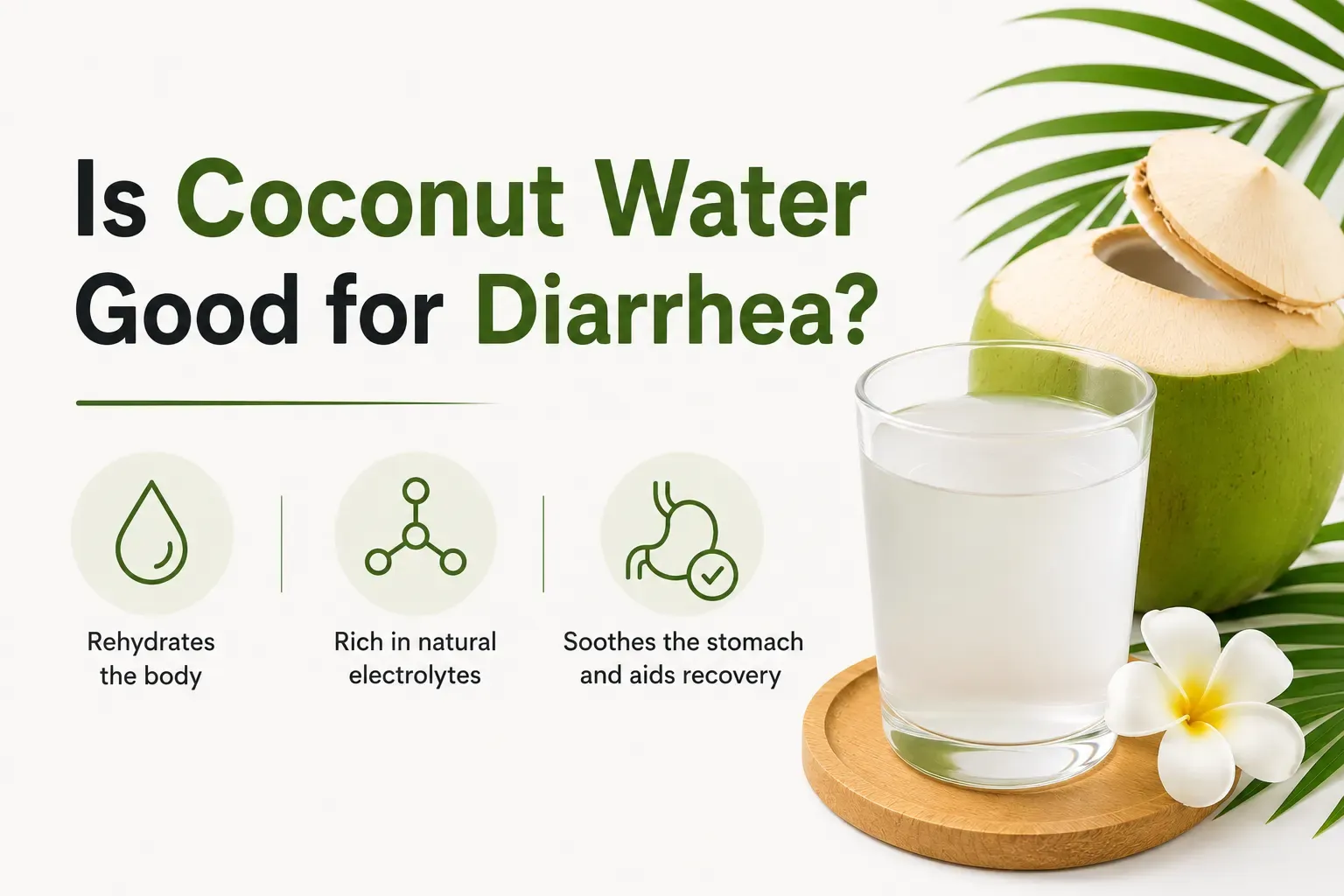
Quick Answer
Coconut water can help as a supportive fluid during mild diarrhea, but it should not replace ORS. It provides water and potassium, but it does not contain enough sodium to correct dehydration the way oral rehydration solution does.
- Use coconut water only as an add-on when diarrhea is mild and fluids are staying down.
- Use ORS first for frequent watery stools, vomiting, weakness or dehydration risk.
- Choose fresh tender coconut water and sip small amounts slowly.
- Stop if bloating or stool frequency increases after drinking it.
Coconut water can support hydration during mild diarrhea, but it cannot replace ORS. It provides fluids and potassium, but its sodium content , roughly 25-50 mg per 100 ml , is too low to activate the gut's water-absorption mechanism the way WHO-ORS does at 520 mg per 100 ml.
Use coconut water as a supplementary drink only when diarrhea is mild, dehydration signs are absent, and fluids are staying down. For frequent watery stools, vomiting, weakness, or any high-risk group, ORS and medical guidance come first.
What Is Coconut Water's Role in Diarrhea?
Coconut water is a natural electrolyte drink that provides potassium, fluids, and small amounts of magnesium. During diarrhea, it functions as a supportive hydration fluid , not a medical treatment.
The critical limitation is sodium. Coconut water contains roughly 25-50 mg of sodium per 100 ml. WHO-ORS contains 520 mg per 100 ml. That gap matters because sodium activates the gut's sodium-glucose cotransport mechanism, which is how water moves from the intestine back into the bloodstream during active fluid loss.
Key facts:
- Coconut water provides real hydration but lacks sufficient sodium for medical-grade rehydration
- ORS uses a proven glucose-to-sodium ratio that activates sodium-glucose cotransport in the small intestine
- For mild diarrhea with no dehydration signs, coconut water is a reasonable supplementary fluid
- For moderate-to-severe diarrhea, or for infants, elderly, or pregnant individuals, ORS comes first , always
In many Indian homes, tender coconut water (nariyal pani) is a go-to drink during loose motions because it feels light and soothing. According to Mool Health's gut health team, that cultural intuition is not wrong , but it is incomplete without ORS.
How Does Coconut Water Work During Diarrhea?
Diarrhea depletes the body of water and electrolytes faster than most people realise , each loose stool can mean a loss of 200-300 ml of fluid. Coconut water addresses some of this loss, but not all of it.
Coconut Water vs WHO-ORS: Nutrient Comparison
| Nutrient | Coconut Water (per 100 ml) | WHO-ORS (per 100 ml) |
|---|---|---|
| Sodium | 25-50 mg | 520 mg |
| Potassium | 200-250 mg | 78 mg |
| Glucose / Sugar | 2.5-5 g | 2 g |
| Chloride | 105 mg | ~1,770 mg |
Why sodium is the critical gap: The small intestine uses sodium-glucose cotransport to pull water out of the gut and into the bloodstream. ORS is formulated specifically around this mechanism. Coconut water has glucose but not enough sodium, which is why it cannot drive rehydration as efficiently during active diarrhea.
What coconut water does contribute:
- Replenishes potassium, which is lost during loose stools and is important for muscle and nerve function
- Provides fluids that count toward daily water intake
- Sits gently on the gut , less likely to worsen bloating compared to sugary drinks or fruit juices
- Contains small amounts of magnesium and phosphorus that support cellular recovery
According to Mool Health's gut health team, coconut water is best understood as a comfort fluid that supports recovery , not a clinical intervention that treats dehydration.
Is Coconut Water Good for Loose Motions? Honest Comparison
No home fluid matches WHO-ORS for active diarrhea with dehydration risk. Among supportive drinks, fresh coconut water ranks ahead of sports drinks and fruit juice , but still sits well below ORS in rehydration strength.
| Fluid | Rehydration Strength | Electrolyte Balance | Best For | Key Limitation |
|---|---|---|---|---|
| WHO-ORS | Highest | Scientifically calibrated Na:Glucose ratio | Any diarrhea with dehydration risk | Taste can be unpleasant for some |
| Coconut Water (fresh) | Moderate | High potassium, low sodium | Mild diarrhea, no dehydration signs | Low sodium limits gut absorption mechanism |
| Rice Water (kanji) | Moderate | Mild electrolytes + starch | Early loose stools, easy on gut | Minimal electrolytes overall |
| Sports Drink (e.g. Gatorade) | Low-moderate | Moderate sodium, high sugar | Mild dehydration in healthy adults | High sugar can worsen osmotic diarrhea |
| Plain Water | Low | None | Supplementary hydration only | Dilutes electrolytes if used alone |
| Fruit Juice | Poor | High sugar, minimal electrolytes | Should generally be avoided | High fructose can worsen loose stools |
The honest verdict: Fresh coconut water is one of the better home fluid choices during mild diarrhea , ahead of sports drinks and fruit juice. But it should always be used alongside ORS, never instead of it.
Mool Health recommends thinking of coconut water as a sip between ORS doses, not a substitute for them.
When Is Coconut Water Good for Diarrhea, and When Is It Not Enough?
Whether coconut water helps or falls short depends entirely on the severity of the episode and who is affected.
Coconut Water Is a Reasonable Supportive Drink When:
- Diarrhea is mild , a few loose stools, not watery or very frequent
- No major weakness, dizziness, or unusual thirst
- No signs of dehydration: normal urination, moist mouth
- Fluids are staying down without repeated vomiting
- Used as an additional fluid alongside ORS and plain water
Prioritise ORS and Seek Medical Care When:
Coconut water is not enough if:
- Stools are frequent and watery
- You feel very weak, dizzy, or unusually thirsty
- Urine is very little or dark yellow
- Mouth is dry or eyes look sunken (especially in children)
- Vomiting is present and fluids are not staying down
- The person is an infant, elderly, pregnant, or has kidney disease or diabetes
- Diarrhea has lasted more than 48 hours
According to Mool Health's clinical team, these signs indicate that the body's fluid deficit has moved beyond what coconut water can address.
Can Coconut Water Cause Diarrhea or Make Loose Motions Worse?
Yes , coconut water can cause loose stools or worsen diarrhea in some people, and it is important to know exactly why.
Coconut water contains sorbitol, a naturally occurring sugar alcohol. The small intestine absorbs sorbitol poorly. What is not absorbed passes into the large intestine, where it draws water in by osmosis , softening stools and speeding up bowel transit. This effect is useful for constipation but counterproductive when diarrhea is already present.
Who is most likely to experience worsening symptoms:
- People with IBS: Sorbitol is a FODMAP , a fermentable carbohydrate that triggers bloating, cramping, or loose stools in irritable bowel syndrome
- People with fructose intolerance: Coconut water contains small amounts of fructose; those with fructose malabsorption may notice worsened loose motions
- Anyone who drinks large amounts at once: Gulping 400-500 ml in one sitting increases the sorbitol load on the gut significantly
- People with osmotic diarrhea: If diarrhea is already driven by excess sugar drawing water into the gut, adding more natural sugars through coconut water can worsen the episode
Is Coconut Water a Laxative?
Coconut water is not a formal laxative, but it has mild laxative properties driven by three specific compounds:
- Sorbitol: Poorly absorbed by the small intestine; draws water into the colon by osmosis, softening stools and accelerating bowel transit
- Magnesium: Coconut water contains roughly 25 mg per 100 ml. Magnesium relaxes smooth muscle in the intestinal wall and pulls water into the gut , the same mechanism used in magnesium-based laxatives, at a much lower dose
- Fructose: In people with fructose malabsorption, unabsorbed fructose ferments in the colon, producing gas, bloating, and loose stools
Coconut water's laxative effect is dose-dependent , 100-150 ml at a time is unlikely to worsen most adults' diarrhea; 400-500 ml consumed quickly may.
The rule: If you notice increased bloating or more frequent stools within 30-60 minutes of drinking coconut water during a diarrhea episode, stop and switch to plain water and ORS.
Tender Coconut Water vs Mature Coconut Water During Diarrhea: Which Is Better?
Not all coconut water is the same when your stomach is upset. Tender coconut water is the better choice during diarrhea.
| Feature | Tender Coconut (Young, Green) | Mature Coconut (Brown, Ripe) |
|---|---|---|
| Taste | Mild, slightly sweet | Stronger, nuttier |
| Sugar content | Lower (2.5-3.5 g per 100 ml) | Higher (3.5-5 g per 100 ml) |
| Electrolyte profile | Higher sodium ratio | More potassium, lower sodium |
| Fat content | Negligible | Moderate (from coconut meat) |
| Gut tolerance | Easier on upset stomach | Can feel heavy |
| Best for diarrhea? | Yes , first choice | Drink in limited amounts; avoid coconut meat |
Why tender coconut wins during diarrhea: Its lower sugar content means less osmotic load on an already irritated intestine. It is closer to a clear fluid in composition, which is what the gut needs during acute illness.
Important note on coconut flesh: Coconut meat is high in fat and fibre , both of which stimulate intestinal movement. Avoid coconut flesh entirely during active diarrhea. Stick to the water only.
Mool Health specifically advises choosing tender coconut water (nariyal pani) over mature coconut during any active loose motion episode.
Is Coconut Water Safe During Diarrhea with Vomiting?
When diarrhea and vomiting occur together, the risk of dehydration rises sharply , and the approach to coconut water needs to change.
Vomiting means the stomach is irritated and ejecting fluids quickly. Gulping any liquid, including coconut water, when vomiting is active will likely trigger another episode.
Step-by-Step Approach for Diarrhea and Vomiting Together:
- Wait 15-20 minutes after each vomiting episode before attempting to drink anything
- Start with 1-2 teaspoons of ORS every 2-3 minutes , slower than you want to drink, but faster than vomiting can remove fluid
- Coconut water in this scenario: Only if ORS is unavailable or not tolerated at all, and diarrhea is mild with vomiting being infrequent , limit to 50-80 ml at a time, sipped very slowly
- If vomiting prevents any fluid from staying down for more than 2 hours: seek medical care. IV fluids may be required. This is beyond home management.
For children with vomiting and diarrhea together: Do not attempt coconut water. Use low-osmolarity ORS as directed by a paediatrician.
The critical marker: If you can keep small sips down without vomiting for 30 minutes, increase the volume gradually. Pale yellow urine within 2-4 hours of starting sips means rehydration is working.
According to Mool Health's clinical team, the combination of vomiting and diarrhea should always prompt early ORS use , coconut water is not an adequate substitute in this scenario.
How to Drink Coconut Water Safely During Diarrhea
Following the right approach reduces the risk of worsening symptoms.
- Choose fresh tender coconut water , lighter, lower in sugar, and easier on an upset stomach than mature coconut water
- Drink 100-150 ml at a time, slowly and in sips , never gulped in one go
- Do not add extra sugar to coconut water during diarrhea
- Alternate with ORS , if stools are frequent, ORS should remain the main rehydration drink
- Stay within 200-400 ml per day as a supplementary fluid for most adults with mild diarrhea
- Stop and reassess if symptoms worsen, bloating increases, or stool frequency rises after drinking
- If you dislike ORS taste, mix a small amount of ORS into coconut water , this is far better than skipping ORS entirely
Common Mistakes to Avoid:
- Replacing ORS with coconut water entirely , this is the most dangerous mistake
- Drinking 400-500 ml in one go, which rapidly increases the sorbitol load
- Adding sugar or salt to coconut water to "make it more like ORS" , homemade additions cannot replicate the precise glucose-to-sodium ratio
- Choosing mature coconut water over tender coconut water during an acute episode
- Eating coconut flesh during active diarrhea , the fat and fibre will likely worsen loose stools
What Does the Research Say About Coconut Water and Diarrhea?
The available evidence positions coconut water as a supportive fluid , not a medical treatment for diarrhea.
Sports Nutrition study (2012): A study in the Journal of the International Society of Sports Nutrition found coconut water was equivalent to carbohydrate-electrolyte sports drinks for mild-to-moderate rehydration after exercise and was better tolerated. Critically, this was exercise-induced dehydration , not diarrhea , where sodium loss is lower than in gastrointestinal illness.
WHO-ORS gold standard: The WHO's ORS formula is based on decades of clinical research. The glucose-sodium cotransport mechanism has been validated across thousands of clinical trials and is considered one of the most cost-effective medical interventions in history. WHO does not recommend coconut water as a primary rehydration fluid for diarrhea.
NHS guidance: The NHS advises ORS sachets as the primary rehydration fluid for diarrhea , particularly for infants, elderly people, and those with underlying health conditions. Coconut water is not mentioned in NHS clinical guidance on diarrhea management.
Indian Pediatrics review: A review on oral rehydration therapies noted that while natural fluids like coconut water and rice water have cultural and practical value in resource-limited settings, their electrolyte composition is too variable and sodium-poor to replace standardised ORS in clinical management.
NIDDK (National Institute of Diabetes and Digestive and Kidney Diseases): NIDDK guidance on diarrhea similarly emphasises ORS and adequate fluid intake as the primary management strategy. Natural drinks are acknowledged as cultural practice but are not cited as clinically effective alternatives to ORS.
According to Mool Health's clinical team, the research consistently supports one conclusion: coconut water belongs in a supportive role, never the primary role, during active diarrhea management.
Is Buko Juice Good for Diarrhea?
Buko juice is the Filipino term for fresh young coconut water , the same clear liquid found inside a green, immature coconut. The composition is identical to tender coconut water: low sugar (around 2.5-3.5 g per 100 ml), moderate potassium (200-250 mg per 100 ml), and low sodium (25-50 mg per 100 ml). The same benefits and the same limitations apply.
In the Philippines, buko juice is a traditional remedy for upset stomach and loose stools , and its cultural use aligns with the evidence. It is a gentle, gut-friendly fluid that helps replace lost water and potassium during mild episodes. It is not a medical treatment and should not replace oral rehydration therapy.
Other names for the same thing:
- Buko juice or buko water , Philippines
- Agua de coco , Spanish-speaking countries
- Nariyal pani , India
- Coconut juice , general colloquial usage
All refer to the liquid inside a young coconut. The guidelines for use during diarrhea are the same regardless of what you call it: use as a supplementary fluid during mild diarrhea, alongside ORS , not instead of it.
Recovery Timeline: What to Expect With Coconut Water and ORS for Diarrhea
If ORS and supportive fluids like coconut water are started promptly, here is what most adults with mild-to-moderate diarrhea may expect.
| Timeline | What May Happen | What to Do |
|---|---|---|
| First 4-6 hours | Thirst, weakness and stool frequency may still continue | Prioritise ORS in small, frequent sips. Use coconut water only as a supplementary fluid if tolerated. |
| 6-12 hours | Urine colour and energy may begin improving if hydration is adequate | Continue ORS, simple foods and rest. Avoid fruit juice, fizzy drinks and heavy meals. |
| 12-24 hours | Loose stools may reduce in frequency in mild cases | Keep fluids steady. Add soft foods such as rice, banana, toast, khichdi or curd if tolerated. |
| 24-48 hours | Most mild episodes should show clear improvement | Seek medical advice if diarrhea continues, worsens or dehydration signs appear. |
Important: Coconut water does not shorten diarrhea by itself. Recovery depends on the cause of diarrhea, hydration status, food tolerance and whether infection, medication, intolerance or another digestive issue is involved.
What Should You Eat With Coconut Water During Diarrhea?
During diarrhea, the goal is not to overload the gut. Choose simple foods that are easy to digest and avoid anything that pulls more water into the intestine.
Better tolerated options may include:
- Soft rice, plain khichdi or rice water
- Banana
- Toast or plain crackers
- Curd or buttermilk if dairy suits you
- Boiled potato
- Clear soups
Avoid or limit during active loose motions:
- Fruit juice and sugary drinks
- Fried or spicy food
- Alcohol
- Large amounts of milk
- Carbonated drinks
- Coconut flesh
- Very high-fibre meals until stools improve
Once stools begin improving, return to normal food gradually. If a specific food repeatedly worsens loose stools, keep a short food and symptom diary and discuss it with a healthcare professional.
When Should You See a Doctor?
Do not rely on coconut water or home fluids alone if diarrhea looks severe, prolonged or dehydration is possible.
- Diarrhea lasts more than 48 hours in adults
- There is blood or mucus in stool
- Fever, severe abdominal pain or repeated vomiting is present
- Urine is very little, very dark or absent for several hours
- You feel dizzy, faint, confused or unusually weak
- There are signs of dehydration in a child, elderly person or pregnant individual
- The person has kidney disease, diabetes, heart disease or is immunocompromised
Infants, children, elderly people and pregnant individuals can dehydrate faster, so ORS and medical guidance should come earlier for these groups.
Mool Health’s Perspective on Coconut Water for Diarrhea
Mool Health views coconut water as a supportive hydration option, not a treatment for diarrhea. It may help when loose motions are mild and the person is otherwise stable, but it should not create a false sense of security when dehydration risk is present.
The right approach is to understand the trigger, protect hydration with ORS when needed, eat simple foods and seek medical advice when symptoms are persistent, severe or recurring. Repeated diarrhea episodes may point to food intolerance, gut sensitivity, infection, medication effects or other digestive patterns that need proper evaluation.
Understand Your Gut Symptoms Better
Frequent diarrhea, bloating or food-triggered digestive discomfort should not be ignored. Take Mool Health’s free gut test to understand your symptoms, food patterns and next steps better.
Medical Disclaimer
This article is for informational and educational purposes only. It is not a substitute for professional medical advice, diagnosis or treatment. Diarrhea can cause dehydration, especially in infants, children, elderly people, pregnant individuals and people with kidney disease, diabetes or other medical conditions. Seek medical care for severe diarrhea, blood in stool, repeated vomiting, fever, dizziness, very low urine output, symptoms lasting more than 48 hours, or any signs of dehydration.
Key Takeaways
- Coconut water can support hydration during mild diarrhea, but it cannot replace ORS.
- The main limitation is sodium. Coconut water is potassium-rich but sodium-poor compared with WHO-ORS.
- Fresh tender coconut water is better tolerated than mature coconut water during loose motions.
- Large amounts can worsen diarrhea in some people because of sorbitol, fructose and magnesium.
- If diarrhea is frequent, watery, associated with vomiting, or affects a high-risk person, ORS and medical advice come first.
- Use coconut water in small sips, ideally 100-150 ml at a time, and stop if bloating or stool frequency worsens.
Your gut is unique your healing should be too.

FAQs
Coconut water can be a supportive drink during mild diarrhea because it provides fluid and potassium. However, it cannot replace ORS because its sodium content is too low for medical-grade rehydration.
No. Coconut water does not stop loose motions. It may support hydration in mild cases, but the cause of diarrhea, fluid loss and dehydration risk still need to be managed properly.
ORS should come first when stools are frequent, watery, or there is any dehydration risk. Coconut water can be taken in small amounts between ORS doses if tolerated.
Yes, in some people. Coconut water contains sorbitol, fructose and magnesium, which may worsen loose stools or bloating, especially when taken in large amounts or in people with IBS or fructose intolerance.
For most adults with mild diarrhea, 100-150 ml at a time and around 200-400 ml per day as a supplementary fluid may be tolerated. Stop if stool frequency or bloating increases.
Children with diarrhea should be managed with ORS and medical guidance. Coconut water should not replace ORS, especially if vomiting, dehydration signs or frequent watery stools are present.
Disclaimer
The content provided by Mool Health is for educational and informational purposes only and should not be considered a substitute for professional medical advice, diagnosis, or treatment.