
Stages of Digestion: How Food Moves Through Your Body
Digestion happens in multiple stages that help break down food and absorb nutrients. This guide explains the complete digestive process step by step.
Quick Answer
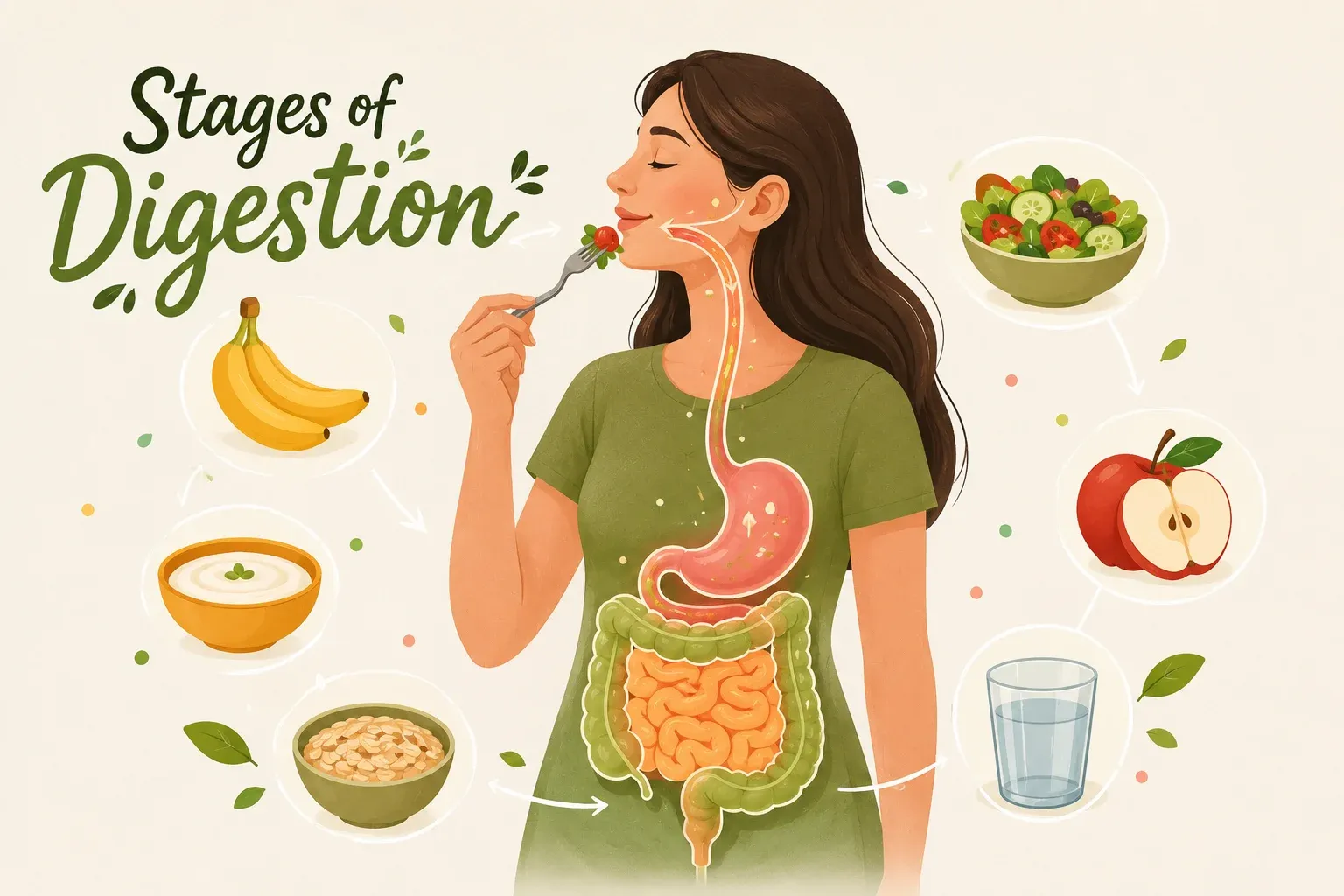
The stages of digestion are the steps your body uses to break food into nutrients and remove waste. The main digestion stages in humans include ingestion, propulsion, mechanical and chemical digestion, absorption, water absorption, and elimination. In most people, the full stages of digestion process take around 24 to 72 hours depending on food type, hydration, gut motility, and overall digestive health.
- Stages of food digestion start in the mouth with chewing and saliva.
- The stomach handles mechanical churning and chemical protein digestion.
- The small intestine is the main site of nutrient absorption.
- The large intestine absorbs water and forms stool.
- Persistent bloating, undigested food, constipation, or diarrhoea may signal disruption in one stage.
What Are the Stages of Digestion? A Complete Overview
If your digestion feels slow or uncomfortable, daily habits that improve digestion naturally can support multiple stages of the process.
The stages of digestion refer to the sequential steps the human body uses to convert food into absorbable nutrients and eliminate waste. According to Mool Health's nutrition team, digestion is not a single event , it is a coordinated, multi-organ process that can take anywhere from 24 to 72 hours to complete, depending on what you eat.
The digestive system includes the mouth, esophagus, stomach, small intestine, large intestine, rectum, and anus, along with accessory organs such as the liver, pancreas, and gallbladder.
What the digestive system does:
- Breaks food into molecules small enough to be absorbed
- Extracts macronutrients (carbohydrates, proteins, fats) and micronutrients (vitamins, minerals)
- Moves waste products toward elimination
- Supports immune function , approximately 70% of the body's immune cells reside in the gut
The digestive process works because each organ performs a specific chemical or mechanical function that prepares food for the next stage. No single organ handles digestion alone.
How the Stages of Digestion Work: The Complete Breakdown
The stages of digestion follow a linear path from ingestion to elimination. Each stage is triggered by the one before it, making the process a continuous chain of cause-and-effect events.
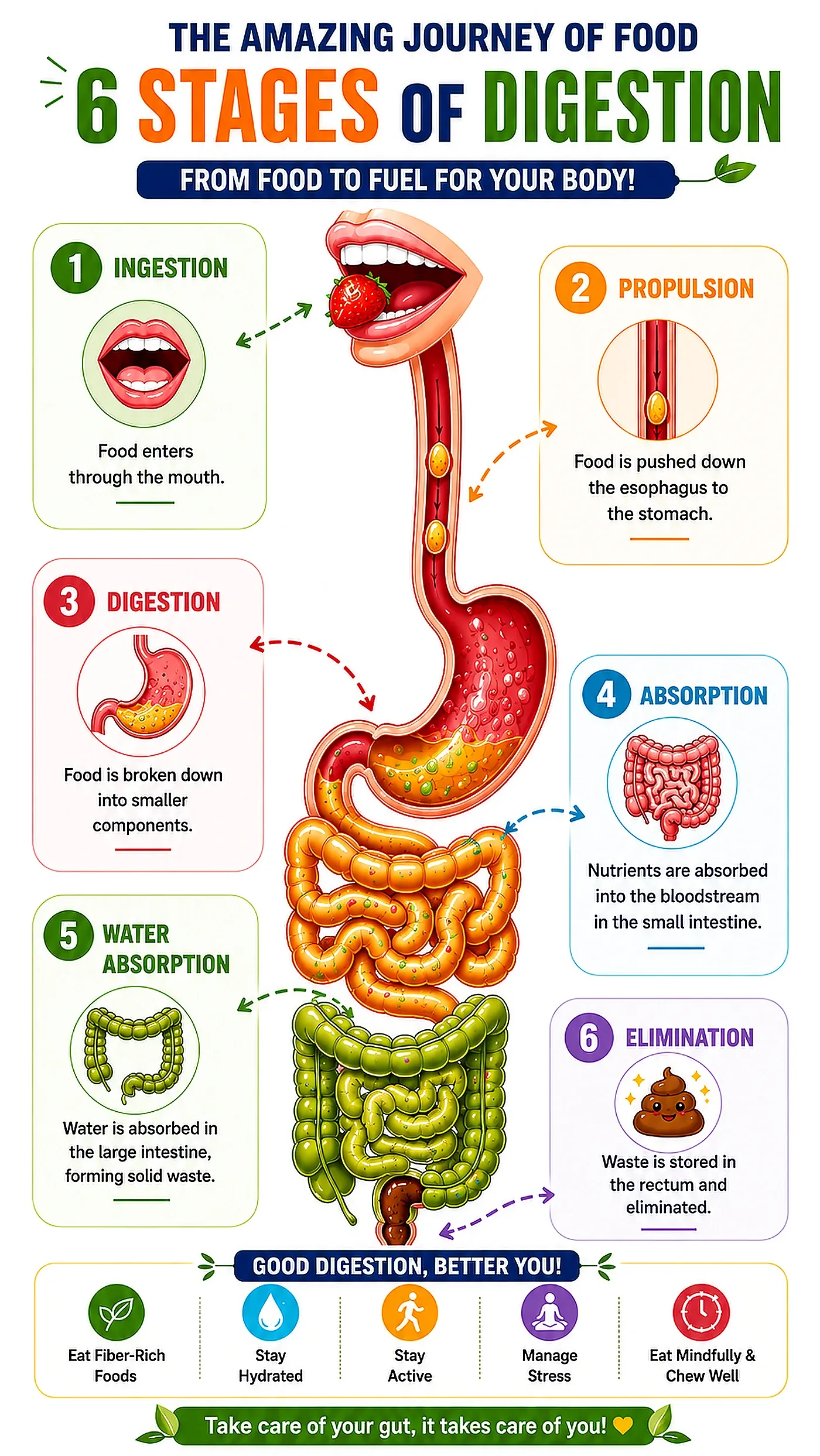
Step 1 , Ingestion (Mouth)
Food enters the body through the mouth. Teeth mechanically break food into smaller pieces (mastication), while salivary glands release approximately 1 to 1.5 litres of saliva per day. Saliva contains amylase, an enzyme that begins breaking down carbohydrates before food even reaches the stomach.
Step 2 , Propulsion (Swallowing and Peristalsis)
The tongue pushes chewed food (now called a bolus) to the back of the throat, triggering a swallow reflex. The bolus travels down the esophagus via peristalsis , rhythmic muscular contractions that move food toward the stomach in approximately 8 to 10 seconds.
Step 3 , Mechanical and Chemical Digestion (Stomach)
The stomach performs two functions simultaneously:
- Mechanical digestion: Muscular walls churn food into a semi-liquid called chyme
- Chemical digestion: Gastric acid (hydrochloric acid, pH 1.5 to 3.5) and enzymes like pepsin break down proteins
The stomach also kills most ingested bacteria because of its highly acidic environment. Food typically remains in the stomach for 2 to 4 hours, though fatty meals may extend this to 5 hours or more.
Step 4 , Nutrient Absorption (Small Intestine)
The small intestine is the primary site of nutrient absorption and is approximately 6 to 7 metres long in an average adult. Chyme from the stomach mixes with bile (from the liver/gallbladder) and pancreatic enzymes, which break down fats, proteins, and carbohydrates into their smallest components.
The inner wall of the small intestine is lined with villi and microvilli , finger-like projections that increase surface area to roughly 250 square metres, allowing efficient absorption of glucose, amino acids, fatty acids, vitamins, and minerals into the bloodstream.
Step 5 , Water Absorption and Waste Formation (Large Intestine)
The large intestine (colon) receives undigested material from the small intestine. Its primary role is to absorb water and electrolytes, reducing liquid waste into solid stool. The colon also hosts the gut microbiome , trillions of bacteria that ferment remaining fibre, produce short-chain fatty acids, and synthesise vitamins including vitamin K and certain B vitamins.
Step 6 , Elimination (Rectum and Anus)
Solid waste (faeces) is stored in the rectum until eliminated through the anus via defecation. The entire transit time from ingestion to elimination typically ranges from 24 to 72 hours, though this varies with diet, hydration, age, and gut health.
What Are the Key Benefits of Understanding the Stages of Digestion?
Understanding the stages of digestion helps individuals make informed decisions about diet, eating habits, and digestive health. Mool Health's team highlights the following evidence-supported benefits:
Short-term benefits:
- Better food choices that match how each digestive stage works (e.g., chewing thoroughly reduces stomach workload)
- Earlier recognition of digestive symptoms such as bloating, acid reflux, or irregular bowel movements
- Improved meal timing strategies , eating smaller, more frequent meals supports efficient gastric emptying
Long-term benefits:
- Reduced risk of chronic digestive disorders, which affect approximately 60 to 70 million people in the United States alone
- Support for immune health through a better-maintained gut microbiome
- Optimised nutrient absorption, which directly impacts energy levels, skin health, and cognitive function
- Lower risk of conditions like constipation, irritable bowel syndrome (IBS), and nutritional deficiencies
| Benefit Area | Short-Term Impact | Long-Term Impact |
|---|---|---|
| Chewing habits | Easier gastric digestion | Reduced bloating over time |
| Fibre intake | Supports large intestine function | Healthier gut microbiome |
| Hydration | Aids colon water absorption | Lower constipation risk |
| Meal timing | Steadier blood sugar | Improved metabolic health |
What Are the Different Types of Digestion?
Digestion occurs through two distinct processes that operate simultaneously throughout the stages of digestion.
Mechanical Digestion
Mechanical digestion involves the physical breakdown of food through chewing, churning, and peristalsis. It does not change the chemical structure of food , it only reduces particle size to increase surface area for enzymes to act on. Mechanical digestion occurs primarily in the mouth and stomach.
Chemical Digestion
Chemical digestion uses enzymes, acids, and bile to break food molecules into their smallest absorbable units. Key agents include:
- Salivary amylase (mouth) , breaks down starch
- Pepsin (stomach) , breaks down proteins
- Lipase (small intestine/pancreas) , breaks down fats
- Bile (liver/gallbladder) , emulsifies fats for easier enzyme access
| Type | Location | Primary Function |
|---|---|---|
| Mechanical | Mouth, stomach | Physically reduces food particle size |
| Chemical | Mouth, stomach, small intestine | Breaks molecules into absorbable units |
Both types are essential. Mechanical digestion works because it creates a larger surface area, which allows chemical digestion to operate faster and more completely.
How Long Does Each Stage of Digestion Take?
For food-specific timelines, you can compare this with fish digestion time and papaya digestion time.
The timeline for the stages of digestion varies based on the type of food consumed, individual gut health, age, and hydration. Mool Health's guidelines on digestive health include the following general estimates:
| Stage | Location | Approximate Time |
|---|---|---|
| Ingestion & chewing | Mouth | 20 to 30 seconds per bite |
| Swallowing & propulsion | Esophagus | 8 to 10 seconds |
| Stomach digestion | Stomach | 2 to 5 hours |
| Nutrient absorption | Small intestine | 2 to 6 hours |
| Water absorption & waste | Large intestine | 10 to 59 hours |
| Elimination | Rectum/Anus | Minutes (once triggered) |
| Total transit time | Entire GI tract | 24 to 72 hours |
Factors that affect digestion speed:
- Fat content: High-fat meals slow gastric emptying significantly
- Fibre intake: Soluble fibre slows transit; insoluble fibre speeds it up
- Hydration: Dehydration slows movement through the large intestine
- Age: Digestive motility typically slows with age, increasing constipation risk
- Physical activity: Regular movement supports peristalsis
Stages of Anaerobic Digestion vs Human Digestion
The stages of anaerobic digestion are different from the stages of digestion in humans. Human digestion breaks food into nutrients inside the body, while anaerobic digestion is a microbial process that breaks down organic matter without oxygen, often used in waste management and biogas production.
| Process | Main Stages | Purpose |
|---|---|---|
| Human digestion | Ingestion, digestion, absorption, elimination | To absorb nutrients and remove waste |
| Anaerobic digestion | Hydrolysis, acidogenesis, acetogenesis, methanogenesis | To break down organic matter and produce biogas |
So, if you are asking about gut health, focus on the stages of food digestion in the human body. If you are asking about biogas or waste breakdown, the stages of anaerobic digestion are a separate scientific process.
What Supports Healthy Digestion? Best Practices from Mool Health
Movement is one simple support, and this guide explains whether walking helps digestion after meals.
Mool Health's nutrition and gut health experts recommend the following evidence-backed practices to support each stage of the digestive process:
- Chew food thoroughly , Aim for 20 to 30 chews per bite. This activates salivary enzymes and reduces the mechanical load on the stomach.
- Stay hydrated , Drink at least 8 glasses of water daily. Adequate hydration supports peristalsis and prevents constipation in the large intestine.
- Eat enough dietary fibre , Adults need 25 to 38 grams of fibre per day (per WHO guidelines). Fibre feeds beneficial gut bacteria and adds bulk to stool.
- Avoid eating too fast , Eating too quickly overloads the stomach, reducing the efficiency of mechanical and chemical digestion.
- Limit highly processed foods , Ultra-processed foods are low in fibre and high in additives that can disrupt the gut microbiome.
- Eat smaller, more frequent meals , This supports steady gastric emptying rather than overwhelming the system with one large meal.
- Move regularly , Even a 15-minute walk after meals has been shown in studies to improve gastric emptying time.
- Manage stress , The gut-brain axis is well established. Chronic stress can slow or accelerate gut motility, disrupting multiple stages of digestion.
Common digestion mistakes to avoid:
- Drinking excessive water with meals (may dilute digestive enzymes)
- Lying down immediately after eating (increases acid reflux risk)
- Skipping meals, which disrupts the rhythm of digestive secretions
- Ignoring persistent symptoms like bloating, pain, or irregular bowel habits
When Should You Be Concerned About Your Digestive Stages?
If symptoms are frequent or unclear, this overview of digestion problems can help you understand possible causes and warning signs.
Most people experience occasional digestive disruptions, but certain symptoms may indicate that one or more stages of digestion are not functioning optimally.
Signs that digestion may need attention:
- Persistent bloating or gas after most meals
- Frequent heartburn or acid reflux (stomach acid entering the esophagus)
- Bowel transit time under 10 hours or over 72 hours consistently
- Undigested food in stool regularly
- Unexplained weight loss or nutritional deficiencies
Who is most at risk of digestive issues?
| Population | Primary Risk | Stage Most Affected |
|---|---|---|
| Adults 60+ | Slower gut motility | Large intestine (constipation) |
| People with low fibre diets | Reduced gut microbiome diversity | Large intestine |
| Individuals with chronic stress | Altered gut-brain signalling | Stomach, small intestine |
| Those with low stomach acid | Impaired protein digestion | Stomach |
| Sedentary individuals | Slow peristalsis | Entire GI tract |
According to Mool Health, persistent or worsening symptoms should be evaluated by a qualified healthcare provider, as they may indicate conditions such as IBS, GERD, or malabsorption disorders.
What Does the Research Say About the Stages of Digestion?
Key findings from clinical and nutritional research:
- Gut microbiome and digestion: A 2019 study published in Cell found that the gut microbiome , active primarily in the large intestine , plays a critical role in fermenting undigested carbohydrates and producing short-chain fatty acids that protect the intestinal lining.
- Gastric emptying and meal composition: Research from the American Journal of Clinical Nutrition confirms that meals high in fat and protein delay gastric emptying by up to 60% compared to carbohydrate-rich meals, directly affecting how long the stomach stage lasts.
- Chewing and digestion efficiency: A study in the Journal of the Academy of Nutrition and Dietetics found that increasing chewing frequency to 40 chews per bite reduced food intake and improved self-reported digestive comfort compared to 15 chews per bite.
- Physical activity and gut transit: A systematic review in World Journal of Gastroenterology found that moderate physical activity can reduce colon transit time by up to 30%, particularly benefiting adults prone to constipation.
Mool Health's approach to gut health is grounded in this body of evidence, combining nutritional guidance with personalised support for each stage of the digestive process.
Mool Health's Perspective
Understanding the stages of digestion can help you identify where symptoms may be starting. Bloating, acidity, constipation, diarrhoea, heaviness, and undigested food may point to different stages of the digestive process.
Mool Health looks at digestion, gut microbiome balance, food triggers, stress, sleep, and Ayurvedic constitution together. This helps identify whether your concern is linked to stomach digestion, small intestine absorption, large intestine motility, microbiome imbalance, or daily lifestyle habits.
What This Means for You
The stages of digestion show how food moves from the mouth to the stomach, small intestine, large intestine, and finally out of the body. If one stage slows down or becomes irritated, symptoms like bloating, acidity, constipation, diarrhoea, or undigested food may appear.
Here is what you should do next:
- Chew food properly to support the first stage of digestion.
- Eat fibre-rich foods and drink enough water to support bowel movement.
- Walk after meals to support gut motility.
- Avoid lying down immediately after eating if reflux is common.
- Seek medical guidance if symptoms are persistent, severe, or linked with weight loss, bleeding, or undigested food in stool.
If your digestion feels slow, irregular, or uncomfortable often, it may help to identify which stage of digestion needs support.
Disclaimer
This article is for informational and educational purposes only. It does not replace medical advice, diagnosis, or treatment. Consult a qualified healthcare professional if you have chronic digestive symptoms, severe pain, blood in stool, unexplained weight loss, persistent diarrhoea, vomiting, or any diagnosed digestive condition.
Key Takeaways
- The stages of digestion are a sequential, multi-organ process spanning the mouth, esophagus, stomach, small intestine, and large intestine , with total transit time ranging from 24 to 72 hours.
- Two types of digestion operate simultaneously: mechanical (physical breakdown) and chemical (enzyme-based breakdown), each occurring at specific locations in the GI tract.
- The stomach's acidic environment (pH 1.5 to 3.5) is essential for protein digestion and bacterial control , it works because low pH activates pepsin and denatures pathogens.
- The small intestine , approximately 6 to 7 metres long , is where the majority of nutrient absorption occurs, aided by bile, pancreatic enzymes, and a vast absorptive surface area.
- The large intestine completes water absorption, houses trillions of gut bacteria, and forms solid waste for elimination.
- Supporting healthy digestion involves chewing thoroughly, staying hydrated, eating enough fibre (25 to 38g/day), and moving regularly , each of these directly aids a specific stage.
- Persistent symptoms like bloating, irregular transit, or undigested food in stool may indicate a disruption at one of the stages of digestion and should be evaluated by a healthcare professional.
Your gut is unique your healing should be too.

Disclaimer
The content provided by Mool Health is for educational and informational purposes only and should not be considered a substitute for professional medical advice, diagnosis, or treatment.