
Ganesh's Acidity Jounrey: The Turning Point
Ganesh’s 8-year acidity journey improved after identifying gut imbalances through the Mool Gut Test and following a personalised plan focused on digestion and gut health.

Ayurvedic Physician at Mool
Published on 8,September 2026
Updated on 8,September 2026
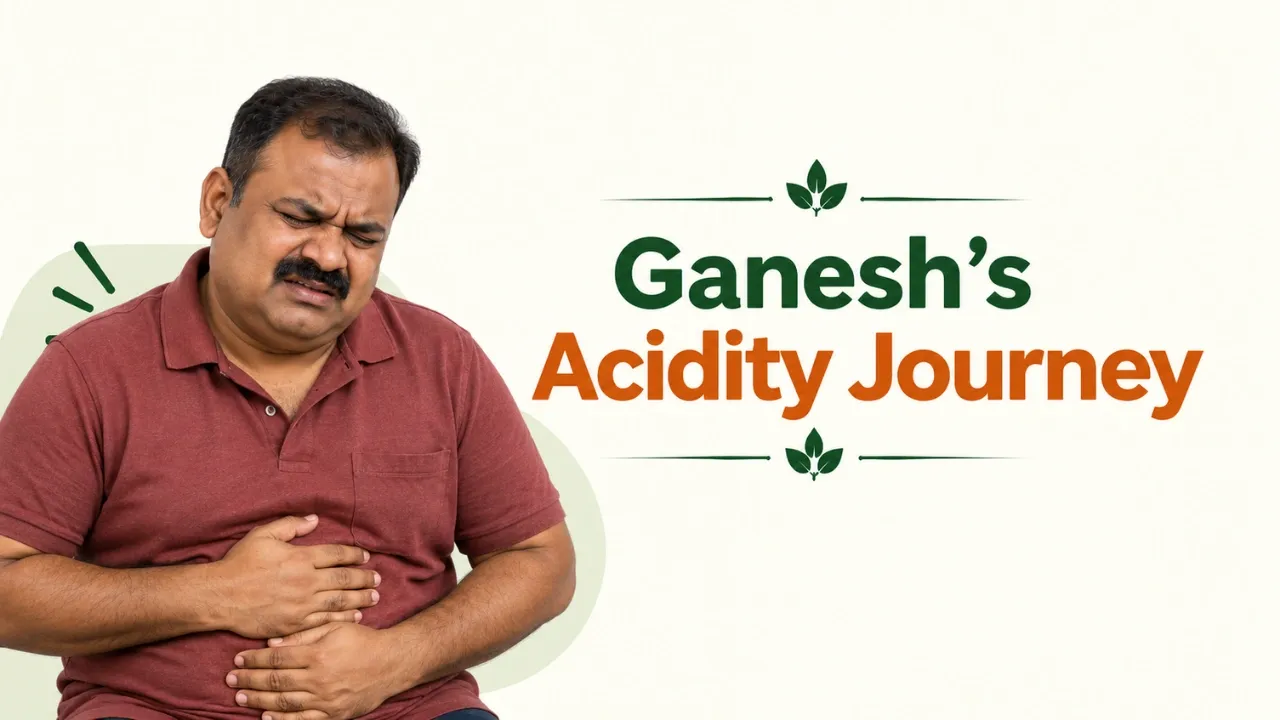
Ganesh had tried everything. Antacids after every meal. Cutting out chai. Sleeping at an angle. Nothing worked for more than a few days — and the burning kept coming back.
Then a colleague mentioned Mool Health.
The Problem That Wouldn't Go Away
Ganesh, 38, a logistics manager from Pune, had been dealing with acidity for nearly four years. The symptoms were predictable: a burning sensation in the chest after meals, frequent belching, a sour taste that crept up at night, and an uncomfortable heaviness after even light food.
He had seen two general physicians. Both prescribed proton pump inhibitors (PPIs). Both worked — until they didn't.
"I was basically managing the fire, not putting it out," Ganesh recalls.
Studies suggest that nearly 22% of India's urban population experiences chronic acidity or gastroesophageal reflux [1]. For most, the cycle is the same: symptom → medication → temporary relief → symptom again.
Ganesh was in that cycle. And he was tired of it.
The Gut Test: Where It Actually Started
Ganesh came across Mool Health through an online search. What caught his attention was not a product — it was a test. Specifically, the Mool Health Gut Test, which can be taken directly on the Mool Health website.
The test is not a stool sample or a lab procedure. It is a structured, symptom-and-lifestyle-based assessment that Ganesh completed from his phone in about 10 minutes.
The questions covered:
- Frequency and timing of acidity episodes
- Meal patterns and food types
- Sleep quality and stress levels
- Bowel regularity and bloating
- Hydration habits and physical activity
The Mool Health Gut Test works because it maps multiple gut-related variables together — not just one symptom in isolation. Conventional approaches often treat acidity as a single-organ problem. The Mool Health model treats it as a gut-ecosystem issue, where digestion, motility, stress response, and microbial balance all interact.
Within minutes of completing the test, Ganesh received his gut health profile.
What the Results Showed Ganesh
The results were specific. Not generic advice like "eat less spicy food" — but a breakdown of where Ganesh's gut health was likely falling short.
His profile indicated:
- Low digestive enzyme activity — food was sitting longer in the stomach, increasing acid exposure time
- Irregular meal timing — his erratic work schedule was disrupting his gut's natural rhythm
- Elevated stress markers — chronic stress was likely triggering excess acid production
- Inadequate fibre intake — slowing gastric emptying and feeding the wrong gut bacteria
Based on these results, a Mool Health Kit was generated specifically for Ganesh's profile. This is the core of how Mool Health works — the kit is not pre-packaged. It is built from the gut test output.
The Coach Call: Before Ganesh Committed to Anything
Before Ganesh decided to buy, Mool Health connected him with a health coach. This part surprised him.
The coach walked Ganesh through his gut test results in plain language — explaining what each finding meant, why it was likely causing his acidity, and how the kit was designed to address it. The coach also asked follow-up questions: family history, current medications, work timings, meal-skipping patterns.
The call lasted about 20 minutes.
"The coach didn't just tell me what to buy," Ganesh says. "She explained why my gut was behaving the way it was. That was the first time I actually understood the problem."
Only after that conversation did Ganesh decide to purchase the Mool Health Kit.
According to Mool Health's approach, this guided step — gut test → personalised kit → coach consultation → purchase decision — is intentional. The goal is informed use, not impulse buying.
What the Mool Health Kit Contained
Ganesh's kit was tailored to his gut test profile. It included targeted supplements and specific dietary guidance aligned with his results — designed to work together rather than as standalone products.
The coaching didn't stop at the call. Ganesh received a structured plan that covered:
- When and how to take each component of the kit
- Meal timing adjustments suited to his work schedule
- Foods to include and reduce based on his specific gut profile
- A simple daily habit tracker for the first four weeks
Mool Health's approach is rooted in the idea that acidity in most cases is a downstream symptom. The upstream causes — disrupted digestion, poor gut motility, stress-linked acid production — need to be addressed at the root for relief to last.
What Happened Over the Next 8 Weeks
Ganesh did not experience dramatic overnight results. That is worth stating clearly.
Week 1–2
Ganesh noticed slightly less bloating after meals. The burning was still present but marginally less frequent. He started following the meal timing changes his coach had recommended.
Week 3–4
The post-lunch acidity — which had been his most consistent problem — reduced noticeably. He was sleeping better, partly because night-time reflux episodes were decreasing.
Week 5–6
Ganesh went four consecutive days without reaching for an antacid. This was the first time that had happened in years. He reported it to his coach, who adjusted one component of his plan based on the update.
Week 7–8
Acidity episodes dropped to roughly 2–3 times per week, down from what had previously been a near-daily occurrence. Ganesh's energy after meals improved. The heaviness he had accepted as normal started to lift.
"I didn't think I'd ever not reach for an antacid after dinner. But I stopped keeping them on the table."
Results vary depending on individual gut health status, adherence to the plan, stress levels, and dietary consistency. Ganesh's timeline may not reflect every user's experience.
Breathing Practices Ganesh Also Learned About
During his coaching sessions, Ganesh asked about breathing practices. His coach explained that pranayama, particularly specific techniques, can support acidity management by reducing stress-linked acid production and improving vagal tone — the nerve pathway that regulates digestion.
The techniques most commonly associated with acidity relief include:
- Bhramari (Humming Bee Breath): May reduce cortisol levels, which in turn can lower stress-triggered acid secretion
- Sheetali (Cooling Breath): Traditionally used in Ayurvedic practice for excess heat or pitta, and may offer short-term relief
- Nadi Shodhana (Alternate Nostril Breathing): Supports nervous system balance, which directly influences gut motility and stomach acid regulation
Research suggests that diaphragmatic breathing practiced for 30 minutes daily may reduce acid reflux episodes in individuals with GERD [2]. Ganesh added a 10-minute pranayama practice to his morning routine in week three.
The Mool Health approach does not treat pranayama as a substitute for dietary or supplemental intervention — but as a complementary tool that addresses the stress-gut axis, which is a significant driver of acidity in many adults.
What Made Mool Health Different: An Honest Look
Ganesh had tried other gut health products before. Here is how the Mool Health experience compared, based on his account:
| Factor | Generic Supplements | Mool Health Kit |
|---|---|---|
| Personalisation | One-size-fits-all | Based on individual gut test results |
| Coach guidance | Not included | Yes — before and during use |
| Root cause focus | Symptom suppression | Addresses underlying gut health drivers |
| Purchase model | Buy first, ask later | Test → consult → decide |
| Ongoing adjustment | No | Coach adjusts plan based on progress |
The key distinction Ganesh consistently returned to was not the product itself — it was the process. Knowing why his acidity was happening made him more consistent with the plan. Consistency, in turn, drove results.
Is the Mool Health Approach Right for Everyone?
The Mool Health Gut Test and Kit may be most useful for:
- Adults experiencing recurring acidity not fully resolved by standard antacids
- People who want to understand the root cause before buying a product
- Individuals willing to make gradual lifestyle adjustments alongside supplementation
- Those experiencing acidity linked to stress, irregular meals, or sedentary habits
It may not be the right fit for:
- People with diagnosed conditions like Barrett's oesophagus or H. pylori infection requiring medical treatment
- Individuals expecting immediate relief without lifestyle change
- Those unable to commit to 6–8 weeks of consistent use
Mool Health does not position its approach as a medical treatment. If acidity is severe, persistent, or accompanied by symptoms like difficulty swallowing or unintended weight loss, a gastroenterologist should be consulted first.
Key Takeaways
- Acidity is often a symptom, not the root cause. Addressing only the burning without understanding the underlying gut health drivers typically leads to recurring symptoms.
- The Mool Health Gut Test is taken online — no lab, no stool sample. It generates a personalised gut health profile in approximately 10 minutes.
- The Mool Health Kit is built from your test results, not a generic product bought off a shelf.
- A coach consultation happens before you buy, so you understand what the kit is designed to address and why.
- Improvement with the Mool Health approach is typically gradual — most users see meaningful change between weeks 4 and 8 with consistent use.
- Pranayama, particularly Bhramari and Nadi Shodhana, may support acidity relief by reducing stress-linked acid production when practiced alongside dietary and supplemental changes.
- The Mool Health model is best suited to people ready to address lifestyle factors, not just mask symptoms — it is a root-cause approach, not a quick fix.
Your gut is unique your healing should be too.

Disclaimer
The content provided by Mool Health is for educational and informational purposes only and should not be considered a substitute for professional medical advice, diagnosis, or treatment.