
Gut Health Meaning in Hindi: आंतों की सेहत क्यों है जरूरी?
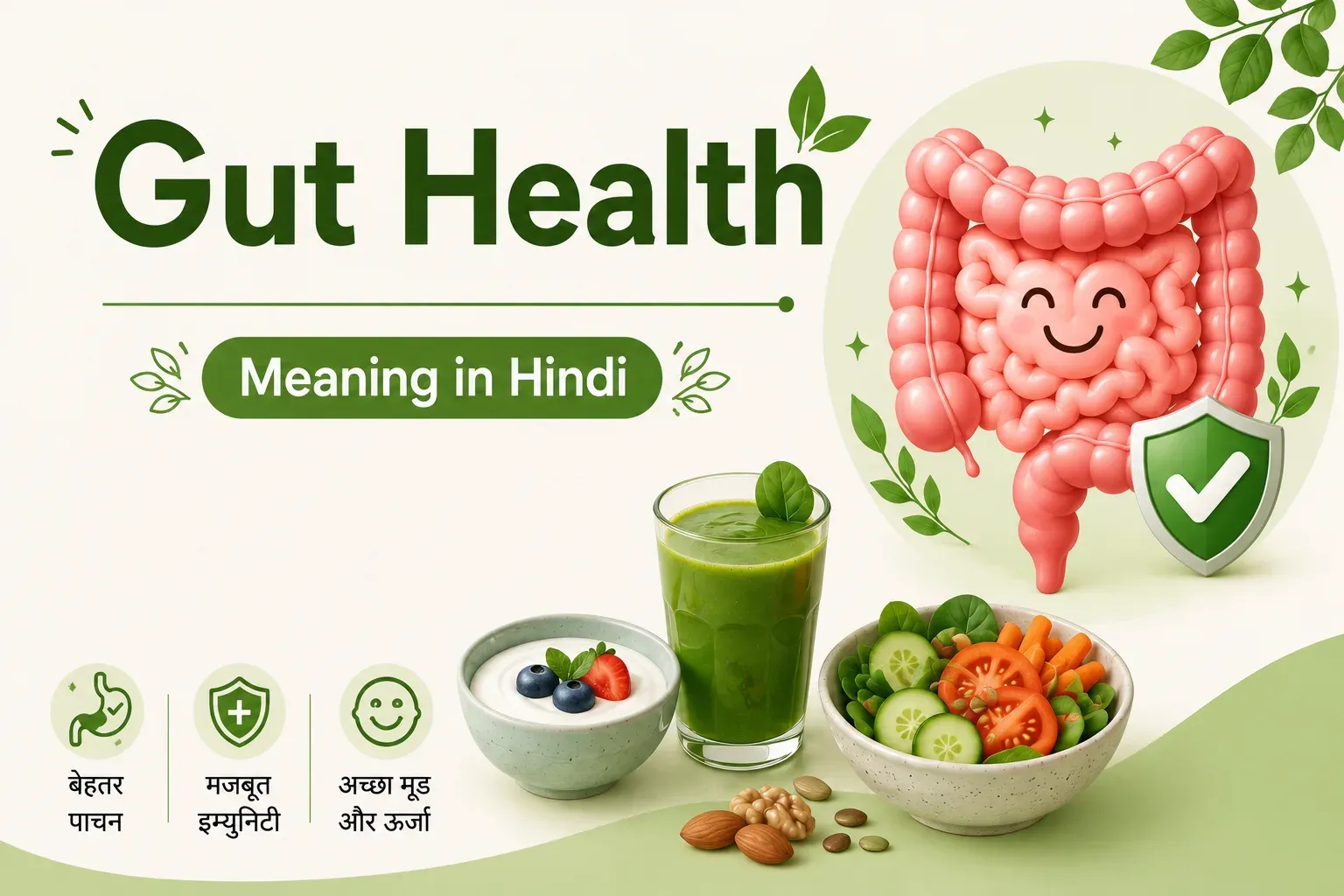
गट हेल्थ (Gut Health) का मतलब पाचन तंत्र और आंतों का स्वस्थ और संतुलित रूप से काम करना है। यह गाइड गट हेल्थ का हिंदी में अर्थ, लक्षण, फायदे और सुधार के तरीके समझाती है।
Quick Answer
आंत का स्वास्थ्य (Aant ka Swasthya) - gut health - refers to how well your digestive system functions, including the balance of bacteria, fungi, and other microorganisms living in your intestines. Poor gut health can affect digestion, immunity, skin, mood, and even hair. According to Mool Health's nutrition team, gut health is one of the most direct levers for whole-body wellness.
What Is Gut Health Meaning in Hindi?
Gut health meaning in Hindi is "आंत का स्वास्थ्य" (Aant ka Swasthya) - the overall health and balance of your gastrointestinal (GI) tract, from the stomach to the large intestine.
Your gut contains an estimated 38 trillion microorganisms, collectively called the gut microbiome (आंत माइक्रोबायोम). When this microbial community is balanced - with more beneficial bacteria than harmful ones - your gut is considered healthy.
Key components of gut health include:
- Microbiome balance - ratio of beneficial to harmful gut bacteria
- Gut lining integrity - the intestinal wall that prevents toxins from entering the bloodstream
- Digestive motility - how efficiently food moves through the GI tract
- Gut-brain axis - the two-way communication pathway between the gut and the brain
Mool Health defines a healthy gut as one that digests food efficiently, absorbs nutrients properly, eliminates waste regularly, and maintains a diverse microbial population.
How Does Gut Health Work? The Complete Mechanism
Gut health works because the gut microbiome directly regulates digestion, immune response, and systemic inflammation through a series of interconnected biological processes.
Step-by-step mechanism:
- Food enters the digestive tract - Enzymes in the mouth and stomach begin breaking down carbohydrates, proteins, and fats.
- Microbiome ferments undigested fibre - Beneficial bacteria in the large intestine ferment dietary fibre, producing short-chain fatty acids (SCFAs) like butyrate. SCFAs nourish the gut lining and reduce inflammation.
- Gut lining acts as a selective barrier - A healthy gut wall allows nutrients through while blocking pathogens and toxins. When this lining is damaged (a condition sometimes called "leaky gut" or आंत की परत का कमजोर होना), harmful substances may enter the bloodstream.
- Immune cells are activated - Approximately 70% of the body's immune cells reside in the gut. The microbiome trains these cells to distinguish between harmless food particles and genuine threats.
- Gut-brain signals are transmitted - The gut produces roughly 95% of the body's serotonin, a neurotransmitter that regulates mood, sleep, and appetite.
Common misconception: Gut health is not just about avoiding constipation or acidity. It governs immunity, mood, skin clarity, and metabolic health simultaneously.
Key Benefits of Good Gut Health: What You Actually Gain
Good gut health, or अच्छा आंत का स्वास्थ्य, delivers benefits across multiple body systems, not just digestion. Mool Health's clinical observations consistently show that gut improvement precedes improvement in several downstream health markers.
Short-term benefits (within 2-4 weeks of dietary change):
- Reduced bloating and gas - improved microbial balance decreases fermentation of undigested food
- More regular bowel movements - fibre and probiotic intake normalises motility
- Better energy levels - improved nutrient absorption reduces fatigue
Long-term benefits (3-6 months of sustained habits):
- Stronger immunity - a balanced microbiome may reduce frequency of infections
- Improved skin health - studies link gut dysbiosis to acne, eczema, and rosacea
- Better mental health - the gut-brain axis connection means a healthier microbiome may reduce symptoms of anxiety and low mood
- Healthier body weight - gut bacteria influence how many calories are extracted from food; a diverse microbiome is associated with lower rates of obesity
- Reduced systemic inflammation - SCFAs produced by gut bacteria suppress pro-inflammatory pathways
| Benefit | Timeframe | Mechanism |
|---|---|---|
| Reduced bloating | 1-2 weeks | Improved microbial balance |
| Regular bowel movements | 2-4 weeks | Fibre and motility normalisation |
| Better skin clarity | 4-8 weeks | Reduced gut-driven inflammation |
| Stronger immunity | 2-3 months | Microbiome-immune cell training |
| Mood improvement | 2-4 months | Increased serotonin production |
| Metabolic benefits | 3-6 months | Microbiome diversity gains |
Types of Gut Health Conditions: Which One Applies to You?
Gut health issues in Hindi - आंत की समस्याएं - fall into several distinct categories, each with different causes and management approaches.
1. Gut Dysbiosis (माइक्रोबायोम असंतुलन)
An imbalance between beneficial and harmful gut bacteria. Common after antibiotic use or a prolonged poor diet. Symptoms include frequent bloating, irregular stools, and fatigue.
2. Leaky Gut / Intestinal Permeability (आंत की परत का कमजोर होना)
The gut lining becomes permeable, allowing bacterial toxins into the bloodstream. May contribute to systemic inflammation, food sensitivities, and skin conditions. Typically addressed through dietary changes and targeted supplementation.
3. Irritable Bowel Syndrome - IBS (आंत की संवेदनशीलता)
A functional gut disorder characterised by alternating constipation and diarrhoea, cramping, and abdominal discomfort. Affects an estimated 10-15% of the global population. Stress and diet are primary triggers.
4. Acidity and GERD (एसिडिटी और गैस)
Excess stomach acid or acid reflux (GERD) disrupts the upper GI environment, affecting the microbiome composition in the small intestine over time.
| Condition | Hindi Term | Primary Symptom | Common Trigger |
|---|---|---|---|
| Gut dysbiosis | माइक्रोबायोम असंतुलन | Bloating, fatigue | Antibiotics, poor diet |
| Leaky gut | आंत की परत कमजोर होना | Food sensitivities, skin issues | Processed food, stress |
| IBS | आंत की संवेदनशीलता | Cramps, irregular stools | Stress, fermentable foods |
| Acidity / GERD | एसिडिटी | Heartburn, reflux | Spicy food, late meals |
How to Improve Gut Health: A Step-by-Step Guide
According to Mool Health's nutrition protocols, improving आंत का स्वास्थ्य requires consistent dietary and lifestyle adjustments rather than a single intervention.
Prerequisites:
- Rule out serious GI conditions with a doctor before starting any protocol
- Track current symptoms: stool frequency, bloating, energy, skin
Step-by-step plan:
- Increase dietary fibre - Aim for 25-30 g of fibre per day from vegetables, lentils, whole grains, and fruits. Fibre feeds beneficial bacteria, promoting SCFA production.
- Add fermented foods - Include 1-2 servings daily of curd (दही), buttermilk (छाछ), idli, or dosa. These are natural sources of live bacteria (probiotics).
- Reduce ultra-processed food - Packaged foods high in refined sugar and seed oils deplete microbial diversity within days of consumption.
- Hydrate consistently - Drink 8-10 glasses of water daily to support gut motility and prevent constipation.
- Manage stress actively - Chronic stress elevates cortisol, which disrupts the gut-brain axis and can reduce populations of beneficial Lactobacillus bacteria within 2-3 weeks.
- Maintain consistent meal timing - Eating at regular intervals supports the gut's circadian rhythm, regulating digestive enzyme release.
- Consider a targeted probiotic - Strains such as Lactobacillus acidophilus and Bifidobacterium longum may help restore microbiome balance, particularly after antibiotic use.
Common mistakes to avoid:
- Taking probiotics without dietary fibre (prebiotics feed the probiotics)
- Eliminating entire food groups without clinical guidance
- Expecting overnight results - microbiome shifts typically take 4-8 weeks
Gut Health Best Practices: Expert Tips for Daily Life
Mool Health's team recommends these evidence-based daily habits to maintain आंत का स्वास्थ्य long-term.
Top gut health best practices:
- Eat the rainbow - consuming 30+ different plant foods per week is associated with significantly greater microbiome diversity
- Chew food slowly - thorough chewing reduces undigested food reaching the large intestine, cutting fermentation-related gas
- Avoid antibiotics unnecessarily - a single course of antibiotics can alter microbiome composition for up to 12 months
- Prioritise sleep - less than 6 hours of sleep per night is linked to reduced gut microbial diversity in observational studies
- Exercise regularly - 150 minutes of moderate exercise per week may increase populations of butyrate-producing bacteria
- Limit alcohol - regular alcohol consumption disrupts the gut lining and promotes growth of harmful bacteria
- Start mornings gut-friendly - warm water with soaked sabja (basil) seeds or a small bowl of curd with fruit provides fibre and live cultures before heavier meals
Mistakes to avoid:
- Relying only on supplements while maintaining a poor diet
- Ignoring mental health - unmanaged anxiety is a direct gut disruptor
- Skipping meals, which can cause acid build-up and motility disruption
Disclaimer
This article is for educational purposes only and should not be treated as medical advice, diagnosis, or treatment. If you have severe, recurring, or long-lasting digestive symptoms, consult a qualified healthcare professional.
Key Takeaways
गट हेल्थ (Gut Health) का मतलब पाचन तंत्र और आंतों का स्वस्थ और संतुलित रूप से काम करना है। यह गाइड गट हेल्थ का हिंदी में अर्थ, लक्षण, फायदे और सुधार के तरीके समझाती है।
Your gut is unique your healing should be too.

Disclaimer
The content provided by Mool Health is for educational and informational purposes only and should not be considered a substitute for professional medical advice, diagnosis, or treatment.