
Papaya Digestion Time: Best Time to Eat for Digestion
Papaya is considered easy to digest because of its natural enzymes and fiber content. This guide explains digestion time and digestive health benefits.
Quick Answer
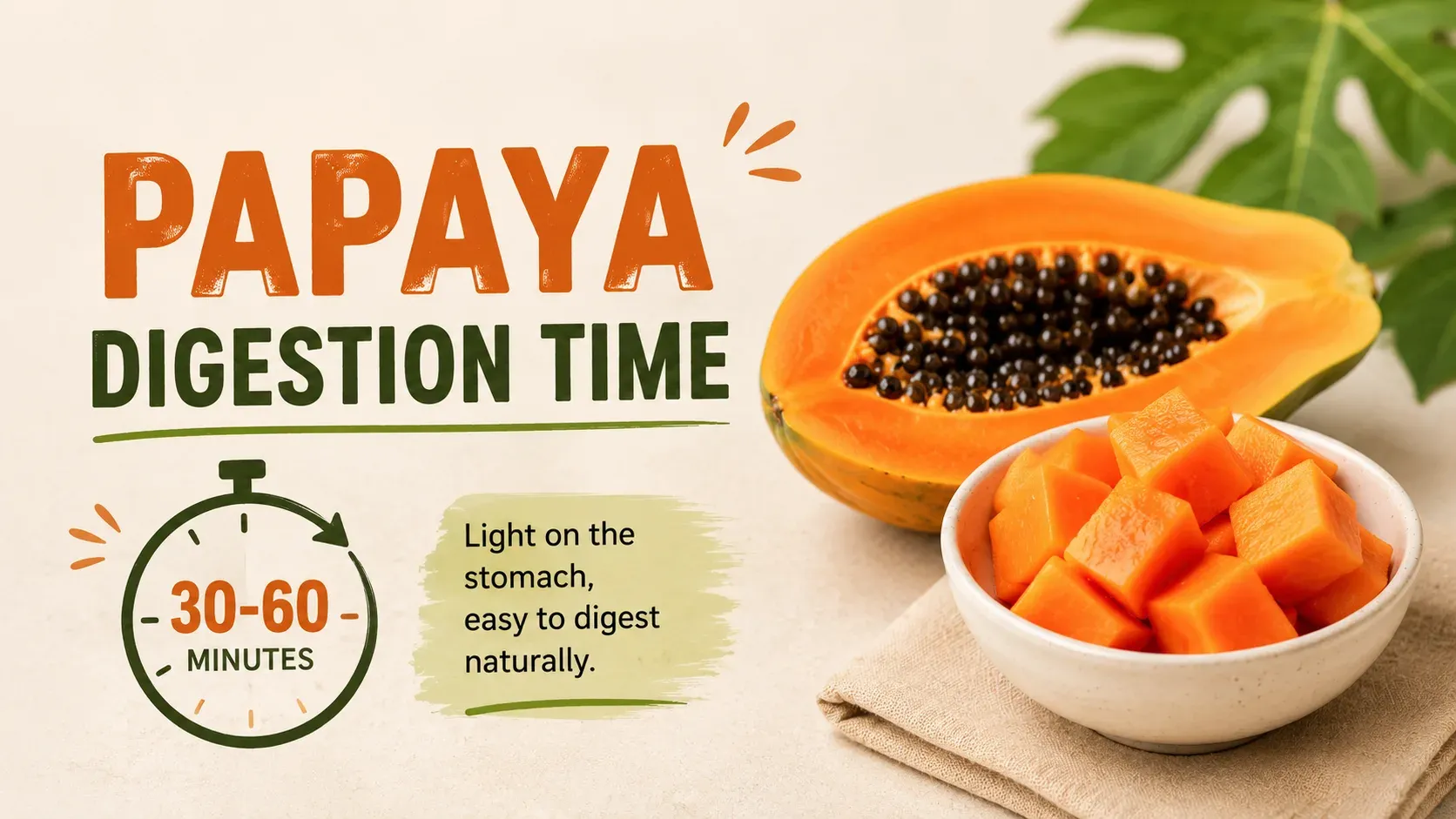
Papaya digestion time is usually 30 to 60 minutes in the stomach, making papaya one of the faster-digesting fruits. The digestion time of papaya is short because ripe papaya contains papain and chymopapain, enzymes that help break down proteins and support smoother digestion. For most people, papaya clears through the digestive system within 2 to 3 hours.
- Papaya digestion time in stomach is usually 30 to 60 minutes.
- Ripe papaya digests faster and more comfortably than unripe papaya.
- The best time to eat papaya for digestion is morning or 30 minutes before a protein-heavy meal.
- Papaya may help bloating, constipation, and post-meal heaviness when eaten consistently.
- People with latex allergy, pregnancy concerns, or fructose malabsorption should use caution.
What Is Papaya Digestion Time? A Complete Guide
Papaya digestion time refers to how long the body takes to break down and absorb nutrients from papaya after it is consumed. Papaya digests faster than most other fruits , typically within 30 to 60 minutes in the stomach , because it contains papain and chymopapain, two powerful digestive enzymes that accelerate the breakdown of macronutrients.
Papaya (Carica papaya) originates from Central America and is now widely cultivated across tropical regions including India, Brazil, and Mexico. The fruit is rich in vitamin C, vitamin A, folate, fibre, and potassium.
Key terms defined:
- Papain: A cysteine protease enzyme in papaya that breaks down protein chains into smaller amino acids
- Chymopapain: A related enzyme that assists in fat and protein digestion
- Gastric transit time: The duration food spends in the stomach before moving to the small intestine
According to Mool Health's nutrition and digestive wellness team, understanding papaya digestion time matters because the speed at which a food is processed directly affects nutrient absorption efficiency, gut comfort, and energy levels.
How Papaya Digestion Time Works: The Complete Breakdown
Papaya digestion time is fast because of a multi-step enzymatic process that begins even before the fruit reaches the stomach.
Step-by-step process:
- Chewing (0 to 2 minutes): Mechanical breakdown begins in the mouth. Salivary amylase starts acting on the natural sugars in papaya.
- Gastric phase (5 to 30 minutes): Papaya enters the stomach. Papain activates in the acidic gastric environment (pH 3 to 4) and begins breaking down proteins into peptides and amino acids.
- Enzymatic acceleration (20 to 60 minutes): Chymopapain works alongside stomach acid to further break down fats and fibrous tissue. This is why papaya's gastric transit time is significantly shorter than that of red meat (4 to 5 hours) or legumes (2 to 3 hours).
- Small intestine absorption (1 to 2 hours): Nutrients including vitamin C, beta-carotene, and folate are absorbed through the intestinal lining.
- Complete clearance (2 to 3 hours): Remaining fibre and water-soluble components pass into the large intestine.
Why papaya digests faster than most foods: Papain works because it mimics the body's own digestive enzymes, reducing the metabolic effort required by the stomach. This is the same reason papain extract is used as a meat tenderiser commercially.
Common misconception: Many people assume that eating papaya on an empty stomach speeds up digestion. While papaya does digest rapidly regardless of timing, consuming it on an empty stomach allows papain to act without competing with other foods, which can optimise its enzymatic benefit.
Key Benefits of Papaya Digestion Time: What You Actually Gain
Papaya's fast digestion time translates into several measurable health benefits, both short-term and long-term.
Supports Digestion and Prevents Constipation
Papaya contains approximately 2.5 g of dietary fibre per 100 g serving. This fibre adds bulk to stool and supports regular bowel movements. Studies suggest that regular papaya consumption can reduce chronic constipation symptoms in up to 76% of participants over a 40-day period.
Boosts Immunity and Helps Destroy Infectious Microbes
A single 150 g serving of papaya provides over 100% of the recommended daily intake of vitamin C. Vitamin C supports white blood cell production, which is the body's first line of defence against pathogens. Papain also shows antibacterial activity against organisms including Staphylococcus aureus and E. coli in laboratory settings.
Benefits for Indigestion (Dyspepsia)
If papaya still does not reduce heaviness or bloating, it may help to understand how to improve digestion through meal timing, chewing, hydration, and gut support.
Papain and chymopapain directly reduce bloating, gas, and discomfort caused by incomplete protein digestion. Research published in Neuro Endocrinology Letters found that a papaya preparation significantly reduced heartburn and bloating compared to placebo.
Benefits for Parasitic Infections
Papaya seeds contain benzyl isothiocyanate, a compound with demonstrated antiparasitic properties. A Nigerian clinical trial found that air-dried papaya seeds cleared intestinal parasites in 76.7% of children, compared to 16.7% in the placebo group.
Benefits for Blood Sugar and Diabetes
Papaya has a glycaemic index of approximately 60 and a glycaemic load of around 9 per serving, making it a moderate-GI food suitable for most people managing blood sugar. Mool Health's clinical advisory team notes that the fibre in papaya slows glucose absorption, which may help reduce post-meal blood sugar spikes.
Benefits at a Glance
| Benefit | Mechanism | Timeframe |
|---|---|---|
| Faster digestion | Papain enzyme activity | Within 30 to 60 min |
| Reduced bloating | Protein breakdown acceleration | Within 1 to 2 hours |
| Improved immunity | Vitamin C and antimicrobial compounds | 2 to 4 weeks regular use |
| Better bowel regularity | Dietary fibre | 1 to 2 weeks regular use |
| Blood sugar management | Low glycaemic load + fibre | Ongoing |
| Antiparasitic action | Benzyl isothiocyanate in seeds | 7 to 14 days targeted use |
How to Get Started with Papaya: A Practical Guide
To benefit from papaya's fast digestion time, preparation and timing matter.
How to Cut a Papaya
- Wash the papaya under running water.
- Cut off both ends with a sharp knife.
- Slice lengthwise down the centre.
- Scoop out the seeds with a spoon (save seeds if using for antiparasitic purposes).
- Peel the skin using a vegetable peeler or knife.
- Cut the flesh into cubes or slices as required.
Step-by-Step: How to Incorporate Papaya for Digestive Benefits
- Choose a ripe papaya. Ripe papaya (yellow-orange skin, slightly soft to touch) contains the highest active papain concentration.
- Consume on an empty stomach or 30 minutes before meals. This allows papain to act without competition from other foods.
- Start with a 100 to 150 g serving. This is sufficient to deliver a measurable dose of papain and fibre without overconsumption of natural sugars.
- Eat 3 to 5 times per week for sustained digestive benefit, according to Mool Health's dietary guidelines.
- Avoid mixing with dairy immediately. Papain can break down casein proteins in milk quickly, which may cause digestive discomfort in some individuals.
Common Mistakes to Avoid
- Eating unripe papaya in large quantities , unripe papaya contains higher latex concentrations, which may cause uterine contractions and is contraindicated in pregnancy
- Discarding seeds, which have documented antiparasitic benefits
- Expecting overnight results , consistent intake over 1 to 2 weeks produces measurable digestive improvement
Papaya Digestion Time vs. Alternatives: How It Compares to Other Fruits
For another fruit comparison, you can also review banana digestion time to understand how papaya differs from a common everyday fruit.
Papaya digestion time is significantly faster than most comparable fruits and high-fibre foods.
| Food | Average Digestion Time | Key Enzyme/Mechanism | Best For |
|---|---|---|---|
| Papaya | 30 to 60 min (stomach) | Papain, chymopapain | Protein digestion, bloating |
| Pineapple | 40 to 60 min | Bromelain | Anti-inflammation, protein digestion |
| Watermelon | 20 to 30 min | High water content | Hydration, rapid clearance |
| Apple | 60 to 90 min | Pectin fibre | Cholesterol, sustained fullness |
| Banana | 45 to 60 min | Resistant starch (unripe) | Gut bacteria, satiety |
| Mango | 60 to 90 min | Digestive enzymes (minor) | Vitamin A, antioxidants |
Key finding: Papaya and pineapple are the only widely available fruits that contain clinically significant protease enzymes (papain and bromelain respectively). This makes papaya particularly beneficial for people who struggle to digest high-protein meals.
Mool Health's recommendation: For individuals specifically targeting protein digestibility and gut comfort, papaya is the more accessible and cost-effective option compared to bromelain supplements, which typically cost 3 to 5x more per equivalent enzyme dose.
Who Should Eat Papaya for Digestive Benefits?
| Ideal For | Not Ideal For |
|---|---|
| Adults with chronic bloating or indigestion | Pregnant women (especially unripe papaya , latex content) |
| People on high-protein diets | Individuals with latex allergy (cross-reactivity risk) |
| Those with irregular bowel movements | People with very low blood sugar (hypoglycaemia) |
| Individuals managing mild parasitic infections | Those taking blood-thinning medications (consult a doctor first) |
| People with low vitamin C intake | Individuals with fructose malabsorption |
| Children over 12 months (pureed/mashed) | People with known papaya allergy |
Mool Health's clinical team notes that most healthy adults can consume papaya safely in standard serving sizes (100 to 200 g per day) without adverse effects.
Papaya Digestion Time Results: What to Expect and When
Results from regular papaya consumption vary depending on the individual's baseline gut health, diet quality, and serving size.
Week 1 to 2: Early Changes
- Reduced bloating after protein-heavy meals (observed within 1 to 3 days in some individuals)
- Softer stools and more regular bowel frequency, typically noticed within 5 to 10 days
- Mool Health's nutrition team notes that individuals with pre-existing constipation tend to see the fastest early response
Weeks 3 to 4: Measurable Improvement
- Improved comfort after meals, reduced sensation of heaviness
- Vitamin C levels begin to normalise in deficient individuals
- Early improvements in skin clarity (linked to beta-carotene and vitamin C)
Month 2 to 3: Long-Term Benefit
- Sustained bowel regularity in approximately 70 to 76% of consistent users
- Measurable improvements in digestive transit time when consuming papaya 3 to 5 times per week
- Reduced frequency of indigestion episodes in people with functional dyspepsia
Factors that affect results:
- Ripeness of papaya (ripe = higher active papain concentration)
- Consistency of intake
- Overall dietary fibre and hydration levels
- Presence of underlying gastrointestinal conditions
Papaya Digestion Time Best Practices: Expert Tips from Mool Health
6 Actionable Best Practices
- Choose ripe papaya every time. Ripe papaya contains 2 to 3x more active papain than unripe papaya. Look for predominantly yellow-orange skin with slight give when pressed.
- Eat papaya in the morning or before a protein-rich meal. This timing allows papain to prime the digestive environment before the stomach is loaded with other foods.
- Keep serving sizes between 100 to 200 g per day. This range delivers sufficient fibre and papain without excessive natural sugar intake (papaya contains approximately 8 g of sugar per 100 g).
- Use papaya seeds deliberately. If targeting parasitic infections or gut flora balance, air-dry seeds and consume half a teaspoon per day mixed with honey or yoghurt.
- Pair with water, not milk. Papain reacts with casein in milk. Consuming papaya with water or herbal tea preserves enzymatic activity.
- Store cut papaya correctly. Refrigerate in an airtight container and consume within 3 days. Papain activity decreases with prolonged air exposure.
Common Mistakes to Avoid
- Relying on canned or processed papaya , heat processing destroys papain activity
- Consuming unripe papaya during pregnancy
- Taking papain supplements without consulting a healthcare provider if on anticoagulant medication
- Expecting papaya alone to resolve clinically diagnosed gastrointestinal disorders
Research and Evidence: What Studies Say About Papaya Digestion
Constipation relief (2013, Journal of Medicinal Food): A 40-day controlled trial found that a standardised papaya preparation (Caricol) significantly improved constipation and bloating scores, with 76% of participants reporting relief. Takeaway: Regular papaya intake can meaningfully reduce chronic constipation symptoms.
Antimicrobial properties (2007, Journal of Medicinal Plants Research): Laboratory testing confirmed that papain extract inhibited the growth of Staphylococcus aureus, Bacillus subtilis, and E. coli. Takeaway: Papaya's antimicrobial activity supports its traditional use in gut infection management.
Functional dyspepsia reduction (2013, Neuro Endocrinology Letters): A clinical trial using a papaya enzyme preparation found significant reductions in heartburn frequency and bloating compared to placebo after 4 weeks. Takeaway: Papain supplementation may offer a viable complementary approach for mild dyspepsia.
Antiparasitic effect of papaya seeds (2007, Journal of Medicinal Food): A Nigerian randomised controlled trial found that air-dried papaya seed preparations eliminated intestinal parasites in 76.7% of children within 7 days, versus 16.7% in the control group. Takeaway: Papaya seeds, not just the flesh, carry significant therapeutic potential.
Limitations of current research: Most studies use standardised papaya enzyme preparations rather than whole fresh fruit, which makes direct extrapolation to dietary consumption more complex. Sample sizes in many trials are modest. Mool Health recommends treating papaya as a supportive dietary tool rather than a standalone medical intervention.
Mool Health's Perspective
Papaya digestion time gives you a helpful average, but your actual experience may depend on gut motility, enzyme activity, fibre tolerance, meal timing, stress, sleep, and microbiome balance.
Mool Health looks at digestion, gut microbiome balance, food triggers, stress, sleep, and Ayurvedic constitution together. This helps identify why papaya may feel light for some people but cause discomfort, acidity, or bloating in others.
What This Means for You
Papaya is a fast-digesting fruit that may support gut comfort, especially when eaten ripe and in the right portion size. For most people, it clears the stomach within 30 to 60 minutes.
Here is what you should do next:
- Eat ripe papaya in the morning or before a protein-heavy meal.
- Keep the serving size around 100 to 200 g per day.
- Avoid mixing papaya with milk if it causes discomfort.
- Use papaya consistently for 1 to 2 weeks to assess digestion benefits.
- Seek guidance if papaya causes acidity, bloating, allergy symptoms, or loose stools.
If papaya repeatedly feels uncomfortable despite being ripe and eaten in moderation, the issue may be linked to your gut sensitivity, enzyme activity, fibre tolerance, or microbiome balance.
Disclaimer
This article is for informational and educational purposes only. It does not replace medical advice, diagnosis, or treatment. Consult a qualified healthcare professional if you have pregnancy concerns, latex allergy, severe acidity, chronic digestive symptoms, blood sugar concerns, or allergy-like symptoms after eating papaya.
Key Takeaways
Papaya is considered easy to digest because of its natural enzymes and fiber content. This guide explains digestion time and digestive health benefits.
Your gut is unique your healing should be too.

Disclaimer
The content provided by Mool Health is for educational and informational purposes only and should not be considered a substitute for professional medical advice, diagnosis, or treatment.