
Fish Digestion Time: How Long Does Fish Take to Digest?
Fish Digestion Time varies by fish type, fat content, and cooking method. Learn how long fish takes to digest, from stomach digestion to full gut transit and elimination.
Quick Answer
Fish digestion time is usually 45 minutes to 2 hours in the stomach, depending on the type of fish and cooking method. White fish digests fastest, oily fish takes longer, and fried fish digestion time is usually the slowest because added fat delays stomach emptying. Full digestion time for fish in the human body can take 24 to 72 hours from eating to elimination.
- White fish stomach digestion time is usually 45 minutes to 1.5 hours.
- Oily fish may take 1.5 to 2.5 hours in the stomach.
- Fried fish may take 2.5 to 4 hours or more because oil slows digestion.
- Fish oil digestion time depends on bile flow and fat digestion in the small intestine.
- Portion size, cooking method, fat content, gut health, and meal timing affect the digestion time of fish.
What Is Fish Digestion Time? A Complete Guide
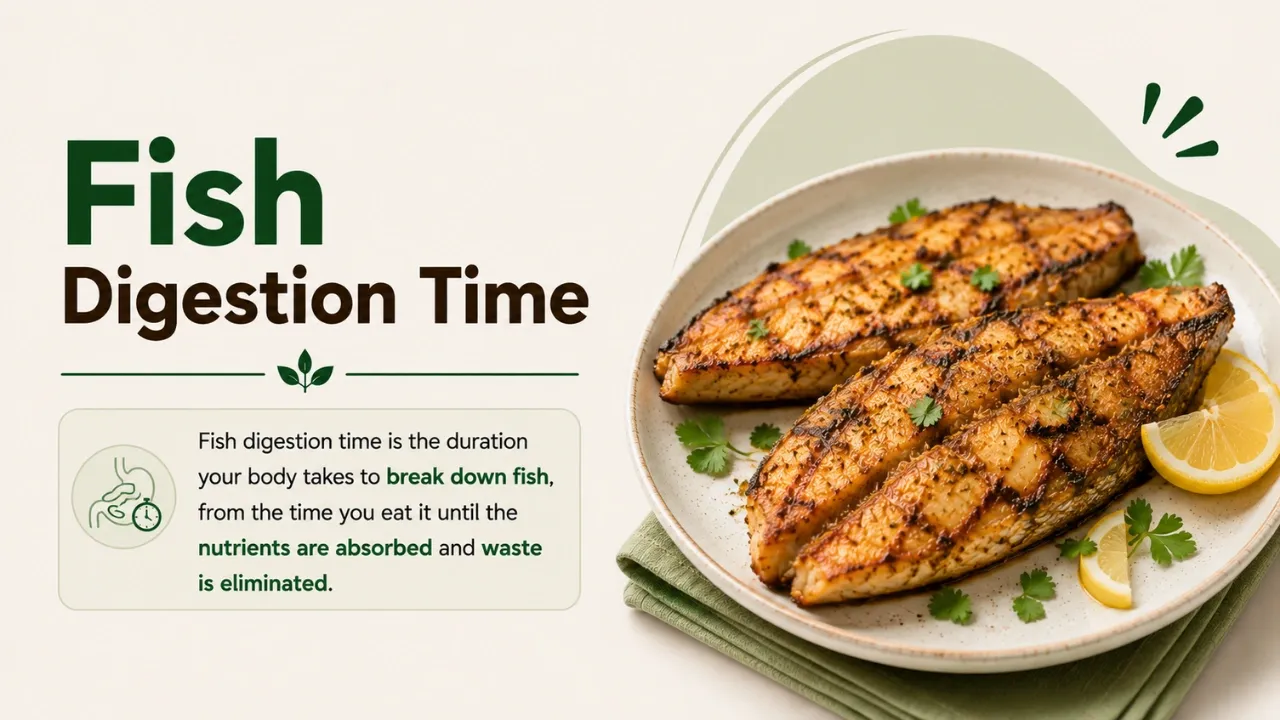
Fish digestion time refers to how long it takes your body to break down fish , from the moment you eat it to when nutrients are absorbed and waste exits your system. The process involves mechanical breakdown in the stomach, enzymatic breakdown of proteins and fats, and absorption in the small intestine.
Fish digests faster than most animal proteins because its muscle fibers are shorter and its connective tissue is less dense than red meat or poultry. According to the nutrition team at Mool Health, fish is generally considered an "easy-to-digest" protein, particularly white fish varieties such as cod, tilapia, and haddock.
Key facts at a glance:
- Stomach emptying after a fish meal: approximately 45 minutes to 2 hours
- Full gut transit time (stomach to elimination): 24 to 72 hours
- Fish digests faster than beef (which can take 3 to 5 hours in the stomach alone)
- Cooking method and fat content influence digestion speed significantly
How Fish Digestion Time Works: The Complete Breakdown
Fish digestion follows the same five-stage digestive pathway as other foods, but moves through it more quickly because of fish's unique protein and fat structure.
Step-by-step process:
- Mouth (0 to 2 minutes): Chewing breaks fish into smaller pieces. Salivary amylase begins acting on any carbohydrates present in the meal.
- Esophagus (seconds): Swallowed food travels to the stomach via peristaltic contractions.
- Stomach (45 minutes to 2 hours): Gastric acid (hydrochloric acid) and pepsin begin breaking down fish proteins. Fish proteins denature quickly because fish myosin , the primary structural protein , is more heat- and acid-sensitive than mammalian myosin. Fat content slows gastric emptying; oily fish like salmon takes longer than white fish.
- Small intestine (1 to 4 hours): Pancreatic enzymes , including proteases, lipases, and amylases , complete the breakdown of proteins, fats, and residual carbohydrates. Amino acids and omega-3 fatty acids are absorbed here into the bloodstream.
- Large intestine (12 to 48 hours): Remaining fiber, water, and waste move through the colon for elimination.
Why fish digests faster than red meat: Fish muscle contains shorter sarcomere lengths and less collagen than beef or pork, which means enzymatic digestion requires less mechanical pre-processing. Studies on digestive enzyme activity confirm that fish proteins are hydrolyzed more rapidly than mammalian proteins under equivalent gastric conditions.
How Long Does Fish Take to Digest? A Realistic Timeline
The digestion timeline for fish varies by fish type, fat content, cooking method, and individual gut health. Mool Health's nutrition advisors recommend understanding these variables rather than relying on a single number.
| Stage | Timeframe |
|---|---|
| Stomach emptying (white fish) | 45 minutes to 1.5 hours |
| Stomach emptying (oily fish) | 1.5 to 2.5 hours |
| Small intestine absorption | 1 to 4 hours |
| Full gut transit (fish meal) | 24 to 48 hours |
| Full gut transit (with high-fat sides) | 48 to 72 hours |
Factors that affect fish digestion time:
- Type of fish: White fish (cod, tilapia, sole) digests faster than oily fish (salmon, mackerel, sardines)
- Cooking method: Steamed or poached fish digests faster than fried fish; frying adds fat that slows gastric emptying
- Portion size: Larger portions take longer to process
- Individual gut health: People with slower gut motility, IBS, or low stomach acid may experience longer transit times
- Meal composition: Eating fish alongside high-fiber vegetables or heavy starches extends the overall digestive timeline
Key Benefits of Eating Fish for Digestive Health
Fish is among the most digestion-friendly animal proteins available. The following benefits are observed when fish forms part of a regular, balanced diet.
Short-term benefits (within hours to days):
- Rapid protein delivery , amino acids reach the bloodstream within 1 to 2 hours of eating
- Lower digestive burden compared to red meat, reducing bloating and post-meal fatigue
- High bioavailability of omega-3 fatty acids (EPA and DHA) absorbed efficiently in the small intestine
Long-term benefits (weeks to months):
- Sustained intake of omega-3s may reduce gut inflammation, supporting healthier gut motility
- Regular fish consumption is associated with improved gut microbiome diversity in observational studies
- Lean fish provides high-quality protein with lower saturated fat, reducing the lipid load on the liver and gallbladder
Who benefits most from fish protein:
- Adults with slow digestion or sensitive stomachs
- Older adults (60+), in whom gastric acid production typically declines by 10 to 30%
- Athletes seeking fast-absorbing protein with lower digestive cost
- People recovering from illness or digestive conditions where gut load needs to be minimized
Types of Fish and How Digestion Time Varies
Not all fish digest at the same rate. The primary variable is fat content, followed by protein density and fiber content of the accompanying meal. Mool Health categorizes fish into three digestion tiers for practical guidance.
| Fish Type | Examples | Stomach Emptying Time | Fat Content |
|---|---|---|---|
| Lean white fish | Cod, tilapia, haddock, sole | 45 min to 1.5 hours | Low (< 2g fat/100g) |
| Semi-fatty fish | Trout, sea bass, snapper | 1.5 to 2 hours | Moderate (2 to 5g fat/100g) |
| Oily fish | Salmon, mackerel, sardines, tuna | 2 to 2.5 hours | High (> 5g fat/100g) |
The type of food matters: Fat is the primary macronutrient that delays gastric emptying. This is because fat triggers the release of cholecystokinin (CCK), a hormone that slows stomach contractions to allow adequate bile and pancreatic enzyme release in the small intestine. Higher fat content in oily fish means a longer but more nutrient-dense digestive process.
Cooking method comparison:
- Steamed / poached: Fastest digestion , no added fat
- Grilled / baked: Moderate digestion speed
- Fried / battered: Slowest , added fat and batter significantly delay gastric emptying
How to Support Healthy Fish Digestion: Practical Steps
Following a few evidence-based practices can help your body process fish more efficiently. Mool Health's digestive wellness team recommends these steps for most adults.
- Eat fish in appropriately sized portions. A 100 to 150g serving of fish is sufficient for most adults. Larger portions extend stomach emptying time proportionally.
- Choose cooking methods that minimize added fat. Steaming, poaching, or grilling fish preserves its natural fat profile without adding digestive load from frying oils.
- Pair fish with easy-to-digest vegetables. Steamed or roasted non-starchy vegetables (courgette, spinach, carrots) support gut motility without adding fermentable fiber that can cause bloating.
- Avoid combining fish with very high-fat sides. Cream sauces, butter-heavy dishes, or deep-fried accompaniments can extend total digestion time by 30 to 60 minutes or more.
- Chew thoroughly. Chewing fish 20 to 30 times per bite significantly reduces the mechanical workload on the stomach and improves enzymatic access to proteins.
- Stay adequately hydrated. Water does not "dilute" stomach acid meaningfully, but adequate hydration supports gut motility and helps food move through the intestines at a healthy pace.
- Allow 2 to 3 hours between a fish meal and intense exercise. Vigorous physical activity redirects blood flow away from the digestive system, slowing nutrient absorption.
Common mistakes to avoid:
- Eating fish very late at night when gut motility naturally slows
- Pairing oily fish with heavy refined carbohydrates, which can cause bloating
- Overeating , doubling portion size roughly doubles stomach residence time
- Eating too quickly and swallowing large chunks, forcing the stomach to do more mechanical work
Tip from Mool Health: There is no need to start a stopwatch after eating fish. Focus on meal composition, cooking method, and portion size , these variables have a far greater practical impact on how you feel after eating than monitoring exact timing.
Fish Digestion Time vs. Other Proteins: An Honest Comparison
For related protein timelines, compare this with chicken digestion time and egg digestion time.
Understanding how fish compares to other protein sources helps set realistic expectations for digestion speed and post-meal comfort. The following data is based on gastric emptying research and established nutritional science.
| Protein Source | Stomach Emptying Time | Full Transit | Key Factor |
|---|---|---|---|
| White fish (steamed) | 45 min to 1.5 hrs | 24 to 36 hrs | Low fat, short muscle fibers |
| Oily fish (grilled) | 1.5 to 2.5 hrs | 24 to 48 hrs | Higher fat content |
| Chicken breast | 1.5 to 2 hrs | 36 to 48 hrs | Low fat, dense protein |
| Eggs | 45 min to 1.5 hrs | 24 to 36 hrs | Moderate fat, easily denatured |
| Beef (lean) | 3 to 5 hrs | 48 to 72 hrs | High collagen, dense muscle fibers |
| Legumes | 2 to 3 hrs | 24 to 48 hrs | High fiber, complex carbohydrates |
Fish digestion time vs. alternatives , key takeaways:
- White fish digests at a comparable rate to eggs, making both suitable for people with sensitive digestive systems
- Fish digests significantly faster than beef, which can remain in the stomach for 3 to 5 hours
- Oily fish takes longer than white fish but provides a higher omega-3 payload per gram
- Fish generally produces less gut fermentation than legume-based proteins, reducing bloating risk
Research and Evidence on Fish Digestion Time
Several peer-reviewed studies support the understanding of fish digestion timelines and enzyme activity. Mool Health's content is grounded in published nutritional science.
Study 1 , Comparative digestive enzyme activity in fish A study published in Aquaculture examined proteolytic and amylase enzyme activity across fish species with different dietary habits. The research confirmed that fish proteins are hydrolyzed more rapidly than comparable mammalian proteins under equivalent gastric conditions, supporting the shorter stomach emptying times observed clinically.
Study 2 , Omega-3 absorption and gut health Research on EPA and DHA bioavailability from fish consumption indicates that omega-3 fatty acids from fish are absorbed with approximately 50 to 70% efficiency in the small intestine, higher than absorption from plant-based omega-3 sources (such as ALA from flaxseed). This high absorption efficiency is partly attributed to fish's easily emulsifiable fat structure.
Study 3 , Gastric emptying and protein type Research on gastric emptying rates consistently shows that the protein source, fat content, and meal volume are the three primary determinants of stomach residence time. Fish, due to its lower connective tissue density, exits the stomach faster than equivalent portions of red meat.
What the evidence shows overall: Fish is scientifically supported as a fast-digesting, high-bioavailability protein source. Results vary depending on individual gut health, fish type, and meal composition , no single digestion timeline applies universally.
Best Practices for Optimizing Fish Digestion
If fish still feels heavy despite lighter cooking methods, it may help to understand how to improve digestion more broadly through meal timing, chewing, hydration, and gut support.
The following evidence-based practices help most people digest fish comfortably and extract maximum nutritional value. These recommendations are used by the nutrition team at Mool Health.
Expert tips:
- Choose white fish for fastest digestion. If you need quick nutrient delivery , before or after exercise , lean white fish is the optimal choice.
- Steam or poach when digestive comfort is a priority. These methods add no fat and preserve the fish's natural digestive profile.
- Eat fish as a standalone protein in a meal. Combining multiple animal proteins in one meal increases overall digestive load.
- Include digestive-supportive herbs. Ginger and fennel, when consumed alongside fish, may support gastric motility and reduce post-meal bloating.
- Space fish meals 4 to 6 hours apart. This allows the stomach to fully empty between meals and maintains consistent digestive enzyme output.
- Consume oily fish at lunch rather than dinner. The higher fat content in salmon or mackerel is processed more efficiently when gut motility is at its daily peak, typically in the early afternoon.
Common mistakes to avoid:
- Consuming fish immediately before bed , lying down slows gastric emptying
- Pairing fish with alcohol, which delays gastric motility
- Eating fish with very spicy foods if you have a sensitive stomach , spice can irritate the gut lining and alter transit time
- Assuming all fish digests identically , fat content creates meaningful differences
Mool Health's Perspective
Fish digestion time gives you a useful average, but your personal digestion may differ based on gut motility, stomach acid, enzyme output, bile flow, stress, sleep, and microbiome balance.
Mool Health looks at digestion, gut microbiome balance, food triggers, stress, sleep, and Ayurvedic constitution together. This helps identify why some people digest fish easily while others feel heaviness, bloating, or discomfort after protein-rich meals.
What This Means for You
Fish is usually one of the lighter animal proteins for digestion, but the exact digestion time depends on the type of fish, how it is cooked, and how your gut is functioning.
Here is what you should do next:
- Choose steamed, poached, or grilled fish if digestive comfort is your priority.
- Pick white fish when you want the fastest stomach digestion time.
- Eat oily fish earlier in the day if it feels heavy at dinner.
- Avoid fried fish if you already struggle with bloating, reflux, or slow digestion.
- Check your gut health if fish regularly causes heaviness despite light cooking methods.
If fish digestion feels unusually slow for you, the issue may not be fish alone. It may be linked to stomach acid, enzyme output, bile flow, gut motility, or microbiome imbalance.
Disclaimer
This article is for informational and educational purposes only. It does not replace medical advice, diagnosis, or treatment. Consult a qualified healthcare professional if you experience persistent bloating, abdominal pain, reflux, food intolerance, vomiting, or digestive discomfort after eating fish.
Key Takeaways
- Fish is a fast-digesting protein. White fish clears the stomach in 45 minutes to 1.5 hours, while oily fish usually takes 1.5 to 2.5 hours.
- Full digestion of a fish meal takes 24 to 48 hours from eating to elimination, including small intestine absorption and colonic transit.
- Fat content is the biggest timing factor. Oily fish and fried fish take longer because fat slows gastric emptying.
- Fried fish digestion time is longer than steamed, grilled, or poached fish because frying adds oil and often batter.
- Fish oil digestion time is linked to fat digestion. It generally needs bile and pancreatic lipase for proper absorption in the small intestine.
- Digestive comfort depends on your gut health. Portion size, cooking method, chewing, hydration, and meal timing all affect how fish feels after eating.
Your gut is unique your healing should be too.

Disclaimer
The content provided by Mool Health is for educational and informational purposes only and should not be considered a substitute for professional medical advice, diagnosis, or treatment.