
Middle Stomach Pain: Possible Causes and When to Seek Care
Middle stomach pain can result from gas, indigestion, constipation, acid reflux, or more serious conditions. Learn its causes, symptoms, home remedies, treatments, and warning signs.

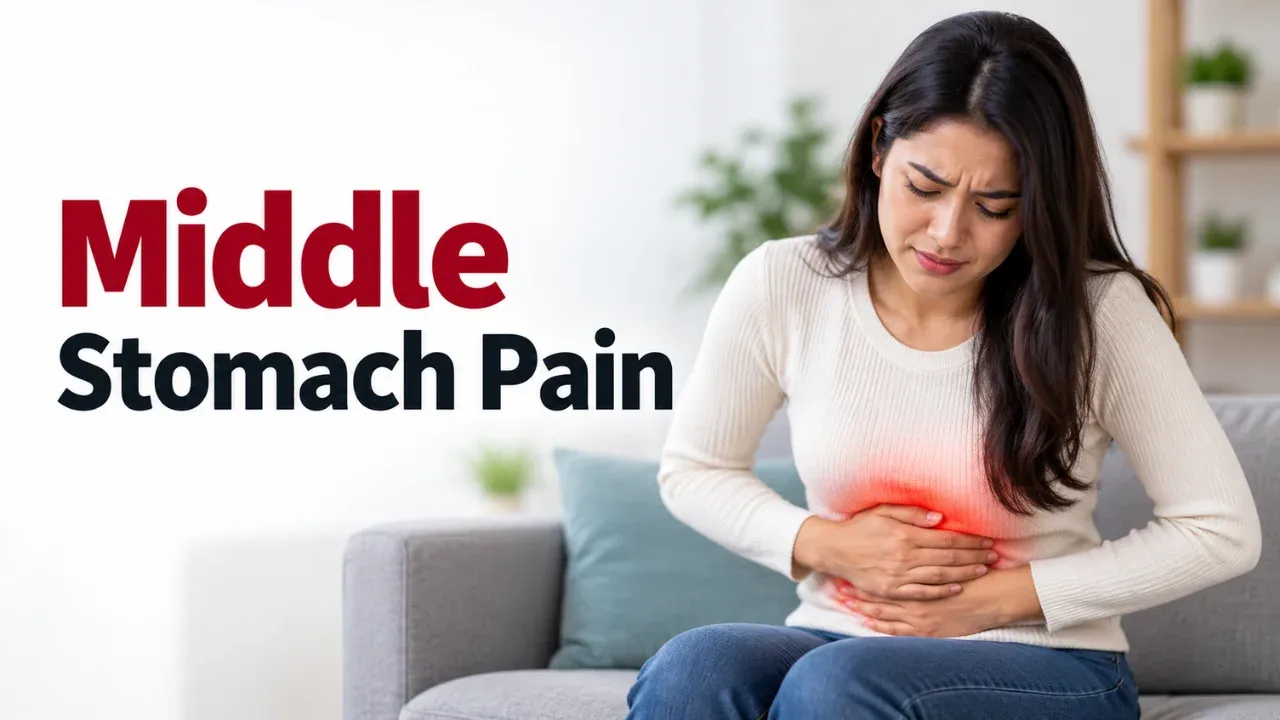
Quick Answer:
Middle stomach pain, or middle abdominal pain, can result from common digestive problems such as gas, indigestion, and constipation, but it can also occur with conditions such as gastritis, pancreatitis, appendicitis, or gallstones.
The appropriate treatment depends on the underlying cause and may range from simple home measures to medicines or other treatments prescribed by a doctor.
Sudden, severe, or worsening pain, especially with symptoms such as vomiting blood, bloody stools, chest pain, breathing difficulties, or fainting, requires immediate medical attention.
What Is Middle Stomach Pain?
Middle stomach pain can refer to either periumbilical pain or epigastric pain, depending on where the discomfort is felt. These terms describe different areas of the central abdomen.
- Periumbilical pain: This refers to pain felt around or behind your belly button. This area, known as the umbilical region, contains mainly parts of the small and large intestine.
- Epigastric pain: This describes discomfort or aching in the upper middle part of your abdomen, just below your rib cage.
What Causes Middle Stomach Pain?
Middle stomach pain can have several reasons, including digestive discomfort, muscle strain, inflammation, and conditions affecting nearby organs.
Since your central abdomen houses major digestive organs, blood vessels, and abdominal muscles, middle stomach pain can stem from a wide range of temporary issues to more complex underlying conditions.
Digestive Issues
Gas, indigestion, and constipation can cause cramping, bloating, and discomfort around the belly button or upper abdomen.
Acid Reflux
Acid reflux occurs when stomach contents, including stomach acid, flow back into the oesophagus. It can cause a burning sensation in the upper abdomen or chest.
Muscular Problems
A strained abdominal muscle may cause sharp pain that worsens when you bend, stretch, cough, or move.
Celiac Disease
Celiac disease is an autoimmune condition in which gluten triggers an immune response that can damage the small intestine. It can cause abdominal pain with bloating and gas.
Food Allergies
Food allergies involve an immune reaction to a particular food and may cause abdominal pain, vomiting, or other symptoms.
Lactose Intolerance
When your body has difficulty digesting lactose, the sugar found in milk and other dairy products, it may cause bloating, gas, diarrhoea, and abdominal discomfort.
Pancreatitis
Inflammation of the pancreas can cause persistent pain in the upper middle abdomen that may spread to the back. Nausea and vomiting may also occur.
Early Appendicitis
Even though appendicitis is associated with pain in the lower right side of the abdomen, its early onset may involve pain in the middle, which usually moves to the lower right side within hours.
Peptic Ulcers
Sores in the stomach lining or upper small intestine can cause burning or aching pain in the abdomen.
Gastroenteritis
Gastroenteritis is an infection caused by viruses, bacteria, or parasites that can lead to abdominal cramps, nausea, vomiting, and diarrhoea.
Cardiac or Vascular Conditions
Occasionally, a heart attack or a serious blood vessel problem can cause middle abdominal pain.
Inflammatory Conditions
Certain inflammatory conditions, such as gastritis, which causes inflammation of the stomach lining, and Crohn's disease, which causes inflammation in the digestive tract, can cause pain in the middle of the stomach.
Small Bowel Obstruction
A blockage in the small intestine can cause pain in the middle of the stomach, along with bloating, vomiting, and an inability to pass stool or gas.
Gallstones
Hardened deposits in the gallbladder can cause pain in the middle of the abdomen, sometimes after a meal.
Hernia
A hernia occurs when an organ or tissue pushes through a weakened area in the surrounding muscle or tissue.
A hiatal hernia develops when part of your stomach moves through the opening in the diaphragm where the oesophagus passes and can cause epigastric pain.
An umbilical hernia occurs when abdominal tissue protrudes through a weakened area around the belly button and may cause pain in the periumbilical region.
Abdominal Aortic Aneurysm
An abdominal aortic aneurysm is when a weakened section of the aorta, the body's main artery, becomes enlarged or bulges outward. If it ruptures, it can cause sudden, severe abdominal or back pain and requires emergency medical attention.
Mesenteric Ischemia
Mesenteric ischemia occurs when the intestines do not receive enough blood and oxygen. It can develop when a blood clot or other blockage reduces blood flow to the intestinal arteries and may cause significant abdominal pain.
Functional Dyspepsia
Functional dyspepsia can cause recurring pain or discomfort in the upper abdomen, along with early fullness, bloating, belching, or nausea, without an identifiable structural cause.
H. pylori Infection
Helicobacter pylori (H. pylori) is a type of bacteria that can infect the stomach lining and contribute to gastritis and peptic ulcers. It may cause burning or aching pain in the upper middle abdomen.
NSAID-Related Stomach Irritation
Nonsteroidal anti-inflammatory drugs (NSAIDs), such as ibuprofen and aspirin, can irritate the stomach lining and increase the risk of gastritis and peptic ulcers, particularly with prolonged or frequent use.
What Causes Middle Stomach Pain in Pregnancy?
Middle stomach pain in women who are pregnant may result from gas, constipation, or changes in the body as the uterus grows. However, abdominal pain during pregnancy can sometimes indicate a complication that needs urgent medical attention.
Common causes may include:
- Gas and constipation: Hormonal changes during pregnancy can slow digestion, leading to bloating and discomfort.
- Heartburn: Hormonal changes can relax the muscle between the stomach and oesophagus, while the growing uterus can increase pressure on the stomach.
More serious causes can include:
- Ectopic pregnancy: A pregnancy that develops outside the uterus, most often in a fallopian tube. It can cause abdominal or pelvic pain and vaginal bleeding.
- Miscarriage: Abdominal cramping or pain may occur along with vaginal bleeding or passage of tissue.
- Placental abruption: A condition in which the placenta separates from the uterine wall before delivery. It can cause sudden abdominal or back pain, uterine tenderness, and vaginal bleeding.
How Can You Treat Middle Stomach Pain?
The treatment for middle stomach pain depends on its underlying cause and your symptoms. When the pain is caused by mild digestive discomfort or acid reflux, it may improve with simple measures or suitable over-the-counter medicines.
Other conditions may require prescription medication, medical procedures, or hospital treatment.
Over-the-Counter Medicines for Middle Stomach Pain
For mild digestive discomfort, some over-the-counter medicines may help relieve specific symptoms rather than treat the underlying cause.
- Simethicone: May help relieve discomfort caused by trapped gas and bloating by helping gas pass more easily through the digestive tract.
- Antacids: Can provide short-term relief from acid-related discomfort, heartburn, or indigestion by neutralising stomach acid.
Home Remedies for Middle Stomach Pain
For mild discomfort in the middle of the abdomen, some simple home measures may help.
- Drinking warm ginger tea: Ginger is traditionally used for digestive discomfort, although evidence for directly relieving gas-related pain is limited.
- Drinking fennel tea or eating fennel seeds: Fennel is traditionally used for digestive discomfort, but strong clinical evidence is limited.
- Warm or cold compresses: These may help ease discomfort caused by muscle strain. Wrap the compress in a towel and avoid extreme heat or cold directly on your skin.
When Should You Consult a Doctor for Middle Stomach Pain?
Seek immediate medical attention if your pain is sudden or severe, worsens rapidly, or occurs with other concerning symptoms.
- Blood in vomit or stool, or black, tarry stools
- A hard, swollen, or very tender abdomen
- Persistent vomiting or an inability to pass stool or gas
- Chest pain, difficulty breathing, dizziness, or fainting
- Severe abdominal pain during pregnancy, particularly with bleeding
Consult your doctor soon if the pain is recurring or does not improve, or if you have unexplained weight loss.
Mool Health's Perspective on Middle Stomach Pain
Middle stomach pain can have several underlying causes. Severe pain needs medical attention. Mild gastric discomfort may improve with over-the-counter medicines, but these do not address the root cause of recurring pain.
At Mool Health, we believe that understanding your digestive health is an important step towards exploring recurring digestive symptoms and finding the right treatment for them.
You can take the Mool Health Gut Test to learn more about your digestive health and whether it may be a factor in recurring stomach pain and discomfort.
References
- Providence - Middle Stomach Pain: Possible Causes and When to Seek Care
- Cleveland Clinic - Abdominal Pain: Causes, Types & Treatment
- MedlinePlus - Abdominal Pain
- Medanta - Is Your Stomach Pain an Emergency?
- Medical News Today - Midabdominal Pain
- Aurora Health Care - Abdominal Pain & Stomach Pain
- NHS - Appendicitis
- MedlinePlus - Appendicitis
- NIDDK - Definition & Facts for Pancreatitis
- NHS - Stomach Pain in Pregnancy
- NHS - Ectopic Pregnancy Symptoms
- Mayo Clinic - Abdominal Pain Causes
- Mayo Clinic - Abdominal Pain: When to See a Doctor
Key Takeaways
- Middle stomach pain may be periumbilical or epigastric, depending on whether it is centred around the belly button or the upper middle abdomen.
- Common causes include gas, indigestion, constipation, acid reflux, muscle strain, lactose intolerance, and functional dyspepsia.
- More serious causes can include pancreatitis, appendicitis, bowel obstruction, gallstones, vascular problems, or pregnancy-related complications.
- OTC treatments may help specific mild symptoms, but they do not treat every underlying cause.
- Home measures such as warm compresses or simple dietary adjustments may ease mild discomfort, but should not delay medical care for severe pain.
- Sudden severe pain, blood in vomit or stool, a rigid abdomen, inability to pass stool or gas, chest pain, breathing difficulty, fainting, or severe pain during pregnancy require urgent medical attention.
Your gut is unique your healing should be too.

FAQs
If middle abdominal pain is sudden, severe, or worsening, or is accompanied by blood in vomit or stool, chest pain, breathing difficulties, fainting, persistent vomiting, or a hard and swollen abdomen, seek immediate medical attention. Persistent or recurring pain also warrants medical assessment.
The right treatment depends on the underlying cause. Mild digestive discomfort or acid reflux may improve with appropriate over-the-counter medicines, smaller meals, hydration, and simple comfort measures. Seek medical advice if pain persists or worsens.
Severe abdominal pain, a rigid abdomen, blood in vomit or stool, repeated vomiting, breathing difficulty, fainting, jaundice, or unexplained weight loss can indicate a problem that needs medical evaluation.
Gastritis may cause burning, aching, or gnawing discomfort in the upper abdomen, sometimes with nausea or bloating. These symptoms overlap with other conditions and cannot confirm gastritis on their own.
Trapped gas may cause cramping, bloating, or shifting abdominal discomfort that improves after burping or passing gas. Severe or persistent pain should not automatically be assumed to be gas.
Disclaimer
The content provided by Mool Health is for educational and informational purposes only and should not be considered a substitute for professional medical advice, diagnosis, or treatment.