
Causes of Diarrhea: Types, Symptoms & Common Triggers
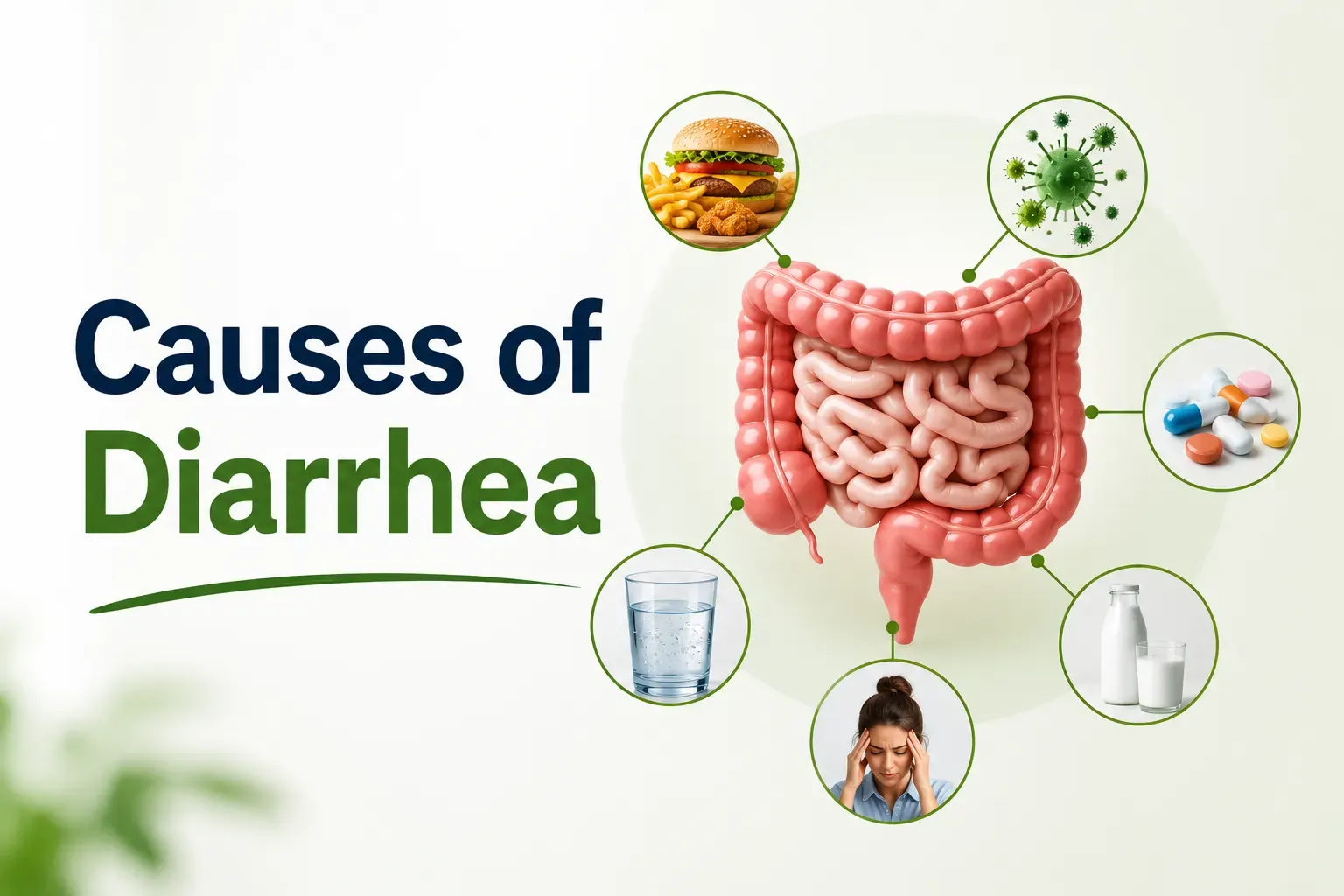
Diarrhea can happen due to infections, food intolerance, digestive disorders, or gut irritation. This guide explains the common causes and different types of diarrhea.
✏️ Quick Answer
Diarrhea has five main root causes: gut infections, damaged gut lining, hyperactive gut motility, bacterial imbalance (dysbiosis), and stress-triggered gut-brain disruption. Most OTC tablets stop the symptom but leave the underlying cause active, which is why loose motions keep coming back.
- Gut infections: bacterial or viral contamination from food or water
- Damaged gut lining: inflamed or porous intestinal walls that cannot absorb water
- Hyperactive motility: food moving too fast through the intestines
- Dysbiosis: imbalance of good and bad gut bacteria
- Gut-brain axis disruption: stress and anxiety sending distress signals to the gut
Your gut is not being dramatic when it sends you rushing to the toilet. Diarrhea, particularly the kind that keeps coming back, is a signal from your digestive system that something in the root-cause chain is still active. The five causes covered in this guide are listed in order of how commonly they trigger acute vs. chronic loose motions. Most people have more than one cause operating at the same time, which is why a single OTC tablet rarely gives lasting relief. For a step-by-step guide on management, see how to stop diarrhea at home.
Acute vs Chronic Diarrhea: When Is It Normal and When Is It Not?
- Acute diarrhea: Loose, watery stools lasting 1–3 days, typically caused by food, contaminated water, or a short-term infection. Usually self-limiting.
- Persistent diarrhea: Lasting 2–4 weeks, often indicates an infection that has not fully cleared or a worsening underlying condition.
- Chronic diarrhea: Occurring weekly or monthly across months, strongly indicates dysbiosis, gut lining damage, IBS, or ongoing stress-gut-brain disruption.
You should be concerned if diarrhea happens more than three times a week even when eating light balanced meals, if stools remain consistently loose and urgent, or if the pattern returns within two weeks of apparent recovery. These signals point to an active root cause that OTC tablets will not resolve. Understanding and supporting gut health and microbiome at a root-cause level is the most durable approach.
How Diarrhea Actually Happens: The 5 Gut Mechanisms Explained
Your intestines have one main job: absorb water, nutrients, and electrolytes from food as it moves through. Diarrhea happens when this process breaks down, either water is secreted in excess, absorption is blocked, or the gut pushes food through too fast.
- Infection disrupts the gut wall. Bacteria like E. coli and Salmonella damage the enterocytes, the cells lining your intestine. When enterocytes are damaged, they secrete fluid instead of absorbing it, leading to the sudden, watery stools typical of acute infection-based diarrhea.
- Gut lining damage breaks the absorption barrier. The intestinal wall is protected by tight junction proteins, microscopic seals between cells. When these seals loosen (due to chronic stress, acidic food, or past infections), water leaks into the gut cavity instead of being absorbed.
- Hyperactive motility rushes food through. Normal peristalsis takes 12–72 hours to move food from mouth to exit. In hyperactive motility, this compresses to a few hours. Water, nutrients, and electrolytes don't have time to be absorbed, resulting in loose, unformed stools.
- Dysbiosis reduces fermentation capacity. Good gut bacteria ferment certain fibres, producing short-chain fatty acids that nourish the gut lining and regulate motility. When dysbiosis reduces good bacteria, fermentation fails and motility becomes erratic, leading to alternating bloating and loose stools.
- Stress activates the enteric nervous system. The gut has its own nervous system, 500 million neurons, that responds directly to emotional stress. When the brain sends a stress signal via the vagus nerve, the gut speeds up contractions. This is why anxiety before an important event can lead to an urgent need to use the toilet within 30 minutes.
The 5 Root Causes of Diarrhea Explained
1. Gut Infections (Most Common Cause of Acute Episodes)
Gut infections are the leading cause of sudden diarrhea. Viral infections, norovirus, rotavirus, adenovirus, and bacterial infections like E. coli and Salmonella cause severe loose motions, often accompanied by fever, nausea, and rapid dehydration. Contaminated food and water are the most common transmission routes in India. Anti-motility tablets may reduce stool frequency temporarily, but the gut lining can take weeks to fully recover after infection, which is why diarrhea sometimes returns in the weeks following an apparent recovery.
2. Weak Absorption / Gut Lining Damage
When the gut lining becomes inflamed or damaged, it cannot absorb water and nutrients properly. This leads to consistently watery stools even without active infection. Triggers include chronic acidity, excessive spicy food, prolonged stress, or an untreated past infection that left the lining weakened. While medications can temporarily reduce frequency, true recovery requires repairing the gut lining itself, not just slowing stool. For a full guide on foods that protect vs. harm the gut lining, see our article on worst foods for gut health.
3. Hyperactive Motility
Sometimes food moves too quickly through the intestines, leaving little time for absorption. Stress, caffeine, raw foods, or irritable bowel syndrome (IBS) often trigger this. The clearest sign: an urgent need to use the toilet within 20–40 minutes of eating, particularly in the morning. Antispasmodic medicines can slow urgency, but they do not correct the underlying motility imbalance, which is why the problem returns as soon as the medicine wears off.
4. Imbalanced Gut Bacteria (Dysbiosis)
Your gut relies on a balance between good and bad bacteria for proper digestion. Antibiotics, processed food, high sugar intake, and chronic stress all disrupt this balance. When good bacteria populations fall, gas-producing bacteria dominate, leading to bloating, indigestion, and loose stools. A 2023 review in Nature Reviews Gastroenterology and Hepatology found that patients with lower microbial diversity took 40% longer to recover from infection-based diarrhea. Restoring gut flora through probiotics, prebiotics, and dietary changes is essential, OTC tablets do not address dysbiosis at all. For evidence-based probiotic guidance, see which probiotic is best for diarrhea.
5. Gut-Brain Axis Disruption (Stress-Induced Diarrhea)
Stress and anxiety play a powerful and often underestimated role in diarrhea. Work deadlines, emotional strain, travel, or ongoing life pressure send distress signals from the nervous system to the gut, triggering urgency and loose stools. Research published in Gastroenterology found that 60–70% of individuals with IBS, a leading cause of chronic diarrhea, show measurable alterations in gut-brain axis signalling. Stress management interventions reduced diarrhea frequency by up to 50% in IBS patients in randomised trials. This is one root cause that no food-based intervention alone can resolve without also addressing stress.
Ayurvedic View on Diarrhea: Atisaar and Root-Cause Classification
In Ayurveda, diarrhea is known as Atisaar and is classified into three types based on its nature:
- Pitta-type: Burning sensation, urgency, and yellowish stool. Caused by excess heat and inflammation in the gut. Focus is on cooling and anti-inflammatory herbs and food alongside gut lining repair.
- Vata-type: Watery stools, frequent urgency, and noisy digestion. Caused by erratic gut motility. Binding foods and antispasmodic herbs address the symptom, but the underlying motility imbalance requires deeper intervention.
- Ama-type: Foul-smelling stools with undigested food particles. Caused by poor digestive fire (agni) and accumulation of toxins. OTC remedies temporarily mask symptoms but do not improve overall digestion.
Ayurveda focuses on restoring digestive balance rather than simply stopping loose stools, correcting absorption, improving gut rhythm, and strengthening Agni. This root-cause orientation aligns closely with what modern gastroenterology is increasingly recognising about the gut microbiome and gut-brain axis.
Diarrhea Treatments Compared: What Actually Works vs What Just Masks the Problem
| Treatment | What It Does | Root Cause Addressed? | Typical Relief Duration | Best For |
|---|---|---|---|---|
| Loperamide (Imodium) | Slows gut contractions | No | Hours to 1 day | One-off acute loose motions only |
| Norflox-TZ (antibiotic) | Kills harmful bacteria, also kills good bacteria | Partial | 2–5 days | Confirmed bacterial infection |
| ORS | Replaces fluids and electrolytes | No, prevents dehydration only | Ongoing | All types, all ages, always first |
| Probiotics | Rebuilds good gut bacteria | Yes, for dysbiosis and post-antibiotic recovery | 2–4 weeks | Post-antibiotic, infection recovery |
| Ayurvedic herbs (Triphala, Kutaj) | Balances Agni, calms gut lining | Yes, for Pitta and Ama types | 2–6 weeks | Chronic or recurrent loose motions |
| Root-cause gut programme | Diagnoses and targets specific cause | Yes, personalised approach | 1–6 months | Chronic diarrhea, IBS, recurring episodes |
How to Heal Your Gut After Diarrhea: 5-Step Recovery Guide
- Stop fluid loss first (Day 1–2): Drink ORS, not just water. Plain water does not replace sodium, potassium, and glucose that diarrhea depletes. Aim for 200–400 ml after every loose stool. For detailed food guidance see what to eat in diarrhea.
- Eat to calm the gut, not starve it (Day 1–4): The old advice to eat nothing is outdated. Light, easily digestible foods speed recovery because they provide fuel for gut-lining repair. Plain white rice, moong dal khichdi, boiled banana, and curd (if tolerated) are the foundation. Avoid raw vegetables, dairy other than curd, fried foods, caffeine, and alcohol.
- Identify your trigger (Day 2–3): Ask yourself: Did this start after eating out? After antibiotics? During a stressful period? After a specific food? Your answer maps directly to one of the five root causes, and recovery differs accordingly.
- Rebuild gut bacteria (Day 3 onwards): Once acute symptoms ease, introduce probiotics. Food-based: curd, buttermilk, fermented kanji. Supplement-based: match strain to cause (Saccharomyces boulardii for post-antibiotic, Lactobacillus rhamnosus GG for viral diarrhea). Research in the Cochrane Database found probiotics reduced diarrhea duration by approximately 25 hours and the risk of diarrhea lasting more than four days by 59%.
- Address the root cause, not just the stool (Week 2 onwards): If loose motions return within two weeks of stopping OTC medication, the root cause is still active. This is when a structured gut-healing approach becomes necessary rather than repeating OTC tablets.
Foods That Help vs Foods That Make Diarrhea Worse
| Foods That Help Recovery | Why They Help |
|---|---|
| Plain white rice | Easy to digest; provides glucose; low fibre to reduce gut load |
| Moong dal (split mung beans) | Gentle protein for gut lining repair without irritation |
| Boiled banana | Contains pectin, absorbs excess water in intestine, firms stools |
| Fresh curd / buttermilk | Natural probiotics that begin rebuilding gut flora from Day 2–3 |
| Coconut water (fresh) | Replaces electrolytes without the sugar load of sports drinks |
| Boiled potato (plain, no butter) | Provides binding starch; easily absorbed calories for recovery |
| Cooked or peeled apple | Provides pectin; avoid raw apple with skin during acute phase |
| Foods That Worsen Diarrhea | Why They Make It Worse |
|---|---|
| Dairy (milk, cream, cheese) | Lactase enzyme is depleted during diarrhea, lactose causes cramping and worsens loose stools |
| Raw vegetables and salad | High insoluble fibre speeds up gut motility, the opposite of what you need |
| Fried and oily food | Fat slows gastric emptying erratically and irritates an inflamed gut |
| Caffeine (tea, coffee) | Known gut motility stimulant, increases urgency |
| Alcohol | Directly irritates the gut lining and depletes electrolytes |
| Artificial sweeteners (sorbitol, mannitol) | Osmotic effect pulls water into the gut, worsening watery stools |
| Spicy food | Capsaicin stimulates gut secretion and increases inflammation on an already-irritated lining |
What the Research Says: Key Evidence on Diarrhea Causes
- Global burden (WHO, 2023): Diarrheal diseases account for approximately 1.7 billion cases annually worldwide and remain the second leading cause of death in children under five globally. In India, diarrhea is one of the top five causes of preventable childhood mortality.
- Gut microbiome role (Nature Reviews Gastroenterology and Hepatology, 2023): Gut dysbiosis is a primary driver of both acute diarrhea severity and its tendency to become chronic. Patients with lower microbial diversity took 40% longer to recover from infection-based diarrhea episodes.
- Stress and gut-brain axis (Gastroenterology): 60–70% of individuals with IBS show measurable alterations in gut-brain axis signalling. Stress management interventions reduced diarrhea frequency by up to 50% in IBS patients in randomised controlled trials.
- Probiotics (Cochrane Database of Systematic Reviews, Allen et al., 2010): Probiotic supplementation across 63 trials and 8,014 participants reduced acute diarrhea duration by approximately 25 hours and the risk of diarrhea lasting beyond four days by 59%.
- Loperamide caution (FDA, 2019): The FDA has issued guidelines limiting high-dose loperamide use due to documented cardiac risks at higher doses, reinforcing that these medications are intended for short-term, occasional use only, not as chronic diarrhea management.
When to See a Doctor: Warning Signs to Watch For
- Blood or mucus in the stool at any point
- High fever above 38.5°C alongside diarrhea
- Signs of severe dehydration: no urination for 8+ hours, sunken eyes, extreme thirst, dizziness
- Diarrhea lasting more than 7 days in adults or more than 2 days in infants and young children
- Significant abdominal pain that does not ease after a bowel movement
- Unexplained weight loss of more than 2–3 kg alongside recurring loose motions
- Return of diarrhea within 2 weeks of apparent recovery
| Profile | Why They Are Higher Risk | When to Act |
|---|---|---|
| Infants and toddlers | Dehydrate faster; signs harder to read | See a doctor within 24 hours |
| Adults over 65 | Electrolyte imbalance more dangerous | Seek help if persists beyond 2 days |
| Pregnant women | Risk of complications from dehydration | Consult immediately |
| Immunocompromised (diabetes, HIV, chemotherapy) | Infections harder to clear naturally | Do not manage at home |
| People on blood pressure or heart medication | Electrolyte loss interacts with medication | Monitor closely; seek care if persisting |
What This Means for You
- If this is your first acute episode: Start with ORS today, follow the recovery diet, and track whether symptoms return within 2 weeks
- If loose motions keep coming back: Stop the OTC cycle. Identify which of the five root causes resonates with your pattern, stress-triggered, food-triggered, post-antibiotic, or post-infection
- If your root cause is dysbiosis or stress: Introduce a daily probiotic (curd, buttermilk, or a supplement) and reduce caffeine and processed food for 30 days, track the difference
- If the pattern persists despite dietary changes after 4–6 weeks: The root cause needs more structured attention than diet alone can provide
- See a doctor if: blood in stool, fever, or weight loss accompanies the diarrhea
Key Takeaways
Diarrhea can happen due to infections, food intolerance, digestive disorders, or gut irritation. This guide explains the common causes and different types of diarrhea.
Your gut is unique your healing should be too.

Disclaimer
The content provided by Mool Health is for educational and informational purposes only and should not be considered a substitute for professional medical advice, diagnosis, or treatment.