
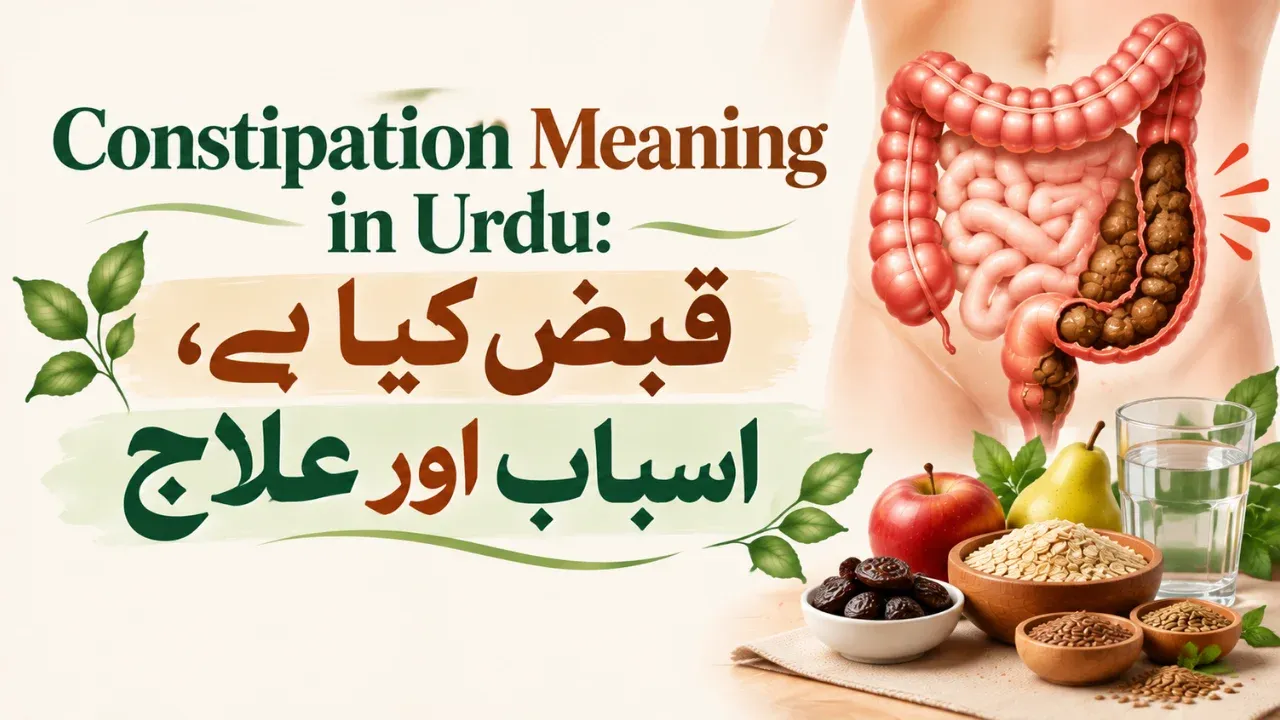
Constipation Meaning in Urdu: قبض کیا ہے، اسباب اور علاج
Constipation (Qabz) affects bowel movements, causing hard stools and difficulty passing waste. Learn its causes, symptoms, home remedies, and when to seek medical help.
Quick Answer
Constipation meaning in Urdu: قبض (Qabz). It means a digestive condition where stool becomes hard and dry, bowel movements happen fewer than three times a week, and passing stool requires straining.
- قبض is also commonly called پیٹ صاف نہ ہونا.
- Mild constipation often improves with water, fibre, walking, and Isabgol.
- دائمی قبض means chronic constipation lasting for 3 months or more.
- Blood in stool, severe pain, vomiting, or sudden weight loss needs medical attention.
Constipation, called قبض in Urdu, is not just a word to look up. It is a clear digestive condition where stool becomes hard, dry, and difficult to pass. In Urdu-speaking households, people often describe it as پیٹ صاف نہ ہونا, which means the stomach not clearing properly.
Clinical constipation is usually identified when bowel movements happen fewer than three times per week, stool is hard or dry, and passing stool needs effort or straining. If this happens for a few days, it may be occasional constipation. If it continues for months, it may be دائمی قبض, or chronic constipation.
Constipation Meaning in Urdu, Complete Reference Table
The meaning of constipation in Urdu becomes clearer when you understand related digestive terms used in daily life and medical conversations.
| English Term | Urdu Meaning | Pronunciation |
|---|---|---|
| Constipation | قبض | Qabz |
| Chronic constipation | دائمی قبض | Daimi Qabz |
| Stomach | پیٹ / معدہ | Payt / Maida |
| Stool / Bowel movement | پاخانہ / فضلہ | Pakhana / Fazla |
| Hard stool | سخت پاخانہ | Sakht Pakhana |
| Gas / Flatulence | گیس / ریاح | Gas / Riyah |
| Bloating | پیٹ پھولنا | Payt Phoolna |
| Indigestion | بدہضمی | Badhazmee |
| Diarrhea / Loose motion | اسہال / پیچش | Ishal / Pechish |
| Acidity / Heartburn | تیزابیت / سینے میں جلن | Tezaabiyat / Seene Mein Jalan |
| Gut health | آنتوں کی صحت | Aanton Ki Sehat |
Digestive Health Terms in Urdu
Several digestive health terms appear alongside قبض in everyday Urdu conversations. Understanding these helps you explain symptoms more clearly.
Defecation, رفع حاجت / پاخانہ کرنا
Defecation is the act of passing stool. In formal Urdu it is رفع حاجت, while everyday speech uses پاخانہ کرنا. During constipation, defecation becomes difficult, infrequent, or painful.
Flatulence, گیس / ریاح
Flatulence means excess gas in the digestive tract. It often appears with constipation because slow-moving stool allows more fermentation in the colon. If gas and bloating are frequent, read more about gas and bloating causes.
Natural Laxative, قدرتی جلاب
A natural laxative is any food, herb, or remedy that supports bowel movement without chemical agents. Common options include Isabgol, ripe papaya, soaked raisins, and Triphala.
Stool Softener, پاخانہ نرم کرنے والا
A stool softener draws water into the stool, making it easier to pass. Isabgol works like a natural stool softener because it absorbs water and forms a soft gel inside the intestine.
What Is Constipation in Urdu?
What is constipation in Urdu? It is قبض, a condition where bowel movement becomes less frequent and stool becomes hard, dry, or difficult to pass.
- ہفتے میں تین بار سے کم پاخانہ آنا, fewer than 3 bowel movements per week
- پاخانہ سخت اور خشک ہونا, hard and dry stool
- پاخانہ کرتے وقت زور لگانا پڑنا, straining during stool passing
- پیٹ میں بھاری پن, heaviness in the stomach
- پیٹ پھولنا اور گیس بننا, bloating and gas
- پاخانہ مکمل نہ آنے کا احساس, feeling of incomplete evacuation
In daily Urdu, people may say پیٹ صاف نہیں ہوا. This means the stool has not passed properly and the stomach still feels heavy.
قبض کیوں ہوتی ہے؟ How Constipation Actually Happens
Constipation happens when the large intestine absorbs too much water from stool. The longer stool stays inside the colon, the more water gets removed. This makes stool hard, compact, and difficult to pass.
- Food waste enters the large intestine: After digestion in the small intestine, waste enters the colon, where water is absorbed.
- Water absorption increases: If gut movement is slow or water intake is low, the colon pulls extra water from stool.
- Stool becomes hard: Dry stool becomes difficult to move forward.
- Gut motility slows: Stress, low fibre, less movement, and some medicines reduce peristalsis.
- Straining starts: Hard stool needs extra pressure to pass, which can increase piles or fissure risk.
Chronic Constipation Meaning in Urdu
Chronic constipation meaning in Urdu is دائمی قبض. دائمی means long-term or persistent. This refers to constipation that lasts for 3 months or more.
| Type | Urdu Term | Duration |
|---|---|---|
| Occasional constipation | کبھی کبھار قبض | Less than 2 weeks |
| Persistent constipation | مستقل قبض | 2 to 4 weeks |
| Chronic constipation | دائمی قبض | More than 3 months |
If constipation keeps coming back, it is important to identify the reason. You can also read about causes of constipation to understand common triggers.
قبض کے اسباب, Causes of Constipation in Urdu Context
- کم پانی پینا: Low water intake makes stool dry and hard.
- فائبر کی کمی: Low-fibre diets, especially high maida or processed food, reduce stool bulk.
- جسمانی سرگرمی کی کمی: Sitting for long hours slows colon movement.
- ذہنی تناؤ: Stress can slow digestion through the gut-brain connection.
- بے وقت کھانا: Irregular meals disturb the natural bowel rhythm.
- دوائوں کا اثر: Iron supplements, pain medicines, and some antacids may cause constipation.
- حمل: Pregnancy hormones slow gut movement, and iron tablets can make stool harder.
For a broader daily routine, see this guide on how to improve digestion.
قبض کے گھریلو علاج, Constipation Home Remedies in Urdu
Traditional Urdu, Unani, and Ayurvedic home remedies can support mild constipation when used correctly.
| Home Remedy | Urdu | How It Helps |
|---|---|---|
| Warm water in the morning | صبح گرم پانی | Activates bowel movement and softens stool |
| Isabgol | اسپغول کی بھوسی | Soluble fibre that softens and bulks stool |
| Triphala at bedtime | ترپھلا | Gentle bowel regulator |
| Soaked raisins | کشمش بھگو کر | Natural sorbitol helps soften stool |
| Ripe papaya | پکا ہوا پپیتا | Papain enzyme supports digestion |
| Ghee with warm milk | گھی اور گرم دودھ | Traditional remedy that lubricates stool passage |
| Saunf water | سونف کا پانی | Supports gut movement and reduces gas |
For movement-based relief, this guide on yoga for constipation may also help.
قبض کا علاج, Step-by-Step Home Treatment Guide
Most mild constipation caused by low water intake, low fibre, or short-term stress responds to a structured home routine.
- Morning: Drink 2 glasses of warm water after waking. This can activate the gastrocolic reflex.
- Breakfast: Add fibre through banana, oats, figs, or vegetables.
- Throughout the day: Drink 8 to 10 glasses of water. Do not replace water with tea or soft drinks.
- Bedtime: Take Isabgol with a full glass of warm water. Drink it immediately before it thickens.
- After meals: Walk for 10 to 15 minutes to stimulate gut movement.
- If no improvement: Consider Triphala or ghee with warm milk, but avoid frequent chemical laxatives without medical advice.
قبض میں کتنے وقت میں فرق پڑتا ہے؟
| Timeline | What to Expect |
|---|---|
| Day 1 | Increased urge after warm water, but no major change yet |
| Day 2 to 3 | Stool becomes softer and straining reduces |
| Day 4 to 5 | Regular bowel movement pattern may return |
| Day 7 to 10 | Mild to moderate constipation often improves |
| Week 3+ | If no improvement, consult a doctor |
Isabgol vs Triphala vs Medical Laxatives
Not every constipation case is the same. The right option depends on your symptom pattern, duration, and severity.
| Option | How It Works | Best For | Use Note |
|---|---|---|---|
| Isabgol | Absorbs water, bulks and softens stool | Mild to moderate constipation | Take with a full glass of water |
| Triphala | Gently supports gut motility | Slow digestion and chronic patterns | Usually taken at bedtime |
| Medical laxatives | Stimulate colon or draw water into intestine | Acute or severe constipation | Use with doctor guidance |
Unani Perspective on Qabz
In Unani medicine, قبض is understood as an imbalance of digestive temperament, or Mizaj. A cold, slow, or dry digestive pattern can make stool harder and bowel movement slower.
- Balgami Mizaj: Slow gut movement and cold digestion, often supported with warming digestive herbs.
- Sawdawi Mizaj: Dry constitution, hard stool, and need for lubricating foods such as ghee, soaked raisins, and Isabgol.
Research on Qabz, What the Evidence Says
- Chronic constipation affects a large number of adults globally, with higher rates in women and older adults.
- Isabgol has clinical evidence for improving stool frequency, stool softness, and straining.
- Triphala has been studied as a gentle bowel regulator in chronic functional constipation.
- Stress can alter gut movement through the gut-brain axis.
- Increasing water intake can improve stool softness in people with low hydration.
Doctor کب دکھائیں, When to See a Doctor for Qabz
- پاخانے میں خون آئے, blood in stool
- Constipation lasts more than 3 to 4 weeks
- Unexplained weight loss
- Severe stomach pain
- Vomiting along with constipation
- No bowel movement for 5 days or more
For recurring constipation, supporting gut health and daily habits is more useful than repeatedly taking quick-relief laxatives.
آپ کے لیے اس کا کیا مطلب ہے؟ What This Means for You
Most mild قبض improves within 5 to 7 days when water intake, dietary fibre, and movement are improved together. For دائمی قبض, results usually need 4 to 8 weeks of consistent habit change and a deeper look at the cause.
- Start tomorrow morning with 2 glasses of warm water.
- Add one fibre-rich food to breakfast, such as banana, oats, or figs.
- Take Isabgol at bedtime with a full glass of water.
- Walk for 10 to 15 minutes after meals.
- If symptoms do not improve in 3 to 4 weeks, consult a doctor.
If your constipation is linked to gut microbiome imbalance, sluggish metabolism, or dietary deficiency, a structured assessment can help. You can start with the Free Gut Health Test.
Key Takeaways
Constipation (Qabz) affects bowel movements, causing hard stools and difficulty passing waste. Learn its causes, symptoms, home remedies, and when to seek medical help.
Your gut is unique your healing should be too.

FAQs
Constipation meaning in Urdu is قبض (Qabz). It refers to a digestive condition where stools become hard and dry, bowel movements occur fewer than three times per week, and passing stool requires straining.
The meaning of constipation in Urdu is قبض, pronounced Qabz. In everyday Urdu speech, constipation is also described as پیٹ صاف نہ ہونا, meaning the stomach not clearing properly.
Chronic constipation meaning in Urdu is دائمی قبض (Daimi Qabz), where Daimi means long-term or persistent. It refers to constipation that has been present for 3 months or more, with fewer than 3 bowel movements per week and hard stools that do not resolve without laxatives.
صبح گرم پانی پئیں، اسپغول کی بھوسی استعمال کریں، رات کو ترپھلا لیں، پکا ہوا پپیتا کھائیں، اور کھانے کے بعد چہل قدمی کریں۔ روزانہ 8–10 گلاس پانی اور فائبر والا کھانا ضرور کھائیں۔
Constipation in Urdu is قبض (Qabz). The colloquial Urdu expression for constipation is پیٹ صاف نہ ہونا, literally the stomach not clearing properly. Chronic constipation in Urdu is دائمی قبض (Daimi Qabz).
Isabgol (اسپغول کی بھوسی) is psyllium husk, the most widely used natural remedy for قبض in Urdu-speaking households. It is a soluble fibre that absorbs water in the intestine, forming a gel that softens and bulks the stool, making it easier to pass. Take with a full glass of water at bedtime for best results.
A stool softener, پاخانہ نرم کرنے والا, is any substance that draws water into the stool to soften it without stimulating the bowel to contract. Isabgol is the most effective natural stool softener available in South Asian households.
If قبض does not improve after 3–4 weeks of consistent home remedies, adequate water, fibre, Isabgol, and daily movement, it is time for a structured assessment. Persistent قبض can result from hypothyroidism, IBS, medication side effects, or a disrupted gut microbiome.
Disclaimer
The content provided by Mool Health is for educational and informational purposes only and should not be considered a substitute for professional medical advice, diagnosis, or treatment.