
Yoga for Constipation: Best Asanas for Quick & Natural Relief
Simple yoga poses can relieve constipation, reduce gas, and improve digestion naturally when practiced regularly.
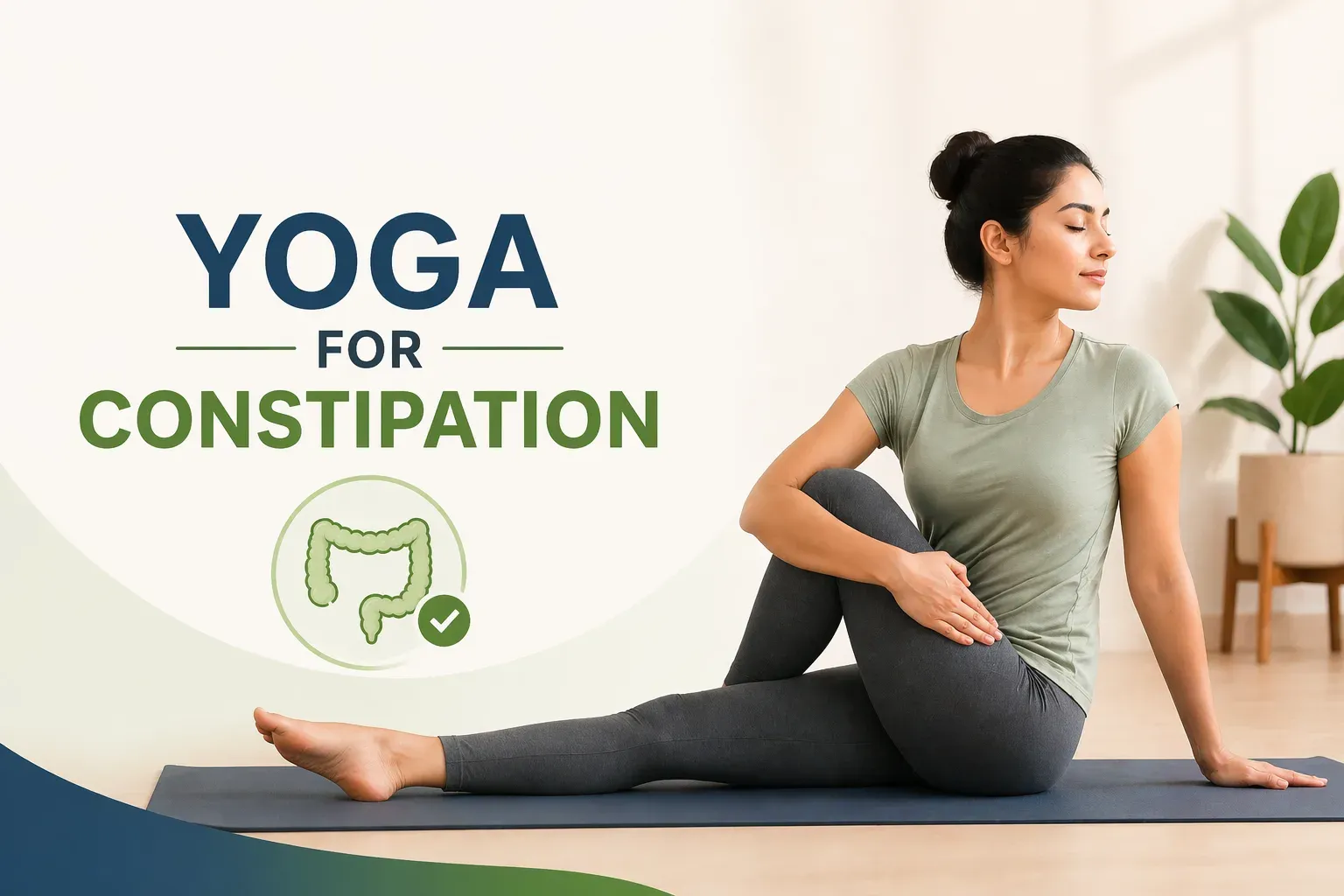
✏️ Quick Answer
Yoga for constipation works by stimulating gut motility, massaging abdominal organs, reducing stress hormones that slow digestion, and activating the parasympathetic nervous system. The best yoga asanas for constipation are Pawanmuktasana (Wind-Relieving Pose), Malasana (Squat Pose), Balasana (Child's Pose), Ardha Matsyendrasana (Seated Spinal Twist), and Supta Matsyendrasana. Practised consistently in the morning on an empty stomach, these yoga exercises for constipation can produce noticeable improvement within 5–7 days.
Constipation is not just a bowel problem — it is often a nervous system problem. When you are stressed, rushing, or sedentary, the gut's natural peristaltic rhythm slows down. Yoga addresses this at the root by combining physical compression and stretching of abdominal organs, parasympathetic nervous system activation, and mindful breathing that directly stimulates gut movement.
Unlike laxatives, yoga for constipation relief does not create dependency and simultaneously improves digestion, reduces gas, and supports overall gut health. This guide covers the most effective yoga poses, asanas, mudras, and sequences — including specific approaches for gas, piles, and digestion support. Understanding causes of constipation helps you choose the right yoga exercises for your specific trigger.
How Yoga for Constipation Works — The Science
Yoga influences the digestive system through four distinct mechanisms that make it one of the most effective non-pharmacological approaches for constipation relief:
- Mechanical stimulation: Twisting, compressing, and stretching yoga poses physically massage the ascending, transverse, and descending colon — directly stimulating peristalsis and moving stool forward
- Parasympathetic activation: Deep diaphragmatic breathing and yoga postures shift the body from "fight or flight" (sympathetic) to "rest and digest" (parasympathetic) mode — the nervous state in which bowel movement occurs naturally
- Intra-abdominal pressure: Poses like Malasana and forward folds increase pressure in the abdominal cavity, compressing the colon and facilitating defecation
- Stress reduction: Chronic stress is one of the most common causes of constipation — yoga reduces cortisol levels that suppress gut motility
Best Yoga Asanas for Constipation — 10 Most Effective Poses
These yoga poses for constipation are ordered from easiest to more advanced. Beginners can start with the first 5; experienced practitioners can work through all 10.
1. Pawanmuktasana — Wind-Relieving Pose
How to do: Lie on your back. Inhale, bring both knees to the chest, wrap arms around shins. Hold for 30–60 seconds, breathing deeply. Rock gently side to side. Release and repeat.
Why it works: Directly compresses the ascending and descending colon — the most targeted yoga pose for constipation and gas relief. The name literally means "wind-releasing posture" — it expels trapped gas and stimulates bowel movement. This is the single most recommended yoga exercise for constipation across Ayurvedic and modern physiotherapy literature.
2. Malasana — Garland Pose / Deep Squat
How to do: Stand with feet slightly wider than hip-width. Lower into a deep squat, bringing hips below knee level. Press palms together at chest. Hold for 30–60 seconds with deep breathing.
Why it works: The squat position straightens the anorectal angle — the natural defecation posture that humans used before modern toilets. It directly relaxes the puborectalis muscle and increases intra-abdominal pressure, making it the most physiologically effective yoga asana for constipation relief. Practising Malasana before using the toilet significantly reduces straining.
3. Ardha Matsyendrasana — Seated Spinal Twist
How to do: Sit with legs extended. Bend right knee, place foot outside left thigh. Inhale, lengthen spine. Exhale, twist right, placing left elbow outside right knee. Hold 30–45 seconds each side.
Why it works: The spinal twist creates a wringing compression through the entire colon — ascending on one side, descending on the other. This yoga asana for constipation is particularly effective for digestion and constipation together as it also stimulates liver and pancreatic function.
4. Balasana — Child's Pose
How to do: Kneel, sit back on heels, fold forward with arms extended or alongside body, forehead resting on the floor. Hold 1–3 minutes with slow breathing.
Why it works: Activates the parasympathetic nervous system — the "rest and digest" state. Gently compresses the abdomen and reduces cortisol, making it particularly effective for stress-triggered constipation. One of the most calming yoga postures for constipation.
5. Supta Matsyendrasana — Supine Spinal Twist
How to do: Lie on back. Draw right knee to chest, then guide it across the body to the left while extending the right arm. Look right. Hold 30–45 seconds. Repeat on the other side.
Why it works: A gentle supine version of the spinal twist — excellent as a morning yoga pose for constipation relief as it can be done immediately after waking without standing. Massages the colon and releases tension in the lumbar region that restricts bowel movement.
6. Uttanasana — Standing Forward Bend
How to do: Stand with feet hip-width apart. Exhale, hinge at hips, fold forward, letting the head hang heavy. Hands can rest on the floor, shins, or hold opposite elbows. Hold 45–60 seconds.
Why it works: Increases blood flow to the digestive organs, compresses the abdomen, and stimulates the vagus nerve — the main nerve of the parasympathetic digestive system. A foundational yoga exercise for constipation and digestion together.
7. Dhanurasana — Bow Pose
How to do: Lie on stomach. Bend knees, reach back to hold ankles. Inhale, lift chest and thighs simultaneously, balancing on the abdomen. Hold 20–30 seconds. Release and repeat 2–3 times.
Why it works: The rocking motion on the abdomen directly massages the entire length of the colon — ascending, transverse, and descending. One of the most powerful yoga exercises for constipation for people with a sluggish colon.
8. Setu Bandhasana — Bridge Pose
How to do: Lie on back, knees bent, feet flat on floor hip-width apart. Inhale, lift hips toward the ceiling, pressing through feet and arms. Hold 30–45 seconds. Release slowly.
Why it works: Strengthens the pelvic floor and gluteal muscles that support defecation mechanics. Particularly beneficial for yoga for constipation and piles — strengthening the pelvic floor reduces downward pressure that aggravates haemorrhoids while improving bowel movement quality.
9. Trikonasana — Triangle Pose
How to do: Stand with feet wide apart. Turn right foot out 90 degrees. Extend arms to sides, then reach right hand to right shin, ankle, or floor. Left arm points upward. Hold 30–45 seconds each side.
Why it works: The lateral stretch stimulates the ascending and descending colon on opposite sides, improving lateral gut motility. A good yoga posture for constipation to include mid-sequence.
10. Viparita Karani — Legs-Up-the-Wall Pose
How to do: Sit close to a wall, swing legs up, lie back with hips close to the wall and legs resting vertically. Hold 3–5 minutes with slow breathing.
Why it works: Reverses blood flow, activates the parasympathetic system deeply, and reduces abdominal tension. Excellent as the final pose in a yoga for constipation relief sequence — allowing the previous stimulation to process while the body is fully relaxed.
Yoga for Constipation and Gas — Specific Approach
Yoga for gas and constipation requires a slightly different emphasis — poses that not only stimulate bowel movement but also release trapped gas from the intestines.
The best yoga poses for constipation and gas relief, in order of effectiveness:
- Pawanmuktasana — single and double leg variations; the definitive gas-release pose
- Apanasana (Knees-to-Chest) — a gentler variation of Pawanmuktasana with sustained abdominal compression
- Seated forward fold (Paschimottanasana) — sustained compression of the ascending colon
- Cat-Cow flow (Marjaryasana-Bitilasana) — the alternating flexion-extension rhythmically massages the entire intestinal tract
- Ardha Matsyendrasana — releases gas trapped in the sigmoid colon on the left twist
When gas and constipation occur together, it is often a sign of gut microbiome imbalance and fermentation of undigested food. Yoga provides immediate relief, but addressing gas and bloating causes through diet is equally important.
Yoga for Constipation and Piles — Safe Modifications
Yoga for constipation and piles requires careful selection — certain poses increase intra-abdominal pressure and should be avoided, while others strengthen the pelvic floor and reduce straining.
Yoga Poses Safe and Beneficial for Piles
- Setu Bandhasana (Bridge Pose) — strengthens pelvic floor; reduces downward pressure on haemorrhoidal veins
- Balasana (Child's Pose) — reduces rectal pressure; soothes pelvic tension
- Viparita Karani (Legs-Up-Wall) — reverses venous pooling in the rectum; provides direct relief
- Supta Matsyendrasana — gentle colon massage without abdominal strain
- Mula Bandha (Root Lock) — gentle contraction and release of the anal sphincter strengthens the region without strain
Yoga Poses to Avoid with Active Piles
- Malasana (deep squat) — increases downward pressure; avoid during active flare
- Dhanurasana (Bow Pose) — direct abdominal pressure; use modified version or avoid
- Sirsasana (Headstand) and Sarvangasana (Shoulder Stand) — increased vascular pressure; avoid
- Strong Pranayama like Kapalbhati — strong abdominal contractions worsen piles
Yoga Mudra for Constipation — Hand Gestures That Stimulate Digestion
Yoga mudras are hand gestures used in pranayama and meditation that activate specific energy channels (nadis) in the body. Several mudras have a direct influence on gut function and can support yoga for constipation relief when practised alongside asanas.
| Mudra | How to Do | Effect on Constipation |
|---|---|---|
| Apana Mudra | Touch tip of middle and ring fingers to thumb; extend index and little fingers | Stimulates Apana Vayu — the downward energy governing elimination; most directly indicated mudra for constipation |
| Vayu Mudra | Bend index finger, press with thumb; other fingers extended | Reduces excess Vata (air element) in the colon; relieves gas and bloating alongside constipation |
| Prithvi Mudra | Touch tip of ring finger to thumb; other fingers extended | Strengthens Earth element; improves digestive fire (Agni) and regularity |
| Prana Mudra | Touch tips of ring and little fingers to thumb; extend others | Activates overall vital energy; improves gut motility when practised daily |
Practise the yoga mudra for constipation — particularly Apana Mudra — for 15–20 minutes daily during pranayama or meditation, ideally in Sukhasana (Easy Pose) with eyes closed and deep abdominal breathing.
Yoga for Digestion and Constipation — Pranayama Techniques
Pranayama (yogic breathing) is a powerful complement to yoga asanas for constipation. Specific breathing techniques directly stimulate gut motility:
- Kapalabhati (Skull-Shining Breath): Rapid abdominal contractions massage the colon from within — 2–3 sets of 30–50 pumps each morning. One of the most effective yoga exercises for constipation relief through breath. Note: avoid in piles, hernia, or pregnancy
- Nauli Kriya: Circular rolling of the abdominal muscles — directly massages the entire colon. Advanced technique; learn from a qualified teacher
- Diaphragmatic breathing: Deep belly breathing during relaxation poses activates the vagus nerve and parasympathetic system — sustained practice over weeks improves chronic constipation
- Anulom Vilom (Alternate nostril breathing): Balances the nervous system, reduces stress-related constipation, and supports gut-brain axis regulation
Best Yoga for Constipation — 15-Minute Daily Sequence
This is a practical morning yoga sequence for constipation relief that covers all four mechanisms — mechanical stimulation, parasympathetic activation, abdominal pressure, and stress reduction.
| Step | Yoga Exercise / Asana | Duration |
|---|---|---|
| 1 | Supta Matsyendrasana (Supine Spinal Twist) | 45 sec each side |
| 2 | Pawanmuktasana (Wind-Relieving Pose) | 60 sec |
| 3 | Apanasana (Knees-to-Chest) | 60 sec |
| 4 | Cat-Cow Flow (Marjaryasana-Bitilasana) | 10 rounds |
| 5 | Balasana (Child's Pose) | 90 sec |
| 6 | Ardha Matsyendrasana (Seated Twist) | 45 sec each side |
| 7 | Malasana (Squat Pose) | 60 sec |
| 8 | Uttanasana (Standing Forward Fold) | 45 sec |
| 9 | Kapalabhati Pranayama | 3 sets × 30 pumps |
| 10 | Viparita Karani (Legs-Up-Wall) + Apana Mudra | 3 minutes |
Yoga for Constipation Relief — Practical Tips to Maximise Results
- Practise consistently, not occasionally — yoga's effect on constipation is cumulative; daily practice for 2–4 weeks shows the most significant improvement
- Morning is best — aligns with gastrocolic reflex and Vata-pacifying time in Ayurveda (6–10 AM)
- Combine with hydration — yoga without adequate water will not produce lasting results; drink 2–3 litres daily
- Add fibre gradually — yoga improves gut motility; fibre provides the material for stool; both are needed together
- Hold poses longer — the deeper benefit of yoga postures for constipation comes from sustained holds of 45–90 seconds, not quick transitions
- Breathe into the abdomen — during every pose, direct the breath into the belly, not the chest — this maximises mechanical compression of the digestive organs
For a comprehensive approach to long-term digestive health, see improve digestion naturally at home and how to build habits that support lasting gut regularity. Supporting gut health and microbiome balance alongside yoga practice produces the best results.
Key Takeaways
Simple yoga poses can relieve constipation, reduce gas, and improve digestion naturally when practiced regularly.
Your gut is unique your healing should be too.

Disclaimer
The content provided by Mool Health is for educational and informational purposes only and should not be considered a substitute for professional medical advice, diagnosis, or treatment.