
How to Remove Acidity from Body: Causes, Relief & Prevention
A practical guide on reducing acidity through food choices, home remedies, better meal timing, lifestyle changes and medical warning signs.
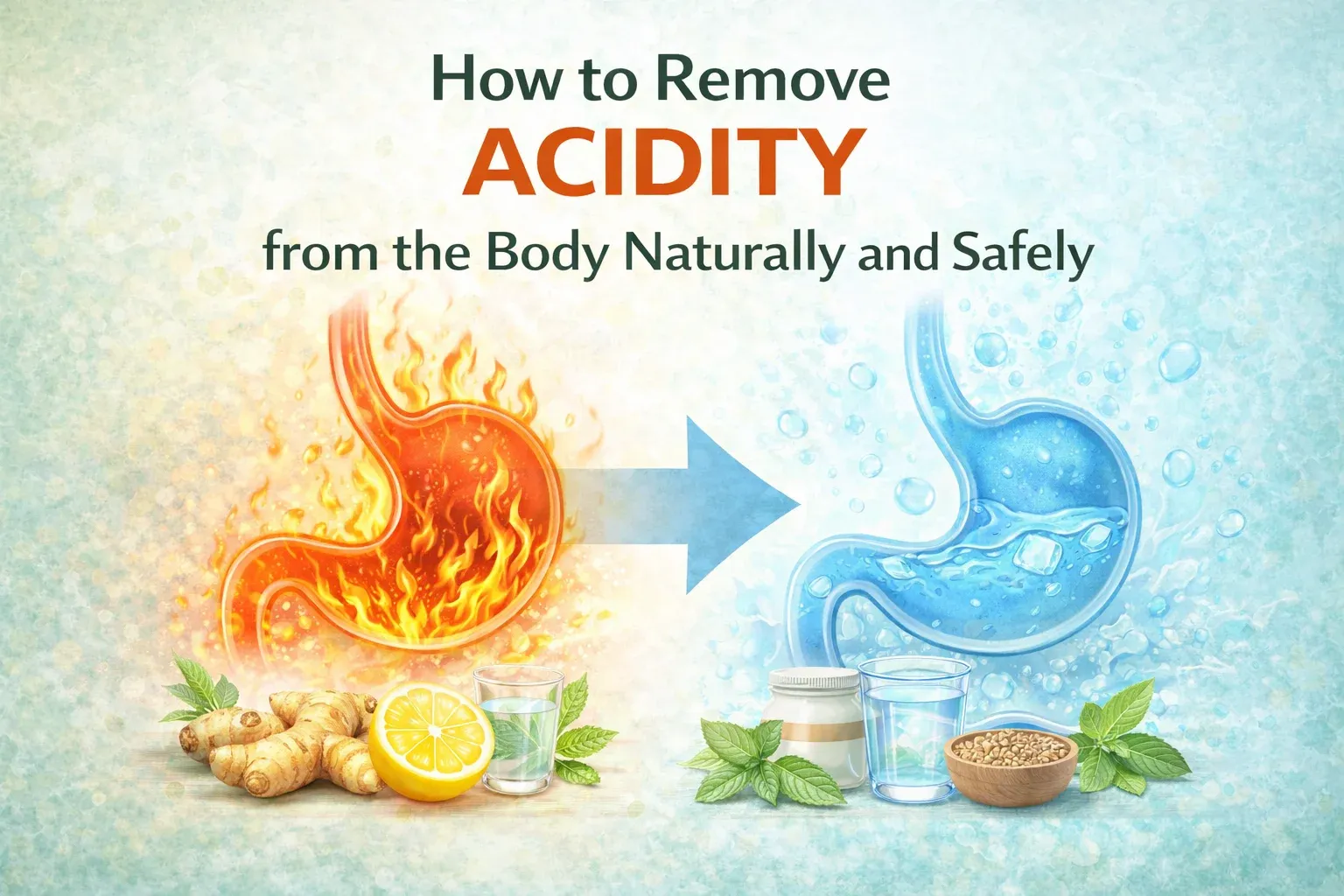
✏️ Quick Answer
Removing acidity from the body is not about neutralising every drop of stomach acid, your body needs that acid to digest food. The real goal is to stop excess acid from escaping upward into the food pipe. For instant relief: sit upright, sip cold milk slowly, or chew fennel seeds. For long-term removal: consistent daily habits followed for 4–8 weeks reduce recurring episodes in most people.
- Eat smaller, regular meals to prevent pressure build-up in the stomach
- Avoid trigger foods (spicy, fried, carbonated) that weaken the valve between stomach and food pipe
- Support gut microbiome balance through curd, buttermilk, and fibre-rich foods
- Manage stress, chronic stress directly increases acid production
- Stay upright for 2–3 hours after meals to prevent reflux
Acidity is not only about excess stomach acid. In many cases, it is connected to slow digestion, irregular eating patterns, gut microbiome imbalance, stress, and lifestyle habits. Understanding the causes of acidity and making simple lifestyle changes can help reduce recurring symptoms naturally. These approaches align with acidity home remedies that have long been used in India.
What Actually Removes Acid from the Body? The Physiology Explained
Acidity occurs when hydrochloric acid (HCl) produced by the stomach travels upward into the oesophagus (food pipe). This happens because the lower oesophageal sphincter (LES), a muscular valve at the junction of the stomach and oesophagus, relaxes or weakens.
Your body already has natural mechanisms to manage acid:
- The LES stays closed after food passes into the stomach, preventing acid from rising
- Saliva, which is alkaline, neutralises small amounts of acid that reach the oesophagus
- The stomach lining produces a protective mucus layer that prevents acid from damaging tissue
- Peristalsis (muscle contractions) moves food and acid downward, away from the oesophagus
Natural remedies work by supporting these existing mechanisms, not by eliminating stomach acid entirely.
Why Does the Body Produce Excess Acid?
- Overeating increases stomach pressure, which forces the LES open
- Stress triggers cortisol release, which increases acid output and slows stomach emptying [1]
- Trigger foods (caffeine, alcohol, fried foods) directly relax the LES
- Irregular meal timing disrupts the circadian rhythm of acid secretion, the stomach produces acid in anticipation of food, and if food does not arrive, that acid has nowhere to go
- Gut microbiome imbalance, reduced populations of beneficial bacteria like Lactobacillus strains are associated with greater digestive discomfort [2]
Occasional vs Chronic Acidity
| Type | Frequency | Main Cause | Approach |
|---|---|---|---|
| Occasional acidity | 1–2 times per month | Trigger foods, overeating | Home remedies, dietary adjustment |
| Frequent acidity | 2+ times per week | LES weakness, chronic stress, GERD | Lifestyle change + medical evaluation |
| Chronic GERD | Daily or near-daily | Structural LES dysfunction | Medical treatment required |
What Causes Acidity and Common Symptoms
Acidity symptoms can vary depending on food habits, digestion, and lifestyle factors. Common symptoms include:
- Burning sensation in the chest
- Sour burps and bitter taste in the mouth
- Bloating and gas after meals
- Nausea and stomach heaviness
- Upper stomach pain
- Headache linked with digestive discomfort
These symptoms often appear after heavy meals, late-night eating, or consuming trigger foods.
Most Effective Natural Ways to Remove Acidity from the Body (Ranked by Evidence)
1. Eat Smaller, More Frequent Meals
Large meals stretch the stomach walls and increase intra-gastric pressure, which forces the LES open. Eating 4–5 smaller meals instead of 2–3 large ones reduces this pressure. Most people notice a reduction in post-meal heaviness within 3–5 days of consistent practice.
2. Time Your Meals Consistently
Your stomach secretes acid in anticipation of food based on habitual meal timing. Irregular timing leads to acid secretion without food to buffer it. Eating at consistent times daily, ideally within a 1-hour window, reduces acid buildup between meals.
3. Stay Upright for 2–3 Hours After Meals
Gravity is one of the most underrated tools against acidity. When you are upright, gravity keeps stomach contents, including acid, in the stomach. Lying down removes this gravitational barrier. This is why late-night eating is a leading trigger for night-time reflux.
4. Include Gut-Friendly Fermented Foods Daily
Curd (dahi), buttermilk for acidity (chaas), and fermented pickles introduce beneficial bacteria to the gut. A balanced gut microbiome improves gastric motility, reducing the time food sits in the stomach and limiting pressure build-up [4]. Aim for 1 small bowl of curd or a glass of thin buttermilk with roasted cumin daily, ideally at lunchtime.
5. Use Digestive Spices Strategically
- Ginger (adrak): Accelerates gastric emptying, food leaves the stomach faster, reducing acid exposure. A 2008 study in the European Journal of Gastroenterology and Hepatology found ginger accelerated gastric emptying time significantly [5]
- Fennel seeds (saunf): Contain anethole, which relaxes smooth muscle in the gastrointestinal tract, reducing spasm and bloating
- Cumin (jeera): Stimulates bile production, supporting fat digestion and reducing gas
- Ajwain: Contains thymol, which stimulates digestive enzyme secretion
Practical use: Chew 1 teaspoon of fennel seeds after meals, or drink jeera water (1 tsp cumin boiled in 1 cup water) in the morning. Also read about cold milk for acidity as an instant-relief option.
6. Drink Warm Water Consistently
Warm water supports gastric motility and helps food move through the digestive tract more efficiently. Drinking 6–8 glasses of water daily, with the first glass warm in the morning, is a low-risk, accessible practice that most people can sustain long-term. Drink water between meals, not in large amounts during meals.
7. Reduce Trigger Foods Systematically
Rather than eliminating everything at once, eliminate one trigger category per week and observe whether symptoms reduce:
- Coffee and tea on an empty stomach (highest trigger for many)
- Carbonated drinks (CO₂ directly expands the stomach)
- Deep-fried snacks (slow gastric emptying significantly)
- Very spicy food in large quantities
- Processed foods high in refined sugar (disrupt gut microbiome)
Supporting gut health and digestion through a consistent reduction of these triggers, combined with fermented foods, produces the most durable long-term relief.
How to Remove Acidity from Body Instantly
- Sit upright, reduces pressure on the stomach and helps prevent acid from moving upward
- Sip cold milk slowly, its alkaline nature briefly neutralises stomach acid (for occasional acute use, not a daily habit)
- Chew fennel seeds, anethole relaxes intestinal smooth muscle and reduces bloating
- Drink ajwain water, thymol stimulates digestive enzyme secretion and reduces gas
- Drink jeera water, stimulates bile production and supports stomach comfort
How to Remove Acidity from Body: A Step-by-Step Daily Routine
Morning (Before Breakfast)
- Drink 1 glass of warm water (room temperature to slightly warm, not boiling)
- Wait 20–30 minutes before eating
- Have a light, non-spicy breakfast, oats with banana, plain dosa, or poha
- Avoid tea or coffee on an empty stomach; have it after eating something
During the Day (Meals and Snacks)
- Eat every 3–4 hours, do not allow gaps longer than 4–5 hours
- Keep portions moderate, fill the stomach to about 70% capacity
- Chew food slowly (20–30 chews per bite slows eating pace and reduces overeating)
- Drink water between meals, not in large amounts during meals
- Have 1 small bowl of curd or a glass of buttermilk with lunch
After Meals
- Chew 1 teaspoon of fennel seeds after lunch and dinner
- Stay seated or standing for at least 30 minutes after eating
- Do not lie down for at least 2–3 hours after dinner
Evening and Night
- Eat dinner at least 2–3 hours before sleeping
- Keep dinner light, avoid heavy proteins, deep-fried foods, or excess spice at night
- Elevate the head end of your mattress slightly if night-time reflux is frequent
- Practice 5–10 minutes of slow breathing or light walking after dinner to reduce stress-related acid production
- Drinking large amounts of water immediately after a meal (dilutes digestive enzymes, slows emptying)
- Skipping meals thinking it will reduce acid, the opposite happens (the acid has no food to work on)
- Taking antacids habitually without addressing dietary triggers (masks symptoms without fixing the root cause)
- Eating fruit on a full stomach (fruit ferments in the gut when combined with other foods, increasing gas)
How Long Does It Take to Remove Acidity from the Body?
| Timeframe | What Typically Happens | What You Can Do |
|---|---|---|
| Days 1–3 | Instant-relief remedies reduce acute symptoms quickly | Use home remedies for immediate comfort; start eliminating top trigger food |
| Week 1–2 | Reduced frequency of post-meal bloating and burning as meal timing regularises | Maintain consistent meal times; add curd/buttermilk to one meal daily |
| Week 3–4 | Gut microbiome begins adjusting to reduced trigger foods and added fermented foods | Introduce ginger/jeera water in the morning; monitor which foods still trigger symptoms |
| Month 2–3 | Significant reduction in recurring symptoms if dietary habits are maintained | Add regular physical activity, 30-minute walk daily improves gastric motility |
| Month 4+ | Long-term stabilisation; occasional episodes after trigger foods but no chronic pattern | Focus on stress management; consider gut health assessment if symptoms persist |
Natural Remedies vs Antacids: Which Works Better?
| Factor | Natural Remedies | Antacids (OTC) |
|---|---|---|
| Speed of relief | 20–60 minutes for acute remedies (cold milk, fennel) | 5–15 minutes |
| Duration of effect | Hours to permanent (with consistent habits) | 2–4 hours (symptom masking) |
| Root cause addressed? | Yes, dietary, microbial, and lifestyle causes | No, neutralises acid temporarily |
| Side effects | Minimal when used correctly | Long-term use can reduce calcium absorption and disrupt gut microbiome [6] |
| Best for | Mild to moderate recurring acidity, lifestyle-driven symptoms | Severe acute episodes; not suitable as a daily habit |
| When to avoid | If symptoms are severe or structural (GERD) | If used daily for more than 2 weeks without medical review |
References: [1] Tsigos C, Chrousos GP, Journal of Psychosomatic Research, 2002. [2] Carabotti M et al., Annals of Gastroenterology, 2015. [3] Bhatia SJ et al., Indian Journal of Gastroenterology, 2011. [4] Dimidi E et al., Nutrients, 2019. [5] Wu KL et al., European Journal of Gastroenterology and Hepatology, 2008. [6] Dial MS et al., JAMA, 2005.
When Should You See a Doctor?
- Acidity several times per week
- Difficulty swallowing
- Persistent vomiting
- Severe stomach pain
- Unexplained weight loss
- Black stools (possible sign of internal bleeding)
What This Means for You
For most people, removing acidity from the body naturally is genuinely achievable, not because of any single remedy, but because the root causes (irregular eating, trigger foods, stress, gut imbalance) are all within your control to change. Consistent practice of the daily routine above typically produces a noticeable reduction in symptoms within 2–4 weeks and significant long-term improvement by month 2–3.
- Today: Identify your top two trigger foods and decide which one you will eliminate or reduce first
- This week: Set consistent meal times and commit to a 2–3 hour gap between dinner and sleep
- This week: Add one fermented food, curd or buttermilk, to your daily lunch
- Within 2 weeks: Introduce a morning warm-water habit and post-meal fennel seeds
- Ongoing: Track your symptoms weekly, if they are not improving after 4 weeks of consistent changes, seek a medical evaluation
Key Takeaways
A practical guide on reducing acidity through food choices, home remedies, better meal timing, lifestyle changes and medical warning signs.
Your gut is unique your healing should be too.

Disclaimer
The content provided by Mool Health is for educational and informational purposes only and should not be considered a substitute for professional medical advice, diagnosis, or treatment.