
What to Eat in Typhoid: Foods to Eat and Avoid for Recovery
Food in typhoid should focus on easily digestible, nutritious, and hydrating options that support recovery. The article covers foods to eat and avoid during typhoid, along with practical dietary tips to support digestion, energy, and healing.
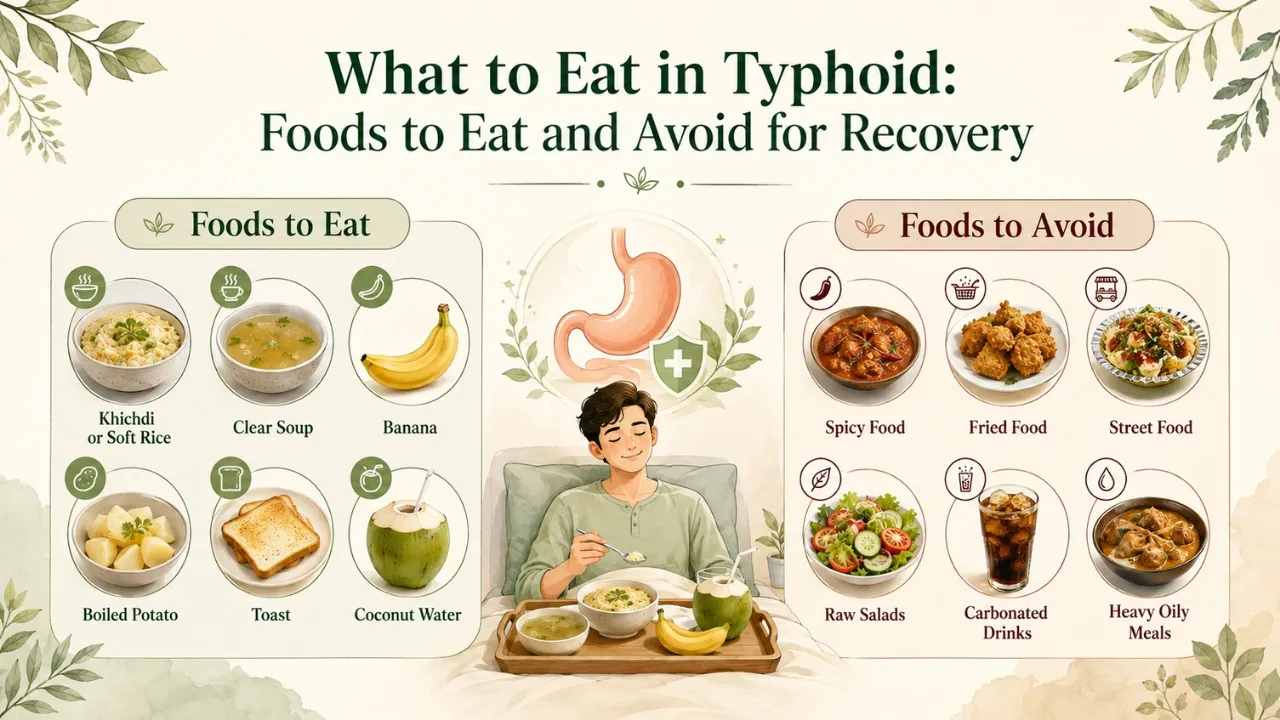
Quick Answer
During typhoid, prioritise soft, cooked, low-fibre, high-calorie foods and plenty of fluids. Start with liquids during acute fever, move gradually to semi-solid and soft foods as symptoms improve, and avoid raw, spicy, fried, or high-fibre foods until recovery is well established.
During typhoid, the right diet helps your body fight infection, protect the gut lining, and rebuild strength faster. Focus on high-calorie, easy-to-digest, soft foods — and avoid anything raw, spicy, or high in fibre until fever fully subsides.
What Is the Typhoid Diet? A Plain-Language Overview
The typhoid diet is a structured eating plan followed during and after a Salmonella typhi infection. It is designed to reduce the load on the inflamed gastrointestinal tract while supplying enough energy and nutrients to support recovery.
Typhoid causes intestinal inflammation that can last 3–4 weeks without proper care. During this period, the gut lining is fragile, digestive enzymes are suppressed, and the body's caloric demand rises by 10–15% due to sustained fever. The typhoid diet addresses all three challenges simultaneously.
Who it is for: Anyone diagnosed with typhoid fever — including children, adults, and elderly patients — typically follows this diet from the day of diagnosis through at least 2–3 weeks after the fever resolves.
Core principle: Soft, cooked, low-fibre, high-calorie foods that are easy to absorb without stressing a weakened gut.
What to Eat in Typhoid: Phase-by-Phase Food Guide
What to eat in typhoid depends on the phase of illness. Mool Health recommends a three-phase dietary approach aligned with the progression of typhoid fever.
Phase 1: Acute Fever Stage (Days 1–7)
During the first week, fever is highest and appetite is lowest. The intestinal wall is at its most inflamed. Focus entirely on liquids and semi-liquids.
Recommended foods:
- Boiled and cooled water (minimum 2–3 litres per day)
- Oral rehydration solution (ORS) to replace electrolytes lost to fever and sweating
- Clear vegetable broths (no spices, no onion)
- Coconut water (natural electrolytes: potassium ~600 mg per cup)
- Rice water (kanji) — soothes the gut lining
- Diluted fruit juices: apple, pomegranate, mosambi (avoid citrus in large quantities)
- Banana puree — soft, easy to digest, provides potassium
Feeding pattern: Small sips or portions every 2–3 hours. Avoid large meals entirely.
Phase 2: Subsiding Fever Stage (Days 8–14)
Fever starts to reduce. Appetite begins to return. Transition gradually to soft, semi-solid foods.
Recommended foods:
- Plain boiled rice or khichdi (rice + yellow moong dal, no tempering)
- Soft-boiled or scrambled eggs — high biological value protein (PDCAAS score: 1.0)
- Mashed potatoes (no butter or spices, just a pinch of salt)
- Curd (plain, unsweetened) — provides probiotics that may support gut flora restoration
- Soft-cooked vegetables: bottle gourd (lauki), ridge gourd, pumpkin
- Banana, papaya, melon — soft fruits that are easy to digest
- Moong dal soup (strained, thin consistency)
- Boiled sweet potato
Protein target: Aim for at least 1.2–1.5 g of protein per kg of body weight daily during recovery to counteract muscle loss from fever.
Phase 3: Convalescence / Regaining Strength (Week 3 Onwards)
Fever has resolved. Energy levels are low but improving. Gradually reintroduce normal foods over 10–14 days.
Recommended foods:
- Soft chapati (1–2 at a time, not heavily phulka-style)
- Dal (well-cooked, lightly spiced — no heavy tadka)
- Paneer (soft, not fried) — good source of protein and calcium
- Boiled chicken or fish (steamed, minimal spice)
- Cooked leafy vegetables: palak, methi (well-cooked, not raw salad)
- Fresh fruit: mango, banana, papaya, watermelon
- Milk (plain, not cold) — if tolerated, provides ~8 g protein per 250 ml
Reintroduce one new food every 1–2 days and watch for bloating, diarrhoea, or cramping.
What Fruits to Eat in Typhoid
Fruits to eat in typhoid should be soft, ripe, and either cooked or mashed in the acute stage. According to the Mool Health nutrition team, the following fruits are appropriate during typhoid recovery:
| Fruit | Why It Helps | Best Form |
|---|---|---|
| Banana | Soft texture, high potassium (~422 mg), gentle on gut | Raw, ripe, mashed |
| Papaya | Contains papain enzyme, aids digestion | Ripe, soft, no seeds |
| Watermelon | 92% water content, supports hydration | Fresh, chilled if tolerated |
| Pomegranate | Rich in antioxidants, may support immunity | Juice or fresh arils |
| Apple (cooked) | Pectin may soothe gut lining | Stewed or as juice |
| Mosambi (sweet lime) | Vitamin C, light on stomach | Fresh juice, diluted |
| Muskmelon | High water content, mild flavour | Fresh, ripe |
Avoid pineapple, raw citrus in excess, and any unripe or unpeeled fruits during the acute phase.
What Not to Eat in Typhoid for Fast Recovery
Knowing what not to eat in typhoid is as important as knowing what to eat. Certain foods can aggravate gut inflammation, trigger diarrhoea, or slow recovery.
Foods to strictly avoid during typhoid:
- Raw vegetables and salads — high fibre, difficult to digest, may carry bacterial contamination
- Whole grains and bran (wheat bran, oats, brown rice) — insoluble fibre irritates inflamed intestinal walls
- Spicy foods — chilli, black pepper, and heavy masalas increase intestinal irritation
- Fried foods — samosas, pakoras, puris — high fat slows gastric emptying and strains a weak digestive system
- Legumes with hard hulls — rajma, chhole, whole urad dal — gas-forming and high in insoluble fibre
- Carbonated drinks — bloating and gas worsen abdominal discomfort
- High-sugar foods — sweets, mithai, sugary drinks — can promote bacterial growth and cause osmotic diarrhoea
- Alcohol — suppresses immune function and dehydrates
- Street food and outside food — risk of secondary infection during immune suppression
- Red meat — difficult to digest, high in saturated fat
- Raw or undercooked eggs — risk of Salmonella co-infection
Which Indian Foods Are Best for Typhoid?
Indian cuisine offers several naturally suitable options for typhoid recovery. Mool Health notes that traditional Indian kitchen staples align closely with clinical dietary guidelines for typhoid.
| Indian Food | Phase Suitable | Key Benefit |
|---|---|---|
| Khichdi (moong + rice) | Phase 1–2 | Balanced protein + carbs, easy to digest |
| Curd rice | Phase 2–3 | Probiotics + gentle carbs |
| Sabudana (tapioca) khichdi | Phase 1–2 | Easy to digest, high carbohydrate energy |
| Moong dal soup | Phase 1–2 | Light protein, low fibre |
| Daliya (broken wheat porridge) | Phase 2–3 | Soluble fibre, soft texture |
| Suji/rava upma | Phase 2–3 | Semolina — easy to digest when lightly cooked |
| Boiled sweet potato | Phase 2–3 | Complex carbs, potassium, vitamin A |
| Banana lassi (light) | Phase 2–3 | Probiotic + energy |
| Rice kanji | Phase 1 | Hydration, soothes gut lining |
| Coconut water | Phase 1–2 | Natural electrolytes, no sugar added |
Foods to avoid in Indian context: Heavy biryani, dal makhani, butter naan, pav bhaji, misal pav, pickle (achaar), papad, and any deep-fried snacks.
Can You Drink Milk or Eat Curd in Typhoid?
Milk: Plain, warm milk is generally tolerated in Phase 2 and Phase 3 of typhoid recovery, provided no lactose intolerance exists. Cold milk may cause digestive discomfort. Avoid flavoured or sweetened milk products.
Curd: Yes, plain unsweetened curd (dahi) can be eaten in typhoid from Phase 2 onwards. Curd contains Lactobacillus bacteria that may help restore gut microbiome balance disrupted by typhoid and antibiotic treatment. Studies suggest probiotic supplementation can reduce antibiotic-associated diarrhoea by up to 60% [1].
What to avoid: Lassi with heavy sugar or salt, flavoured yoghurt, and cold dairy products in Phase 1.
How the Typhoid Diet Works: The Mechanism Explained
The typhoid diet works because it matches the physiological state of the intestine during a Salmonella typhi infection. Here is the causal reasoning behind each dietary principle:
- Low fibre reduces mechanical stress — Insoluble fibre requires muscular gut contractions. During typhoid, inflamed intestinal walls are at risk of perforation (a serious complication affecting approximately 1–3% of untreated cases). Low-fibre food reduces that mechanical load.
- High calories fight fever-driven catabolism — A body temperature of 39–40°C increases basal metabolic rate by approximately 7% per degree Celsius. Without sufficient calorie intake, the body breaks down muscle protein, slowing recovery.
- Soft foods protect the mucosal barrier — Typhoid damages the mucosal lining of the small intestine. Soft, easily absorbed foods require minimal digestive enzyme secretion and reduce further irritation.
- Adequate hydration prevents complications — Fever and reduced appetite commonly lead to dehydration. Adequate fluid intake (2.5–3 litres daily) maintains blood volume, kidney function, and thermoregulation.
- Probiotics support post-antibiotic recovery — First-line antibiotics (azithromycin, ceftriaxone) disrupt gut flora. Foods like curd and fermented foods may partially restore this balance during convalescence.
- Small frequent meals prevent overloading — Typhoid reduces gastric motility. Large meals sit longer in the stomach, increasing nausea and the risk of vomiting. Meals every 2–3 hours in small portions solve this.
Typhoid Diet Timeline: What to Expect Week by Week
| Week | Fever Status | Diet Focus | Foods to Introduce |
|---|---|---|---|
| Week 1 | High fever (39–40°C) | Liquids only | ORS, rice water, coconut water, clear broth, banana puree |
| Week 2 | Fever reducing | Semi-solids | Khichdi, soft eggs, mashed potato, curd, moong soup |
| Week 3 | Fever resolved | Soft regular food | Dal, soft chapati, boiled chicken/fish, cooked vegetables |
| Week 4 | Convalescence | Gradual normalisation | Add fruits, mild spices, soft legumes one at a time |
| Week 5–6 | Full recovery | Near-normal diet | Return to normal diet cautiously; avoid raw/fried food for 2 more weeks |
Note: Recovery timelines vary depending on the severity of infection, the antibiotic used, age, and baseline nutritional status. Children and elderly patients may need an additional 1–2 weeks on the soft diet phase.
What to Eat in Typhoid: Best Practices and Expert Tips
The Mool Health clinical nutrition team recommends the following best practices for managing the typhoid diet effectively:
- Boil all drinking water — Even if tap water appears clean, boil and cool it during the illness to prevent reinfection or secondary bacterial contamination.
- Eat every 2–3 hours, not 3 large meals — Small, frequent meals are easier on an inflamed gut and maintain energy levels without overloading digestion.
- Track fluid intake — Aim for at least 2.5 litres of fluids daily. Use ORS if sweating is heavy.
- Prioritise cooked over raw — Even during recovery, cooked and peeled fruit is safer than raw salads until the gut fully heals.
- Reintroduce fibre slowly — Start with soluble fibre (banana, cooked apple, oats in Phase 3) before adding insoluble fibre (raw vegetables, bran).
- Avoid self-prescribing appetite stimulants — Some traditional remedies (heavy ghee, fried foods) can worsen gut inflammation even if the patient feels hungry.
- Monitor stool consistency — Loose stools after introducing a new food mean that food should be removed and retried a week later.
- Continue soft diet for 2 weeks after fever breaks — Intestinal healing continues well after the fever resolves. Premature return to normal diet is a common cause of relapse symptoms.
Common mistakes to avoid:
- Switching to normal food the day fever breaks
- Eating raw salads and fruits with skin
- Drinking cold or refrigerated beverages in Phase 1
- Forcing solid foods on a child who is refusing to eat (liquids are sufficient in Phase 1)
Tips for Caregivers
- Prepare fresh food for every meal. Leftover food increases infection risk for an immunocompromised patient.
- Wash hands thoroughly before food preparation.
- Use separate utensils for the typhoid patient.
- Do not rely on restaurant food or packaged ready-to-eat meals during recovery.
What to Eat in Typhoid vs. Normal Diet: Key Differences
| Parameter | Typhoid Diet | Normal Balanced Diet |
|---|---|---|
| Fibre content | Very low (Phase 1–2), gradual increase | High (25–38 g/day recommended) |
| Meal size | Small, frequent (every 2–3 hours) | 3 main meals + 2 snacks |
| Food texture | Soft, mashed, liquid in early phase | Varied |
| Raw foods | Avoided | Encouraged |
| Spice level | None to minimal | Moderate |
| Protein source | Eggs, curd, moong dal, soft fish | Wide variety |
| Hydration focus | Very high (2.5–3 L/day) | Standard (1.5–2 L/day) |
| Duration | 4–6 weeks total | Indefinite |
The typhoid diet is a temporary therapeutic measure, not a long-term lifestyle. Returning to a normal healthy diet after full recovery is not only safe but recommended to restore nutritional deficiencies caused by the illness.
Research and Evidence: What Studies Say About Typhoid Nutrition
[1] Probiotics and antibiotic-associated diarrhoea: A 2012 Cochrane review of 63 randomised trials found that probiotic use during antibiotic therapy reduced diarrhoea incidence by approximately 42%. This supports the inclusion of curd in the typhoid recovery diet, particularly during antibiotic treatment.
[2] Protein requirements in fever: Research published in the American Journal of Clinical Nutrition indicates that protein synthesis rates drop significantly during systemic infection. Adequate protein intake of 1.2–1.5 g/kg/day may help attenuate lean muscle loss during and after typhoid.
[3] Hydration and typhoid outcomes: A study in Tropical Medicine & International Health noted that dehydration significantly worsened outcomes in enteric fever patients. ORS and consistent fluid intake were correlated with shorter hospital stays.
[4] Intestinal perforation risk: Clinical literature reports intestinal perforation in 1–3% of typhoid cases, typically in the third week of untreated or mismanaged illness. High-fibre and hard foods during this window are considered a contributing mechanical risk factor.
When to See a Doctor About Your Typhoid Diet
Dietary management alone does not treat typhoid. Antibiotics prescribed by a licensed physician are essential. Food and hydration support recovery, but they should always be used alongside the treatment plan recommended by your doctor.
Contact your doctor promptly if:
- Your fever is not improving despite treatment, or returns after initially settling.
- You are unable to eat or drink enough to maintain hydration and energy.
- Repeated vomiting prevents you from keeping fluids, ORS, medicines, or food down.
- Diarrhoea becomes frequent or persistent, particularly if it causes weakness or dehydration.
- You notice very little urine, severe thirst, dizziness, unusual weakness, or other signs that you may be dehydrated.
- You develop worsening abdominal pain, significant abdominal swelling, or unusual tenderness.
- You notice blood in the stool, black stool, or any sudden change in bowel symptoms.
- Your appetite remains extremely poor even after the fever begins to subside.
- You lose significant weight or continue becoming weaker despite following the recovery diet.
- A food that was previously tolerated suddenly causes repeated diarrhoea, vomiting, bloating, or abdominal cramping.
Children, older adults, pregnant people, and anyone with another medical condition may require closer monitoring because dehydration and nutritional loss can become significant more quickly.
Continue all prescribed antibiotics for the full duration recommended by your doctor, even if the fever improves earlier. Do not change or stop medication based only on improvement in appetite or digestive symptoms.
Key Takeaways
- Keep meals gentle: Choose soft, cooked, low-fibre foods and progress from liquids to solids gradually.
- Prioritise fluids: Use water, ORS, rice water, broths, and other suitable fluids to prevent dehydration.
- Eat small, frequent meals: Smaller portions are easier to tolerate while appetite and digestion recover.
- Avoid gut irritants: Skip raw, spicy, fried, high-fibre, and street foods until recovery is well established.
- Continue medical treatment: Complete prescribed antibiotics and seek care if symptoms worsen or warning signs appear.
Your gut is unique your healing should be too.

Disclaimer
The content provided by Mool Health is for educational and informational purposes only and should not be considered a substitute for professional medical advice, diagnosis, or treatment.