
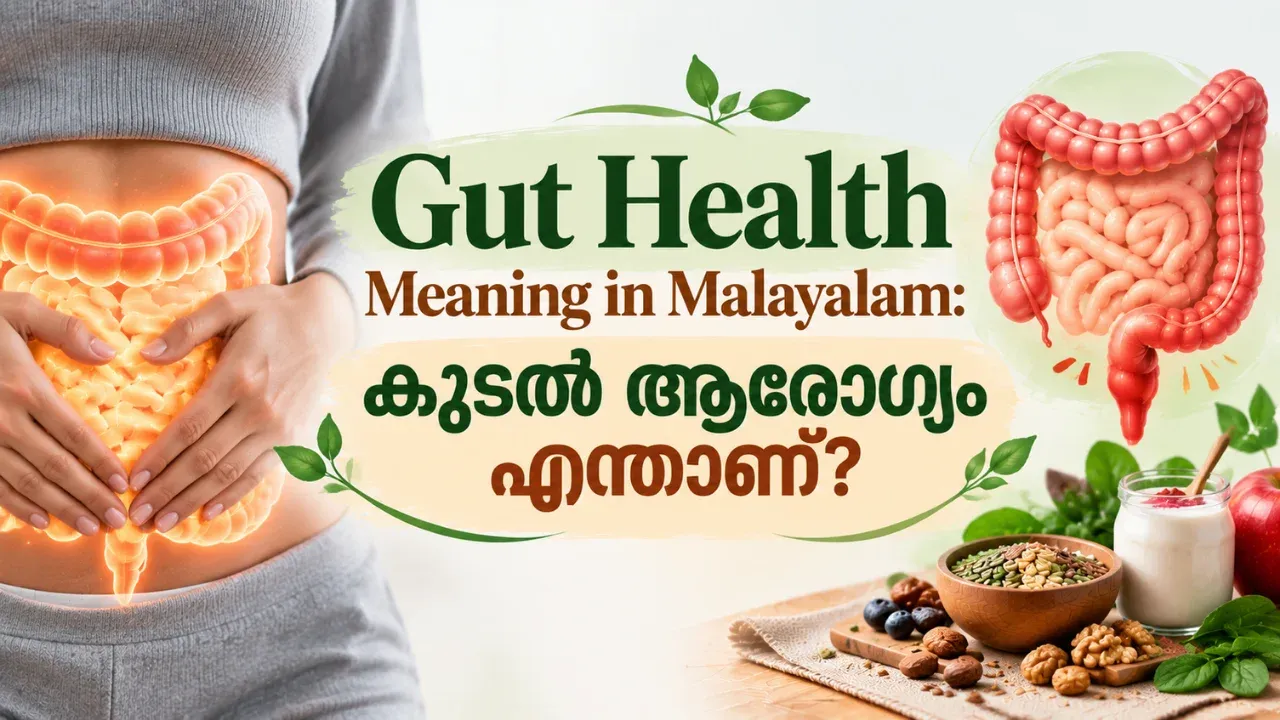
Gut Health Meaning in Malayalam: കുടൽ ആരോഗ്യം എന്താണ്?
Gut health meaning in Malayalam guide covering കുടൽ ആരോഗ്യം, digestion, gut microbiome, healthy signs, symptoms, foods and habits.
Published on Wed Sep 30 2026
Quick Answer
Gut health meaning in Malayalam is “കുടൽ ആരോഗ്യം” (kudal aarogyam) or “ദഹനവ്യവസ്ഥയുടെ ആരോഗ്യം” (dahana vyavasthayude aarogyam). It refers to how well your stomach and intestines digest food, absorb nutrients, move waste and maintain a stable community of microorganisms.
Good gut health does not mean that you never experience gas or discomfort. It generally means digestion and bowel movements are comfortable and predictable, while recurring bloating, constipation, diarrhoea, reflux or stomach pain may signal that your digestive system needs attention.
The word “gut” usually refers to the gastrointestinal tract, especially the stomach and intestines. Therefore, when someone searches for gut health Malayalam meaning, they are asking about the overall health and function of the digestive system, not only the presence of “good bacteria.”
Your digestive system breaks food into smaller components, absorbs water and nutrients, and removes waste. Microorganisms living in the gastrointestinal tract also participate in digestion. However, gut-health symptoms can have many causes, so they should not be used to diagnose a microbiome imbalance on their own.
What Is Gut Health Meaning in Malayalam?
In simple Malayalam, gut health can be explained as “വയറിന്റെയും കുടലിന്റെയും നല്ല പ്രവർത്തനം”, the healthy functioning of the stomach and intestines. A healthy digestive system should be able to process food, support nutrient absorption and allow comfortable bowel movements without frequent distress.
| English term | Malayalam meaning | Simple explanation |
|---|---|---|
| Gut | കുടൽ / ദഹനപഥം | The stomach and intestinal tract |
| Gut health | കുടൽ ആരോഗ്യം | How well the digestive system functions |
| Digestion | ദഹനം | Breaking down food so the body can use it |
| Gut microbiome | കുടലിലെ സൂക്ഷ്മജീവികളുടെ സമൂഹം | Microorganisms that live mainly in the intestines |
| Bowel movement | മലവിസർജനം | Passing stool from the body |
How Does the Gut Work?
Digestion begins in the mouth and continues through the food pipe, stomach, small intestine and large intestine. The liver, gallbladder and pancreas also help by producing or storing substances needed for digestion. how the digestive system works can help you understand what happens after every meal.
- Food is chewed and mixed with saliva in the mouth.
- The stomach mixes food with acid and digestive juices.
- The small intestine absorbs most nutrients from digested food.
- The large intestine absorbs water and forms stool.
- Muscle contractions move waste towards elimination.
What Is the Gut Microbiome?
The gut microbiome is the community of bacteria and other microorganisms living in the gastrointestinal tract. Some of these organisms help process parts of food that the body cannot fully digest by itself. The composition of this community varies between people and can be influenced by diet, medicines, age, environment and other factors.
Common Signs of a Healthy Gut
There is no single home test that confirms perfect gut health. However, the following patterns may suggest that your digestion is functioning comfortably:
- •Regular bowel movements that are easy to pass
- •Minimal straining or prolonged urgency
- •Food is tolerated without frequent pain or severe bloating
- •No recurring reflux, nausea or unexplained vomiting
- •A stable appetite and no unexplained weight loss
- •Digestive symptoms do not regularly disturb sleep or daily activities
Symptoms That May Suggest Poor Gut Health
The phrase “poor gut health” is broad. Symptoms may come from diet, infection, food intolerance, reflux, constipation, irritable bowel syndrome or another digestive condition. common digestion problems if you frequently experience:
- •Bloating or excessive gas
- •Constipation, diarrhoea or alternating stool patterns
- •Acidity, heartburn or sour burps
- •Stomach pain or cramps
- •A feeling of incomplete bowel movement
- •Nausea, reduced appetite or discomfort after meals
How to Support Gut Health Naturally
Most people do not need an extreme “gut reset.” Consistent daily habits are more useful than short detoxes or restrictive diets. The following steps may support normal digestion:
- Eat a varied diet with vegetables, fruits, pulses and whole grains. Increase fibre gradually, especially if you currently eat very little.
- Drink enough water through the day. Fluid needs differ according to weather, activity, pregnancy and health conditions.
- Eat slowly and avoid repeatedly overeating. Regular meal timing may help people whose symptoms worsen after irregular meals.
- Move your body daily. Walking and other regular activity can support bowel movement and overall digestive function.
- Prioritise sleep and stress management because the brain and digestive tract communicate through nerves, hormones and immune signals.
- Avoid unnecessary antibiotics and do not stop prescribed medicines without medical advice.
- Track foods, bowel patterns and symptoms before eliminating multiple food groups.
For a more structured approach, read how to improve digestion naturally rather than depending on quick-fix drinks, harsh laxatives or unverified supplements.
Malayalam Foods That Can Be Part of a Gut-Friendly Diet
A gut-friendly diet does not require imported foods. Familiar Kerala staples can provide fibre, fluids and variety when portions suit your body and medical needs.
| Food group | Examples | How it may help |
|---|---|---|
| Vegetables | ചീര, പയർ, കാരറ്റ്, വെണ്ടയ്ക്ക | Adds fibre and dietary variety |
| Fruits | പപ്പായ, പേരയ്ക്ക, വാഴപ്പഴം, ഓറഞ്ച് | Provides fibre, fluid and micronutrients |
| Pulses | പരിപ്പ്, കടല, ചെറുപയർ | Provides fibre and plant protein |
| Whole grains | ഓട്സ്, മില്ലറ്റ്, മട്ട അരി | Can increase total dietary fibre |
| Fermented foods | തൈര്, മോര്, ഇടലി/ദോശ batter | May add fermented-food variety if tolerated |
Fermented foods are not suitable for everyone, and yoghurt is not the same as a clinically studied probiotic strain. People with lactose intolerance, reflux or specific medical diets may need different choices.
Gut Health and Ayurveda: A Balanced View
Ayurveda often describes digestion through the concept of Agni, or digestive capacity. Modern medicine explains digestion through organs, enzymes, gut movement, nerves and microorganisms. These frameworks use different language. Ayurvedic habits may support routine and mindful eating, but persistent symptoms still need medical evaluation and should not be assumed to result from one dosha or “toxins.”
When Should You Take a Gut Health Assessment?
A symptom assessment may help you organise information about bowel habits, acidity, bloating, meal patterns and lifestyle triggers. It is not a substitute for diagnosis. Mool’s free gut test can help you review your pattern before discussing ongoing symptoms with a qualified professional.
Want to Understand Your Gut Pattern Better?
Recurring bloating, constipation, diarrhoea, reflux or stomach pain may need a clearer gut pattern. Take Mool Health’s free gut test.
Conclusion
Gut health meaning in Malayalam is best understood as “കുടൽ ആരോഗ്യം”, the healthy functioning of your digestive tract. It includes digestion, nutrient absorption, bowel movement and the environment in which gut microorganisms live.
Instead of chasing a perfect microbiome or a one-week detox, focus on varied food, adequate fluids, regular movement, sleep and a clear assessment of recurring symptoms. Take Mool’s free gut test to understand your digestive pattern and identify the next appropriate step.
Key Takeaways
Gut health meaning in Malayalam guide covering കുടൽ ആരോഗ്യം, digestion, gut microbiome, healthy signs, symptoms, foods and habits.
Your gut is unique your healing should be too.

Disclaimer
The content provided by Mool Health is for educational and informational purposes only and should not be considered a substitute for professional medical advice, diagnosis, or treatment.