
What is Burping? Causes, Symptoms, and Treatment
Burping is the release of swallowed air through the mouth and is usually normal. Learn about its causes, symptoms, home remedies, treatment, including its links to acid reflux, indigestion and digestive health.
Ayurvedic Physician & Medical Operations Lead at Mool
Published on 13,November 2026
Updated on 13,November 2026
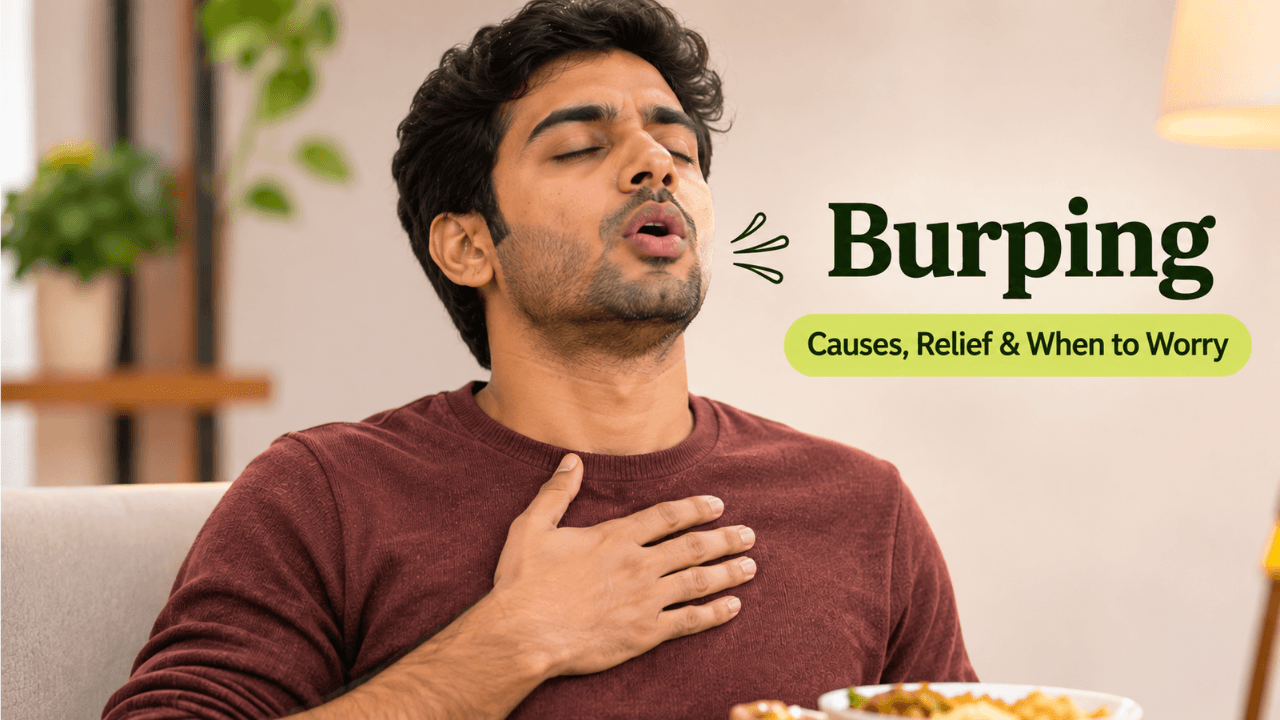
Quick Answer
Burping, also called belching or eructation, is the release of swallowed air through the mouth. It is usually normal, especially after eating or drinking. Frequent burping may be linked to eating quickly, fizzy drinks, swallowing excess air, acid reflux, indigestion, or supragastric belching. Eating slowly, avoiding personal triggers, and practising diaphragmatic breathing may help. Persistent burping with other symptoms needs medical assessment.
Burping is a normal part of digestion that releases extra air that builds up in your digestive system from the stomach or oesophagus through the mouth. However, experiencing it frequently or persistently can become uncomfortable, particularly when it happens after every meal or even on an empty stomach. You may also notice it alongside bloating, heartburn, or a feeling of fullness.
Belching, or eructation, is the medical term for burping: the release of gas from your stomach through your mouth. It usually happens when you swallow air while eating or drinking. However, repeated belching can sometimes be associated with acid reflux, indigestion, or a behavioural pattern of swallowing and releasing air.
What Is Burping?
When you eat, drink, or swallow, you also swallow small amounts of air. This air stretches the stomach until a muscle at the lower end of the oesophagus (the lower oesophageal sphincter) relaxes, allowing the air to escape. Belching is the process of releasing this swallowed air.
Your body uses belching to release this excess air and reduce pressure in the stomach. Occasionally, it is therefore a normal bodily function. According to the National Institute of Diabetes and Digestive and Kidney Diseases (NIDDK), people typically belch up to 30 times a day, although the frequency varies. [1]
Is Burping Normal?
Yes, it is generally normal, especially during or after meals. You may burp more when you eat quickly, drink fizzy beverages, or swallow extra air.
However, if you burp repeatedly throughout the day, feel discomfort, or find it interferes with your daily activities, identifying the underlying cause by consulting a gastroenterologist may help.
Difference Between Burping and Hiccups
Burping and hiccups are different bodily processes. The table helps you differentiate between the two:
| Burps | Hiccups |
|---|---|
| Releases gas through your mouth. | Occur due to involuntary diaphragm contractions. |
| Often follows eating or drinking. | May occur after eating, drinking, or suddenly changing temperature. |
| Usually provides relief from trapped air. | Produces a characteristic “hic” sound. |
Common Symptoms of Burping
Burping itself is the release of gas. Depending on its cause, you may experience other symptoms, such as:
- Frequent or repetitive belching
- A feeling of fullness after eating
- Bloating or abdominal discomfort
- Heartburn or a burning sensation in your chest
- A sour or bitter taste in your mouth
- Nausea or the sensation of food coming back up
If you experience belching with other digestive symptoms, the combination of your symptoms may help your doctor identify the cause and suggest appropriate treatment.
What Are the Causes of Burping?
The most common causes of burping involve swallowing excess air or experiencing changes in how your digestive tract works. Sometimes, an underlying digestive condition may also contribute. The table shows some of the most common causes:
| Causes | Mechanism |
|---|---|
| Aerophagia | Eating quickly introduces extra air into the stomach through everyday habits like chewing gum or using straws. |
| Supragastric Belching | Sucks air into the oesophagus and immediately expels it before it ever enters the stomach. |
| Large Meals | Stretches the stomach wall by forcing it to accommodate a high volume of food and trapped air at once. |
| Carbonated Drinks | Releases trapped carbon dioxide gas directly into the upper digestive tract as the liquid warms up. |
| Acid Reflux (GERD) | Relaxes the lower oesophageal sphincter, letting stomach contents and trapped gas flow upward. |
| Indigestion | Disrupts how the stomach stretches to accommodate food and alters normal gut sensation processing. |
| Stress | Accelerates breathing patterns and triggers a brain-gut connection that increases subconscious air swallowing. |
Also Read: Acid Reflux: Causes, Symptoms and Treatment
What Causes an Older Person to Burp a Lot?
Frequent burps in older adults may often be associated with eating habits, reflux, indigestion, food intolerances, or certain medicines.
Age alone does not explain excessive belching. If the symptom is new, persistent, or accompanied by unexplained weight loss, difficulty swallowing, or vomiting, it should be evaluated by a healthcare professional.
Why Do You Burp in the Morning on an Empty Stomach?
Morning burps can happen even when you haven't eaten. You may have swallowed air during the night, experienced reflux while lying down, or noticed belching associated with an underlying digestive condition.
If it happens occasionally without other symptoms, it may not be concerning. However, persistent morning burps accompanied by pain, nausea, or heartburn require immediate medical assessment.
Mool Health’s probiotics gut reset contains ingredients that are clinically proven to relieve gut issues and enhance nutrient absorption. Your gut test analyses the symptoms and adds them to your kit.
How to Reduce and Prevent Burping
If your burp is related to swallowing excess air, a few changes to your daily habits may help.
| Habits | How it may help |
|---|---|
| Eat slowly and chew your food properly | Eating slowly can help reduce the amount of air you swallow. |
| Identify foods that trigger burps. | Keeping a simple food and symptom diary helps you track the causes and eliminate them. |
| Eat smaller meals | Because larger meals worsen fullness, indigestion, or reflux, eating smaller portions helps manage symptoms. |
| Avoid lying down immediately after eating. | Staying upright for a while usually helps your body digest food and lowers the risk of heartburn or indigestion. |
| Manage stress and anxiety. | Relaxation techniques, mindful eating and gentle breathing exercises may help if stress contributes to your symptoms. |
Note: Avoid eliminating entire food groups without a clear reason or professional guidance.
Mool Health Digest Ease may help support smoother digestion and reduce burps associated with digestive discomfort, helping you feel more comfortable after meals.
Practise Techniques to Reduce Air Swallowing
Diaphragmatic breathing may help you manage repetitive belching alongside treatment. To practise:
- Sit comfortably with your shoulders relaxed.
- Place one hand on your chest and the other on your abdomen.
- Breathe in slowly through your nose, allowing your abdomen to expand.
- Breathe out gently without forcing the air.
- Continue for a few minutes.
This technique may help with supragastric belching, where air is drawn into the oesophagus and released without reaching the stomach.
Home Remedies for Burping
Home remedies may help if your burp is related to eating habits or swallowed air. However, they are not a substitute for treatment when an underlying digestive condition is responsible.
What Drink Helps Stop Burping?
Research on drinks proven to stop burping immediately is limited. If fizzy drinks trigger your symptoms, switch to still water. Warm water may feel soothing, but limited evidence shows its temperature specifically reduces belching. Avoid peppermint drinks if you experience acid reflux, as peppermint may worsen symptoms in some cases.
Does Drinking Water Reduce Gas?
Drinking water supports normal digestion and hydration. However, it does not directly remove gas from your stomach.
Sipping water slowly may be more comfortable than drinking large amounts quickly, particularly if you tend to swallow air.
Which Fruit May Help Relieve Gas?
No fruit has been proven to remove stomach gas or stop burping directly. If you experience bloating along with belching, you may find certain fruits are better tolerated than others. Your response depends on the underlying cause and your individual digestive sensitivity.
Do Walking and Gentle Movement Help With Burping?
Gentle walking after meals may help you feel more comfortable when you feel full or bloated.
However, walking is not a specific treatment for excessive belching. If movement worsens your symptoms, stop and seek advice if the discomfort persists.
Which Finger Do You Press for Gas?
Some traditional acupressure practices involve pressing points on the hand or wrist to relieve digestive discomfort. However, reliable evidence that pressing a particular finger treats burping is limited. If you experience persistent gas or belching, identifying the cause is more useful than relying on acupressure points.
Treatment for Excessive Burping
Belching treatment depends on what is causing your symptoms. Occasional burping usually does not require medication.
Over-the-Counter Medicines for Burping
If a burp occurs alongside indigestion or acid reflux, a pharmacist may recommend an antacid or alginate to relieve associated symptoms.
However, these medicines do not necessarily treat the underlying cause of excessive belching. Simethicone may help some gas-related symptoms, but its effectiveness varies.
Note: Avoid taking medicines regularly without understanding why you are burping frequently. Also, a pharmacist can suggest over-the-counter (OTC) medicines only for mild symptoms and cannot replace a doctor’s diagnosis.
Belching Treatment for Acid Reflux and Indigestion
If your burp is associated with acid reflux or indigestion, your doctor may recommend lifestyle changes or medicines that reduce stomach acid.
Treatment may include:
- Antacids or alginates for short-term symptom relief
- Proton pump inhibitors (PPIs) when appropriate
- Treatment for an identified digestive condition
- Dietary changes based on your symptoms
If your belching is repetitive and related to supragastric air movement, medication may not be the main treatment. Behavioural approaches, such as diaphragmatic breathing, speech therapy or cognitive behavioural therapy, may help.
When Do You Need Medical Treatment for Frequent Burping?
You should consider seeing a doctor if:
- You burp frequently despite changing your eating habits.
- It is accompanied by persistent heartburn or abdominal discomfort.
- You experience symptoms that interfere with your daily life.
- Your symptoms have suddenly changed or become more frequent.
Your doctor may review your symptoms, medicines and eating habits. Depending on the findings, they may recommend further investigations.
When Should You Worry About Burping?
Occasional belching is usually harmless. However, consult a healthcare professional if it is frequent, persistent, worsening, excessive, occurs alongside other symptoms, or affects your quality of life.
You should also seek medical advice if you experience unexplained weight loss, difficulty swallowing, repeated vomiting, or ongoing abdominal pain. These symptoms may indicate an underlying condition that needs assessment.
Burping With Other Digestive Symptoms
Pay attention to symptoms that occur alongside belching. Here’s what your symptoms may be associated with:
| Symptom | Possible association |
|---|---|
| Heartburn or sour taste | Acid reflux |
| Fullness after meals | Indigestion |
| Bloating and abdominal cramps | Food intolerance or intestinal gas |
| Persistent nausea or vomiting | A digestive condition requiring assessment |
| Difficulty swallowing | An oesophageal problem requiring evaluation |
These associations are based on research and do not confirm a diagnosis. A healthcare professional can assess your symptoms and determine whether further testing is necessary.
Warning Signs That Need Medical Attention
Seek urgent medical attention if you experience severe or persistent chest pain, particularly if it spreads to your arm, jaw, or back, or occurs with breathlessness, sweating, or dizziness.
Do not assume chest pain is caused by gas or burping. Blood in your vomit or stools, severe abdominal pain or persistent vomiting also requires prompt medical assessment.
Mool Health’s Perspective on Burping
At Mool Health, we believe that burping may be due to a stressed gut, gut lining sensitivity, or sensitivity to a particular food group. To stop and manage symptoms of gas and bloating, we work on the root cause for long-term relief.
The Mool Health Gut Test analyses your symptoms in detail and builds a customised kit based on the severity of your stomach imbalance. Our holistic approach includes gut expert support with meal plans tailored for you, so that you can see a real difference with consistent use.
References
- Disney B, Trudgill N. Managing a patient with excessive belching. Frontline Gastroenterol. 2014;5(2):79-83. doi:10.1136/flgastro-2013-100355.
- National Institute of Diabetes and Digestive and Kidney Diseases (NIDDK). Symptoms & Causes of Gas in the Digestive Tract. Last updated June 2021.
- Moshiree B, Drossman D, Shaukat A. AGA Clinical Practice Update on Evaluation and Management of Belching, Abdominal Bloating, and Distention: Expert Review. Gastroenterology. 2023;165(3):791–800.e3.
- NHS. Indigestion. Last updated May 2023.
Key Takeaways
- Burping, also called belching or eructation, is a normal bodily process that releases swallowed air through the mouth.
- Common causes of frequent burping include eating quickly, carbonated drinks, swallowing excess air, large meals, acid reflux, indigestion, and stress.
- Supragastric belching occurs when air enters the oesophagus and is immediately expelled without reaching the stomach.
- Occasional burping after eating or drinking is generally harmless, but persistent or excessive belching may require medical assessment.
- Eating slowly, chewing thoroughly, having smaller meals, and avoiding personal triggers may help reduce burping.
- Diaphragmatic breathing and behavioural therapies may help people experiencing repetitive supragastric belching.
- Home remedies such as sipping water slowly or walking gently after meals may ease discomfort, but they do not treat every cause of excessive belching.
- Medicines such as antacids or alginates may help when belching occurs alongside acid reflux or indigestion, depending on the underlying cause.
- Persistent burping accompanied by unexplained weight loss, difficulty swallowing, repeated vomiting, or abdominal pain requires medical evaluation.
- Severe chest pain, blood in vomit or stools, or severe abdominal pain requires urgent medical attention.
Your gut is unique your healing should be too.

FAQs
Burping is a normal bodily process that releases swallowed air from your stomach. Occasional belching is generally harmless and may relieve pressure.
You may not be able to stop it immediately. You can try sitting upright, breathing slowly, and avoiding fizzy drinks or rapid eating to suppress your symptoms.
You may have swallowed air while talking, breathing, or feeling stressed. Reflux or repetitive supra-gastric belching can also occur independently of meals.
Yes. Burping may occur alongside acid reflux, indigestion, functional dyspepsia, or certain food intolerances. However, it alone does not confirm a gastric condition.
Not necessarily. Repetitive belching may also involve air moving into and out of the oesophagus without reaching the stomach.
Frequent burping can occur with acid reflux, particularly when you also experience heartburn or regurgitation. However, excessive belching has other causes, so don't assume reflux is responsible.
Disclaimer
The content provided by Mool Health is for educational and informational purposes only and should not be considered a substitute for professional medical advice, diagnosis, or treatment.