
Bloating During Periods: How to Reduce Period Bloating
Bloating During Periods occurs due to hormonal changes that affect digestion and fluid balance. This article explains the causes of period bloating, common symptoms, and effective ways to reduce discomfort through diet, lifestyle changes, and self-care.
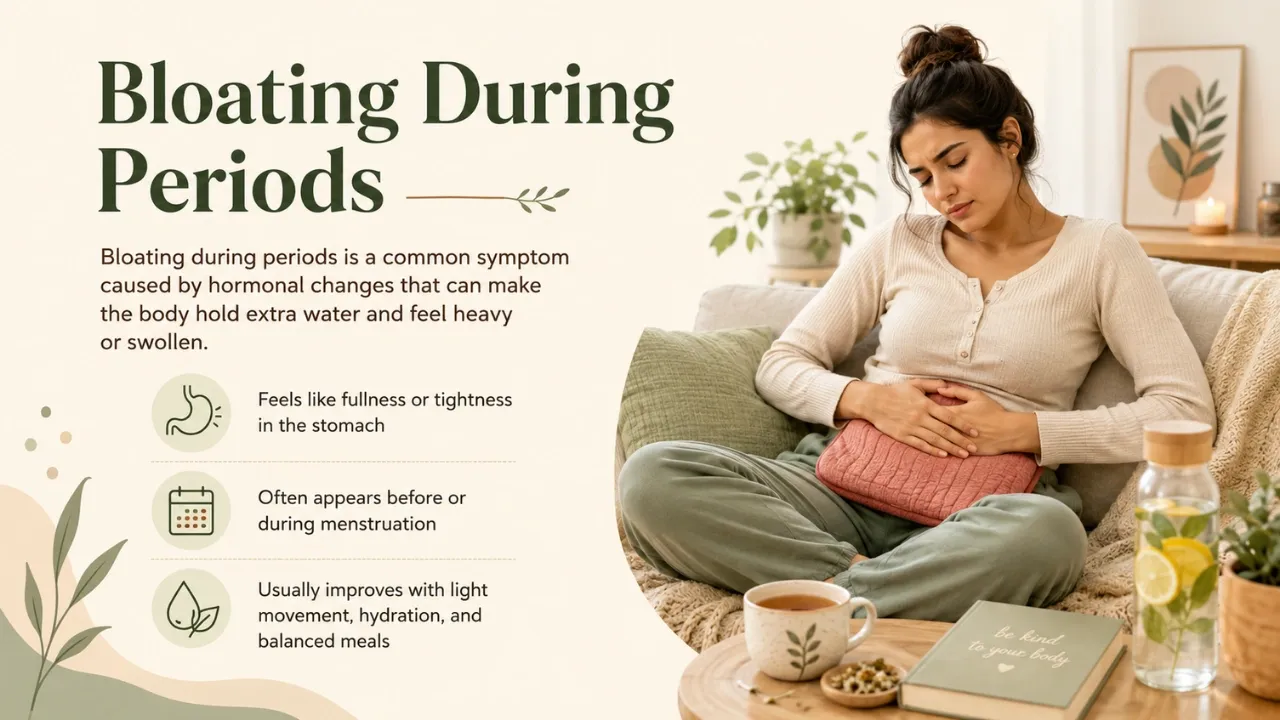
Quick Answer
Bloating during periods is caused by hormonal shifts, primarily Progesterone slowing gut motility, Oestrogen driving water retention, and Prostaglandins triggering intestinal cramping. It typically peaks 1 to 2 days before your period starts and resolves within the first 2 to 3 days of flow. To reduce it: cut salt in the luteal phase, increase magnesium and potassium, drink warm water, and move daily.
What Is Bloating During Periods?
Bloating during periods is temporary abdominal swelling, tightness, or visible distension that occurs in the days before or during menstruation. It is a recognised component of Premenstrual Syndrome (PMS) and is driven by hormonal fluctuations, not digestive disorders or dietary choices alone.
Period bloating has two distinct components:
- Water retention bloating, hormonal changes cause the body to hold excess fluid, particularly in the abdomen and lower body
- Gut motility bloating, Prostaglandins and Progesterone slow intestinal movement, causing gas and stool to accumulate and create distension
Bloating during periods is not fat gain or permanent swelling. It is a predictable, hormonally driven response that typically resolves within the first 2 days of menstrual flow once hormone levels drop.
According to the Mool Health gut health team, over 70% of women with regular cycles experience at least one moderate gastrointestinal symptom, including bloating, in the luteal phase of their cycle.
Why Does Bloating Happen During Periods? The Hormonal Science
Bloating during periods is caused by three overlapping hormonal mechanisms that occur across the menstrual cycle.
Progesterone and Gut Motility
In the luteal phase (days 15 to 28 of a typical 28-day cycle), Progesterone rises significantly. Progesterone directly relaxes smooth muscle, including the muscles lining the gastrointestinal tract. This slows gut motility, meaning food and gas move more slowly through the intestines. The result is accumulated intestinal gas and a sensation of trapped fullness that peaks just before menstruation begins.
A 2003 study published in Gut (Wald et al.) confirmed that whole-gut transit time increases significantly in the luteal phase compared to the follicular phase, directly explaining gas accumulation in the 10 days before menstruation.
Oestrogen and Water Retention
Oestrogen rises briefly then drops sharply in the days before a period. High Oestrogen levels cause the kidneys to retain sodium, and sodium retains water. This leads to visible fluid retention in the abdomen, face, hands, and feet. The abdomen feels tight and swollen even without excess gas.
Prostaglandins at the Start of Flow
When menstruation begins, the uterine lining releases Prostaglandins, hormone-like compounds that trigger uterine contractions. A 2016 review in Prostaglandins & Other Lipid Mediators confirmed that PGF2α acts on the myenteric plexus of the intestine, causing cramping, loose stools or constipation, nausea, and worsening bloating in the first 1 to 2 days of flow.
Hormonal Timeline of Bloating During Periods
| Cycle Phase | Days (Typical) | What Happens | Bloating Level |
|---|---|---|---|
| Follicular Phase | Day 1–14 | Oestrogen rises, gut motility normal | Low to none |
| Ovulation | Day 14–15 | Oestrogen peaks, brief water retention | Mild |
| Luteal Phase | Day 15–28 | Progesterone slows gut, Oestrogen causes water retention | Moderate to high |
| Pre-period | Day 26–28 | Prostaglandins build up, peak bloating | Highest |
| Menstruation starts | Day 1–2 | Prostaglandins release, cramping, loose stools | High then falling |
| Day 3–5 of period | Hormones drop, water released, gut normalises | Low to resolved |
What Does Stomach Bloating During Periods Feel Like?
Stomach bloating during periods has a distinct symptom profile that sets it apart from ordinary digestive bloating.
Common symptoms include:
- Abdominal swelling and tightness, the lower belly visibly protrudes and clothes feel tighter
- Fullness without overeating, even small meals feel heavy
- Gas and burping, slowed gut motility causes gas to accumulate
- Lower abdominal pressure, distinct from period cramps but often concurrent
- Temporary weight gain of 1 to 3 kg, almost entirely water retention that resolves quickly
- Nausea, especially in the first 2 days of flow when Prostaglandins peak
- Alternating constipation and loose stools, Progesterone slows transit first; Prostaglandins then speed it up
Period Bloating vs Food-Related Bloating
| Feature | Period Bloating | Food-Related Bloating |
|---|---|---|
| Timing | Predictable, same cycle phase each month | Within hours of eating |
| Duration | 5 to 7 days | Hours to 1 day |
| Location | Lower abdomen, full-body fluid retention | Upper or mid abdomen |
| Trigger | Hormonal, not a specific food | Specific food or intolerance |
| Resolves with | Period starting, then hormone drop | Gas passing, digestion completing |
How Long Does Bloating During Periods Last?
Bloating during periods typically begins 3 to 5 days before menstruation, peaks 1 to 2 days before the period starts, and resolves within the first 2 to 3 days of flow as hormone levels drop and the body releases retained water. Total duration is usually 5 to 7 days per cycle.
Bloating that persists beyond day 4 of your period is outside the typical hormonal pattern. According to Mool Health, persistent or progressively worsening bloating across multiple cycles warrants investigation to rule out underlying conditions.
Why Does Your Period Cause Gas? The Intestinal Mechanism
Period gas is a direct side effect of the same hormones that cause cramping, not a consequence of what you ate.
Progesterone relaxes intestinal smooth muscle, slowing the passage of food and gas. Slowed transit means food sits longer in the large intestine. Gut bacteria ferment this residual food and produce more gas than usual. Intestinal gas production can increase by up to 40% when gut transit time slows, because fermentation time for food in the colon rises proportionally.
At the same time, the rectum and sigmoid colon are physically adjacent to the uterus. Uterine contractions directly compress these structures, worsening trapped gas pressure and the urge to pass wind frequently. This is why many women notice significantly more flatulence in the 1 to 2 days before their period and on day 1 to 2 of flow.
To relieve menstrual gas quickly:
- Fennel seed water, Simmer 1 teaspoon of fennel seeds in 300 ml of water for 5 minutes, strain, and drink warm. Anethole in fennel relaxes intestinal spasm and releases trapped gas within 20 to 30 minutes.
- Pawanmuktasana (knee-to-chest yoga pose), Lie on your back and pull both knees to your chest for 30 seconds. This mechanically compresses the colon and releases trapped gas.
- Warm peppermint tea, Menthol relaxes intestinal smooth muscle. One cup may provide noticeable relief within 15 minutes.
- Gentle clockwise abdominal massage, Five minutes of circular strokes following the direction of the colon helps move gas through the intestinal tract.
- Avoid gas-amplifying foods on day 1 and 2, Beans, cruciferous vegetables (broccoli, cauliflower, cabbage), carbonated drinks, and chewing gum add gas volume on top of existing motility slowdown.
How to Reduce Bloating During Periods, 7 Proven Methods
Reducing bloating during periods requires targeting both water retention and gut motility across the luteal phase and the first days of flow.
1. Reduce Salt Intake in the Luteal Phase
Sodium is the primary driver of water retention. In the 5 to 7 days before your period, reduce processed foods, pickles, papads, packaged snacks, and sauces, all of which contain high levels of hidden sodium. This single dietary change can reduce visible abdominal swelling by 30 to 40%.
2. Increase Potassium and Magnesium
Potassium counteracts sodium's water-retaining effect. Potassium-rich foods include banana, sweet potato, coconut water, spinach, and avocado. Magnesium relaxes intestinal smooth muscle and improves gut motility. Magnesium-rich foods include pumpkin seeds, dark leafy greens, almonds, and dark chocolate.
3. Drink More Warm Water
Drinking more water reduces water retention. When dehydrated, the body holds onto sodium and water more aggressively. Warm water stimulates intestinal peristalsis, helping gas move through faster. Aim for 2.5 to 3 litres daily in the week before your period.
4. Choose Anti-Bloating Drinks
Drinks that may reduce bloating naturally include:
- Warm ginger tea, reduces Prostaglandin-driven cramping and gut spasm
- Peppermint tea, relaxes intestinal muscles
- Fennel seed water, relieves trapped gas
- Warm water with lemon, stimulates bile flow and digestion
5. Eat Anti-Bloating Foods and Avoid Trigger Foods
Foods that may help prevent gas and bloating include cucumber, ginger, pineapple (bromelain reduces inflammation), papaya (papain supports digestion), fennel, and asparagus (a natural diuretic).
Foods to reduce during this phase: beans, cruciferous vegetables (cabbage, broccoli, cauliflower), carbonated drinks, alcohol, and refined carbohydrates.
6. Exercise Regularly, Even Lightly
Physical movement is one of the most effective tools to reduce period bloating. Walking, gentle yoga, and swimming stimulate intestinal peristalsis and help the body release retained water through sweat. Even 20 to 30 minutes of walking daily reduces gas accumulation meaningfully.
7. Consider Magnesium Supplementation
A double-blind, randomised controlled trial published in the Journal of Women's Health (Walker et al., 2000) found that 360 mg of magnesium daily from day 15 of the cycle to the onset of menstruation reduced premenstrual fluid retention and bloating by approximately 34% compared to placebo after two cycles. Magnesium glycinate is the most gut-friendly form. Consult a doctor before starting supplementation.
Methods Summary
| Method | Targets | When to Apply |
|---|---|---|
| Reduce salt intake | Water retention | 5–7 days before period |
| Increase potassium and magnesium | Water retention + gut motility | Luteal phase onwards |
| Warm water 2.5–3 L daily | Water retention + gas | Daily, especially pre-period |
| Ginger and peppermint tea | Gas, cramping, gut spasm | As needed during period |
| Anti-bloating foods | Gas accumulation | Throughout cycle |
| Light exercise daily | Gas + water retention | Daily in luteal phase |
| Magnesium supplement | Water retention + PMS | From day 15 of cycle |
How to Avoid Bloating During Periods, Cycle-Long Prevention
Prevention of bloating during periods requires consistent habits across the entire cycle, not just in the days immediately before flow.
Throughout the Month
- Support gut microbiome health, A diverse gut microbiome metabolises Oestrogen more efficiently, reducing Oestrogen-driven water retention. Daily probiotic foods (curd, buttermilk, kimchi) show measurable effects over 8 to 12 weeks of consistent use.
- Reduce chronic inflammation, High-sugar, processed-food diets raise systemic inflammation, which amplifies Prostaglandin production and worsens period bloating.
- Manage stress actively, Cortisol worsens both water retention and gut motility, compounding period bloating significantly.
In the Luteal Phase (Day 15 Onwards)
- Switch to smaller, more frequent meals
- Avoid carbonated drinks completely
- Cut alcohol, it worsens water retention and disrupts gut bacteria
- Reduce caffeine, it increases cortisol and can worsen bloating in sensitive women
- Increase fibre gradually, helps regulate bowel movement when Progesterone slows intestinal transit
Ayurvedic Approach to Period Bloating
In Ayurveda, bloating during periods reflects aggravated Vata dosha, which governs movement, including both menstrual flow and intestinal function. The traditional approach includes warming, grounding foods (khichdi, warm soups, sesame, ghee in moderation), regular oil massage (Abhyanga), and avoiding cold, raw, and dry foods in the pre-menstrual days.
Ayurvedic formulations for bloating and gas, including Hingvastak Churna, Trikatu, and warm ajwain water, can provide meaningful symptomatic relief during this phase.
Period Bloating vs Pregnancy Bloating vs IBS Bloating: Key Differences
Bloating during periods can be confused with bloating from early pregnancy, IBS, or food intolerances. The distinguishing factor is timing and cycle-relatedness.
| Feature | Period Bloating | Pregnancy Bloating | IBS Bloating | Food Intolerance Bloating |
|---|---|---|---|---|
| Timing | Predictable, days 24–28 of cycle | Continuous from week 4–6 | Random or after eating | Within 2 hours of trigger food |
| Cycle link | Yes, resolves with period | No, does not resolve with period | No direct cycle link | No direct cycle link |
| Duration | 5–7 days per cycle | Weeks to months | Chronic, recurrent | Hours to 1 day |
| Location | Lower abdomen + full body fluid | Lower abdomen | Mid and lower abdomen | Upper or mid abdomen |
| Other signs | Cramping, mood changes, breast tenderness | Missed period, nausea, breast heaviness | Alternating constipation or diarrhoea, urgency | Specific food trigger, possible rash or headache |
| Resolves with | Period starting and hormone drop | Progresses through pregnancy | Dietary changes, stress management | Eliminating trigger food |
The diagnostic approach: Track your bloating on a period-tracking app for 2 to 3 cycles. If bloating reliably peaks on day 26 to 28 and resolves by day 3 of flow, it fits the pattern of standard period bloating. If it does not follow this pattern, consult a gynaecologist.
When Is Period Bloating a Red Flag? Symptoms That Need a Doctor
Bloating during periods is normal for most women, but there are clear boundaries to what qualifies as standard PMS.
Stop self-treating and consult a gynaecologist if you experience:
- Bloating that does not ease by day 3 or 4 of your period, standard hormonal bloating resolves within 2 to 3 days of flow starting
- Bloating that is getting progressively worse cycle by cycle, a gradual increase in severity over 3 or more consecutive cycles is a clinical signal
- Bloating accompanied by significant pelvic pain, especially if pain worsens during sex, bowel movements, or urination (associated with endometriosis)
- Bloating present throughout the entire month, continuous bloating worsened by periods but not confined to the luteal phase may indicate IBS, PCOS, or an ovarian cyst
- Sudden severe bloating with no prior history, new and severe abdominal swelling at any point in the cycle should be evaluated promptly
- Heavy bleeding or clots larger than 2.5 cm, may indicate uterine fibroids or adenomyosis
Conditions Commonly Linked to Severe Period Bloating
| Condition | Key Distinguishing Feature | Action |
|---|---|---|
| Endometriosis | Bloating + pelvic pain + pain during sex | Gynaecology referral; pelvic ultrasound or laparoscopy |
| PCOS | Irregular cycles + bloating throughout month + acne or hair changes | Blood tests (LH/FSH ratio, testosterone) + ultrasound |
| Ovarian cysts | One-sided pelvic pressure + bloating | Pelvic ultrasound |
| Uterine |
Understand Your Gut Pattern
Recurring bloating, gas, acidity, or digestion discomfort may need a closer look.
Key Takeaways
Bloating During Periods occurs due to hormonal changes that affect digestion and fluid balance. This article explains the causes of period bloating, common symptoms, and effective ways to reduce discomfort through diet, lifestyle changes, and self-care.
Your gut is unique your healing should be too.

FAQs
Yes. Bloating can be a common premenstrual symptom and may happen before or during a period. It often improves after menstrual flow begins. Persistent, severe, or worsening bloating should be assessed by a healthcare professional.
Period bloating often begins in the days before a period and improves within the first few days of flow. The exact duration can vary from cycle to cycle.
Regular light activity, adequate fluids, and reducing foods that make you feel more gassy may help. Track symptoms across cycles to identify patterns and triggers that are personal to you.
Some people notice gas, changes in bowel movements, or constipation around their period. Hormonal changes and changes in gut movement may contribute to these symptoms.
Seek medical advice if bloating is severe, does not improve, becomes more frequent, comes with unexplained weight loss, persistent pelvic pain, blood in stool, or symptoms that significantly affect daily life.
Disclaimer
The content provided by Mool Health is for educational and informational purposes only and should not be considered a substitute for professional medical advice, diagnosis, or treatment.