
What Is the Function of Digestive Enzymes? Types & Deficiency Signs
Learn what digestive enzymes do, their key types, how they support nutrient absorption, signs of deficiency, and when supplements may be needed.
Quick Answer
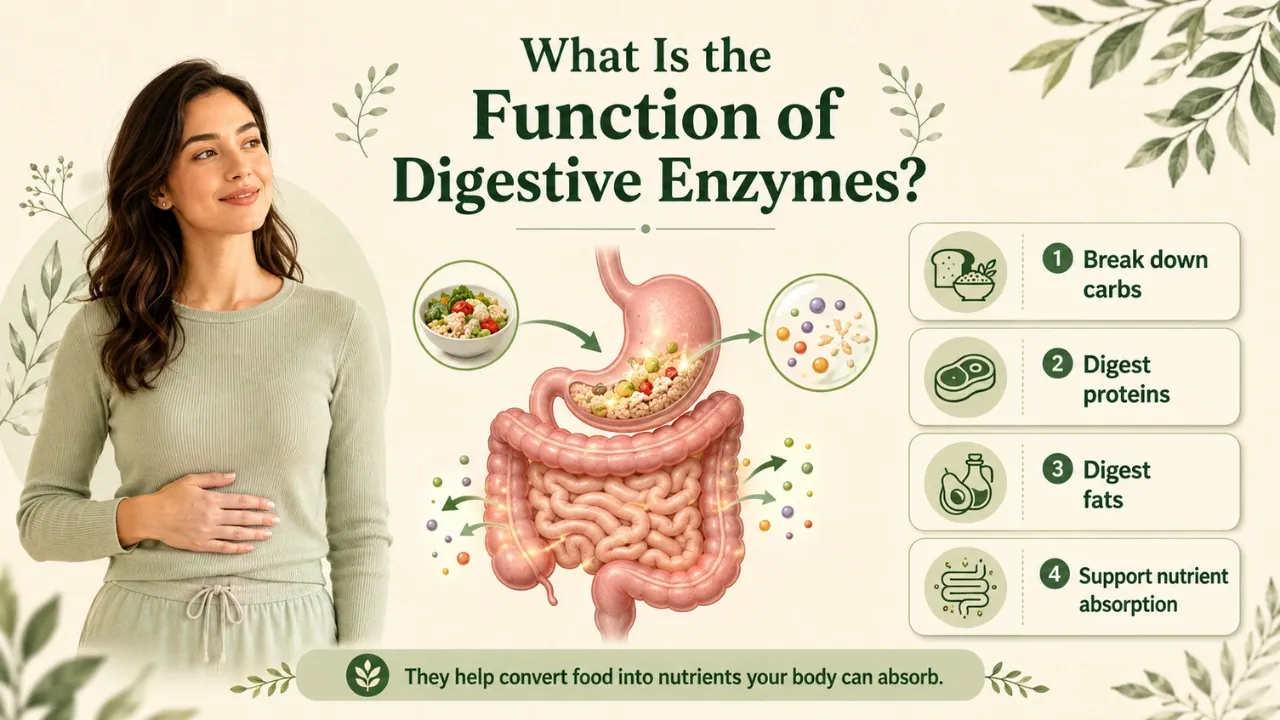
In simple terms, digestive enzymes help your body convert the food you eat into nutrients it can use. They work on carbohydrates, proteins, fats, and other nutrients so the small intestine can take them into the bloodstream and use them for energy, repair, and daily body functions.
- Amylase helps break down starch and carbohydrates into simpler sugars.
- Proteases help break down proteins into smaller peptides and amino acids.
- Lipase helps break down fats into fatty acids and glycerol.
- Digestive enzyme production mainly involves the salivary glands, stomach, pancreas, and small intestine.
- Persistent bloating, loose stools, fatty stools, weight loss, or ongoing fatigue should be assessed by a healthcare professional.
Digestive enzymes are proteins that break down food into smaller molecules your body can absorb. Without this process, nutrients from carbohydrates, proteins, and fats cannot be used efficiently by the body. Your body produces digestive enzymes naturally, mainly through the salivary glands, stomach, pancreas, and small intestine.
What Is the Function of Digestive Enzymes in the Body?
The function of digestive enzymes is to chemically break down food into absorbable nutrients. Each enzyme targets a specific type of molecule, such as carbohydrates, proteins, or fats, and splits it into smaller units that the intestinal lining can absorb.
Without enough digestive enzyme activity, food may not be broken down properly. This can contribute to symptoms such as bloating, gas, loose stools, fatty stools, discomfort after meals, and signs of poor nutrient absorption. These symptoms can have many causes, so they should not be used to self-diagnose an enzyme deficiency.
Core functions at a glance:
- Break carbohydrates into simple sugars.
- Split proteins into peptides and amino acids.
- Divide fats into fatty acids and glycerol.
- Break nucleic acids into nucleotides.
- Enable nutrient absorption through the intestinal wall.
How Do Digestive Enzymes Work? The Complete Mechanism
The function of digestive enzymes begins when food enters the mouth and continues through the stomach and small intestine. Each enzyme works by binding to a specific food molecule, helping break its chemical bonds, and releasing smaller molecules that can be absorbed.
Step-by-step process:
- Mouth: Salivary amylase begins breaking down starch. Chewing also increases the surface area of food, making later digestion easier.
- Stomach: Stomach acid helps activate pepsin, an enzyme involved in protein digestion.
- Pancreas: The pancreas releases enzymes such as amylase, lipase, trypsin, chymotrypsin, and elastase into the small intestine.
- Small intestine: Brush-border enzymes such as maltase, sucrase, and lactase complete carbohydrate breakdown, while peptidases help finish protein digestion.
- Absorption: Nutrient units pass through the intestinal wall into the bloodstream or lymphatic system.
This process works because enzymes are highly specific. One enzyme cannot fully replace another. For example, lactase helps digest lactose, while lipase helps digest fats.
What Are the Types of Digestive Enzymes?
The main types of digestive enzymes are classified by the nutrients they act on. Understanding these types can make what digestion means easier to understand in everyday terms.
| Enzyme Type | What It Acts On | End Product | Primary Source |
|---|---|---|---|
| Amylase | Carbohydrates and starch | Simple sugars | Salivary glands, pancreas |
| Protease | Proteins | Peptides and amino acids | Stomach, pancreas, small intestine |
| Lipase | Fats and triglycerides | Fatty acids and glycerol | Pancreas, tongue, stomach |
| Nuclease | Nucleic acids such as DNA and RNA | Nucleotides | Pancreas |
| Lactase | Lactose | Glucose and galactose | Small intestine |
| Sucrase | Sucrose | Glucose and fructose | Small intestine |
| Maltase | Maltose | Glucose | Small intestine |
Amylase
Amylase helps digest carbohydrates, especially starch. It begins working in the mouth and continues in the small intestine after pancreatic amylase is released.
Protease
Proteases, including pepsin, trypsin, and chymotrypsin, help break down proteins. Pepsin works in the stomach, while trypsin and chymotrypsin are released by the pancreas and work in the small intestine.
Lipase
Lipase helps break down dietary fats. Bile from the liver works alongside lipase by making fat easier for enzymes to act on. This is why the role of bile in digestion is closely connected to fat digestion.
Lactase
Lactase helps digest lactose, the natural sugar found in milk and dairy products. Low lactase activity can make dairy harder to tolerate for some people and may cause gas, bloating, or diarrhoea after milk intake.
What Are the Key Benefits of Digestive Enzymes?
The function of digestive enzymes extends beyond basic food breakdown. When enzyme activity is adequate, digestion and nutrient absorption are more efficient.
Short-term digestive benefits may include:
- Less bloating and gas after meals in people whose symptoms are linked to poor digestion.
- Improved comfort after meals that contain higher fat or protein.
- Better breakdown of foods that may otherwise feel heavy.
Long-term support may include:
- Better availability of nutrients from food.
- Support for protein breakdown and amino acid absorption.
- Reduced risk of nutrient-related issues when enzyme insufficiency is the cause of malabsorption.
- More consistent energy when poor nutrient absorption has been contributing to fatigue.
Digestive enzymes should not be seen as a cure-all. If symptoms are frequent, worsening, or associated with weight loss, blood in stool, severe pain, or persistent diarrhoea, a medical evaluation is important.
Who May Be Affected by Digestive Enzyme Deficiency?
The function of digestive enzymes is relevant to everyone who eats, but some people are more likely to experience enzyme-related digestive problems.
- People with chronic pancreatitis: The pancreas may not produce enough digestive enzymes.
- People with exocrine pancreatic insufficiency: This condition often requires medical enzyme replacement therapy.
- People with lactose intolerance: Low lactase activity can make lactose harder to digest.
- People with some intestinal conditions: Inflammation or damage in the small intestine may affect brush-border enzymes.
- People after certain digestive surgeries: Changes in digestive anatomy may affect enzyme mixing and nutrient absorption.
Symptoms such as long-term bloating, diarrhoea, greasy stools, weight loss, or signs of nutrient deficiency should be discussed with a doctor rather than managed only with supplements.
How to Increase Digestive Enzymes Naturally: Step-by-Step Guide
Understanding the function of digestive enzymes is the first step. Supporting digestion through practical food and lifestyle habits is the next. These steps can also support overall digestion improvement when symptoms are mild and not linked to a serious condition.
Step 1: Eat a varied, balanced diet
Include a mix of fruits, vegetables, whole grains, pulses, nuts, seeds, and protein sources. A varied diet supports digestion by giving the gut different nutrients and fibres to work with.
Step 2: Include enzyme-containing foods where suitable
Some foods naturally contain enzymes, such as papaya, pineapple, mango, raw honey, yoghurt, kefir, and fermented foods. These foods may support overall dietary variety, but they should not be treated as a replacement for medical enzyme therapy when a diagnosed deficiency exists.
Step 3: Chew food thoroughly
Chewing increases the surface area of food and mixes it with saliva. This helps salivary amylase begin carbohydrate digestion and reduces the workload on later stages of digestion.
Step 4: Avoid eating in a highly stressed state
Stress can affect appetite, gut movement, and digestive comfort. A short pause before meals, slow breathing, and eating without rushing may help some people feel more comfortable after food.
Step 5: Stay adequately hydrated
Fluid supports normal digestive secretions and stool consistency. Most people can drink water across the day and take small amounts with meals as needed. Very large amounts taken quickly during meals may feel uncomfortable for some people.
Step 6: Limit ultra-processed foods
A diet high in ultra-processed foods and low in fibre can affect the overall digestive environment. Choosing more whole foods may support the gut microbiome and regular bowel habits. If gas and bloating are common, it can help to understand causes of gas and bloating before making major diet changes.
Step 7: Consider supplements only when needed
Digestive enzyme supplements may help some people, especially those with diagnosed enzyme insufficiency. They should be chosen based on symptoms, medical history, and professional advice, not only based on general digestive discomfort.
Digestive Enzyme Supplements vs Natural Enzyme Support
The function of digestive enzymes can be supported through daily habits or, in some cases, targeted supplementation. Each approach has a different use case.
| Factor | Natural Enzyme Support | Digestive Enzyme Supplements |
|---|---|---|
| Best for | Mild digestive discomfort and general digestive support | Confirmed deficiency or professional recommendation |
| Speed of effect | Gradual, usually over weeks | May be faster when the supplement matches the problem |
| Cost | Usually lower, based on food and habits | Ongoing cost depending on product and dose |
| Side effect risk | Usually low when changes are gradual | Possible nausea, diarrhoea, cramping, or interactions in some people |
| Sustainability | High when built into routine | Depends on the underlying condition and medical need |
| Best next step | Improve meal habits, food quality, and symptom tracking | Speak with a healthcare professional if symptoms persist |
For people without a diagnosed condition, natural enzyme support through food habits, chewing, stress management, and balanced meals is usually the first step. Supplementation is more appropriate when symptoms persist, tests suggest a deficiency, or a clinician recommends it.
What to Expect: Digestive Enzyme Support Timeline
Digestive comfort can improve gradually when the right habits or treatments are used consistently. The timeline depends on the cause of symptoms, the severity of enzyme insufficiency, diet quality, medication use, and other gut conditions.
| Timeframe | What May Happen |
|---|---|
| Days 1 to 7 | Some people notice less heaviness, bloating, or gas after meals. |
| Weeks 2 to 4 | Meal tolerance and bowel regularity may improve if poor digestion was contributing. |
| Month 1 to 3 | Energy and nutrient-related symptoms may improve when absorption improves. |
| Month 3 to 6 | Blood markers may improve if a deficiency was present and properly treated. |
Track symptoms over one to two weeks instead of judging progress day by day. If symptoms are severe, persistent, or associated with warning signs, do not wait for home strategies to work.
When Should You See a Doctor?
Digestive discomfort after certain meals is common, but some symptoms need medical attention. See a healthcare professional if you have:
- Persistent diarrhoea, greasy stools, or stools that float and are difficult to flush.
- Unexplained weight loss or reduced appetite.
- Blood in stool, black stool, or vomiting blood.
- Severe or repeated abdominal pain.
- Ongoing fatigue with signs of nutrient deficiency.
- Symptoms after pancreatic disease, digestive surgery, or long-term digestive illness.
These symptoms may need testing and medical treatment. Enzyme supplements should not be used to delay diagnosis.
Mool Health’s Perspective on Digestive Enzymes
Mool Health looks at digestive symptoms through the lens of food habits, gut patterns, stress, sleep, and overall lifestyle. Instead of treating enzymes as a quick fix, the focus is on understanding why symptoms are recurring and whether they need dietary support, lifestyle correction, medical evaluation, or targeted supplementation.
Understand Your Gut Symptoms Better
Get a clearer view of your digestive concerns, food patterns, and everyday habits with a personalised gut health assessment.
Key Takeaways
- Digestive enzymes break food into smaller units that the body can absorb and use.
- Amylase breaks carbohydrates, proteases break proteins, lipase breaks fats, and lactase breaks lactose.
- The pancreas, salivary glands, stomach, and small intestine all contribute to digestive enzyme activity.
- Enzyme insufficiency can cause maldigestion and malabsorption, not just mild digestive discomfort.
- Food habits, chewing, hydration, and stress management can support digestion naturally.
- Digestive enzyme supplements are most useful when there is a specific need or diagnosed deficiency.
- Persistent diarrhoea, greasy stools, weight loss, blood in stool, or severe pain should be medically evaluated.
Your next step: If you experience persistent bloating, fatigue, loose stools, or discomfort after meals, Mool Health recommends speaking with a qualified nutritionist or gastroenterologist to understand whether digestion, enzyme activity, gut health, or another condition may be involved.
Your gut is unique your healing should be too.

FAQs
The function of digestive enzymes in the body is to break carbohydrates, proteins, fats, and other food molecules into smaller units that the intestinal wall can absorb.
At a Class 10 level, digestive enzymes are biological catalysts that speed up the chemical breakdown of food. Amylase breaks starch, proteases break proteins, and lipase breaks fats.
Some people may take digestive enzymes daily under medical guidance, especially if they have a diagnosed condition such as exocrine pancreatic insufficiency. For general digestive discomfort, speak with a healthcare professional before long-term use.
Insufficient digestive enzyme production can cause maldigestion. Symptoms may include bloating, gas, diarrhoea, greasy stools, weight loss, and nutrient deficiencies, depending on the cause and severity.
The pancreas produces several important enzymes, including pancreatic amylase, lipase, trypsin, chymotrypsin, and elastase. Together, they help digest carbohydrates, fats, and proteins in the small intestine.
Yes. Digestive enzymes are proteins that break down food, while probiotics are live microorganisms that support gut microbiome balance. Both relate to gut health, but they work in different ways. Learn more about gut health meaning and benefits.
Stress can affect digestion, appetite, gut movement, and digestive comfort. Some people notice more bloating, acidity, or bowel changes during stressful periods.
Papaya, pineapple, mango, raw honey, avocado, yoghurt, kefir, kimchi, and sauerkraut may contain naturally occurring enzymes. However, food-based enzymes are not a substitute for medical treatment when a diagnosed enzyme deficiency is present.
Disclaimer
The content provided by Mool Health is for educational and informational purposes only and should not be considered a substitute for professional medical advice, diagnosis, or treatment.