
Burning Sensation in Throat: Causes, Acid Reflux Link and Relief
Burning throat is often linked to reflux, GERD or LPR. This guide explains causes, symptoms, relief steps, lifestyle changes and warning signs.
Quick Answer
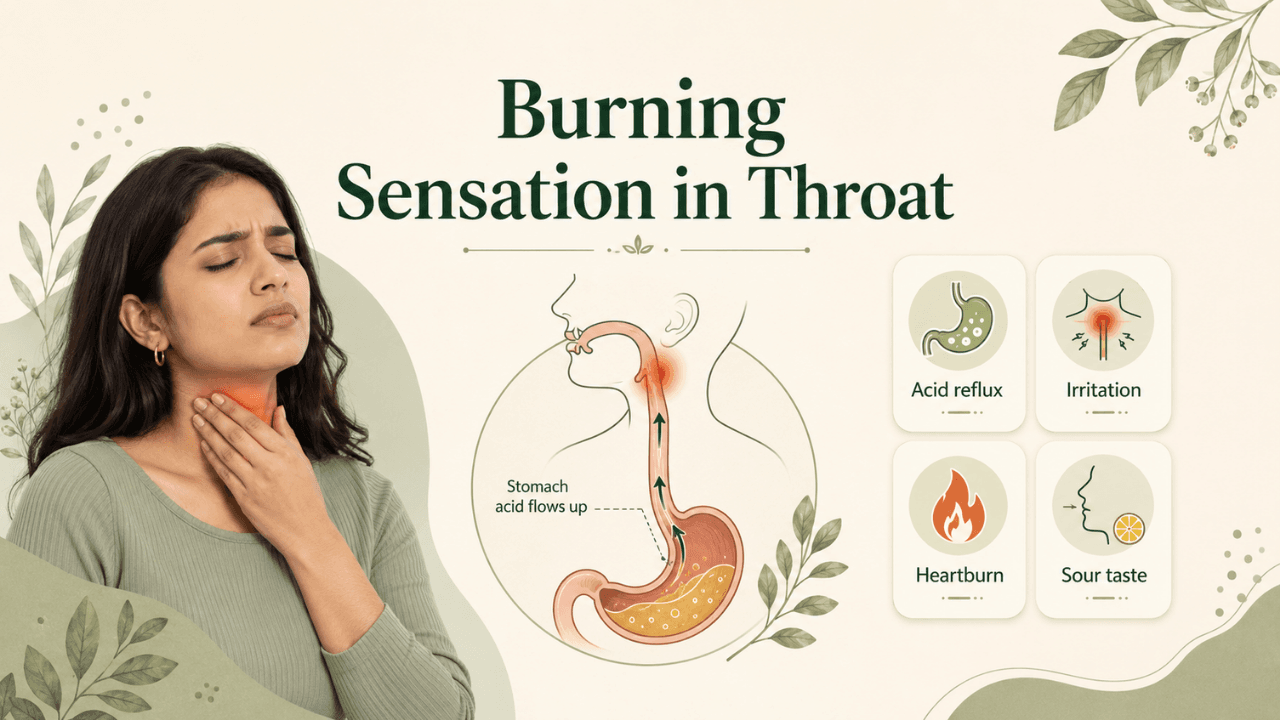
A burning sensation in the throat is most commonly linked to acid reflux, especially when it becomes worse after meals, at night, or while lying down. It can happen when stomach acid and digestive enzymes travel upward and irritate the throat lining, which is more sensitive than the food pipe.
It may feel like raw burning, sourness, irritation behind the voice box, frequent throat clearing, hoarseness, chronic dry cough, or a lump-like feeling. Many cases improve with consistent lifestyle changes such as early dinner, smaller meals, staying upright after eating, head-of-bed elevation, trigger food control and stress management.
- Most common reason: Acid reflux, GERD or LPR
- Common triggers: Late meals, spicy food, tea, coffee, smoking, stress, obesity, pregnancy and lying down after eating
- Quick relief: Warm water, upright posture, sugar-free gum and avoiding lying down
- Needs medical help: Difficulty swallowing, blood, weight loss, severe pain, fever, persistent symptoms beyond 8 weeks or repeated choking sensation
What Is a Burning Sensation in the Throat?
A burning sensation in the throat is not the same as heartburn, and treating it like heartburn is why most people stay stuck for months.
Heartburn burns in the chest. A burning throat burns higher up, behind the voice box, and can persist all day even without any chest pain. The medical name for this is laryngopharyngeal reflux (LPR), a form of acid reflux where stomach acid travels past the oesophagus and contacts the throat lining directly.
Key facts:
- Stomach acid has a pH of 1.5-3.5; the throat lining has zero acid defence
- Up to 40% of people with LPR never feel classic chest heartburn at all
- Symptoms are typically worst in the morning and after meals
- Most people see 60-80% improvement within 6-8 weeks of consistent lifestyle changes
The condition has two overlapping names. When acid affects the oesophagus and throat together, it is called GERD (gastroesophageal reflux disease). When acid primarily affects the throat and voice box without classic chest burning, it is called LPR. Both fall under the umbrella of acid reflux disorders.
According to Mool Health's gut health team, throat burning acidity is frequently misdiagnosed as a recurring throat infection for months, because LPR looks nothing like the heartburn most people picture.
What Causes a Burning Sensation in the Throat? The 11 Most Common Triggers
A burning sensation in the throat has at least 11 documented causes. Acid reflux is the most common, responsible for roughly 60-70% of cases, but identifying your specific cause is what determines whether your treatment actually works.
Why the Burning Feels Different, Hot, Cold, or Peppery
The sensation itself varies by cause, and this is a useful diagnostic clue:
- Hot or raw burning, classic sign of acid or pepsin contact with the throat lining
- Cold or tingling burning, often post-nasal drip or dry air
- Peppery or sharp burning, common with LPR, where pepsin directly irritates the throat wall
- Warm, fuzzy burning, can indicate vocal strain or irritation from coughing
- Sudden burning with no warning, often triggered by a specific food, drink, or positional change; can indicate acute LES relaxation
One important fact: pepsin, the digestive enzyme that travels with acid during LPR episodes, remains active in the throat at a pH above 4, meaning even after acid is neutralised, pepsin continues to cause tissue damage.
Acid-Related Causes
- GERD, chronic acid backflow due to a weakened lower oesophageal sphincter (LES)
- LPR, acid and pepsin reach the throat and voice box, often without chest heartburn
- Hiatal hernia, part of the stomach pushes above the diaphragm, making reflux easier and more frequent
- Pregnancy, rising abdominal pressure pushes acid upward, particularly in the second and third trimesters
- Obesity, excess abdominal weight chronically increases LES pressure
Non-Acid Causes
- Throat infections (pharyngitis), bacterial or viral, usually with fever and pain on swallowing
- Post-nasal drip, excess sinus mucus creates rawness at the back of the throat
- Allergic rhinitis, seasonal or food allergies trigger throat inflammation
- Dry air or environmental irritants, especially in air-conditioned offices or during winter months
- Medications, NSAIDs (ibuprofen, aspirin), certain antibiotics, and bisphosphonates directly irritate the oesophageal lining
- Vocal strain, overuse creates throat rawness that closely mimics acid burning
Understanding the root cause of a burning sensation in the throat, rather than assuming it is all acid reflux, is the first step toward effective management.
How Is Acid Reflux Connected to GERD Throat Symptoms?
Under normal conditions, a muscle called the lower oesophageal sphincter (LES) acts as a valve, it opens to let food into the stomach and closes to stop acid from coming back up. When this valve weakens or relaxes too often, acid can escape upward.
Once acid rises:
- It irritates the oesophagus, causing heartburn
- It may reach the throat, causing burning, dryness, or pain
- It can affect the voice box, leading to hoarseness or voice fatigue
This explains why a burning sensation in the throat may occur even without classic chest heartburn. According to Mool Health, psychological stress further amplifies this mechanism, cortisol raises gastric acid secretion and slows gastric emptying, meaning food and acid sit in the stomach longer and are more likely to reflux upward. This is one reason stress-related gut symptoms can feel stronger during reflux episodes.
Common GERD Throat Symptoms Including Burning Sensation in Throat
Throat-related reflux symptoms are often mistaken for infections or allergies. Key symptoms include:
| Symptom | How It Feels |
|---|---|
| Burning sensation in throat | Hot, raw, or stinging sensation |
| Frequent throat clearing | Constant urge to clear mucus |
| Hoarse or weak voice | Worse in the morning |
| Lump sensation | Feeling something is stuck |
| Chronic dry cough | Especially at night |
| Bitter or sour taste | After meals or on waking |
Why Does Burning Throat Worsen at Night or After Meals?
Gravity helps keep acid in the stomach when you are upright. After meals or when lying down, this protection reduces.
Key reasons symptoms worsen:
- Large or heavy meals that stretch the stomach
- Lying flat soon after eating
- Late-night dinners common in urban Indian routines
- Bending or slouching after meals
At night, swallowing rate drops by approximately 80% and saliva production almost stops. Acid that reaches the throat sits there for much longer without being washed away or neutralised. A 2001 study in Gastroenterology found that nocturnal acid exposure causes greater oesophageal and throat tissue injury than daytime episodes.
Acid Reflux vs LPR vs Throat Infection: How to Tell the Difference
A burning sensation in the throat can look similar across three very different conditions. This table helps distinguish them.
| Feature | GERD / Acid Reflux | LPR (Silent Reflux) | Throat Infection |
|---|---|---|---|
| Where it burns | Chest + throat | Throat and voice box only | Throat, may radiate to ears |
| Worst timing | After meals, lying down | Morning, after waking | Constant, day and night |
| Fever present? | No | No | Often yes |
| Hoarseness | Sometimes | Very common | Possible |
| Heartburn | Yes, classic | Absent in 40% of cases | Absent |
| Sore throat pattern | Raw, burning, irritated | Dry, post-nasal drip feel | Scratchy, painful to swallow |
| Duration | Weeks to months (chronic) | Weeks to months (chronic) | 3-10 days (acute) |
| Improves with antacids? | Yes, temporarily | Partially | No |
| Responds to antibiotics? | No | No | Yes (if bacterial) |
How to use this table: If your burning throat has lasted more than 2 weeks, has no fever, and is worse after meals or on waking, acid reflux or LPR is far more likely than an infection. If symptoms match the infection column and you have fever, see a doctor within 48 hours.
Up to 40% of people with LPR do not have classic heartburn, which is why burning throat from reflux is frequently misdiagnosed as a recurrent throat infection, and why antibiotics prescribed for those cases produce no improvement.
Who Gets Burning Throat from Acid Reflux? Risk Factors and Vulnerable Groups
A burning sensation in the throat from acid reflux does not affect everyone equally. Certain patterns significantly increase risk, and most of them are modifiable.
| Risk Factor | Why It Matters |
|---|---|
| Eating dinner after 9 PM | Stomach is full when you lie down; LES is under simultaneous pressure from gravity and stomach content |
| Sedentary office work | Prolonged sitting increases intra-abdominal pressure; low physical activity slows gastric emptying |
| High-stress lifestyle | Cortisol raises gastric acid production and slows stomach emptying |
| BMI above 25 | Abdominal fat directly compresses the stomach and weakens the LES over time |
| Frequent use of NSAIDs | Ibuprofen and aspirin reduce prostaglandin synthesis, directly eroding the oesophageal lining |
| Pregnancy (second + third trimester) | Growing uterus pushes stomach upward; progesterone relaxes smooth muscle including the LES |
| Smoking | Reduces LES pressure, impairs saliva production, and slows healing |
| Alcohol use | Relaxes the LES and increases gastric acid secretion simultaneously |
| Tight clothing or belts | Increases intra-abdominal pressure after meals |
Who Is Most Likely Affected in Urban India?
Mool Health's gut health community reflects a specific clinical pattern: working professionals between 25 and 45 years old, with dinner typically between 9 and 11 PM, high work stress, limited physical activity, and 3+ cups of tea or coffee daily. Late dinners followed by sleep within 90 minutes is, in practice, the single most common trigger pattern seen in urban Indian GERD cases.
People Who Often Mistake Burning Throat for Something Else
- Those who take frequent over-the-counter antacids and assume the problem is "just acidity"
- People who have seen an ENT for "chronic sore throat" without a GERD diagnosis
- Young adults who associate GERD with older age and do not consider it as a cause
- Individuals with LPR and no heartburn who have been treated repeatedly for "throat infections"
LPR accounts for up to 10% of all ENT outpatient consultations, yet it is frequently misdiagnosed as chronic pharyngitis, meaning many people receive antibiotics for a condition that antibiotics cannot fix.
Immediate Relief for Burning Throat from Acid Reflux: What to Do Right Now
When a burning sensation in the throat is active, the priority is to reduce acid contact and soothe the irritated lining. These steps produce relief within 10-30 minutes:
Drink 100-150 ml of warm water slowly. Water physically washes acid from the throat and oesophagus. Warm water is better than cold, cold water can trigger oesophageal spasm in some people. Drink slowly; gulping increases belching and acid movement upward.
Stand or sit upright immediately. Gravity is your fastest tool. Moving from lying to sitting reduces acid contact with the throat within minutes. If lying down, sit at 45° or stand for at least 20 minutes.
Chew sugar-free gum for 10 minutes. Chewing stimulates saliva production. Saliva is naturally alkaline (pH 6.5-7.5) and neutralises acid in the throat and oesophagus. A randomised controlled trial found chewing gum for 30 minutes after meals significantly reduced oesophageal acid exposure time.
Take a small amount of cold low-fat milk or plain curd. Both are mildly alkaline and coat the oesophageal lining. Avoid full-fat dairy, fat relaxes the LES and can worsen reflux within 20-30 minutes.
Try half a teaspoon of baking soda in 200 ml of water, for acute episodes only, not daily use. Sodium bicarbonate rapidly neutralises stomach acid. Do not use this if you are on a low-sodium diet or have kidney issues.
What NOT to Do During an Active Burning Episode
- Do not eat more food to "dilute" the acid, it increases stomach pressure
- Do not drink mint tea or peppermint water, mint relaxes the LES and worsens reflux
- Do not lie down, even a 15° incline is better than lying flat
- Do not take NSAIDs for throat pain, ibuprofen directly irritates the oesophageal lining
Note: These steps provide temporary relief. If burning episodes are happening more than twice a week, the root cause needs to be addressed systematically. See the lifestyle steps in the next section.
How to Get Rid of Burning Sensation in Throat From Acid Reflux: Step-by-Step
Most people reach for antacids first. Antacids neutralise acid temporarily, they do not fix the underlying cause. The steps below address both immediate relief and long-term prevention.
Stop eating 2-3 hours before lying down. When you eat and immediately lie down, gravity can no longer keep acid in the stomach. The LES is under pressure from both sides, stomach fullness pushing up and gravity no longer pulling down. This single change produces noticeable relief for most people within 1-2 weeks. In urban India, dinner at 9-10 PM followed by sleep at 11 PM is the single most common trigger. Shift dinner to 7 PM wherever possible.
Eat smaller, slower meals. Large meals distend the stomach. A distended stomach increases pressure on the LES, causing it to open when it should stay closed. Chewing each bite 20-25 times activates digestive enzymes in saliva and reduces the workload on the stomach.
Elevate the head of your bed by 15-20 cm. Elevating only your pillow does not work, it creates a neck angle that can worsen reflux. Elevate the bed frame or use a wedge pillow under the mattress. Studies show this reduces nocturnal acid contact time by up to 67%.
Identify and reduce your personal trigger foods. Triggers differ between individuals. Keep a 2-week food diary. Common triggers include: spicy foods, citrus fruits and juices, tomatoes, chocolate and peppermint (both relax the LES), tea, coffee and carbonated drinks, and fried and fatty foods. Remove one category at a time for one week each.
Manage stress actively. Stress increases cortisol, which raises stomach acid production and slows gastric emptying. Ten minutes of diaphragmatic breathing after meals or a 20-minute walk significantly reduces post-meal reflux episodes.
Review your medications. NSAIDs, calcium channel blockers, and some antidepressants can relax the LES or irritate the oesophageal lining directly. Speak to your doctor about alternatives if you take these regularly.
Stay upright and move after meals. A 10-15 minute gentle walk after meals accelerates gastric emptying and reduces the time acid has to reflux. Sitting upright for at least 30 minutes post-meal achieves a similar effect. For recurring post-meal symptoms, walking after meals can be a useful habit.
According to Mool Health's gut health team, consistently applying all seven steps, rather than selectively applying one or two, is what produces the 60-80% improvement range seen in most mild-to-moderate GERD cases.
What to Expect Week by Week: Burning Throat Recovery Timeline
Most people with a burning sensation in the throat from acid reflux want to know how long relief takes. The timeline below reflects what clinical observation and research suggest for people following consistent lifestyle changes.
| Timeframe | What Most People Notice |
|---|---|
| Weeks 1-2 | Reduction in night-time burning and morning hoarseness with steps 1 and 3 |
| Weeks 3-4 | Reduction in post-meal burning as food diary helps eliminate key triggers |
| Months 2-3 | Significant reduction in frequency; most with mild-to-moderate GERD see 60-80% improvement with lifestyle changes alone |
| Month 4+ | Maintenance phase, triggers become clear, flare-ups become infrequent and manageable |
A systematic review published in Archives of Internal Medicine (2006) found that combined lifestyle interventions, head-of-bed elevation, dietary changes, and weight management, produced clinically significant improvements in the majority of GERD patients without pharmaceutical intervention.
The honest qualifier: If symptoms persist beyond 8 weeks of genuine lifestyle effort, or if you experience difficulty swallowing or unexplained weight loss, that signals a need for medical evaluation, not more lifestyle tweaking.
Home Remedies vs Medical Treatment for Burning Throat
Home remedies can reduce mild reflux-related throat burning, but they cannot replace medical care when symptoms are severe, persistent or linked with warning signs. The right approach depends on how often symptoms happen and whether they affect swallowing, sleep, voice or daily comfort.
| Approach | Best For | Limitations |
|---|---|---|
| Warm water, upright posture and sugar-free gum | Temporary burning after meals | Does not fix frequent reflux patterns |
| Early dinner and smaller meals | Night-time throat burning and morning hoarseness | Needs consistency for several weeks |
| Trigger food control | Symptoms linked with spicy, acidic or fatty foods | Works best with a food diary |
| Medical evaluation | Symptoms beyond 2 to 8 weeks, swallowing difficulty, weight loss, blood or severe pain | Needed to rule out infection, GERD complications or other causes |
Mool Health’s Perspective on Burning Throat
Mool Health looks at burning throat as a symptom pattern, not just a one-time acidity episode. If it happens repeatedly after meals, at night or on waking, the pattern may involve reflux, meal timing, stress, posture, trigger foods and broader digestion problems.
Quick relief can help in the moment, but recurring throat burning needs a consistent plan. Track food triggers, meal timing, sleep position, stress levels and reflux symptoms for 2 weeks. This makes it easier to understand whether you are dealing with occasional acidity, GERD, LPR or another throat-related issue.
Key Takeaways
Burning throat is often linked to reflux, GERD or LPR. This guide explains causes, symptoms, relief steps, lifestyle changes and warning signs.
Your gut is unique your healing should be too.

Disclaimer
The content provided by Mool Health is for educational and informational purposes only and should not be considered a substitute for professional medical advice, diagnosis, or treatment.