
Mudra for Digestion: Hand Mudras for Better Gut Health
This guide explains the best mudras for digestion, gas, constipation, acidity, practice steps, safety tips, and expected results.
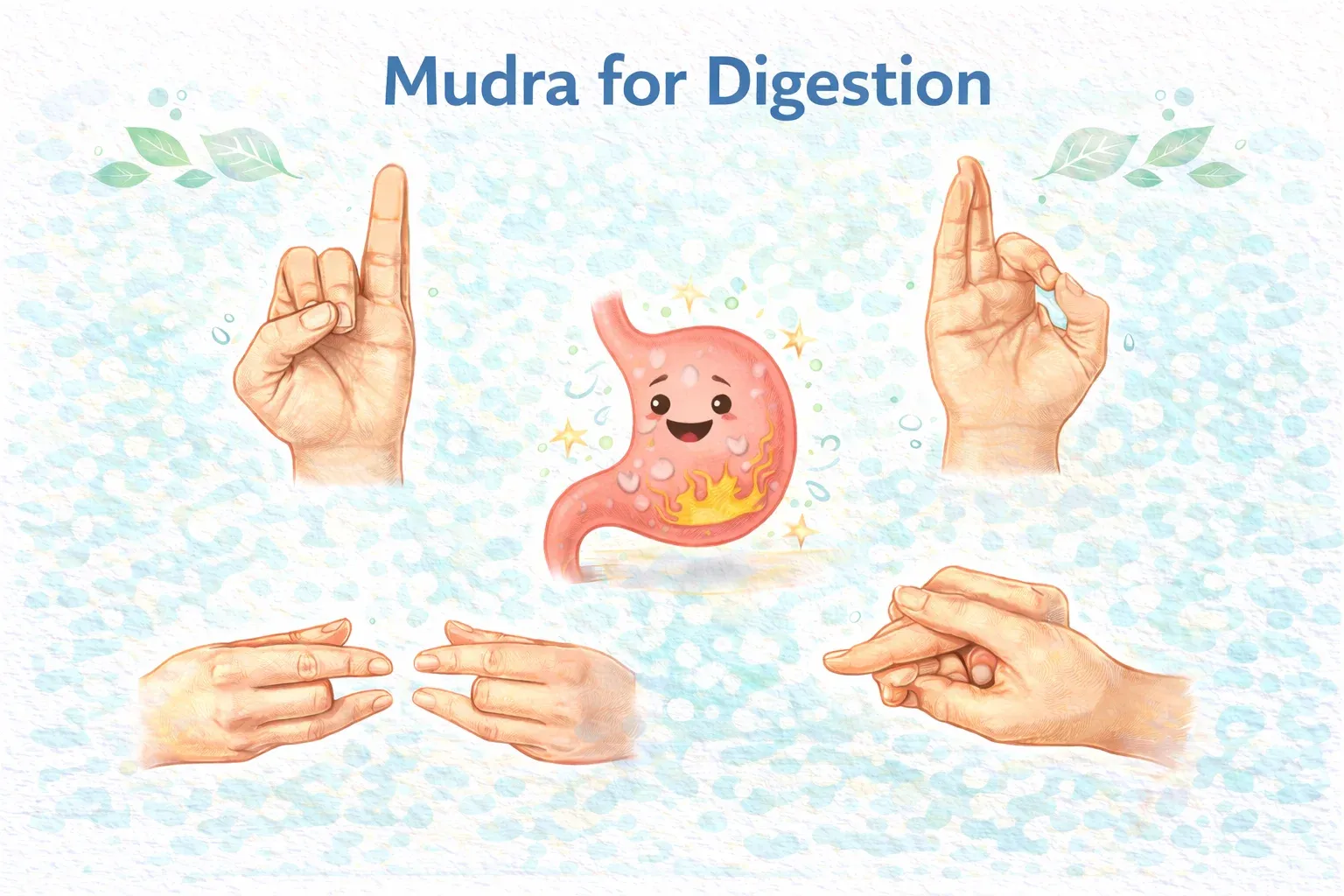
Quick Answer
Mudra for digestion can support gas relief, constipation, slow digestion, acidity-related discomfort, and post-meal heaviness when practiced consistently with slow breathing. The most useful mudras are Apana Mudra, Vayu Mudra, Surya Mudra, Samana Mudra, and Apana Vayu Mudra.
- Apana Mudra supports elimination and constipation.
- Vayu Mudra helps gas, bloating, and trapped wind.
- Surya Mudra supports sluggish digestion, but should be avoided during acidity flares.
- Samana Mudra supports digestive balance and absorption.
- Apana Vayu Mudra helps when gas and acidity happen together.
Most people try mudras once after a meal and give up because nothing happens in five minutes. That is usually a problem of expectation, not necessarily the practice.
A hand mudra for digestion works through steady posture, specific finger positioning, slow breathing, and parasympathetic activation. In Ayurveda, mudras are also understood as a way to direct prana through the body and support Agni, Samana Vayu, and Apana Vayu.
Why Mudras Work for Digestion
Mudra is an Ayurvedic and yogic practice of holding specific hand positions to direct prana through the body's energy channels. The five fingers are linked with the five elements: earth, water, fire, air, and space.
The digestive system is mainly governed by Samana Vayu, Apana Vayu, and Agni. When these are balanced, digestion, absorption, gas movement, and elimination work more smoothly.
Mudra practice becomes more effective when paired with slow diaphragmatic breathing. This activates the rest-and-digest response, which supports gut motility and comfort.
For broader daily support, you can combine mudras with yoga for digestion and simple dietary correction.
Best Mudras for Digestion: Complete Reference Table
| Mudra | Best For | When to Do | Duration | How to Form |
|---|---|---|---|---|
| Apana Mudra | Overall digestion, constipation, gas, elimination | Morning empty stomach or after meals | 15 to 30 min | Middle and ring fingers touch thumb tip; index and little fingers extended |
| Surya Mudra | Fast digestion, sluggish metabolism, heaviness | Morning, empty stomach | 15 to 30 min | Ring finger bends to base of thumb; thumb presses gently |
| Vayu Mudra | Gas, bloating, flatulence, trapped wind | After meals | 10 to 20 min | Index finger bends to base of thumb; thumb presses gently |
| Samana Mudra | Digestive fire balance, absorption, assimilation | Before or after meals | 15 min | All five fingertips touch each other |
| Prana Mudra | Weak digestion, fatigue, poor energy | Morning or evening | 15 to 30 min | Ring and little fingers touch thumb tip |
| Shankh Mudra | Intestinal spasm, cramps, IBS-type discomfort | After meals or discomfort | 10 to 15 min | Encircle one thumb with opposite hand fingers |
| Apana Vayu Mudra | Acidity with gas, heartburn with bloating | After meals or discomfort | 15 min | Index at thumb base; middle and ring touch thumb tip |
Mudra for Digestion vs Other Ayurvedic Gut Practices
Mudra is one of several Ayurvedic practices for gut health. It works best when used in the right situation rather than as a random habit.
| Practice | Best For | When to Use | Can Combine With Mudra? |
|---|---|---|---|
| Hand mudra | Gas, constipation, slow digestion | During or after meals, morning routine | Yes |
| Yoga asanas | Gas expulsion, bowel regularity | Morning empty stomach, Vajrasana after meals | Yes |
| Pranayama | Stress-driven gut issues, Agni support | Morning empty stomach | Yes |
| Herbal support | Chronic constipation, Ama, microbiome balance | As prescribed or with warm water | Yes |
| Dietary correction | Food triggers and inflammatory gut patterns | Always | Yes |
When Mudra May Help Most
- Post-meal gas and bloating, especially with Vayu Mudra.
- Travel or sedentary periods where movement is limited.
- Stress-driven digestion issues because slow breathing supports rest-and-digest response.
- Constipation patterns where Apana Mudra supports downward movement.
When Mudra Is Not Enough Alone
- Diagnosed conditions like IBS, IBD, GERD, or structural bowel issues.
- Nutritional deficiencies like low iron, B12, or low stomach acid.
- Acute episodes like severe pain, vomiting, or blood in stool.
- Persistent symptoms despite 8 to 12 weeks of daily practice.
Best Mudra for Digestion: Step-by-Step Guide
1. Apana Mudra
Apana Mudra is one of the best mudras for digestion and constipation. It supports downward movement, elimination, and gut clearance.
- Sit comfortably in Sukhasana, Vajrasana, or on a chair.
- Touch the tips of the middle finger and ring finger to the thumb tip.
- Keep the index and little fingers extended.
- Rest both hands on the knees, palms facing upward.
- Breathe slowly for 15 to 30 minutes.
This is useful for constipation, gas, post-meal heaviness, and sluggish elimination. For deeper understanding, read what is constipation.
2. Surya Mudra
Surya Mudra is also called Agni Mudra. It supports fast digestion and sluggish metabolism by increasing the fire element.
- Bend the ring finger so its tip touches the base of the thumb.
- Press the thumb gently over the ring finger.
- Keep the other fingers extended and relaxed.
- Practice in the morning for 15 to 30 minutes.
Avoid Surya Mudra during active acidity, GERD flares, fever, very hot weather, or at night.
3. Vayu Mudra
Vayu Mudra is the main mudra for digestion and gas. It helps reduce trapped air, bloating, belching, and flatulence.
- Bend the index finger so its tip touches the base of the thumb.
- Press the thumb gently over the index finger.
- Keep the middle, ring, and little fingers extended.
- Practice after meals for 10 to 20 minutes with belly breathing.
If your main issue is gas, also review the causes of gas so you can address food and lifestyle triggers too.
4. Samana Mudra
Samana Mudra balances all five elements and supports digestion, absorption, and assimilation. It is especially helpful before meals.
- Bring all five fingertips together to form a point.
- Keep the palm slightly cupped.
- Hold the hands near the navel or rest them on the thighs.
- Practice 10 to 15 minutes before meals.
5. Apana Vayu Mudra
Apana Vayu Mudra is useful when gas and acidity occur together. It combines downward movement support with air reduction.
- Fold the index finger to touch the base of the thumb.
- Bring middle and ring fingertips to the thumb tip.
- Keep the little finger extended.
- Practice for 15 minutes after meals or during discomfort.
If acidity is your main complaint, use this along with food timing and acidity and gas remedies.
6. Prana Mudra
Prana Mudra builds digestive vitality over time. It is better for weak digestion, fatigue, poor appetite, and post-illness gut recovery.
- Touch the ring finger and little finger tips to the thumb tip.
- Keep the index and middle fingers extended.
- Hold both hands on the thighs.
- Practice 15 to 30 minutes daily.
It works well when combined with habits that improve digestion naturally.
Mudra for Specific Digestive Conditions
Mudra for Indigestion
Indigestion after meals responds best to Samana Mudra practiced for 15 minutes after eating. It supports balanced digestion without strongly increasing heat.
Vayu Mudra for Acidity
Vayu Mudra may indirectly help mild acidity if gas pressure is pushing acid upward. But for acidity specifically, Apana Vayu Mudra is the better choice.
Avoid Surya Mudra and Linga Mudra during acidity flares because they are heating and may worsen heartburn.
Mudra for Digestion and Gas
The best combination for gas and digestion is Vayu Mudra followed by Apana Mudra. Practice Vayu Mudra for 10 to 15 minutes during gas discomfort, then Apana Mudra for another 15 minutes.
Mudra for Digestion After Dinner
After dinner, Vayu Mudra in Vajrasana for 15 minutes can help reduce post-dinner gas formation. Avoid heating mudras like Surya and Linga at night.
Mudra for Fast Digestion
Surya Mudra supports fast digestion when the issue is sluggish metabolism or heaviness. It should be used carefully and avoided during acidity, fever, or Pitta aggravation.
Digestion Mudra for Constipation
Apana Mudra is the main digestion mudra for constipation. Practice every morning for 20 to 30 minutes on an empty stomach. For stubborn constipation, combine with warm water and dietary correction.
How to Practice Mudras for Digestion
Correct technique matters more than doing many mudras. A single mudra practiced daily with good posture and breathing is more useful than five mudras done irregularly.
Sitting Position
- Sukhasana: easy cross-legged posture with spine erect.
- Vajrasana: useful after meals and complements digestion mudras.
- Chair sitting: fully valid if floor sitting is uncomfortable.
Breathing Pattern
Use slow diaphragmatic breathing. Inhale for 4 counts, hold for 2, and exhale for 6. The longer exhale activates the parasympathetic nervous system, supporting rest-and-digest function.
Duration and Frequency
- Minimum effective dose is 10 minutes per session.
- 15 to 30 minutes is ideal for most digestion mudras.
- Morning empty stomach plus after the largest meal is a strong routine.
- Daily practice over 4 to 8 weeks gives more lasting results.
What to Avoid
- Avoid Surya Mudra and Linga Mudra during acidity flares.
- Avoid distracted practice with phone, TV, or conversation.
- Do not grip fingers tightly. Pressure should be gentle.
- Do not use mudra as a replacement for medical care in severe symptoms.
Is Mudra Right for You?
| Ideal For | Use With Caution / Not Ideal Alone |
|---|---|
| Functional complaints like gas, bloating, post-meal heaviness | Diagnosed organic conditions like IBD, celiac disease, or structural bowel issues |
| Stress-driven gut issues or nervous stomach | Severe pain, blood in stool, vomiting, or unexplained weight loss |
| Vata-type digestion with irregular gas and constipation | People on medicines that affect gut motility |
| Kapha-type sluggish digestion and heaviness | Pregnancy, unless guided by a qualified practitioner |
| Desk-bound, travel-heavy, or sedentary lifestyles | Severe GERD if using heating mudras |
What Results to Expect
| Time Frame | What Most People Notice |
|---|---|
| First session | Gas may reduce, mild abdominal warmth, calmer breathing |
| Days 3 to 7 | Post-meal heaviness may reduce, bowel timing may improve |
| Weeks 2 to 4 | Constipation and gas frequency may improve |
| Months 1 to 2 | Chronic bloating and post-meal discomfort may reduce |
| 3+ months | Better bowel regularity and fewer stress-driven gut flares |
Safety, Side Effects, and Precautions
Mudras are generally safe, but safe does not mean no precautions. Heating mudras and pregnancy-related practice need extra care.
- Samana Mudra is gentle and balanced for most healthy individuals.
- Vayu Mudra should not be overdone for long periods because excessive air reduction may create sluggishness.
- Surya Mudra should be avoided during active acidity, fever, hot weather, and at night.
- Apana Mudra may create a bowel urge, which is usually the intended effect.
- Linga Mudra is very heating and should be used sparingly.
Research and Evidence
Mudra's place in Ayurveda is ancient, while direct modern research on mudra alone is still limited. However, related mechanisms like diaphragmatic breathing, yoga-based gut practices, hand acupressure, and vagal activation have stronger evidence.
- Diaphragmatic breathing supports gut motility and may reduce IBS-related symptoms.
- Yoga-based practices show benefit for functional gut disorders.
- Hand pressure points are studied in acupressure and reflexology traditions.
- Slow breathing improves vagal tone, which is linked with rest-and-digest function.
The practical takeaway is that mudra may support digestion through breathing, relaxation response, posture, and nervous system regulation, while Ayurveda explains the same effect through prana, elements, and Agni.
Mool Health's Approach to Digestive Wellness
Mudra can support digestion, but persistent symptoms often need a broader view. Mool Health looks at digestion, gut microbiome balance, food triggers, stress, sleep, and Ayurvedic constitution together.
This helps identify whether your gas, bloating, constipation, acidity, or post-meal heaviness is driven by food combinations, stress, slow motility, weak Agni, or deeper gut imbalance.
What This Means for You
If you choose the right mudra, sit with an erect spine, and practice with slow diaphragmatic breathing for at least 15 minutes daily, you may notice gas relief quickly and more consistent digestion over the next few weeks.
Here is a simple protocol to start with:
- Before meals, practice Samana Mudra for 10 to 15 minutes.
- After meals, practice Vayu Mudra in Vajrasana for 15 minutes.
- Every morning, practice Apana Mudra for 20 minutes on an empty stomach.
- When gas and acidity happen together, use Apana Vayu Mudra for 15 minutes.
- If symptoms persist for 8 to 12 weeks, seek structured medical or nutritional support.
Mudra can be a useful support for functional digestive complaints, but it is not a replacement for diagnosis, medical care, or root-cause gut health work when symptoms are severe or persistent.
Disclaimer
This article is for informational and educational purposes only. Mudra practice does not replace medical diagnosis or treatment. Consult a qualified healthcare professional if you have severe pain, blood in stool, persistent constipation, GERD, pregnancy-related concerns, or diagnosed digestive conditions.
Key Takeaways
This guide explains the best mudras for digestion, gas, constipation, acidity, practice steps, safety tips, and expected results.
Your gut is unique your healing should be too.

Disclaimer
The content provided by Mool Health is for educational and informational purposes only and should not be considered a substitute for professional medical advice, diagnosis, or treatment.