
Loose Motion During Pregnancy: A Complete Trimester Guide
A trimester-wise guide to loose motion during pregnancy, including possible causes, hydration, safe foods, home care, medicine precautions, and warning signs.
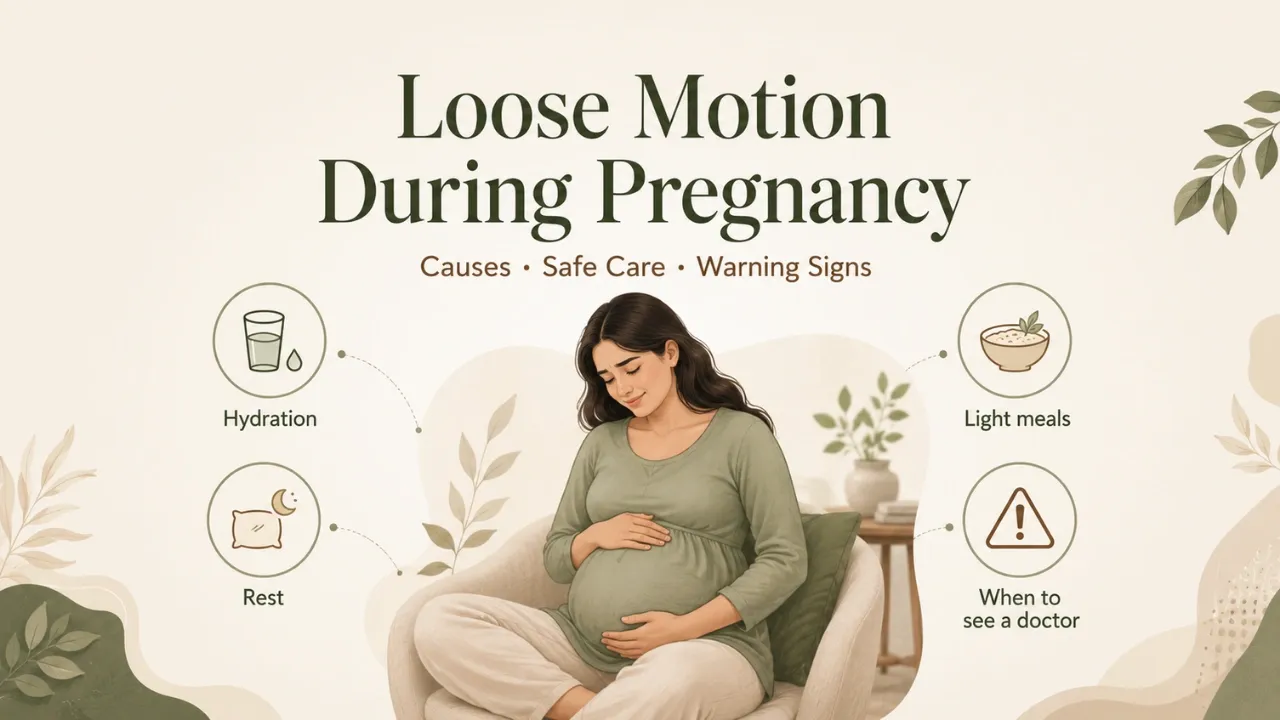
Quick Answer
Loose motion during pregnancy can happen after food changes, new supplements, a stomach infection, or increased gut sensitivity. The main priority is preventing dehydration. Use small, frequent sips of fluid or a prepared oral rehydration solution, and seek prompt maternity advice if symptoms are severe, persistent, or accompanied by warning signs.
- Choose small, bland meals once you can tolerate food.
- Do not self-start anti-diarrhoeal tablets, antibiotics, or herbal remedies during pregnancy.
- Contact your maternity team for fever, blood in stool, severe pain, ongoing vomiting, or inability to keep fluids down.
- Reduced baby movements, contractions, or suspected waters breaking need urgent assessment.
Is Loose Motion Normal During Pregnancy?
Loose motion during pregnancy is common and, in most cases, not a cause for alarm. It may happen in the first trimester as the body adjusts to hormonal and dietary changes, or later in pregnancy when food sensitivities, infection, stress, or pre-labour changes affect the bowel.
The key distinction is between occasional, mild loose stools and persistent, severe, or bloody diarrhoea. The concern is not the loose stool itself but the risk of dehydration. Seek pregnancy-specific medical advice promptly if you cannot keep fluids down, have a fever, see blood in your stool, have severe abdominal pain, notice contractions, or feel reduced baby movements.
The short answer: Occasional loose motion during pregnancy can be manageable with fluids, rest, and bland food. Loose motion that persists, worsens, or occurs with warning signs needs a doctor or obstetrician.
Why Does Loose Motion Happen During Pregnancy?
Loose motion during pregnancy is not one single problem. It has several possible causes, and the likely trigger can differ by trimester.
1. Hormonal changes
Pregnancy hormones can change bowel movement patterns. Some people become constipated, while others notice a more sensitive gut and looser stools, particularly early in pregnancy.
2. Dietary changes
Adding more fruits, vegetables, high-fibre foods, or supplements at once can alter stool consistency. A sudden fibre increase may be difficult for the gut to adjust to.
3. Prenatal vitamins and supplements
Prenatal vitamins and minerals can affect digestion. Iron more often causes constipation, while magnesium-containing supplements may have a laxative effect in some people. Discuss any new or changed supplement with your obstetrician.
4. Increased gut sensitivity and food intolerances
Pregnancy can change how comfortably you tolerate dairy, spicy food, high-fat meals, or certain vegetables. Keeping a simple food-and-symptom note can help identify a pattern.
5. Infections
Food poisoning symptoms, viral gastroenteritis, and bacterial infections can all cause sudden loose motion. During pregnancy, fever, flu-like symptoms, or diarrhoea after risky food exposure should be discussed with a clinician because some infections require prompt assessment.
6. Pre-labour bowel changes
Near the due date, some people experience looser stools or more frequent bowel movements. This can happen alongside other changes before labour, but it should not be assumed to be a labour sign if there is fever, severe pain, or signs of dehydration.
Loose Motion in Different Trimesters: What Is Normal?
| Trimester | When It May Occur | Possible Causes | What to Do First |
|---|---|---|---|
| First trimester | Often alongside nausea and dietary changes | Hormonal shifts, new vitamins, food sensitivity, infection | Small frequent sips of fluids, bland food, rest; contact a clinician if symptoms persist or fluids do not stay down |
| Second trimester | Less common without a clear trigger | Food intolerance, supplement side effects, infection | Review recent food or supplement changes and seek advice for fever, blood in stool, or ongoing symptoms |
| Third trimester | May occur near the due date | Food sensitivity, infection, stress, possible pre-labour changes | Hydrate, monitor symptoms and baby movements, and contact your obstetrician if there are contractions or warning signs |
| 8th month | Weeks 32–36 | Diet sensitivity, infection, pressure on the bowel | Use bland food and fluids; contact the maternity team for persistent symptoms or fever |
Loose Motion During Early Pregnancy and the First Trimester
Loose motion during early pregnancy can occur alongside nausea, changing appetite, and new food aversions. When nausea and loose stools happen together, avoiding dehydration becomes especially important because it may be harder to drink enough.
First trimester practical steps:
- Take small, frequent sips of water or an oral rehydration solution rather than large drinks at once.
- Choose simple foods you can tolerate, such as plain rice, toast, soft khichdi, banana, or boiled potato.
- Do not stop prescribed prenatal supplements without checking with your obstetrician.
- Call your maternity provider if vomiting or loose motion makes it difficult to keep liquids down.
Loose Motion in the 6th and 7th Month of Pregnancy
Loose motion in the 6th or 7th month is less likely to be explained only by early-pregnancy hormonal adjustment. Look for a recent trigger such as a new supplement, a food that no longer suits you, an infection, or stress.
Common considerations during these months:
- Food sensitivity: Dairy, high-fat meals, spicy foods, and some fruits or vegetables may trigger symptoms in a more sensitive gut.
- Supplement changes: A newly added mineral or a dose change can affect bowel movements.
- Infection: Fever, chills, ongoing abdominal pain, or diarrhoea after unsafe food or water needs same-day medical advice.
- Stress: A stressful period can affect the gut-brain connection and bowel pattern, even without a dietary trigger.
A single brief episode is not automatically dangerous. However, prolonged symptoms, fever, blood in stool, severe pain, or reduced fetal movements need medical evaluation.
Loose Motion During the 8th Month of Pregnancy
Loose motion in the 8th month can happen because of diet sensitivity, infection, stress, or pressure from the growing uterus. It is important not to dismiss it when it occurs with contractions, pelvic pressure, lower back pain, fever, or reduced baby movements.
Stay hydrated, use bland food as tolerated, and contact your obstetrician promptly when symptoms continue or feel different from your usual bowel changes.
Loose Motion in the 9th Month of Pregnancy: What Is Normal?
Loose motion in the 9th month may happen around the time the body is preparing for labour, but it is not a reliable sign on its own. Pay attention to the full picture, including contractions, water breaking, pelvic pressure, lower back pain, and baby movements.
What to do in the 9th month:
- Drink fluids steadily. An oral rehydration solution can be useful when loose stools are frequent.
- Choose small, bland meals such as plain rice, khichdi, ripe banana, boiled potato, or toast.
- Do not use anti-diarrhoeal medicines without your gynaecologist’s advice.
- Keep track of baby movements as advised by your maternity team.
- Contact your obstetrician or hospital if loose motion occurs with regular contractions, leaking fluid, fever, severe pain, or reduced movements.
Normal vs Concerning Loose Motion During Pregnancy
| Feature | Usually Less Concerning | Needs Prompt Medical Advice |
|---|---|---|
| Duration | Brief episode that improves with fluids and rest | Symptoms that persist, worsen, or repeatedly return |
| Stool appearance | Loose or watery stool without blood | Blood, black stool, or large amounts of mucus |
| Associated symptoms | Mild nausea without other warning signs | Fever, severe cramps, persistent vomiting, or feeling faint |
| Hydration | Able to drink and pass urine normally | Cannot keep fluids down, very dark urine, minimal urine, marked dizziness, or weakness |
| Baby movements | Usual movement pattern | Reduced or absent movements |
| Late pregnancy symptoms | No contractions or fluid loss | Regular contractions, suspected waters breaking, or severe pelvic pressure |
The key principle: Prompt medical advice is needed for fever, blood in stool, severe or worsening pain, dehydration, reduced baby movements, or inability to keep fluids down.
How Long Does Loose Motion Last During Pregnancy?
The duration depends on the cause. A mild food-related episode may settle after a short period of rest, fluids, and simple food, while a viral or bacterial infection can last longer. Pregnancy is a reason to check in with your maternity provider sooner rather than waiting for symptoms to become severe.
Contact your obstetrician or doctor if loose motion does not improve, keeps returning, or happens with fever, significant pain, vomiting, blood in stool, dehydration, or changes in baby movement.
How to Manage Loose Motion During Pregnancy
- Focus on fluids first. Take small, regular sips of water, clear fluids, or a prepared oral rehydration solution. This helps replace fluid and electrolyte losses.
- Choose bland foods as tolerated. Start with small portions and consider a gentle loose motion food plan that includes plain rice, khichdi, toast, boiled potato, and soft cooked foods.
- Pause suspected triggers. Avoid oily, fried, very spicy, or high-sugar foods until bowel movements settle. Do not deliberately fast if you can tolerate small meals.
- Rest and reduce strain. Rest can help when loose motion is accompanied by fatigue or nausea. Stress can also make gut symptoms feel worse.
- Ask before taking medicine. During pregnancy, do not self-start anti-diarrhoeal tablets, antibiotics, or herbal preparations. Treatment depends on the cause and your stage of pregnancy.
- Use curd only when tolerated. Once symptoms ease, small amounts of plain pasteurised curd may suit some people. Read more about curd during diarrhoea before adding it back.
Safe Home Care: What May Help and What to Avoid
Options That May Be Easier to Tolerate
| Option | How to Use It | Practical Note |
|---|---|---|
| Prepared oral rehydration solution | Use as directed on the packet and sip regularly | Helpful when diarrhoea or vomiting causes fluid loss |
| Plain rice or soft khichdi | Eat small portions | Simple, lower-fat foods may be easier to tolerate |
| Ripe banana | Have a small portion if it suits you | Provides carbohydrate and potassium |
| Fresh coconut water | Use as an additional drink, not as a replacement for ORS when dehydration is significant | Choose fresh, unsweetened options where possible |
| Plain pasteurised curd | Try a small amount after symptoms start easing | Avoid if dairy is a personal trigger or lactose intolerance is suspected |
| Mild ginger drink | Use a weak preparation in a small amount for nausea | Discuss regular use of herbal preparations with your obstetrician |
Things to Avoid Until You Feel Better
- Fried, oily, very spicy, or heavily processed foods that may worsen nausea or gut irritation.
- Alcohol, excessive caffeine, carbonated drinks, and very sugary beverages.
- Unpasteurised milk products, raw or undercooked eggs and meat, and food from sources with uncertain hygiene.
- Unprescribed antibiotics, anti-diarrhoeal tablets, or concentrated herbal remedies.
- Large meals when nausea is present; smaller portions are often easier to tolerate.
Can You Take Medicine for Loose Motion During Pregnancy?
Do not self-medicate during pregnancy. Medicines that are commonly used for diarrhoea outside pregnancy may not be appropriate for you, may mask a condition that needs assessment, or may interact with other prescribed medicines.
Contact your obstetrician, midwife, or doctor before taking anti-diarrhoeal tablets, antibiotics, anti-nausea medicines, digestive powders, or herbal remedies. Antibiotics are not used for every case of loose motion and are only appropriate when a clinician identifies a bacterial infection or another specific cause.
When to Seek Medical Care
Contact your obstetrician, maternity unit, or a doctor urgently if you have any of the following:
- Fever, chills, flu-like symptoms, or feeling markedly unwell.
- Blood in stool, black stools, or severe abdominal pain.
- Persistent vomiting or inability to keep fluids down.
- Very dark urine, little urine, dizziness, fainting, or unusual weakness.
- Reduced or absent baby movements.
- Regular contractions, suspected waters breaking, or pelvic pressure with loose motion in late pregnancy.
- Symptoms after unsafe food, contaminated water, or a known exposure to food poisoning.
Pregnancy increases the importance of checking possible foodborne infections. Do not wait for symptoms to become severe before calling your care team if you have fever or flu-like symptoms after a suspected risky food exposure.
How to Prevent Loose Motion During Pregnancy
- Wash hands thoroughly with soap and water before preparing food and after using the toilet.
- Drink safe water and keep cooked and raw foods separate.
- Cook eggs, meat, and seafood thoroughly; avoid raw sprouts and unpasteurised dairy products.
- Introduce high-fibre foods gradually rather than changing your diet all at once.
- Ask your obstetrician how to manage any supplement that appears to affect your bowel pattern.
- Use a food-and-symptom note when symptoms occur more than once, so recurring triggers are easier to identify.
Key Takeaways
- Loose motion can happen at any stage of pregnancy, but hydration is the priority.
- Food changes, supplements, infection, stress, and changing gut sensitivity can all play a role.
- Near the due date, loose stools can occur with other body changes, but they do not confirm labour on their own.
- Avoid self-medicating with anti-diarrhoeal medicines or antibiotics during pregnancy.
- Fever, blood in stool, severe pain, dehydration, reduced baby movements, contractions, or fluid leakage require prompt medical attention.
Your gut is unique your healing should be too.

FAQs
Mild, short-lived loose stools can happen during pregnancy because of dietary changes, food sensitivity, supplements, stress, or infection. Speak to a clinician promptly if symptoms persist or occur with fever, blood in stool, severe pain, dehydration, contractions, or reduced baby movements.
Choose small, bland meals as tolerated, such as plain rice, soft khichdi, toast, boiled potato, banana, or clear soup. Regular fluids and a prepared oral rehydration solution can help replace losses.
Some people notice loose stools near their due date, but it is not a reliable sign by itself. Contact your obstetrician if it occurs with regular contractions, fluid leakage, pelvic pressure, or reduced baby movements.
A brief, mild episode is not usually harmful by itself. The concern is dehydration or an infection that needs treatment. Contact your maternity team promptly for warning signs such as fever, blood in stool, severe pain, inability to keep fluids down, or reduced baby movements.
Do not take anti-diarrhoeal medicine without advice from your obstetrician or doctor. The cause of loose motion and your stage of pregnancy need to be considered before treatment.
Seek urgent medical help for fever, blood in stool, severe or worsening pain, dehydration, inability to keep fluids down, reduced baby movements, contractions, or suspected waters breaking.
Disclaimer
The content provided by Mool Health is for educational and informational purposes only and should not be considered a substitute for professional medical advice, diagnosis, or treatment.