
Is Egg Good for Diarrhea? Benefits, Risks & Safe Ways to Eat
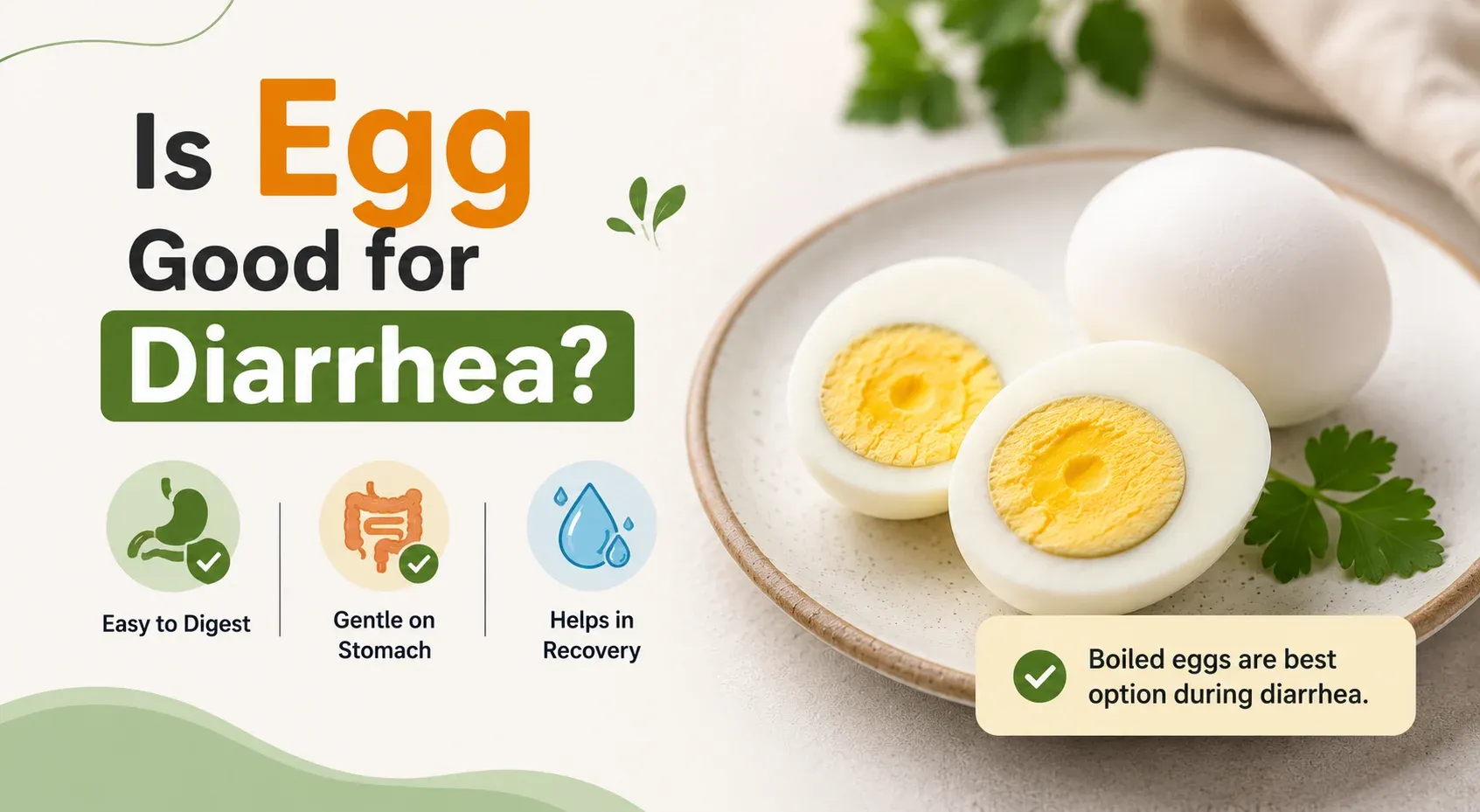
Eggs are easy to digest and rich in protein, making them a common food choice during diarrhea recovery. This guide explains benefits, risks, and the best ways to consume them.
✏️ Quick Answer
Eggs can be safe and helpful during diarrhea when eaten in the right way. They are easy to digest, rich in protein, and help provide strength during weakness. However, eggs should be eaten plain and well-cooked. Fried eggs, spicy preparations, or eating eggs during severe diarrhea and its causes may worsen symptoms.
During diarrhea, many people are unsure whether protein-rich foods like eggs are safe. Eggs are commonly available and nutritious, but the way they are prepared matters a lot when digestion is sensitive. Understanding when eggs help and when they should be avoided can prevent discomfort and speed up recovery. For a complete guide on what to eat during loose motions, see what to eat in diarrhea.
Why Eggs Can Be Good During Diarrhea
1. Easy-to-Digest Protein
Eggs provide high-quality protein that is generally easy on the stomach when cooked simply. Protein helps maintain strength and supports recovery.
2. Low Fibre Content
Eggs contain almost no fibre, which is beneficial during diarrhea because fibre can increase stool movement.
3. Supports Energy and Healing
During diarrhea, appetite is low and weakness is common. Eggs provide nutrition without needing large portions.
Best Way to Eat Eggs During Diarrhea
Recommended Forms
- Boiled egg
- Soft-boiled or well-cooked scrambled egg (without oil)
Egg Preparations to Avoid
- Fried eggs
- Egg curry or masala egg
- Half-cooked or runny eggs
- Eggs cooked with butter, cheese, or spices
When Eggs May Worsen Diarrhea
- Severe or watery diarrhea
- Diarrhea with vomiting
- Egg allergy or sensitivity
- Bloating or cramps after eating eggs
Eggs vs Other Protein Foods During Diarrhea
| Protein Source | Digestibility During Diarrhea | Recommended? |
|---|---|---|
| Boiled egg | Easy, low fibre, no dairy | ✅ Yes, in small amounts |
| Meat (chicken, mutton) | Heavier, harder to digest | ⚠️ Avoid during active phase |
| Paneer | Contains dairy, may worsen diarrhea due to lactose | ❌ Avoid |
| Moong dal (split mung) | Light, easily digestible protein | ✅ Good alternative |
| Curd (plain) | Probiotic support, lower lactose than milk | ✅ Recovery phase only |
Eggs are usually a better protein option during mild diarrhea. For other safe food choices including banana for diarrhea and curd for gut recovery, see those dedicated guides.
Eggs and ORS: Important Difference
Eggs provide nutrition but do not prevent dehydration. ORS replaces fluids and electrolytes; eggs support strength and recovery. The best approach is ORS for hydration + eggs as supportive food. For the full ORS and home management protocol, see how to stop diarrhea safely.
How Many Eggs Are Safe?
- 1 egg at a time
- Eat slowly and observe for tolerance
- Avoid overeating even if appetite improves
How Mool Health Helps With Diarrhea
Mool Health focuses on helping people choose foods that support digestion during illness. Eating the wrong type of protein or preparation can prolong diarrhea. Mool Health helps people understand which foods are gentle during gut upset, how to reintroduce protein safely, and daily digestive habits that support gut recovery. Supporting recovery also means protecting long-term gut health and recovery and avoiding foods that may irritate the digestive system further.
Key Takeaways
Eggs are easy to digest and rich in protein, making them a common food choice during diarrhea recovery. This guide explains benefits, risks, and the best ways to consume them.
Your gut is unique your healing should be too.

Disclaimer
The content provided by Mool Health is for educational and informational purposes only and should not be considered a substitute for professional medical advice, diagnosis, or treatment.