
Diarrhea After Eating Sweets: Why It Happens and How to Stop It
Guide to diarrhea after eating sweets, sugar triggers, lactose, fructose, sugar alcohols, IBS, prevention, quick relief, diet and red flags.
Quick Answer
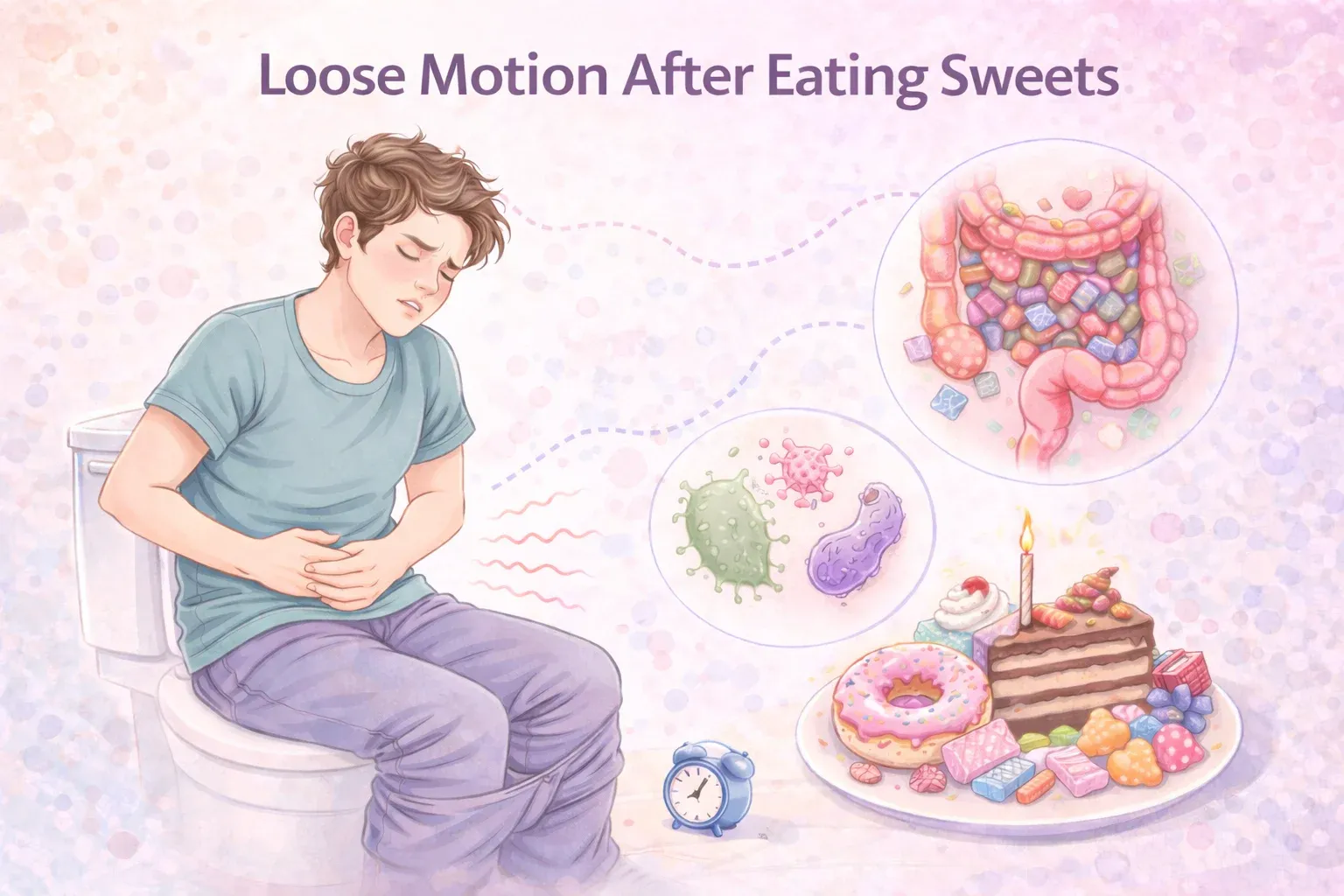
Loose motion after eating sweets happens because undigested sugar draws water into the intestine through osmosis, ferments rapidly in the colon, and accelerates bowel movement. Symptoms typically appear within 30 minutes to 2 hours of eating. Common triggers include fructose malabsorption, lactose intolerance, artificial sweeteners like sorbitol and xylitol, IBS, and large sugar loads consumed on an empty stomach.
Most people experience this occasionally after festive overindulgence. But if diarrhea after eating sweets happens consistently, even with small portions, your gut may be signalling an underlying sensitivity that needs identification, not just willpower.
What Is Diarrhea After Eating Sweets?
Diarrhea after eating sweets is a digestive response in which loose, watery stools occur within 30 minutes to 2 hours of consuming sugary foods. The condition is not caused by sugar itself, it is caused by what happens when the gut cannot absorb sugar fast enough.
When excess sugar reaches the colon undigested, two things happen simultaneously: the sugar molecules pull water from surrounding tissue into the intestinal cavity (osmotic effect), and gut bacteria begin fermenting the sugar rapidly, producing gas and speeding up bowel transit. The result is bloating, urgency, and loose stools.
This reaction can affect otherwise healthy people after a large sweet intake. It becomes clinically significant when it occurs consistently at moderate or small quantities, a pattern that typically points to an underlying condition such as fructose malabsorption, lactose intolerance, or irritable bowel syndrome (IBS).
Why Does Loose Motion After Eating Sweets Happen? The 4 Mechanisms
Sugar triggers diarrhea through four distinct biological pathways. Identifying which one applies to you determines the right fix.
Mechanism 1: The Osmotic Effect (Most Common)
When you eat more sugar than your small intestine can absorb, the leftover sugar remains inside the gut. Because sugar molecules attract water, they pull fluid from surrounding tissues into the intestinal cavity. This dilutes the stool before it can be properly formed, producing watery, loose stools.
This is why eating a large quantity of sweets, even natural ones like fruit, can cause loose motion in otherwise healthy people. The dose is the problem, not necessarily an underlying condition.
Key fact: Undigested sugar draws water into the intestine and produces loose stools within 30 to 120 minutes of consumption.
Mechanism 2: Rapid Fermentation in the Colon
The colon contains trillions of bacteria. When undigested sugar arrives, these bacteria ferment it rapidly, producing short-chain fatty acids and gases including hydrogen and carbon dioxide. The gas buildup causes bloating, cramping, and accelerated bowel movement, which is why diarrhea after eating sweets often comes with noticeable gas and urgency.
Excess fermentable carbohydrates can speed up bowel transit and reduce the time available for water absorption, which is why sugar-triggered diarrhea often comes with gas, bloating and urgency.
Mechanism 3: Gut Motility Disruption from Blood Sugar Spikes
High-sugar foods cause a rapid spike in blood glucose. This spike activates the enteric nervous system, the network of nerves lining the digestive tract, and triggers the gastrocolic reflex more strongly than usual. The result is an urgent need to pass stool, often within 20 to 30 minutes of eating.
This mechanism explains why some people get diarrhea after cake or ice cream even when the portion size was modest. The fat-plus-sugar combination amplifies the blood sugar spike and the subsequent gut response.
Mechanism 4: Microbiome Disruption from Chronic High Sugar Intake
Frequent sugar consumption over weeks and months shifts the gut microbiome toward harmful, pro-inflammatory bacteria and away from beneficial strains like Lactobacillus and Bifidobacterium. This imbalance weakens the gut lining, reduces digestive enzyme output, and increases overall gut sensitivity, making you more reactive to sugar even in normal amounts.
Frequent high-sugar intake may disturb gut microbial balance in some people and can worsen gas, bloating, urgency and IBS-like symptoms, especially when the overall diet is low in fibre.
What Are the Common Causes of Diarrhea After Eating Sweets?
Multiple underlying conditions and dietary factors can cause loose motion after eating sweets. According to Mool Health's gut health team, identifying the specific cause is essential because each one requires a different management approach.
If milk sweets trigger symptoms, compare the pattern with lactose intolerance before blaming all sugar.
If sweets trigger cramps, urgency and repeated flares, it may overlap with IBS symptoms in some people.
| Cause | How It Affects Digestion | Common Example Foods |
|---|---|---|
| Fructose malabsorption | Poor fructose absorption in the small intestine | Fruit juices, mango pulp, syrups, glucose-fructose syrup |
| Lactose intolerance | Insufficient lactase enzyme to digest milk sugar | Ice cream, kheer, milk barfi, rasgulla, paneer sweets |
| Artificial sweeteners | Osmotic diarrhea from poorly absorbed sugar alcohols | Sugar-free candy, chewing gum, diet sweets (sorbitol, xylitol, maltitol) |
| Irritable Bowel Syndrome (IBS) | Heightened gut sensitivity to fermentable carbohydrates | Any sweet with high FODMAP content |
| High sugar load (overindulgence) | Rapid fermentation from exceeding the gut's absorption threshold | Festival sweets, large dessert portions, multiple sweets in one sitting |
Which Specific Sweets Are Most Likely to Cause Diarrhea?
Not all sweets trigger diarrhea equally. The risk depends on the type of sugar present, whether the sweet contains lactose or artificial sweeteners, and the fat content.
| Sweet / Food | Main Trigger | Why It Causes Problems | Risk Level |
|---|---|---|---|
| Ice cream | Lactose + high fat | Lactose needs lactase to digest; fat amplifies osmotic effect | High |
| Choco brownie / cake | Refined sugar + butter fat | Fat-sugar combo spikes blood glucose and activates gastrocolic reflex | High |
| Jelly sweets / gummies | Sorbitol / fructose | Sorbitol is poorly absorbed in many people and can pull water into the bowel | High |
| Sugar-free candy / gum | Sorbitol, xylitol, maltitol | Sugar alcohols are poorly absorbed in many people; the leftover amount can ferment in the colon | Very High |
| Indian milk sweets (kheer, barfi, rasgulla) | Lactose + sucrose | Double burden for lactose-intolerant individuals; high sugar load even in small portions | High |
| Fruit juice / mango pulp | Fructose | Large fructose loads can exceed the gut's absorption capacity | Moderate-High |
| Dark chocolate (70%+ cocoa) | Theobromine + low sugar | Mild stimulant effect on gut; lower sugar load reduces osmotic risk | Moderate |
| Jaggery (in small amounts) | Sucrose + minerals | Unrefined; smaller quantities easier to absorb; mineral content supports gut motility | Low-Moderate |
| Honey (small amounts) | Fructose | Large amounts can trigger loose stools in sensitive people | Low-Moderate |
Which Sweets Are Safer for a Sensitive Gut?
If you are prone to diarrhea after sweets, these choices carry a lower risk:
- •Dark chocolate in 1-2 square portions (lower sugar, no lactose if dairy-free)
- •Jaggery-based sweets in small amounts, paired with a meal, not on an empty stomach
- •Fresh fruit rather than juice, fibre slows fructose absorption and reduces osmotic impact
- •Rice-based desserts made with coconut milk, no lactose, moderate sugar if portion-controlled
💡 Practical tip from Mool Health: If you are unsure whether lactose, fructose, or artificial sweeteners are your trigger, eliminate one category at a time for one week. If ice cream causes problems but jaggery does not, lactose intolerance is the more likely cause than overall sugar sensitivity.
How Does Sugar Affect Gut Health Over Time?
Loose motion after eating sweets is not always an isolated event. Mool Health's gut health team notes that chronic high sugar intake can create lasting changes in digestive function through three main pathways.
Repeated reactions may also reflect broader gut microbiome changes, not just one dessert.
Osmotic Effect on the Bowel
Undigested sugar pulls water into the intestines, softening stool excessively and speeding up bowel movement. This is a direct, immediate effect that occurs even in a healthy gut when sugar intake exceeds the absorption threshold.
Microbiome Imbalance
Frequent sugar intake feeds harmful gut bacteria over time. This disrupts the balance between beneficial and harmful strains, increases gas production, and worsens symptoms like bloating, urgency, and loose stools, even when sugar intake later returns to normal.
Blood Sugar and Gut Nerve Signalling
Rapid blood glucose spikes and falls disturb the enteric nervous system, increasing the frequency and intensity of the gastrocolic reflex. Over time, this can make the gut hypersensitive to sugar, lowering the threshold at which symptoms appear.
Who Is Most at Risk for Diarrhea After Eating Sweets?
Diarrhea after a large festive serving of sweets is not the same as reacting to a single mithai after a normal meal. The distinction matters because the cause, and the fix, is different.
If you react only when you overeat sweets: Your gut is likely functioning normally. The osmotic absorption threshold was simply exceeded. Reducing portion size typically resolves the issue without further intervention.
If you react consistently, even to moderate quantities: An underlying condition is more likely. The three most common are:
Fructose malabsorption happens when the small intestine does not absorb fructose efficiently. High-fructose foods such as fruit juice, syrups and large fruit portions can then trigger gas, bloating and loose stools.
Lactose intolerance happens when the body does not digest lactose well. Milk-based sweets such as ice cream, kheer, barfi and some paneer sweets can trigger gas, bloating and diarrhea in lactose-sensitive people.
Irritable Bowel Syndrome (IBS) can make the gut more sensitive to fermentable carbohydrates and large sugar loads. Sweets may trigger urgency, cramping, bloating or loose stools in some people with IBS.
Risk Factors That Increase Sensitivity to Loose Motion After Sweets
- •Recent antibiotic course (disrupts protective gut bacteria)
- •Chronic psychological stress (activates the gut-brain axis, speeding motility)
- •History of gastroenteritis or gut infection (post-infectious IBS)
- •Low digestive enzyme production (common with age or nutritional deficiency)
- •Eating sweets late at night (reduced digestive enzyme activity in evening hours)
- •Eating sweets on an empty stomach (no food matrix to slow sugar absorption)
When to Seek Medical Evaluation Instead of Managing at Home
| Symptom Pattern | Likely Cause | Recommended Action |
|---|---|---|
| Loose motion only after large sweet portions | Osmotic overload | Reduce portions, pair with meals |
| Loose motion after any quantity of milk sweets | Lactose intolerance | Try lactase enzyme supplement; avoid lactose |
| Loose motion after fruit juice or fructose | Fructose malabsorption | Eliminate fructose for 2 weeks, reintroduce slowly |
| Loose motion with bloating, pain, and anxiety | IBS | Consult a gastroenterologist for low-FODMAP guidance |
| Persistent diarrhea with weight loss or fatigue | Malabsorption disorder | Urgent medical evaluation required |
How Long Does Diarrhea After Eating Sweets Last?
How quickly symptoms appear and how long they last depends on the underlying cause. Mool Health advises understanding this timeline to assess whether home management is appropriate or whether medical support is needed.
Osmotic diarrhea from sugar overload (most common):
- •Onset: 30 minutes to 2 hours after eating
- •Duration: Usually resolves within 4-8 hours once sugar is cleared from the intestine
- •Resolution: Drinking water and avoiding further sugar intake speeds recovery
Lactose intolerance reaction:
- •Onset: 30 minutes to 2 hours after consuming lactose
- •Duration: 4-12 hours, depending on the amount of lactose consumed and residual lactase activity
- •Resolution: Faster with a lactase enzyme supplement taken before eating
Fructose malabsorption:
- •Onset: 1-3 hours after high-fructose food
- •Duration: 6-24 hours in moderate cases; longer if high quantities were consumed
- •Resolution: Elimination of fructose and hydration; no enzyme supplement is currently available
Artificial sweetener (sorbitol/xylitol) reaction:
- •Onset: 1-2 hours after consuming the sweetener
- •Duration: 4-8 hours typically
- •Resolution: Resolves once the sweetener clears the gut; no ongoing treatment needed
IBS-triggered episode:
- •Onset: 20 minutes to 3 hours, often with abdominal cramping before loose motion
- •Duration: Can last 12-48 hours in flare conditions
- •Resolution: Slower; may require dietary adjustment, stress management, and in some cases medical support
Key takeaway: Most cases of diarrhea from sweets resolve within 4-8 hours on their own, provided no further sugar overload occurs.
When it is not resolving on its own: If loose motion continues for more than 48 hours, or is accompanied by fever, blood in stool, severe abdominal pain, or significant weakness, seek medical attention. These are signs of a more serious condition, not simple sugar sensitivity.
How to Stop Diarrhea After Eating Sweets: A Step-by-Step Guide
These steps apply to osmotic or dose-dependent diarrhea, the most common kind. According to Mool Health's clinical team, if symptoms persist despite these steps, an underlying sensitivity may be the cause and needs separate evaluation.
For general acute-loose-motion steps, use the how to stop diarrhea guide alongside hydration basics.
Step 1: Stop eating sweets immediately and hydrate Drink 200-300 ml of plain water or ORS (oral rehydration solution) as soon as symptoms begin. This replaces the water pulled into the intestine by the osmotic effect and prevents dehydration. Avoid fruit juice or sweetened drinks, they worsen the osmotic load.
Step 2: Eat a small portion of plain, binding food A small serving of plain cooked rice, banana, or dry toast helps slow bowel movement by absorbing excess water in the stool. These are low-fibre, low-fermentable foods that do not add to the gut's burden. Avoid raw vegetables during the episode, they accelerate transit.
Step 3: Rest your gut for 4-6 hours Avoid eating another full meal for at least 4 hours after symptoms begin. The intestine needs time to clear the undigested sugar. Eating too soon reactivates fermentation and prolongs symptoms.
After the acute episode settles, probiotic foods or supplements may support some people, but they should not replace ORS, hydration or medical care when symptoms are severe.
Step 5: Identify your specific trigger before your next indulgence Once recovered, try one type of sweet at a time in a controlled setting and note which triggers symptoms. This helps distinguish osmotic overload (large portions of any sweet) from specific intolerances (lactose, fructose, or artificial sweeteners).
Common Mistakes to Avoid During a Diarrhea Episode
- •Eating 'sugar-free' sweets as a replacement, sugar alcohols like sorbitol often cause worse osmotic diarrhea than regular sugar
- •Fasting completely, skipping all food delays gut recovery; small binding meals help
- •Drinking tea or coffee, caffeine stimulates gut motility and worsens urgency
- •Taking anti-diarrheal medication immediately, for osmotic diarrhea, this can trap fermentation byproducts; allow natural clearance unless medically necessary
How to Prevent Loose Motion After Eating Sweets
Prevention is more effective than trying to control symptoms after they start. The goal is not to avoid every sweet forever, but to find the portion, timing and sweet type your gut can tolerate.
| Prevention Step | Why It Helps | How to Do It |
|---|---|---|
| Avoid sweets on an empty stomach | Sugar reaches the intestine quickly and may trigger urgency | Eat sweets after a balanced meal, not as the first food |
| Keep portions small | Reduces osmotic load | Start with 1 small serving and stop before fullness |
| Choose one sweet at a time | Makes the trigger easier to identify | Do not mix ice cream, mithai, cake and fruit juice together |
| Limit sugar-free sweets | Sorbitol, xylitol and maltitol can trigger loose stools | Check labels before using sugar-free candy or gum |
| Choose solid fruit over juice | Fibre slows sugar absorption | Prefer whole fruit in small portions instead of juice |
| Track dairy-based sweets | Milk sweets can trigger symptoms in lactose intolerance | Notice reaction to ice cream, kheer, barfi or rasgulla |
If symptoms are frequent even without sweets, compare your pattern with Mool’s guide to causes of diarrhea instead of assuming sugar is the only issue.
How to Identify Your Trigger: Sugar, Lactose, Fructose or IBS?
The fastest way to identify the trigger is to track the type of sweet, timing of symptoms and associated signs such as gas, cramps, bloating, urgency or nausea.
If the main symptom is fullness, tightness or visible swelling, understanding what bloating means can help separate gas from true diarrhea.
| Pattern | More Likely Trigger | What to Try Next |
|---|---|---|
| Loose motion after milk sweets or ice cream | Lactose intolerance | Try lactose-free dairy or avoid milk sweets for 1 to 2 weeks |
| Loose motion after fruit juice, mango pulp or honey-heavy sweets | Fructose sensitivity | Choose smaller whole-fruit portions instead of juice |
| Loose motion after sugar-free sweets or chewing gum | Sugar alcohols | Avoid sorbitol, xylitol, mannitol and maltitol |
| Loose motion after any large sweet portion | Osmotic sugar load | Reduce portion and eat after meals |
| Cramping, urgency, bloating and stress link | IBS-like sensitivity | Track FODMAP foods and seek guidance if recurring |
| Diarrhea with fever, blood or persistent weakness | Not simple sugar sensitivity | Seek medical advice |
What to Eat After Diarrhea From Sweets
After loose motion starts, choose foods and fluids that calm the gut and prevent dehydration. Do not continue eating sweets to ‘settle the stomach’.
Some people use coconut water as a light fluid, but it should not replace ORS in repeated watery stools. Read more on coconut water for diarrhea.
- •Sip water or ORS, especially if stools are watery or repeated.
- •Choose plain rice, khichdi, toast, banana or boiled potato if hungry.
- •Avoid fruit juice, soda, alcohol, spicy foods and more dessert until symptoms settle.
- •Avoid very high-fibre raw salads during the active episode if they worsen urgency.
- •For a broader recovery plan, read what to eat in diarrhea.
- •Restart regular meals slowly once stools become more formed.
When Should You See a Doctor?
Diarrhea after sweets is often mild and short-lived, but some signs suggest something more serious than sugar sensitivity.
- •Loose stools continue for more than 48 hours or keep returning repeatedly.
- •There is blood, black stool or pus in stool.
- •You have high fever, severe abdominal pain or persistent vomiting.
- •There are dehydration signs such as very low urine, dizziness, extreme thirst or confusion.
- •You are pregnant, elderly, immunocompromised, diabetic or have kidney disease.
- •You are losing weight unintentionally or feeling unusually fatigued.
- •You need medicine guidance, especially before using random stomach infection tablet options.
How Mool Health Looks at Sweet-Triggered Diarrhea
Mool Health views diarrhea after sweets as a pattern, not a willpower issue. The important clues are the type of sweet, portion size, timing, whether the sweet contains dairy or sugar alcohols, and whether symptoms include bloating, cramps or urgency.
For the baseline definition of diarrhea and duration-based guidance, refer to what is diarrhea.
If it happens only after overeating sweets, portion control may be enough. If it happens repeatedly after small servings, the root pattern may involve lactose intolerance, fructose sensitivity, IBS-like gut sensitivity or microbiome imbalance.
Sweets Ke Baad Loose Motion Baar-Baar Hota Hai?
Sugar, dairy, bloating or IBS-like sensitivity may be part of your gut pattern. Take Mool Health’s free gut test to understand your symptoms better.
Medical Disclaimer
This article is for general educational purposes only and does not diagnose, treat or cure any condition. Diarrhea can cause dehydration. Seek medical care for blood in stool, black stool, persistent vomiting, high fever, severe abdominal pain, very low urine, dizziness, confusion, symptoms lasting more than 48 hours, repeated episodes after small portions, unexplained weight loss, pregnancy, older age, diabetes, kidney disease or weak immunity.
Key Takeaways
Guide to diarrhea after eating sweets, sugar triggers, lactose, fructose, sugar alcohols, IBS, prevention, quick relief, diet and red flags.
Your gut is unique your healing should be too.

Disclaimer
The content provided by Mool Health is for educational and informational purposes only and should not be considered a substitute for professional medical advice, diagnosis, or treatment.