
Constipation Diet Plan: 7 Day Indian Meal Plan for Relief
A proper constipation diet can improve digestion and support regular bowel movements. This guide covers foods to eat, avoid, and daily meal tips.
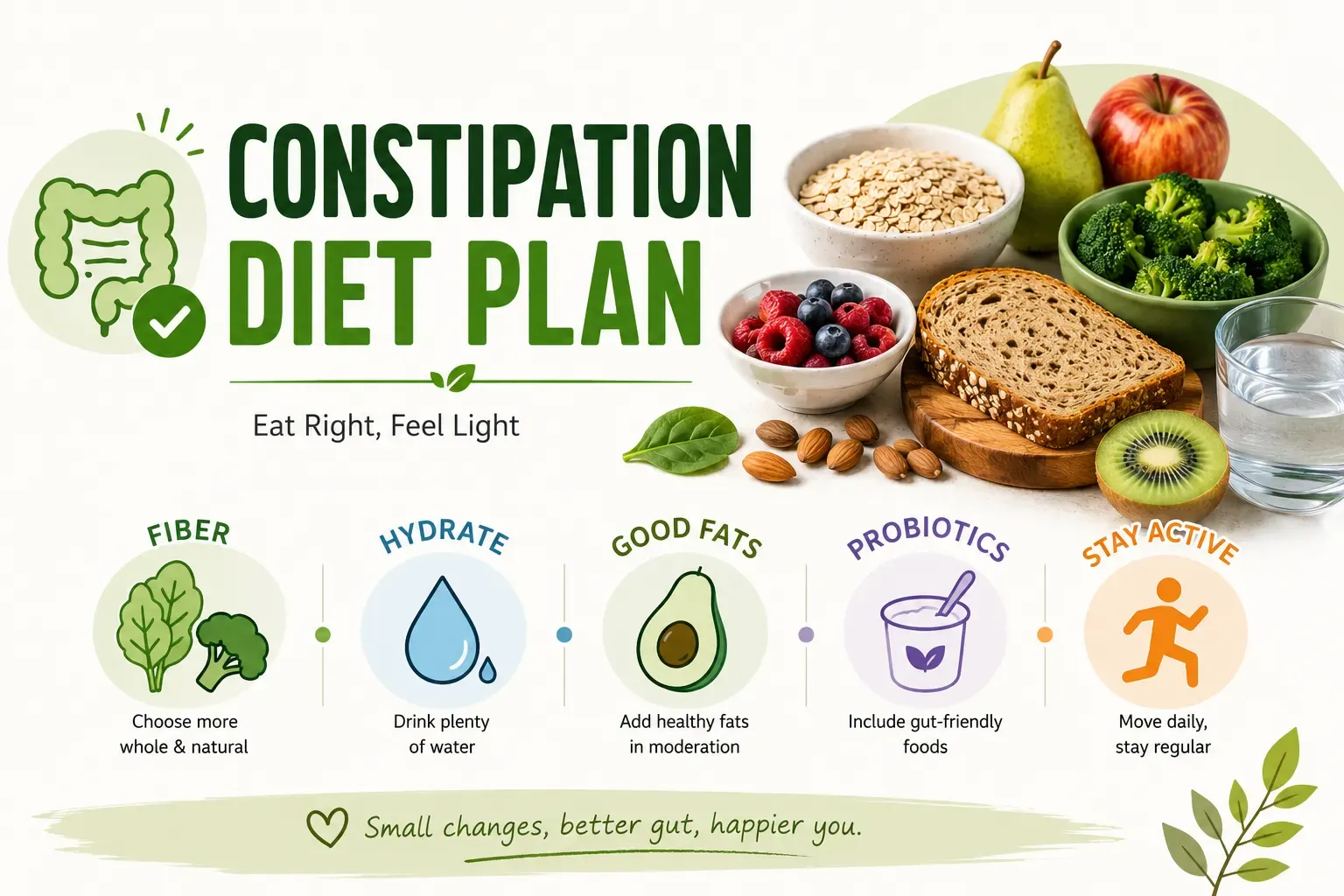
✏️ Quick Answer
A constipation diet plan centres on three pillars: 25–30g of dietary fibre daily, 2–3 litres of water, and probiotic-rich foods to support gut motility. For Indian diets, this means prioritising whole wheat roti, dal, seasonal vegetables, ripe fruits (papaya, guava, banana), and fermented foods like chaas and dahi. The 7 day diet plan for constipation below is built around Indian foods and is suitable for both general and chronic constipation management.
Diet is the single most powerful lever for managing constipation, more effective than laxatives for most people and entirely free of side effects. A well-designed constipation diet plan works by increasing the fibre that adds bulk to stool, the water that softens it, and the gut-friendly bacteria that keep intestinal contractions regular.
For most Indians, the gap between current fibre intake (approximately 10–15g/day) and the recommended 25–30g is the root cause of constipation. Closing this gap through an Indian diet plan for constipation does not require exotic foods, it requires a structured, consistent approach using everyday Indian foods. Understanding causes of constipation helps you identify which dietary changes will make the most impact for your specific situation.
Diet Plan for Constipation, The Three Core Principles
Before the day-by-day plan, understanding the three principles that drive every effective diet plan for constipation helps you adapt the plan to your own routine.
Principle 1, Fibre: 25–30g Daily
Dietary fibre is the foundation of any constipation diet plan. Fibre adds bulk to stool (insoluble fibre) and draws water into the colon to soften it (soluble fibre). Both types are needed:
- Soluble fibre, forms a gel in the intestine, softening stool. Found in oats, isabgol, ripe banana, apple, moong dal
- Insoluble fibre, adds bulk and speeds up gut transit. Found in whole wheat, vegetables, flaxseed, ragi, bajra
Principle 2, Hydration: 2–3 Litres Daily
Fibre without water can worsen constipation. Water is what allows fibre to swell and soften stool rather than compact it. Warm water first thing in the morning activates the gastrocolic reflex, the colon's natural movement signal, and is one of the simplest interventions in any diet plan for constipation patient.
Principle 3, Probiotics: Daily Fermented Foods
Beneficial gut bacteria produce short-chain fatty acids that stimulate colon contractions. Without sufficient probiotic support, even a high-fibre diet may not produce regular bowel movements. Chaas (buttermilk), dahi (curd), and idli/dosa batter are all excellent daily probiotic sources in the Indian constipation diet plan.
Best Foods for a Constipation Diet Plan Indian Style
| Food | Fibre per Serving | Best Way to Include |
|---|---|---|
| Whole wheat roti (2) | 4–5g | Replace maida roti at every meal |
| Ragi / Bajra roti (2) | 5–6g | Rotate with wheat roti; highest fibre grains |
| Oats (1 bowl) | 4g | Breakfast with milk or water; add banana or flaxseed |
| Dal (moong/masoor/chana, 1 cup) | 7–9g | Lunch and dinner staple; do not strain |
| Papaya (1 cup) | 2.5g + papain enzyme | Morning on empty stomach; natural laxative effect |
| Guava (1 medium) | 5g | Afternoon snack with skin |
| Ripe banana | 3g + FOS prebiotic | Morning snack or with oats; fully ripe only |
| Flaxseed (1 tbsp ground) | 2.8g | Add to roti atta, curd, or oats daily |
| Isabgol (1 tsp) | 4g soluble fibre | At bedtime with a full glass of warm water |
| Chaas / Buttermilk (1 glass) | 0 + probiotics | After lunch daily; improves gut motility |
| Spinach / Palak (1 cup cooked) | 4g | In sabzi, dal, or paratha stuffing |
| Rajma / Chana (1/2 cup cooked) | 7–8g | Once or twice weekly; chew well |
For guidance on specific foods and their constipation benefit, particularly whether banana is good for constipation, see the individual food guides linked throughout this plan.
Foods to Avoid in a Constipation Diet Plan
| Food to Avoid | Why It Worsens Constipation | Replace With |
|---|---|---|
| Maida (white flour) roti, bread, puri | Zero fibre; slows gut transit significantly | Whole wheat, ragi, or bajra roti |
| White rice (excess) | Low fibre; constipating in large quantities | Brown rice, daliya, or limited white rice with dal |
| Fried snacks (samosa, pakoda, chips) | High fat slows gastric emptying; zero fibre | Roasted chana, fruit, sprouts |
| Processed foods (biscuits, namkeen) | Low fibre, high sodium, dehydrates stool | Homemade snacks with whole ingredients |
| Excess dairy (cheese, paneer in large amounts) | Casein protein slows gut transit | Limit to 100g/day; pair with fibre-rich vegetables |
| Unripe banana | High resistant starch hardens stool | Fully ripe banana (yellow with spots) |
| Tea / coffee as water substitute | Caffeine mildly dehydrating; reduces colon fluid | Herbal tea, warm water, coconut water |
| Red meat (excess) | Very slow digestion; zero fibre; high protein | Dal, egg, chicken in moderate portions |
7 Day Diet Plan for Constipation, Indian Meal Plan
This 7 day diet plan for constipation is built around Indian foods, delivers approximately 28–32g of fibre daily, and includes probiotics at every lunch. Each day is designed to be practical, seasonal-flexible, and vegetarian-first (with egg/chicken options noted where relevant).
Daily non-negotiables across all 7 days:
- 2 glasses of warm water on waking, before any food
- Minimum 2.5 litres of water throughout the day
- 1 teaspoon isabgol in warm water at bedtime
- 30 minutes of walking or light exercise
Chronic Constipation Diet Plan, Additional Adjustments
The standard 7-day plan above works well for occasional and mild constipation. A chronic constipation diet plan for those with constipation lasting 3 months or more requires additional targeted adjustments:
- Increase soluble fibre specifically: Add 1 tablespoon of ground flaxseed to every meal, flaxseed is the highest combined soluble and insoluble fibre source available and has a documented laxative effect in chronic constipation clinical trials
- Add 5 soaked prunes every morning: Prunes contain sorbitol and dihydroxyphenyl isatin, both compounds with proven laxative effects in chronic constipation patients. Eat on an empty stomach with warm water
- Double the probiotic dose: In addition to daily chaas and dahi, include fermented foods at two meals, not just one. Kefir, kanji, or fermented rice kanji are good additions
- Track bowel movements in writing: Chronic constipation patients benefit from a bowel diary, noting frequency, consistency (Bristol Stool Scale), and any correlation with specific foods or stress
- Eliminate potential trigger foods for 2 weeks: Dairy in some individuals significantly worsens chronic constipation. Eliminate dairy completely for 2 weeks to assess if it is a contributing factor
- Add omega-3 rich foods: Walnuts, flaxseed, and fatty fish (if non-vegetarian) support gut motility through anti-inflammatory mechanisms relevant in chronic constipation
Diet Plan for Constipation Patient, Condition-Specific Guidance
The diet plan for constipation patient needs adjustments based on any concurrent health condition:
Constipation with Diabetes
- Prioritise soluble fibre (oats, isabgol, dal) over high-sugar fruits like mango
- Replace white rice with brown rice, daliya, or ragi
- Prunes and dates are helpful for constipation but should be limited to 2–3 daily due to sugar content
- Methi seeds (fenugreek) in water every morning, supports both blood sugar and constipation
Constipation with IBS
- Follow a low-FODMAP approach, avoid high-FODMAP foods like garlic, onion, rajma, wheat (for sensitive individuals)
- Soluble fibre (isabgol, oats) is better tolerated in IBS-C than insoluble fibre (bran, wheat)
- Introduce fibre very gradually, 2g increase per week maximum
- Avoid chia seeds, lentils in large amounts, fermentation can worsen bloating
Constipation During Pregnancy
- The 7-day Indian plan above is broadly safe during pregnancy
- Avoid stimulant laxatives and raw papaya (fully ripe papaya is fine)
- Increase fluid intake to 3 litres as progesterone-driven gut slowing needs more hydration to compensate
- Iron supplement timing: take with food or at a different time from fibre supplements to reduce constipating effect
Constipation in Elderly Patients
- Soft, cooked vegetables are better than raw salads, easier to digest for reduced stomach acid
- Daliya (broken wheat) and khichdi are ideal high-fibre, easy-to-digest staples
- Small, frequent meals are more effective than 3 large meals for elderly gut motility
- Prune juice (100ml daily) is often easier than eating whole prunes
Alongside diet, physical movement significantly amplifies the diet plan results. See exercise for constipation for a complete guide. Yoga also complements the diet plan well, see yoga for constipation for a morning sequence that works best before breakfast.
How to Make the Constipation Diet Plan Work, Practical Tips
- Start the day with warm water before anything else: This single habit activates the gastrocolic reflex and can produce a bowel movement within 30 minutes, even before the diet changes show full effect
- Eat at consistent times daily: The gut has a circadian rhythm, eating at the same times each day regulates the gastrocolic reflex and makes bowel movements more predictable
- Do not strain on the toilet: Straining worsens constipation over time. If nothing happens in 10 minutes, leave and try again after the next meal
- Use a footstool: Elevating feet 20–25cm while on the toilet straightens the anorectal angle and reduces effort by up to 30%
- Cook dal without straining: Many households strain the water from dal before eating, this removes the soluble fibre. Eat dal with the cooking water
- Eat fruits with skin: The skin of guava, apple, and pear contains most of the insoluble fibre, peeling reduces fibre by 30–40%
For a complete guide to daily habits that support digestion alongside the diet plan, see improve digestion naturally at home.
Key Takeaways
A proper constipation diet can improve digestion and support regular bowel movements. This guide covers foods to eat, avoid, and daily meal tips.
Your gut is unique your healing should be too.

Disclaimer
The content provided by Mool Health is for educational and informational purposes only and should not be considered a substitute for professional medical advice, diagnosis, or treatment.