
Yoga for Acidity: Gentle Poses, Pranayama and Safe Practice
Explore reflux-friendly poses, breathing techniques, and symptoms that need medical attention.
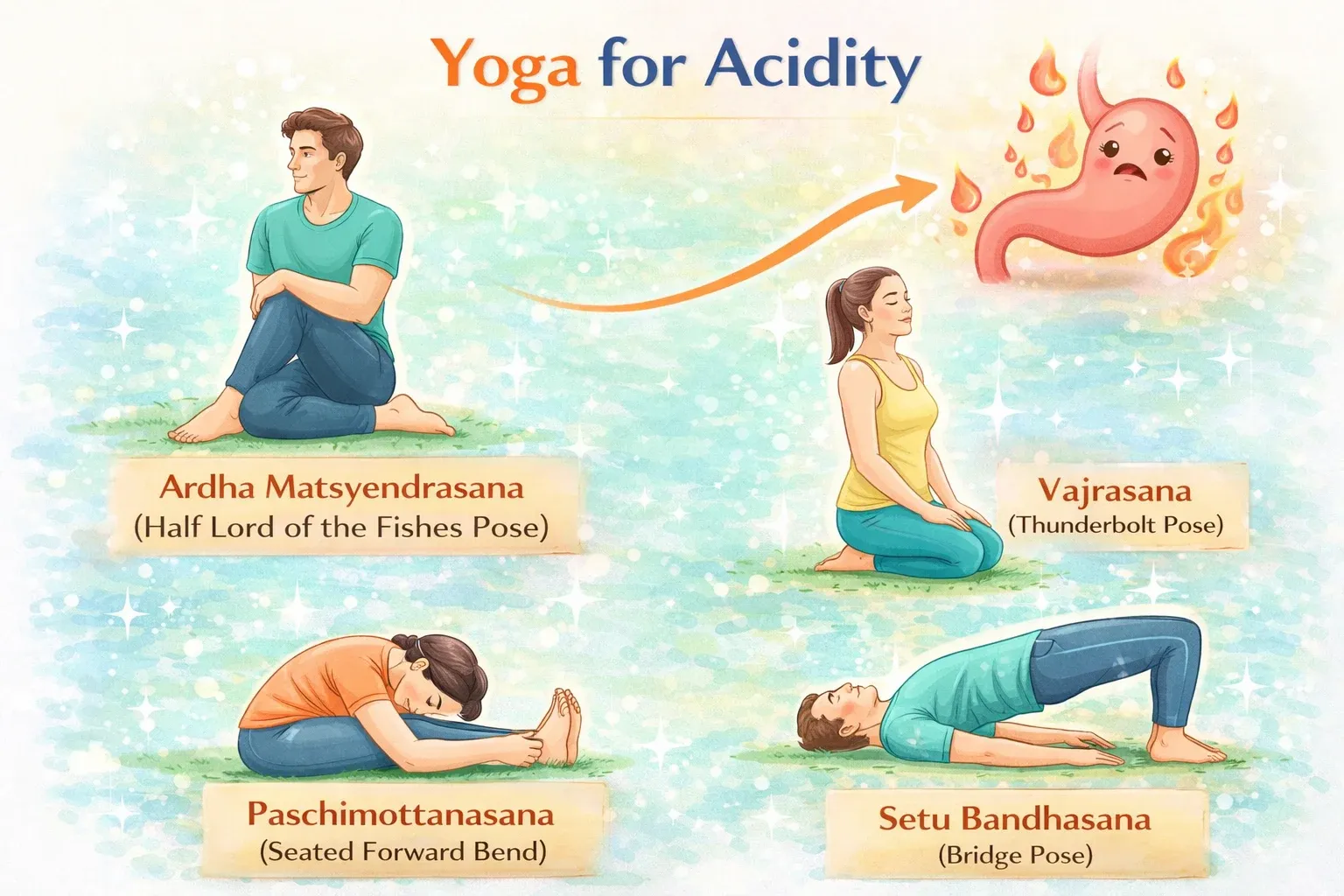
Quick Answer
Yoga for acidity can be a calming addition to reflux care, especially when stress, meal timing, or poor sleep make symptoms worse. Gentle movement and slow diaphragmatic breathing may help some people feel more comfortable, but yoga does not replace medical treatment for persistent acid reflux or GERD.
- Practise active poses on an empty stomach or at least 2 to 3 hours after a full meal.
- After eating, choose upright sitting, relaxed breathing, or a gentle walk instead of bends or floor poses.
- Deep forward folds, inversions, and abdominal compression can worsen reflux for some people.
- Diaphragmatic breathing has the strongest evidence among yoga-based practices for mild reflux support.
- Chest pain, swallowing difficulty, vomiting blood, black stool, or unexplained weight loss need medical care.
Acidity is often used to describe heartburn, acid reflux, upper-abdominal burning, a sour taste, or regurgitation. Yoga may support relaxation and daily routines that reduce symptom triggers, but it is not a quick cure for every type of digestive discomfort.
What Is Yoga for Acidity?
Yoga for acidity combines gentle movement, posture awareness, and breathing practices that may support comfort when reflux or indigestion is linked to stress, long periods of sitting, irregular meals, or poor sleep. It works best as part of a broader plan that also includes individual trigger awareness, meal timing, and medical care when needed.
Yoga does not neutralise stomach acid or diagnose the cause of chest burning. Instead, it may help some people reduce stress, improve breathing patterns, and create habits that make reflux episodes less likely.
| What Yoga May Support | What It Cannot Do |
|---|---|
| Relaxation and stress management | Diagnose GERD, an ulcer, a heart condition, or another cause of chest discomfort |
| Diaphragmatic breathing practice | Replace medicines prescribed by a qualified clinician |
| Gentle mobility and posture awareness | Fix a hiatal hernia or other structural cause of reflux |
| More consistent daily routines | Make warning signs safe to manage at home |
Can Yoga Help With Acidity and Acid Reflux?
Yoga may help when it encourages calmer breathing, regular movement, and better awareness of posture and triggers. Diaphragmatic breathing has some evidence for supporting mild GERD symptoms in selected people, while the evidence for individual yoga poses is more limited. For a clear view of food, routine, and medical contributors, see the common causes of acidity.
Yoga can be useful alongside standard reflux care, not instead of it. When you have frequent burning, regurgitation, cough, or throat symptoms, it also helps to understand what acidity can mean and discuss persistent symptoms with a clinician.
Before You Start Yoga for Acidity
Timing matters. Reflux can worsen when the abdomen is compressed or when you lie flat too soon after eating. Plan active yoga before breakfast, or wait at least 2 to 3 hours after a full meal. For a light snack, allow enough time to feel comfortable before moving into floor-based postures.
- Wear comfortable clothing that does not tighten around the abdomen.
- Start with easy movement and normal breathing rather than deep stretches.
- Stop a pose immediately if burning, nausea, dizziness, chest pressure, or pain increases.
- Use a chair, wall, cushion, or bolster to stay supported.
- Choose an experienced yoga instructor if you are new to practice, pregnant, recovering from surgery, or living with joint or spine concerns.
Gentle Yoga Poses for Acidity Support
These poses are gentle options for people who are not in an active flare and have allowed enough time after food. They are intended to support relaxation and comfortable movement, not to force digestion or push through symptoms.
| Practice | When to Try It | How Long | Important Caution |
|---|---|---|---|
| Comfortable upright seat or Vajrasana | After a light meal if comfortable, or during a breathing break | 3 to 5 minutes | Avoid kneeling if you have knee pain, arthritis, or recent knee surgery |
| Cat-Cow | Empty stomach or 2 to 3 hours after food | 1 to 2 minutes | Use a chair variation for wrist or knee discomfort |
| Gentle seated twist | Empty stomach or well after a meal | 20 to 30 seconds each side | Keep the twist mild; avoid after abdominal surgery or during acute pain |
| Supported reclined bound angle | Only when the upper body is raised and reflux is settled | 3 to 5 minutes | Do not lie flat after meals or when reclining worsens symptoms |
| Relaxed standing side stretch | Morning or between meals | 3 slow breaths each side | Avoid reaching if it causes dizziness or shoulder pain |
1. Comfortable Upright Seat or Vajrasana
For people who find kneeling comfortable, Vajrasana is a traditional upright seated position. You may also sit tall in a chair with both feet on the floor. The goal is to stay upright, relax the shoulders, and breathe gently rather than compressing the abdomen.
- Sit tall with the head, neck, and spine comfortably aligned.
- Rest hands on your thighs or lap.
- Let the abdomen soften and breathe slowly through the nose.
- Stay for 3 to 5 minutes, then stand up slowly.
Why it may help: An upright position is generally more reflux-friendly than lying flat after eating. Choose a chair instead if kneeling strains your knees or ankles.
2. Cat-Cow Pose
Cat-Cow is a slow spinal movement that may feel good when you are stiff from sitting. Practise it away from meals and keep the range comfortable.
- Start on hands and knees with wrists under shoulders and knees under hips.
- Inhale as you gently lengthen the spine and lift the chest without forcing the neck.
- Exhale as you round the back lightly and let the head follow naturally.
- Continue for 8 to 12 slow breath-led cycles.
Why it may help: Gentle mobility and slower breathing can reduce physical tension. Use a chair-based version when wrists, knees, or balance make floor practice uncomfortable.
3. Gentle Seated Twist
A mild seated twist can release upper-back and rib tension, especially after a long day at a desk. It should feel easy, not compressed or forced.
- Sit in a chair or on the floor with a tall spine.
- Place one hand on the opposite thigh and the other behind you for support.
- Turn gently from the upper body while keeping both hips grounded.
- Hold for 20 to 30 seconds with normal breathing, then change sides.
Why it may help: The practice can create a sense of ease around the chest and torso. Skip it if twisting triggers burning, abdominal pain, or surgical-site discomfort.
4. Supported Reclined Bound Angle
This restorative position should only be used when you are well past a meal and can keep your upper body elevated on cushions or a bolster. If lying back causes burning, choose upright breathing instead.
- Support your back and head on firm cushions so your chest is higher than your abdomen.
- Bring the soles of the feet together and allow knees to rest outward with support beneath them.
- Rest hands comfortably and breathe slowly for 3 to 5 minutes.
- Roll gently to one side before sitting up.
Why it may help: A supported position may promote relaxation. It is not appropriate during active nighttime reflux or soon after eating.
Pranayama for Acidity and Stress-Related Symptoms
Breathwork is often the most practical yoga-based technique for acidity because it can be done upright and does not require bending or lying down. Keep the breath slow and comfortable. Avoid breath retention, forceful breathing, or any practice that makes you light-headed.
Diaphragmatic Breathing
- Sit upright or stand with your shoulders relaxed.
- Place one hand on your chest and one over the lower ribs or upper abdomen.
- Inhale gently through the nose, allowing the lower hand to move more than the chest hand.
- Exhale slowly and comfortably for a little longer than the inhale.
- Continue for 5 minutes.
Why it may help: Diaphragmatic breathing has the best available evidence among breathing practices for mild GERD support. It may help selected people by improving diaphragm and antireflux-barrier function while reducing stress.
Anulom Vilom or Alternate Nostril Breathing
- Sit comfortably with a relaxed jaw and shoulders.
- Close one nostril gently and inhale through the other without strain.
- Switch sides and exhale slowly.
- Continue at an easy pace for 3 to 5 minutes without holding the breath.
Why it may help: This is a gentle calming practice that may suit people whose digestive symptoms worsen during stress. Stop if you feel congested, dizzy, or uncomfortable.
Bhramari or Humming Breath
- Sit tall and soften your face and shoulders.
- Inhale gently through the nose.
- Exhale with a quiet, comfortable humming sound.
- Repeat 5 to 7 times, keeping the exhale smooth.
Why it may help: Humming can be a simple way to slow the breath and settle the nervous system. It should not cause pressure, strain, or ear discomfort.
A 10-Minute Yoga Routine for Acidity Support
Use this routine in the morning or at least 2 to 3 hours after a meal. During active reflux soon after food, do only the upright breathing section and stay upright instead of moving onto the floor.
- Upright diaphragmatic breathing for 3 minutes: Sit tall and use a gentle, longer exhale.
- Cat-Cow for 2 minutes: Move slowly through 8 to 12 comfortable cycles.
- Gentle seated twist for 2 minutes: Hold each side lightly and avoid forcing range.
- Supported upright rest for 3 minutes: Sit in a chair, soften the shoulders, and return to slow breathing.
For a post-meal option, stay upright and choose a short stroll rather than active yoga. Learn more about whether walking helps digestion and use the pace that feels comfortable for you.
Yoga Poses and Practices to Avoid During Active Reflux
Some positions increase pressure around the abdomen or place the body flat or inverted. They can make reflux worse, especially after food.
| Avoid or Modify | Why It May Worsen Symptoms | Safer Alternative |
|---|---|---|
| Inversions such as headstand or shoulder stand | They can encourage stomach contents to move upward | Upright breathing or a gentle standing stretch |
| Deep forward folds | They may compress the abdomen and increase pressure | Neutral-spine seated or chair-supported practice |
| Knees-to-chest or strong abdominal compression | Compression can provoke regurgitation in some people | Slow diaphragmatic breathing while seated upright |
| Flat relaxation immediately after food | Lying flat soon after meals can worsen reflux | Remain upright for at least 2 to 3 hours after a meal |
| Forceful breathwork or breath holds | Straining may increase discomfort or dizziness | Gentle, steady nasal breathing |
Yoga, Daily Habits, and Complementary Care
Yoga works best when it supports healthy routines, not when it is used to push through regular symptoms. Finish evening meals well before lying down, stay upright after food, and identify foods or drinks that reliably trigger burning. For another non-medication approach, explore acupressure for acidity and gas with the same caution: individual responses vary, and persistent symptoms need medical assessment.
- Eat in a relaxed setting and avoid rushing through meals when possible.
- Keep dinner earlier when nighttime reflux is a pattern.
- Choose a small, comfortable portion instead of a large late meal.
- Use yoga to manage stress and improve routine, not as a substitute for prescribed treatment.
- Track symptoms, meal timing, sleep, and practices that help or worsen discomfort.
Yoga for Acidity During Pregnancy or After Surgery
Pregnancy, recent abdominal surgery, C-section recovery, hernia, severe back pain, glaucoma, uncontrolled blood pressure, or joint problems all change which movements are appropriate. During pregnancy, avoid deep twists, prone positions, and anything that feels compressive. A prenatal yoga teacher and obstetric clinician can help you choose safer modifications.
After surgery, wait for clearance from the treating surgeon or physiotherapist before restarting yoga. Any new or worsening chest, abdominal, pelvic, or wound pain needs medical review rather than a stronger stretch.
When Should You See a Doctor for Acidity?
Yoga can support wellbeing, but recurring reflux still needs a clinical review. Contact a doctor if heartburn occurs two or more times a week, does not improve with lifestyle changes or suitable over-the-counter care, wakes you frequently at night, or keeps returning.
- Seek urgent help for severe chest pain, breathlessness, sweating, fainting, or pain spreading to the arm, jaw, or back.
- Get prompt medical advice for difficulty swallowing, painful swallowing, vomiting blood, black stool, persistent vomiting, severe abdominal pain, or unexplained weight loss.
- Do not assume that new or unusual chest discomfort is acidity.
Understand What May Be Triggering Your Acidity
Frequent burning, reflux, bloating, or post-meal discomfort can follow different food, lifestyle, and digestion patterns. Start with a clearer view of your gut-health routine.
Medical Disclaimer
This article is for general health education only and does not replace medical advice, diagnosis, or treatment. Yoga and breathing practices should be adapted to your health needs. Seek urgent medical care for severe chest pain, breathlessness, fainting, pain spreading to the arm or jaw, vomiting blood, black stools, severe abdominal pain, difficulty swallowing, or unexplained weight loss. Consult a qualified healthcare professional for persistent acidity, reflux, or digestive symptoms.
Key Takeaways
Explore reflux-friendly poses, breathing techniques, and symptoms that need medical attention.
Your gut is unique your healing should be too.

FAQs
Yoga cannot cure every cause of acidity or GERD. It may support relaxation, breathing habits, movement, and symptom awareness, but persistent reflux can require medical assessment and treatment.
Stay upright and use calm diaphragmatic breathing after eating. Some people may be comfortable sitting in Vajrasana, but avoid floor poses, deep bends, twists, and lying flat soon after a meal.
Diaphragmatic breathing has some evidence for helping selected people with mild GERD symptoms. Practise slowly in an upright position and stop if it increases discomfort or dizziness.
During an active episode, avoid inversions, deep forward folds, strong twists, abdominal compression, and lying flat. Stay upright, use gentle breathing, and seek medical care for warning signs.
Seek medical advice if symptoms happen two or more times a week, keep returning, worsen despite self-care, or occur with swallowing problems, bleeding, vomiting, severe pain, weight loss, or chest-pain warning signs.
Disclaimer
The content provided by Mool Health is for educational and informational purposes only and should not be considered a substitute for professional medical advice, diagnosis, or treatment.