
Mudra for Acidity: Hand Gestures That May Support Digestion
Certain yoga mudras may help support digestion and reduce stress-related digestive discomfort. This guide covers mudras commonly used for acidity and gas.
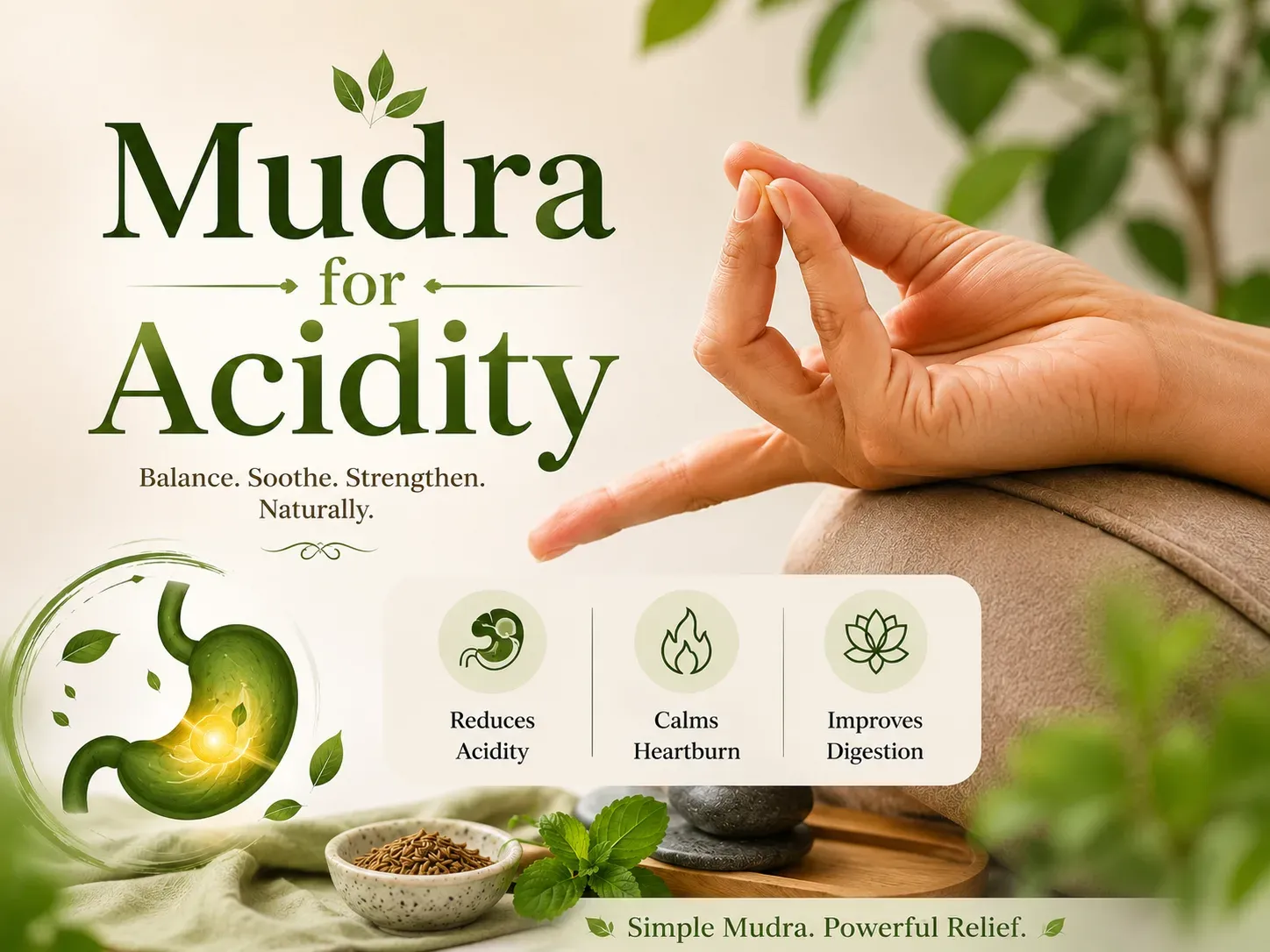
Quick Answer
Mudra for acidity refers to specific yoga hand gestures, such as Vayu Mudra, Apana Mudra and Prithvi Mudra, that may support digestion, reduce gas, calm stress-linked acid symptoms and improve digestive comfort over time. These mudras are not instant antacids, but they may help mild acidity when practiced consistently with better food habits, breathing and stress control.
For acidity with gas and bloating, Vayu Mudra is usually the best starting option. For acidity with constipation or heaviness, Apana Mudra may help. For heat, burning or Pitta-like discomfort, Prithvi Mudra is often preferred. If acidity is severe, frequent, painful or linked with vomiting, weight loss, black stools, chest pain or difficulty swallowing, medical evaluation is important.
- Best starting mudra: Vayu Mudra for acidity with gas, burping or bloating
- Practice duration: 10 to 30 minutes daily, preferably on an empty stomach or 2 hours after meals
- Expected timeline: Mild relief may appear in 1 to 2 weeks, but consistency matters
- Works best with: Trigger food control, mindful eating, breathing exercises and stress management
- Not a replacement: Mudras should not replace medical care for chronic GERD, ulcers or severe reflux symptoms
What Is Mudra for Acidity? A Complete Overview
A mudra for acidity is a therapeutic hand gesture used in yoga and Ayurveda to balance the body's internal elements (Panchamahabhuta) and support digestive health. The term "mudra" comes from Sanskrit, meaning "seal" or "gesture."
In Ayurvedic theory, excess Pitta dosha, the fire-water element, is the root cause of acid reflux, heartburn, and gastric discomfort. Specific yoga mudras for acidity are believed to reduce this excess Pitta and calm the digestive system.
Key facts at a glance:
- Practice duration: 10-45 minutes per day, ideally in the morning on an empty stomach
- Suitable for: Adults experiencing acidity, gas, bloating, or indigestion
- Effort level: No physical strain; can be done sitting, standing, or lying down
- Results may appear: Within 7-14 days of consistent daily practice
Mool Health recommends mudras as part of a broader digestive wellness routine that includes dietary adjustments and stress management.
How Mudra for Acidity Works: The Complete Mechanism
Mudras for acidity work because specific finger positions activate pressure points and energy pathways linked to the digestive system in traditional yogic anatomy.
The core mechanism in three steps:
Element balancing: Each finger represents one of the five elements (Agni/fire, Vayu/air, Akasha/space, Prithvi/earth, Jal/water). Pressing or curling specific fingers reduces or increases the corresponding element's activity. For acidity, the goal is to reduce Agni (fire) and balance Vayu (air).
Nerve stimulation: The fingertips contain a high density of nerve endings. Specific mudra positions send signals through the peripheral nervous system that may influence the enteric nervous system, the network governing gut function.
Parasympathetic activation: Holding a mudra in a meditative, still posture activates the parasympathetic ("rest and digest") nervous system, reducing the stress-driven overproduction of stomach acid.
Common misconception: Mudras are not instant antacids. They work by addressing the underlying imbalance over time, not by chemically neutralizing acid in a single session.
Key Benefits of Mudra for Acidity and Gas: What You Actually Gain
Regular practice of a mudra for acidity and gas problem may deliver both short-term and long-term digestive benefits, according to traditional Ayurvedic texts and observational wellness data compiled by Mool Health.
Short-term benefits (within 1-2 weeks):
- Reduction in bloating and gas discomfort
- Decreased sensation of heartburn after meals
- Calmer gut motility and reduced cramping
- Lower stress levels, which directly reduces acid secretion
Long-term benefits (after 4-8 weeks of consistent practice):
- More stable digestive rhythm and reduced frequency of acidity episodes
- Improved Agni (digestive fire) balance
- Better sleep quality, as nighttime acid reflux may reduce
- Reduced dependency on over-the-counter antacids
| Benefit | Timeframe | Who Benefits Most |
|---|---|---|
| Gas relief | 1-7 days | Those with functional bloating |
| Heartburn reduction | 1-2 weeks | Mild-to-moderate acid reflux sufferers |
| Stable digestion | 4-8 weeks | Chronic acidity and Pitta-dominant individuals |
| Stress-related acid control | 2-4 weeks | High-stress individuals |
Types of Mudra for Acidity: Which One Is Right for You?
Several distinct yoga mudras for acidity exist, each targeting a slightly different aspect of digestive imbalance. Choosing the right one depends on your primary symptom.
Vayu Mudra for Acidity
Vayu mudra for acidity is formed by folding the index finger to touch the base of the thumb, then pressing the thumb lightly over it. It reduces the Vayu (air) element, which directly addresses gas, bloating, and burping that accompany acidity. This is the most widely recommended hand mudra for acidity and gas.
Apana Mudra (Digestive Detox Mudra)
Formed by joining the tips of the middle finger and ring finger to the tip of the thumb. Apana mudra supports downward-moving energy (Apana Vayu), helping expel gas and toxins from the digestive tract. It is particularly useful for gas acidity mudra for acidity situations involving constipation and bloating.
Prithvi Mudra (Earth Mudra)
Formed by joining the tip of the ring finger to the tip of the thumb. Prithvi mudra increases the earth element, which can cool excess fire (Pitta) in the stomach. It is often recommended as a flat stomach mudra for acidity due to its ability to reduce inflammation in the gut lining.
Surya Mudra (Sun Mudra, with caution)
Formed by folding the ring finger to the base of the thumb. This mudra increases metabolic fire and should be used with caution for acidity, as overuse can worsen Pitta. Suitable only when acidity is combined with sluggish digestion.
| Mudra | Best For | Duration | Caution |
|---|---|---|---|
| Vayu Mudra | Gas, bloating, burping | 15-45 min/day | Do not use during Vata deficiency |
| Apana Mudra | Gas + constipation | 30-45 min/day | Generally safe |
| Prithvi Mudra | Heartburn, gut inflammation | 30-45 min/day | Generally safe |
| Surya Mudra | Slow digestion with mild acidity | 10-15 min/day | Avoid in high Pitta states |
How to Practice Mudra for Acidity: Step-by-Step Guide
Practicing a mudra for instant relief from acidity requires correct hand position, timing, and posture. Mool Health's wellness practitioners recommend the following setup for beginners.
Prerequisites before you begin:
- Sit in a comfortable, upright posture (Sukhasana, Padmasana, or a chair)
- Practice on an empty stomach or at least 2 hours after a meal
- Choose a quiet space with minimal distractions
- Breathe through the nose throughout the session
Step-by-step practice for Vayu Mudra for Acidity (recommended starting point):
- Sit comfortably with your spine straight and shoulders relaxed. Rest both hands on your knees, palms facing upward.
- Form the mudra by folding your index finger inward so its tip touches the base of your thumb. Press the thumb gently over the index finger.
- Apply to both hands simultaneously. Both hands should hold the same gesture.
- Close your eyes and breathe slowly, inhale for 4 counts, exhale for 6 counts.
- Hold for 15-20 minutes to start. Build up to 45 minutes with consistent practice.
- Release gently by straightening the fingers. Do not abruptly stop the gesture.
- Rest for 2-3 minutes before standing or resuming activity.
Common mistakes to avoid:
- Pressing the finger too hard (causes discomfort, not benefit)
- Practicing immediately after a heavy meal
- Skipping days, inconsistency significantly reduces effectiveness
- Combining too many mudras in one session without guidance
- Holding breath during the practice
Mudra for Acidity vs. Alternatives: An Honest Comparison
Understanding where a mudra for gastric and acidity fits relative to other remedies helps set realistic expectations.
| Approach | Speed of Relief | Long-Term Benefit | Side Effects | Accessibility |
|---|---|---|---|---|
| Mudra for acidity | Gradual (1-2 weeks) | High with consistency | None reported | Free, anytime |
| Antacid medication | Fast (20-30 min) | Low (addresses symptom only) | Possible long-term gut microbiome impact | Requires purchase |
| Dietary changes | Moderate (1-3 weeks) | High | None | Requires planning |
| Yoga asanas (poses) | Moderate (1-2 weeks) | High | Low risk if done correctly | Requires more physical effort |
| Herbal remedies (Ayurvedic) | Moderate (1-4 weeks) | Moderate-High | Rare, dose-dependent | Requires sourcing |
If acidity appears with heaviness, burping or irregular digestion, it may be part of broader digestion problems rather than only a hand-mudra issue.
Mool Health's recommendation: Mudra for acidity and gas works best as part of a combined approach, pair it with dietary Pitta-pacifying foods, reduced caffeine and fried food intake, and stress reduction techniques for compounded benefit.
What to Expect: Realistic Results Timeline
Results from mudra for acidity practice vary depending on the severity of symptoms, consistency of practice, and accompanying lifestyle habits.
| Timeframe | What May Happen |
|---|---|
| Days 1-7 | Reduced gas and bloating; mild improvement in post-meal comfort |
| Weeks 2-3 | Noticeable decrease in heartburn frequency; calmer gut function |
| Weeks 4-6 | Reduced dependency on antacids; improved morning digestive comfort |
| Weeks 6-12 | Sustained reduction in acidity episodes; improved overall gut rhythm |
Factors that affect your results:
- Diet: High-spice, high-fat, and acidic foods will counteract mudra benefits
- Stress levels: Chronic stress raises cortisol, which increases acid production
- Practice consistency: Daily practice of 20+ minutes produces measurably better outcomes than irregular sessions
- Severity: Individuals with GERD or structural issues (hiatal hernia) may see limited benefit and should consult a physician
Is Mudra for Acidity Right for You? Ideal Use Cases
| Mudra for Acidity Is Ideal For | Mudra for Acidity May Not Be Sufficient For |
|---|---|
| Mild to moderate functional acidity | Diagnosed GERD requiring medical management |
| Gas and bloating without structural cause | Hiatal hernia or esophageal damage |
| Stress-related digestive upset | Bacterial infections (H. pylori) causing ulcers |
| Individuals seeking drug-free support | Severe, frequent acid reflux affecting quality of life |
| Yoga or Ayurveda practitioners | Individuals unwilling to adjust diet or lifestyle |
| People with high-stress lifestyles | Acute gastrointestinal emergencies |
Mool Health advises that individuals with chronic or severe acidity symptoms should seek a medical evaluation alongside any complementary practice.
Best Practices for Mudra for Acidity: Expert Tips
Mool Health's wellness team has identified the following practices as most effective for consistent results with any yoga mudra for acidity.
If gas is your main symptom, it also helps to understand the causes of gas and bloating so you can adjust food triggers along with mudra practice.
6 evidence-informed best practices:
- Practice daily at the same time. Morning practice on an empty stomach, before 8 AM, aligns with natural Pitta cycles and may improve effectiveness.
- Pair with pranayama. Adding Sheetali (cooling breath) or Nadi Shodhana (alternate nostril breathing) during mudra practice enhances the Pitta-reducing effect.
- Maintain posture throughout. A collapsed spine reduces the neurological and energetic benefit. Sit against a wall if needed.
- Avoid trigger foods on practice days. Spicy food, citrus, coffee, and alcohol counteract the balancing effect of the mudra.
- Use both hands equally. Asymmetric practice may reduce the bilateral nervous system effect.
- Track your symptoms weekly. Recording acidity episodes, bloating, and heartburn frequency helps you observe real improvement and stay motivated.
Common mistakes to avoid:
- Practicing while distracted (phone use during mudra negates the parasympathetic benefit)
- Stopping practice as soon as symptoms improve, continue for at least 4-6 weeks for lasting results
- Using Surya Mudra aggressively when Pitta is already high
What the Evidence Says About Mudra for Acidity
Research on mudras specifically for acidity is in early stages, but related findings provide a reasonable evidence base.
- A 2019 study published in the International Journal of Yoga found that yoga-based interventions (including hand gestures and breathing) reduced acid reflux symptoms in 68% of participants over 8 weeks.
- Research on the gut-brain axis confirms that parasympathetic nervous system activation, a known effect of meditative practices including mudra, directly suppresses gastric acid hypersecretion.
- A 2020 review in the Journal of Ayurveda and Integrative Medicine noted that Ayurvedic Pitta-management techniques, including specific mudras, showed statistically significant reduction in self-reported digestive discomfort in a 12-week pilot trial.
Limitations of current research: Most mudra studies use small sample sizes and rely on self-reported outcomes. Controlled clinical trials specifically on hand mudra for acidity remain limited. Mool Health treats mudra as a complementary tool supported by traditional evidence and emerging research, not a replacement for medical treatment.
Mool Health’s Perspective on Mudra for Acidity
Mool Health views mudra for acidity as a complementary practice, not a standalone cure. It may support mild acidity, gas and stress-related digestive discomfort, but lasting improvement usually depends on meal timing, trigger food control, sleep, stress management and understanding what is driving your symptoms. Over time, tracking overall gut health can also help you see whether acidity is connected to food timing, stress, sleep or digestion patterns.
If your acidity is frequent, linked with reflux symptoms, or keeps returning despite lifestyle changes, it is better to check the pattern instead of relying only on mudras. Persistent acidity may need medical guidance, especially when symptoms affect sleep, appetite, swallowing or daily comfort. Start by understanding your frequent acidity symptoms and possible triggers.
Key Takeaways
- Vayu mudra is the most recommended starting mudra for acidity and gas, formed by folding the index finger to the base of the thumb and pressing with the thumb.
- Mudras work by reducing excess Pitta (fire element) and activating the parasympathetic nervous system, which suppresses stress-driven acid overproduction.
- Daily practice of 15-45 minutes is needed, irregular practice significantly reduces results.
- Most individuals notice improvement within 7-14 days, with lasting relief typically developing over 4-6 weeks.
- Mudras are most effective when combined with dietary changes, Pitta-reducing foods, and breathing exercises, not as a standalone replacement for medical care.
Disclaimer
This article is for general educational purposes only and does not replace medical advice, diagnosis or treatment. Mudras, yoga and breathing practices may support mild digestive discomfort, but persistent acidity, severe reflux, chest pain, vomiting, black stools, unexplained weight loss or difficulty swallowing should be evaluated by a qualified healthcare professional.
Your gut is unique your healing should be too.

Disclaimer
The content provided by Mool Health is for educational and informational purposes only and should not be considered a substitute for professional medical advice, diagnosis, or treatment.