
Is Ice Cream Good for Acidity? The Truth About Ice Cream and Acid Reflux
This guide covers vanilla, chocolate, kulfi and all ice cream types, the science behind why ice cream worsens acidity and gas, and the best cold alternatives for genuine acidity relief.
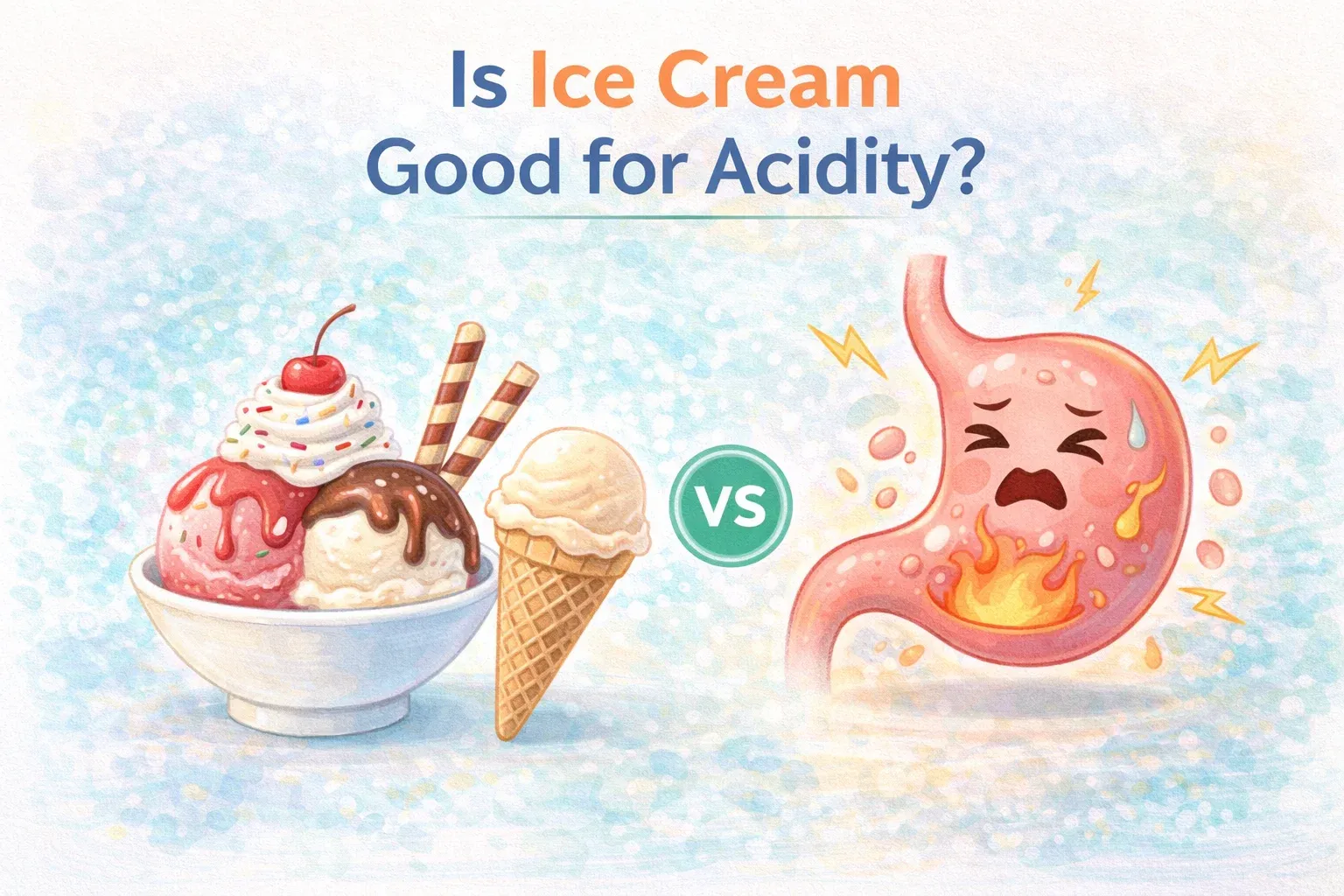
✏️ Quick Answer
Ice cream is not good for acidity — despite the temporary cooling relief it may seem to provide. Ice cream contains high fat, sugar, and dairy, all of which trigger excess acid production, slow gastric emptying, and relax the Lower Oesophageal Sphincter (LES), directly worsening acid reflux over time. The cold temperature offers momentary soothing but the composition causes acid rebound within 20–30 minutes.
Ice cream types and their effect on acidity:
- ·Vanilla ice cream — Least harmful of the flavours; plain, low-acid; still not recommended for acidity
- ·Chocolate ice cream — Worst for acidity; chocolate relaxes LES and is highly acidic
- ·Kulfi — Slightly better than ice cream; lower fat, less sugar; still not ideal for active acidity
- ·Fruit-flavoured ice cream — Citrus flavours (lemon, orange) are acidic and worsen reflux significantly
- ·Better alternative — Cold plain curd (dahi), cold coconut water, or cold milk for temporary acidity relief
Why People Think Ice Cream Helps Acidity — And Why They Are Wrong
The belief that ice cream is good for acidity is extremely widespread in India — and understandable. Ice cream is cold, smooth, and dairy-based. Cold things seem to soothe burning. Dairy is alkaline in nature. So the logic appears sound. But this is one of the most common dietary misconceptions about acidity management — and following it actually makes things worse.
The temporary relief people feel after eating ice cream during an acidity episode is real — but it lasts only 10–20 minutes. After that, the high fat content triggers a prolonged release of cholecystokinin (CCK), a hormone that relaxes the LES. A relaxed LES allows stomach acid to flow back into the oesophagus more easily — causing a rebound effect that is often worse than the original acidity. This is why many people notice their heartburn returning more intensely 20–30 minutes after eating ice cream. Understanding the true causes of acidity makes clear why high-fat, high-sugar foods like ice cream are on the list of triggers, not remedies.
The Science: Why Ice Cream Worsens Acidity
To properly answer whether ice cream is good for acidity, it helps to examine what each component of ice cream does to the digestive system and acid regulation:
- High fat content relaxes the LES — Ice cream typically contains 8–14% fat (full-fat varieties up to 18%). Fat is the strongest known dietary trigger for LES relaxation. When fat enters the small intestine, it triggers CCK release, which directly relaxes the LES sphincter — the valve preventing stomach acid from refluxing into the oesophagus. This is the primary reason why ice cream worsens acid reflux even though it temporarily feels soothing.
- High sugar spikes acid production — The 18–25g of sugar in a typical single serving of ice cream stimulates insulin release and increases gastric acid secretion. High-sugar foods are consistently associated with worsening GERD symptoms in clinical studies. This is compounded by the fact that sugar slows gastric emptying — meaning food sits longer in the stomach, extending the window during which acid can reflux.
- Lactose intolerance worsens the picture — A significant proportion of Indians have some degree of lactose intolerance. In these individuals, the lactose in ice cream is incompletely digested, leading to fermentation in the colon, gas production, and increased intra-abdominal pressure — all of which push stomach acid upward. Even mild lactose sensitivity that causes no obvious symptoms can significantly worsen acidity.
- Cold temperature disrupts digestive enzyme activity — Cold food temporarily suppresses gastric acid and digestive enzyme activity. While this feels like relief, it actually impairs digestion of the meal — leading to food fermenting in the stomach and producing gas, which increases intra-gastric pressure and worsens reflux 20–30 minutes after eating.
- Artificial flavours and additives — Most commercial ice creams contain artificial flavours, emulsifiers, and stabilisers. Emulsifiers like polysorbate 80 and carboxymethylcellulose have been shown in recent research to alter gut microbiome composition and increase intestinal permeability — both of which contribute to chronic digestive inflammation and worsening acid reflux over time.
Is Ice Cream Good for Acidity? Complete Comparison by Type
| Ice Cream Type | Effect on Acidity | Why | Verdict | Better Alternative |
|---|---|---|---|---|
| Vanilla ice cream | Mildly worsens | Plain flavour — no acidic additives; but still high fat + sugar | Least harmful; avoid during active acidity | Cold plain curd / mishti doi (small amount) |
| Chocolate ice cream | Significantly worsens | Chocolate is naturally acidic (pH ~5.5) and strongly relaxes LES; caffeine in cocoa stimulates acid | Avoid completely if you have acidity | Vanilla or fruit-free options if needed |
| Strawberry / fruit ice cream | Worsens (acidic fruits) | Strawberry, citrus, mango are high-acid fruits; their flavours retain acidity even in ice cream form | Avoid citrus-based flavours entirely | Coconut-based frozen desserts |
| Kulfi (traditional) | Mildly worsens | Higher milk solids, less air, less fat than ice cream; no LES-relaxing additives; but still dairy + sugar | Slightly better than ice cream; still not ideal | A small amount of kulfi after a full meal is less harmful |
| Mint / peppermint ice cream | Significantly worsens | Peppermint is a strong LES relaxant — one of the worst ingredients for acid reflux despite its cooling sensation | Avoid completely — worse than plain ice cream | Cardamom-flavoured alternatives |
| Coconut milk ice cream | Neutral to mildly worsens | No lactose; lower acidity than dairy; but still high fat which slows gastric emptying | Best ice cream option if you must have one | Coconut water (far better for acidity) |
| Sorbet (fruit-based, no dairy) | Depends on fruit | No dairy fat; but fruit-based sorbets can be very acidic (citrus sorbet pH ~3–4) | Avoid citrus; watermelon or cucumber sorbet acceptable | Plain cold coconut water, chilled aloe vera juice |
Is Vanilla Ice Cream Good for Acidity?
Vanilla ice cream is the least harmful ice cream flavour for people with acidity — but it is still not good for acidity. Here is why vanilla ice cream occupies a grey zone:
- Why it seems better — Vanilla has no inherent acidity. Pure vanilla flavouring is pH-neutral. Unlike chocolate (acidic) or citrus fruits (highly acidic), vanilla ice cream does not directly add acid to the digestive environment. The momentary cold temperature does temporarily neutralise some acid at the oesophageal level.
- Why it is still problematic — Vanilla ice cream still contains 8–14% fat and 18–22g sugar per serving — both of which trigger the LES relaxation and acid rebound mechanism described above. The dairy fat effect on acid reflux is flavour-independent. Vanilla ice cream is good for acidity only in comparison to worse options — not in absolute terms.
- When vanilla ice cream is least harmful — A very small serving (half a scoop) of plain vanilla ice cream eaten in the middle of a full meal (not on an empty stomach, not after a meal) causes the least LES disruption. Never eat it alone as a snack, never at night, and never on an empty stomach.
- Vanilla ice cream vs cold milk — Cold milk for acidity is far superior to vanilla ice cream because cold milk provides the dairy-based alkaline buffering effect without the concentrated fat, sugar, and additive load of ice cream. Cold milk is a clinically validated acidity remedy; vanilla ice cream is not.
Is Chocolate Ice Cream Good for Acidity? Is Kulfi Good for Acidity?
Chocolate Ice Cream — Worst for Acidity
Chocolate ice cream is among the worst foods you can eat during an acidity episode. Chocolate is problematic for three distinct reasons beyond the general ice cream issues: it is naturally acidic (pH 5.0–5.5), it contains methylxanthines (caffeine and theobromine) that directly stimulate gastric acid secretion, and it is one of the most potent known dietary LES relaxants. Studies consistently show chocolate consumption is associated with significantly worse GERD symptom scores. Combining all these properties with ice cream's fat and sugar content makes chocolate ice cream a near-perfect acidity trigger. People with chronic acid reflux should eliminate chocolate ice cream entirely, not just reduce it.
Kulfi — Slightly Better but Still Not Ideal
Kulfi is a traditional Indian frozen dairy dessert made by slow-cooking whole milk until it reduces to a thick, concentrated consistency. Compared to commercial ice cream, kulfi has some advantages for people with acidity: it contains no emulsifiers or stabilisers, has a higher milk solid content (more buffering capacity), less air (less volume of cold food hitting the stomach), and is typically less sweet than commercial ice cream. However, kulfi still contains significant dairy fat and lactose — both of which contribute to LES relaxation and potential lactose-related gas. A small portion of plain kulfi after a full meal causes less harm than ice cream, but kulfi is still not good for acidity in any meaningful sense. Is curd good for acidity — yes, much more so than kulfi — because curd's probiotic content actively supports gut health rather than just providing temporary cold buffering.
Is Ice Cream Good for Acidity and Gas?
For the specific combination of acidity and gas, ice cream is particularly counterproductive. The dual burden of acidity and gas — very common in India — is worsened by ice cream through multiple mechanisms simultaneously:
- Lactose fermentation produces gas — In lactose-intolerant individuals (estimated 60–70% of South Asians have some degree of lactose sensitivity), the undigested lactose in ice cream reaches the colon where bacteria ferment it, producing significant amounts of hydrogen and methane gas. This gas increases intra-abdominal pressure, which directly pushes stomach acid upward — worsening both gas and acidity together.
- Fat slows gastric emptying — fermenting food produces gas — Ice cream's high fat content slows gastric emptying by 30–50%. Food that sits longer in the stomach ferments, producing gas. This gas-acid combination creates the uncomfortable post-ice cream feeling of simultaneous bloating and heartburn that many people experience without understanding why.
- Cold temperature causes intestinal cramping — The sudden cold stimulates intestinal muscle contractions that, in sensitive individuals, can cause cramping, bloating, and increased gas — compounding the acidity symptoms rather than relieving them.
What to Have Instead: Better Alternatives to Ice Cream for Acidity Relief
If you are looking for something cold, creamy, or sweet that actually helps acidity rather than worsening it, these are the best alternatives backed by both clinical nutrition and Ayurvedic principles. Acidity home remedies that provide genuine cold relief far outperform ice cream:
Cold Plain Milk
Cold plain milk (full-fat or low-fat, unsweetened) provides genuine temporary relief for acidity. The calcium in milk acts as a buffer against excess stomach acid, and the protein content provides sustained neutralisation. Unlike ice cream, cold milk does not contain the concentrated fat load that relaxes the LES. The relief lasts 20–40 minutes — much longer than ice cream. However, in people with lactose intolerance or GERD, cold milk can also cause rebound acidity — it is a short-term remedy, not a cure.
Cold Coconut Water
The best cold remedy for acidity. Coconut water is naturally alkaline (pH 5.5–7.8), rich in potassium and electrolytes, completely free of fat and lactose, and provides genuine pH-balancing in the oesophagus and stomach. It is Ayurveda's most recommended Pitta-cooling beverage. Unlike ice cream, coconut water improves the underlying acidity rather than causing rebound.
Chilled Buttermilk (Chaas)
Chilled, lightly salted buttermilk is one of the best alternatives to ice cream for acidity relief. It contains live probiotic cultures that support gut health, has a lower fat content than ice cream, and the lactic acid in buttermilk paradoxically buffers excess gastric acid. Is buttermilk good for acidity — yes, significantly more so than ice cream, and it is a legitimate long-term remedy rather than a temporary fix.
Frozen Banana (Banana Nice Cream)
A blended frozen ripe banana has a creamy, ice-cream-like texture and is genuinely gut-friendly for acidity. Bananas are mildly alkaline (pH 5.6–6.5 when ripe), rich in pectin that soothes the oesophageal lining, and contain potassium that helps regulate acid levels. Blending a frozen ripe banana with a small amount of cold milk creates a genuinely acidity-friendly alternative to ice cream.
Cold Aloe Vera Juice
Chilled aloe vera juice (inner leaf, not latex) is one of the most evidence-backed cold remedies for acid reflux. A 2015 study published in the Journal of Traditional Chinese Medicine found that aloe vera syrup reduced acid reflux symptoms as effectively as conventional antacids. It coats the oesophageal lining, reduces inflammation, and does not trigger LES relaxation.
Ayurvedic Perspective: Why Ice Cream Is a Pitta Aggravator
Ayurveda's classification of ice cream as a food incompatible with acidity management is remarkably well-aligned with modern gastroenterology. According to Ayurvedic principles, ice cream simultaneously violates three key dietary rules for Pitta management (the dosha governing acid production and digestive heat):
- Guru (heavy) quality — Ice cream is classified as heavy — it takes long to digest and weighs on the digestive system, reducing Agni (digestive fire) and slowing gastric emptying. In Ayurveda, heavy foods at the wrong time or in excess are a primary cause of Ama (undigested toxins) — which is the Ayurvedic equivalent of gut fermentation and acid overload.
- Sheeta (cold) quality aggravates Agni — While Pitta is hot and cold things seem to balance it, consuming very cold food actually disrupts the digestive fire suddenly. After the brief suppression, Agni rebounds more intensely — producing more acid as the body compensates. This is the physiological basis for the acid rebound phenomenon after ice cream.
- Viruddha Ahara combinations — Ice cream commonly contains milk with fruit flavours (strawberry, mango, citrus) — a classic Viruddha Ahara (incompatible food combination) in Ayurveda. Milk and fruit together are considered to produce Ama and aggravate both Pitta and Kapha, contributing to both acidity and congestion. A better option for those wanting cold relief is to reduce acidity naturally through consistently Pitta-cooling foods rather than occasional cold indulgences that cause rebound.
📋 Key Takeaways
- Ice cream is not good for acidity — the temporary cold relief is followed by acid rebound caused by fat-triggered LES relaxation within 20–30 minutes
- Vanilla ice cream is the least harmful flavour — no inherent acidity, but still problematic due to fat and sugar content
- Chocolate ice cream is the worst for acidity — it is naturally acidic, contains LES-relaxing methylxanthines, and stimulates excess acid secretion
- Kulfi is slightly better than commercial ice cream — no emulsifiers, higher milk solids, less sugar — but still not good for active acidity
- Ice cream is particularly bad for acidity and gas together — lactose fermentation, fat-slowed digestion, and cold-induced cramping all worsen both simultaneously
- Coconut milk ice cream is the least harmful ice cream type — no lactose, less acidic — but still not a good choice during an acidity episode
- Better cold alternatives: cold coconut water, chilled buttermilk, cold plain milk, frozen banana, or chilled aloe vera juice
- Ayurveda classifies ice cream as Guru (heavy), Sheeta (cold), and potentially Viruddha Ahara — all of which aggravate Pitta and worsen acidity
- Never eat ice cream on an empty stomach or at night — both scenarios cause maximum LES disruption and acid rebound
Why Mool Health for Acidity Relief
Mool Health integrates Ayurvedic dietary wisdom with contemporary clinical nutrition to deliver superior gut health outcomes. Our approach to acidity and GERD goes beyond telling you what to avoid — we build personalised dietary protocols that identify your specific acid triggers, optimise your meal timing and food combinations, and support long-term gut healing through Ayurvedic formulations.
If you find yourself reaching for ice cream or cold foods during acidity episodes, it is a sign that the underlying acidity is not yet under control. Our gut health specialists can help you identify and address the root cause.
⚠️ Medical Disclaimer
This article is published by Mool Health for educational purposes only and does not substitute professional medical advice. Dietary recommendations for acidity management vary by individual and underlying condition. If you experience chronic acid reflux, GERD, or any persistent digestive symptoms, consult a qualified physician or gastroenterologist for a personalised evaluation and treatment plan. Do not make significant dietary changes without professional guidance if you have a diagnosed medical condition.
Key Takeaways
This guide covers vanilla, chocolate, kulfi and all ice cream types, the science behind why ice cream worsens acidity and gas, and the best cold alternatives for genuine acidity relief.
Your gut is unique your healing should be too.

Disclaimer
The content provided by Mool Health is for educational and informational purposes only and should not be considered a substitute for professional medical advice, diagnosis, or treatment.