
Ulcerative Colitis: Symptoms, Causes, Types, Diagnosis, and Treatment
Ulcerative colitis is a chronic inflammatory bowel disease that affects the colon and rectum, causing symptoms such as bloody diarrhoea, abdominal pain, and frequent bowel movements.

Ayurvedic Physician at Mool
Published on 28,September 2026
Updated on 28,September 2026
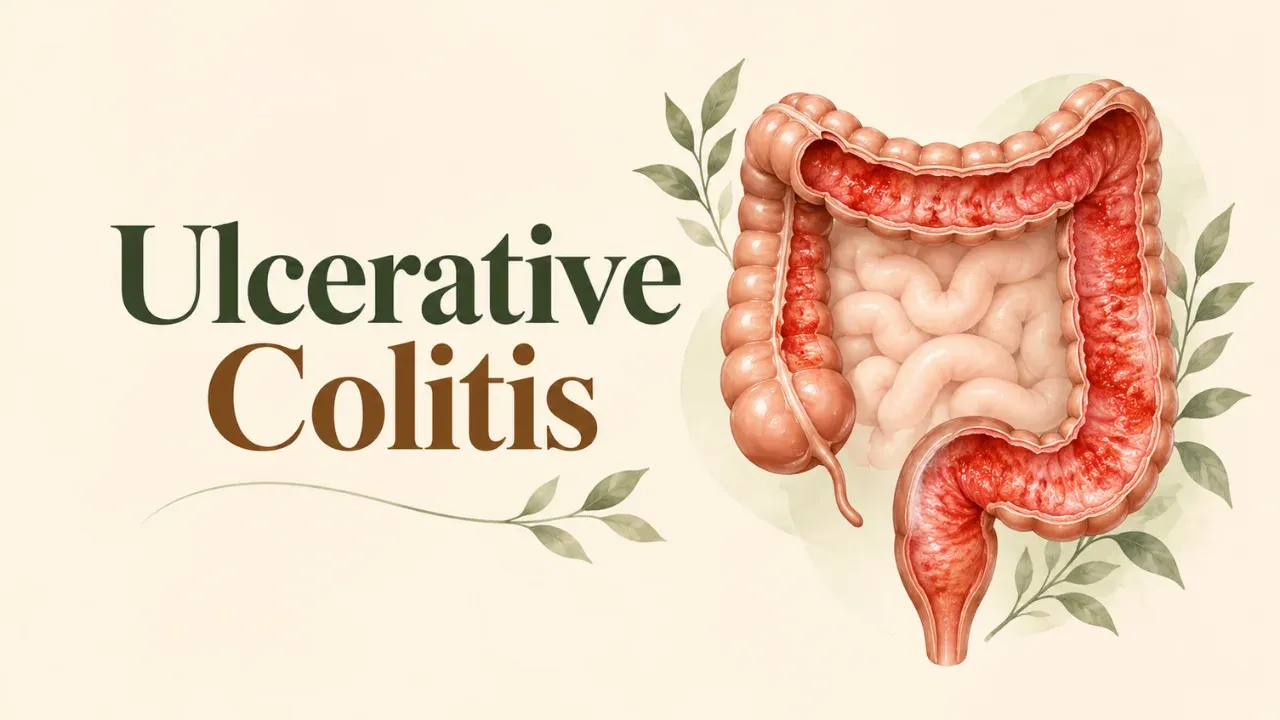
Quick Answer:
Ulcerative colitis (UC) is a chronic condition that causes ulcers in the innermost lining of the colon (large intestine) and rectum. It can lead to symptoms such as bloody diarrhoea, abdominal cramps, and more frequent bowel movements.
Treatment options include anti-inflammatory medications, such as aminosalicylates, biologic therapies, and corticosteroids. Surgical approaches, such as proctocolectomy and colectomy, may be recommended if medications do not yield desired results.
What Is Ulcerative Colitis?
Ulcerative colitis is a type of inflammatory bowel disease (IBD) that causes inflammation in the innermost lining of the large intestine and the rectum. Over time, this inflammation can cause symptoms that range from mild changes in bowel habits to severe diarrhoea with bleeding.
However, the exact symptoms can vary depending on where the inflammation occurs in the colon and how severe it is. Based on the location of the inflammation, ulcerative colitis is classified into different types, each with its own symptom pattern.
What Are the Types of Ulcerative Colitis?
Ulcerative colitis is usually classified into five types, based on where the inflammation occurs in the colon and rectum.
Each of the following types of ulcerative colitis affects a different part of the large intestine, which can influence the symptoms and severity of the condition:
Ulcerative Proctitis
This form of UC affects only the rectum, which is the lower part of the large intestine and closest to the anus.
The primary symptoms of ulcerative proctitis are rectal bleeding and a frequent or urgent need to pass stool. Some people may also experience rectal discomfort or constipation.
Proctosigmoiditis
Proctosigmoiditis affects the rectum and sigmoid colon, which is the lower section of the colon. It can cause bloody diarrhoea, abdominal cramps, fatigue, and weight loss, particularly when inflammation is more severe.
Left-Sided Colitis
The inflammation in this case extends from the rectum to the left part of the sigmoid and descending parts of the colon.
This can lead to bloody diarrhoea, weight loss, and cramps and pain on the left side of your abdomen. You may also experience a persistent urge to pass stool even when you cannot (tenesmus).
Widespread Colitis
Also called pancolitis, this form affects most or all of the colon. It can cause more widespread inflammation and may lead to bloody diarrhoea, abdominal pain and cramps, fatigue, and weight loss.
Fulminant Colitis
Fulminant colitis is a rare and severe form of ulcerative colitis that can affect the entire colon. It can cause severe abdominal pain and diarrhoea and may result in dehydration, shock, colon perforation, or severe swelling of the colon (toxic megacolon). This requires urgent medical treatment.
It is also important to distinguish ulcerative colitis from other conditions that can cause digestive inflammation.
Crohn’s disease, for instance, can affect any part of the digestive tract and may involve deeper layers of the bowel wall, while UC is limited to the colon and rectum.
Microscopic colitis can also cause persistent watery diarrhoea, but its inflammation is identified under a microscope rather than through visible changes during a colonoscopy.
What Causes Ulcerative Colitis?
The exact cause of ulcerative colitis is still being studied. Researchers believe it may develop through a combination of genetic, immune, environmental, and gut-related factors rather than one single cause.
That said, the consensus among most experts is that ulcerative colitis is an autoimmune condition. This means that it results from the immune system mistakenly attacking your own organs and tissues, leading to inflammation.
While the exact causes of ulcerative colitis are not entirely clear, the following factors have been identified as potential contributors to it:
Genetics
Research suggests that UC can run in families. However, it also states that it may not be linked to a single or specific gene, but rather many small genetic variants working together.
Environmental Factors
Diet, exposure to cigarette smoke, air pollution, and other environmental factors may play a role in the development or progression of UC.
Immune Response
The immune system’s reaction to a viral or bacterial infection may trigger a colon inflammation associated with ulcerative colitis.
Gut Microbiome
People with IBD can have differences in the types and balance of microorganisms living in their gut. However, there is still research being conducted to understand whether these changes contribute to the development or progression of UC.
What Are the Complications of Ulcerative Colitis?
Ulcerative colitis can sometimes lead to complications such as anemia, colon cancer, osteoporosis, and liver inflammation, particularly when inflammation in the colon is severe or remains uncontrolled.
When inflammation persists, becomes severe, or affects other organs, the following complications can develop:
- Anemia: Ongoing bleeding from the colon can cause a loss of red blood cells, leading to anemia.
- Colon cancer: Long-standing inflammation of the colon can increase the risk of colorectal cancer.
- Osteoporosis: People with IBD may have an increased risk of reduced bone density.
- Primary sclerosing cholangitis: This is a condition that causes inflammation and scarring of the bile ducts that carry bile from the liver.
- Growth and development issues in children: UC can affect a child's ability to maintain adequate nutrition, particularly during active disease. This may interfere with normal growth and development.
- Dehydration: Persistent diarrhoea can cause significant fluid and electrolyte loss, which may require prompt medical attention.
- Perforation: Severe inflammation can weaken the colon wall and, in rare cases, cause a hole to develop. A perforated colon is a medical emergency.
- Severe bleeding: Heavy bleeding from the colon can result in significant blood loss and may require hospital treatment or a blood transfusion.
- Toxic megacolon: Due to severe inflammation, the colon can become enlarged and stop functioning normally. This rare complication requires urgent treatment.
- Blood clots: IBD can increase the risk of blood clots forming in veins or arteries. Depending on where a clot develops, it can become life-threatening.
How Is Ulcerative Colitis Diagnosed?
Doctors diagnose ulcerative colitis by looking at your symptoms, medical history, family history, physical examination findings, and the results of laboratory and imaging tests.
Since several digestive conditions can cause similar symptoms, testing also helps rule them out.
Your healthcare professional may take the following approaches to understand what is causing your symptoms:
Medical History Assessment
Your doctor may ask about your bowel habits, bleeding, abdominal pain, weight changes, previous flare-ups, and family history of IBD.
Physical Examination
The doctor may check for signs of abdominal tenderness, weight loss, or anemia.
Blood Tests
Through blood tests, doctors can check for anemia and signs of inflammation.
Stool Tests
Doctors may require stool tests to check for blood in stools and help rule out infections that may cause similar symptoms.
Colonoscopy or Sigmoidoscopy
A colonoscopy allows a doctor to examine the entire colon using a flexible tube with a camera. A sigmoidoscopy helps them examine the rectum and lower part of the colon.
During these procedures, small tissue samples called biopsies may be taken to help distinguish UC from other conditions.
Imaging Tests
CT or MRI scans may be used when doctors need to assess severe inflammation or look for complications.
How Is Ulcerative Colitis Treated?
Treatment for ulcerative colitis may include oral medications such as corticosteroids, biologic therapies, and aminosalicylates. In some cases, surgery may also be suggested.
The treatment approach that you may be prescribed depends on the severity of the condition and the extent of inflammation.
Medications
Medicines are often the first line of treatment for ulcerative colitis. Some medications work by reducing inflammation, while some calm the immune response that contributes to the disease.
Based on your medical history and the extent of the condition, a doctor may prescribe either of the following medicines for ulcerative colitis:
| Medications for Ulcerative Colitis | How They Help |
|---|---|
| Aminosalicylates | Reduce inflammation in the lining of the colon. |
| Corticosteroids | Rapidly reduce inflammation during flare-ups (prescribed for a short period) |
| Immunosuppressants | Curb immune system activity, which helps prevent flare-ups |
| Biologic therapies | Target specific parts of the immune system involved in inflammation |
Your doctor may use one medication or a combination of treatments depending on your condition and response to therapy.
Surgery
Surgery may be considered when medicines do not show the desired effect on ulcerative colitis. It may also be considered in case of serious complications.
A surgical approach that doctors may prefer is proctocolectomy, which involves removing the colon and rectum. To allow stool to pass through, surgeons create a new pathway, called the ileal pouch, connecting the small intestine to the anus.
Another surgical procedure that doctors may perform is colectomy, wherein the whole or a part of the large intestine is removed. Creating an ileal pouch will be required here, as well.
How Can You Prevent Ulcerative Colitis Flare-Ups?
While you cannot always prevent a UC flare-up, approaches such as tracking your symptoms, following your treatment plan, and identifying personal triggers may help reduce problems.
The following practical changes may help you manage your condition between medical appointments:
Identify Your Triggers
Keeping a simple symptom and food journal can help you notice patterns over time. Note every time you experience a flare-up, along with what you ate at the time, what your symptoms are, and your stress levels.
This can give you and your healthcare professional useful information when determining what may be affecting your symptoms.
Make Dietary Changes
There is no single ulcerative colitis diet that works for everyone. That said, during a flare-up, certain foods may become harder to tolerate, so adjusting the texture and fibre content of meals may make eating more comfortable.
Based on your symptoms, food sensitivity, and preferences, you can consider making the following dietary changes:
Reducing Fibre Intake
High-fibre foods such as raw vegetables, fruits, and whole grains are nutritious, but they may worsen symptoms for some people during an active flare. Softer, lower-fibre foods may be easier to tolerate temporarily.
However, fibre should not be restricted unnecessarily without guidance, particularly because nutritional needs still need to be met.
Limit Foods That Worsen Your Symptoms
Spicy, greasy, or heavily processed foods may aggravate digestive symptoms for some people. They are better avoided when dealing with ulcerative colitis.
Drink Enough Fluids
Frequent diarrhoea can increase fluid loss, making hydration especially important.
Be Mindful of Alcohol and Caffeine
Alcohol and caffeinated drinks may worsen diarrhoea or other digestive symptoms in some people. Carbonated drinks may also increase bloating or gas.
Include Fermented Dairy if Tolerated
Fermented items such as curd or buttermilk can be beneficial for gut health. But if milk or dairy products worsen your symptoms, avoid them and discuss suitable alternatives with a healthcare professional or dietitian.
Manage Stress
Stress does not cause ulcerative colitis by itself, but it may affect symptoms and disease activity in some people. Building stress-management habits can therefore be a useful part of managing life with a chronic condition.
Activities such as gentle exercise, yoga, meditation, breathing exercises, or speaking with a mental health professional may help you manage stress and cope with symptoms.
Mool Health’s Perspective on Ulcerative Colitis
Living with ulcerative colitis can be difficult, especially when symptoms appear unexpectedly or interfere with everyday life. It can also take time to understand which foods, habits, stressors, and treatments work best for your body.
At Mool Health, we believe that managing a chronic condition such as UC requires taking a closer look at your health as a whole while still giving appropriate medical care the importance it deserves.
You can also benefit from better understanding your gut health, as it can be an important part of your overall digestive health and well-being.
The Mool Health Gut Test can help you learn more about your gut health and gain a better understanding of what may be affecting it.
References
Harvard Health Publishing. (2020). Ulcerative Colitis A to Z. Harvard Health Publishing.
https://www.health.harvard.edu/digestive-health/ulcerative-colitis-a-to-z
Onuma, E. K., Amenta, P. S., Ramaswamy, K., Lin, J. J.-C., & Das, K. M. (2000). Autoimmunity in ulcerative colitis (UC): A predominant colonic mucosal B cell response against human tropomyosin isoform 5. Clinical and Experimental Immunology, 121(3), 466–471. DOI: 10.1046/j.1365-2249.2000.01330.x.
https://pmc.ncbi.nlm.nih.gov/articles/PMC1905719/
Caba, L., Florea, A., Cianga, P., Drug, V., Popescu, R., Mihai, C., Ciobanu, C.-G., Iacob, V. V., Florea, L., & Gorduza, E. V. (2025). Genetic and Epigenetic Factors in Ulcerative Colitis: A Narrative Literature Review. Genes, 16(9), 1085. DOI: 10.3390/genes16091085.
https://pmc.ncbi.nlm.nih.gov/articles/PMC12470167/
Mayo Clinic Staff. (2025). Ulcerative colitis flare-ups: 5 tips to manage them. Mayo Clinic.
Cleveland Clinic. (2023). Ulcerative Colitis: Symptoms, Causes, Diagnosis & Treatment. Cleveland Clinic.
https://my.clevelandclinic.org/health/diseases/10351-ulcerative-colitis
Mayo Clinic Staff. (2026). Ulcerative colitis: Symptoms and causes. Mayo Clinic.
https://www.mayoclinic.org/diseases-conditions/ulcerative-colitis/symptoms-causes/syc-20353326
Mayo Clinic Staff. (2026). Ulcerative colitis: Diagnosis and treatment. Mayo Clinic.
https://www.mayoclinic.org/diseases-conditions/ulcerative-colitis/diagnosis-treatment/drc-20353331
National Institute of Diabetes and Digestive and Kidney Diseases. (2020). Ulcerative Colitis. National Institutes of Health.
https://www.niddk.nih.gov/health-information/digestive-diseases/ulcerative-colitis
National Institute of Diabetes and Digestive and Kidney Diseases. (2020). Symptoms & Causes of Ulcerative Colitis. National Institutes of Health.
https://www.niddk.nih.gov/health-information/digestive-diseases/ulcerative-colitis/symptoms-causes
Key Takeaways
Ulcerative colitis is a chronic inflammatory bowel disease that affects the colon and rectum, causing symptoms such as bloody diarrhoea, abdominal pain, and frequent bowel movements.
Your gut is unique your healing should be too.

FAQs
No, bananas are not bad for people with ulcerative colitis. Ripe bananas are soft and relatively easy to digest, which may make them easier to tolerate during a flare-up. However, food tolerance varies, so avoid or limit bananas if you notice that they worsen your symptoms.
Common symptoms of ulcerative colitis include bloody diarrhoea, frequent bowel movements, an urgent need to pass stool, abdominal cramps, and abdominal pain. Some people may also experience fatigue and weight loss.
You may be able to reduce the likelihood or severity of flare-ups by taking your prescribed medicines as directed, attending regular medical appointments, tracking your symptoms, identifying and avoiding personal food triggers, staying hydrated, managing stress, and getting adequate sleep. Since UC affects people differently, your gastroenterologist can help you develop a management plan suited to your condition.
Yes. With appropriate treatment and ongoing medical care, many people with ulcerative colitis can continue to work, study, travel, exercise, and take part in everyday activities.
There is no universal list of foods that everyone with UC needs to avoid. During a flare-up, some people may find that high-fibre foods, high-fat meals, spicy foods, dairy, caffeine, or alcohol worsen their symptoms. Major dietary restrictions should be discussed with a gastroenterologist or registered dietitian.
Disclaimer
The content provided by Mool Health is for educational and informational purposes only and should not be considered a substitute for professional medical advice, diagnosis, or treatment.