
Best Tea for Digestion: 8 Herbal Teas Ranked by Symptom
A symptom-wise guide to the best teas for digestion, covering ginger, peppermint, fennel, chamomile, green tea, licorice and more.
Quick Answer
The best tea for digestion depends on the symptom you want to target. Ginger tea is best for nausea and slow digestion, peppermint tea may help IBS-type bloating and cramps, fennel tea is useful for gas, chamomile tea supports stress-linked gut discomfort, and green tea is better for long-term gut maintenance.
- For bloating and gas, choose fennel tea first; peppermint tea can help cramps but may worsen reflux.
- For nausea, post-meal heaviness, or slow digestion, ginger tea is usually the strongest option.
- For stress-linked indigestion or night-time gut discomfort, chamomile tea is the most suitable caffeine-free choice.
- For acid reflux or stomach lining irritation, licorice root tea in DGL form may help, but avoid high-dose non-DGL licorice.
- Avoid peppermint tea with GERD, green tea on an empty stomach if acidity-prone, and very hot tea above 65°C.
What Is Tea for Digestion? A Complete Overview
Tea for digestion refers to herbal or plant-based brews - and some minimally processed teas like green tea - that contain active compounds known to support gastrointestinal function. These compounds work on the gut by reducing spasms, stimulating bile production, easing inflammation, or feeding beneficial gut bacteria.
Digestive teas are not medications. They are functional beverages used to manage common complaints such as bloating, indigestion, nausea, constipation, and gas. digestive teas are most effective when used consistently as part of a balanced diet and adequate hydration routine.
Key terms used in this article:
- Carminative: A compound that relieves gas and bloating
- Antispasmodic: A compound that relaxes involuntary muscle contractions in the gut
- Prokinetic effect: Stimulating forward movement of food through the digestive tract
How Digestive Tea Works: The Complete Mechanism
Digestive teas work because their active plant compounds interact directly with the gut's muscular, microbial, and enzymatic systems.
Step-by-step mechanism:
- Hot water extracts active compounds. Steeping plant material in water at 85 to 100°C releases volatile oils, polyphenols, flavonoids, and terpenes from plant cells into the liquid.
- Compounds reach the gastrointestinal lining. Within 15 to 20 minutes of consumption, these compounds come into contact with the mucosal lining of the stomach and small intestine.
- Smooth muscle relaxation occurs. Compounds such as menthol (peppermint) and anethole (fennel) act as antispasmodics, relaxing the smooth muscle of the gut wall. This relieves cramping and reduces gas pressure.
- Enzyme and bile stimulation follows. Compounds in ginger and dandelion root stimulate the production of digestive enzymes and bile, accelerating the breakdown of fats and proteins.
- Inflammation is reduced. Polyphenols in green tea and chamomile reduce inflammatory cytokine activity in the gut lining, which may help with conditions like irritable bowel syndrome (IBS).
- Gut microbiome is supported. Prebiotic compounds in teas like dandelion and licorice root feed beneficial bacteria such as Lactobacillus and Bifidobacterium species.
Common misconception: Digestive teas do not "flush" or "detox" the gut in the way some marketing claims suggest. Their effects are functional - they support normal digestive processes rather than triggering any kind of purging.
The 8 Best Teas for Digestion: A Full Comparison Table
Different digestive teas target different symptoms. Select a tea based on your primary complaint rather than general "digestive health" marketing claims.
| Tea Type | Primary Benefit | Best For | Active Compound |
|---|---|---|---|
| Ginger Tea | Anti-nausea, prokinetic | Nausea, slow digestion, post-meal discomfort | Gingerols, shogaols |
| Peppermint Tea | Antispasmodic, carminative | IBS, bloating, gas, cramping | Menthol |
| Fennel Tea | Carminative, antispasmodic | Gas, bloating, colic-type discomfort | Anethole, fenchone |
| Chamomile Tea | Anti-inflammatory, relaxant | Stress-related indigestion, spasms, sleep-linked gut issues | Apigenin, bisabolol |
| Green Tea | Antioxidant, mild prokinetic | General gut health, post-meal metabolism, inflammation | EGCG |
| Dandelion Root Tea | Prebiotic, bile stimulant | Constipation, sluggish fat digestion, liver-linked digestion | Inulin, taraxacin |
| Licorice Root Tea | Mucosal protection | Acid reflux, gastritis, stomach lining irritation | Glycyrrhizin |
| Triphala Tea | Bowel regulation | Chronic constipation, Ayurvedic gut reset | Tannins, gallic acid |
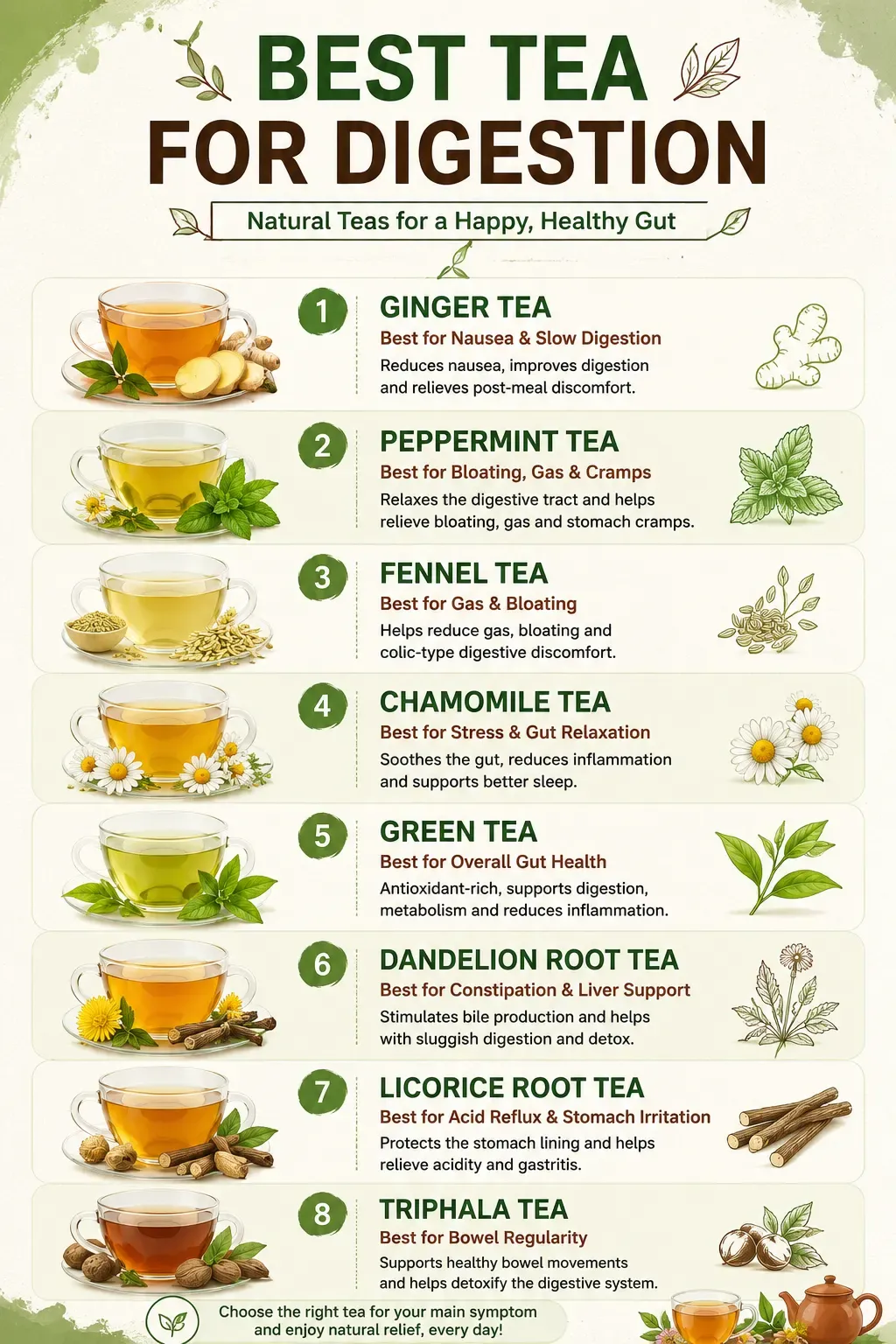
Quick guide by symptom:
- Bloating and gas → fennel or peppermint
- Nausea → ginger
- IBS symptoms → peppermint or chamomile
- Constipation → dandelion root or triphala
- Acid reflux → licorice root DGL form, in moderation
- General gut maintenance → green tea
The 4 Most Evidence-Backed Digestive Teas: What the Research Actually Shows
Most articles on the best digestive tea list multiple options without specifying which ones have clinical backing. Four teas stand out from the research: ginger, peppermint, fennel, and chamomile.
Ginger Tea: Best for Nausea and Slow Gastric Emptying
Ginger tea is the most clinically studied tea for digestive nausea. The active compounds - gingerols and shogaols - accelerate gastric emptying and reduce nausea by acting on 5-HT3 receptors in the gut lining.
A systematic review of 12 randomised controlled trials (Viljoen et al., 2014, Nutrition Journal) confirmed ginger is more effective than placebo for nausea from multiple causes, including morning sickness, post-operative nausea, and chemotherapy-related nausea. The effective dose in most studies was 1 to 1.5 g of ginger per day - equivalent to approximately one strong cup of fresh ginger tea using 1 tablespoon of grated root steeped for 8 minutes.
- Best for: Post-meal heaviness, nausea, slow digestion, motion sickness
- Timing: 20 minutes before a meal or immediately after eating
- Caution: High-dose ginger above 4 g per day may interact with anticoagulant medication
Peppermint Tea: Best for IBS-Type Bloating and Cramping
Peppermint tea is the strongest evidence-backed tea for bloating caused by IBS and smooth muscle spasm. Menthol, its primary active compound, relaxes the smooth muscle of the intestinal wall, reducing cramping, gas pressure, and spasm frequency.
A 2014 meta-analysis in the Journal of Clinical Gastroenterology (Ford et al.) found peppermint oil significantly outperformed placebo for IBS symptom relief, with a number-needed-to-treat of 2.5. Peppermint tea delivers the same compound - menthol - at a lower concentration than encapsulated oil.
- Best for: IBS-type bloating, post-meal gas, intestinal spasms
- Timing: 30 minutes after a meal
- Caution: Avoid if you have GERD or acid reflux - menthol relaxes the lower oesophageal sphincter, which can worsen reflux symptoms
Fennel Tea: Best Carminative for Gas and Bloating
Fennel tea is the most effective single-herb carminative for trapped gas. Anethole and fenchone, fennel's primary volatile oils, relax the smooth muscle of the intestinal wall and accelerate the passage of gas through the gut.
A 2016 study published in the Journal of Gastrointestinal and Liver Diseases found fennel seed extract reduced bloating severity scores by 40% in adults with functional dyspepsia after 4 weeks of use. Fennel tea made from crushed seeds retains higher concentrations of anethole than most commercial flat tea bags.
- Best for: Gas, bloating, colic-type cramping, post-meal distension
- Timing: 30 minutes after a heavy meal, or before bed for overnight gas relief
- Tip: Crush seeds before steeping to increase anethole release by approximately 30%
Chamomile Tea: Best for Stress-Linked Digestive Symptoms
Chamomile tea is the strongest herbal option when stress is driving gut symptoms. Apigenin, chamomile's primary flavonoid, has mild anxiolytic effects that indirectly regulate gut motility by calming the enteric nervous system - the gut-brain connection.
A 2017 randomised controlled trial in Phytomedicine found chamomile extract reduced generalised anxiety disorder scores and improved sleep quality over 8 weeks, with downstream benefits reported for bloating and gut discomfort. Bisabolol, chamomile's secondary active compound, has direct anti-inflammatory effects on the gut lining, supported by a 2019 review in the Journal of Ethnopharmacology (Srivastava et al.).
- Best for: Stress-related bloating, spasms worsened by anxiety, evening gut discomfort, sleep-disrupted digestion
- Timing: 30 minutes before bed
- Caution: Chamomile may potentiate sedative medications. Those with ragweed allergy should introduce chamomile cautiously.
Best Tea for Acid Reflux and Bloating: What to Drink and What to Avoid
Acid reflux and bloating often occur together - but the same tea cannot address both simultaneously. Some teas that relieve bloating, such as peppermint and high-dose licorice, can worsen reflux. Choosing correctly requires identifying which symptom is primary.
If bloating is primary and reflux is mild: Fennel tea is the safest option when both reflux and bloating are present. Unlike peppermint, fennel does not relax the lower oesophageal sphincter. It reduces gas pressure through anethole's carminative action without increasing acid exposure. Use 1 cup of fennel seed tea 30 minutes after a meal, made with crushed seeds.
If reflux or stomach lining irritation is primary: Licorice root tea - specifically the deglycyrrhizinated licorice (DGL) variant - has the best evidence for protecting the stomach lining. Glycyrrhizin stimulates mucin production in the stomach, creating a protective barrier against acid. A 2012 study in Evidence-Based Complementary and Alternative Medicine found DGL extract reduced acid reflux symptoms in 75% of participants over 30 days. Use DGL licorice tea, 1 cup before meals, limited to 4 weeks of continuous use. Not suitable for people with high blood pressure.
What to avoid if you have acid reflux:
| Tea | Why to Avoid with GERD |
|---|---|
| Peppermint tea | Relaxes lower oesophageal sphincter, increases acid exposure |
| High-dose licorice (non-DGL) | Raises blood pressure; worsens fluid retention |
| Green tea on empty stomach | Caffeine may stimulate acid secretion in sensitive individuals |
| Very hot tea above 65°C | Damages oesophageal lining with habitual consumption |
For general indigestion without reflux: Ginger tea is the most effective option - it accelerates gastric emptying, reducing the time acid-producing food sits in the stomach.
Best Tea for Digestion at Night: Timing, Choices, and What to Avoid After 8 PM
Evening digestion differs from daytime digestion. The body's digestive enzyme secretion slows after 7 to 8 PM, gut motility decreases, and the gut-brain axis becomes more sensitive to stress accumulated during the day. The best tea for digestion at night targets this slower, stress-sensitive state.
the best tea for digestion at night is chamomile tea, followed by fennel tea. Both are caffeine-free, both calm gut spasms, and chamomile has an additional advantage: apigenin reduces evening cortisol spikes that disrupt both sleep and gut motility.
Chamomile tea before bed: Drinking chamomile tea 30 minutes before bed combines two effects. Apigenin binds to GABA-A receptors in the brain, producing mild sedation and cortisol reduction, while bisabolol reduces gut lining inflammation accumulated from the day's food intake. Dose: 1 cup steeped for 7 minutes, covered, at 90 to 95°C. Allow to cool to approximately 55°C before drinking.
Fennel tea after dinner: For people whose primary evening complaint is gas and bloating rather than stress, fennel tea 30 minutes after dinner is the more targeted option. Anethole accelerates the passage of gas through the large intestine, reducing overnight distension. Dose: 1 teaspoon of crushed fennel seeds steeped for 8 to 10 minutes, covered. Effective within 30 to 45 minutes for most people.
What to avoid at night:
- Green tea - contains 25 to 35 mg of caffeine per cup, enough to disrupt sleep onset in caffeine-sensitive individuals
- High-concentration ginger tea - its stimulating effect on gastric secretions may cause discomfort if consumed within 1 hour of lying down
- Peppermint tea if you have reflux - lying down after peppermint can worsen acid exposure when the oesophageal sphincter is relaxed
- Any tea above 65°C - allow at least 5 minutes of cooling before drinking
How to Make Digestive Tea: Step-by-Step Guide
Making digestive tea correctly determines how much of the active compound reaches your gut. Most people under-steep or skip covering the cup - both reduce potency significantly.
What you need:
- Fresh or dried herbs, tea bags, or loose-leaf tea
- Filtered water
- A kettle or saucepan
- A strainer or infuser for loose-leaf
- A covered mug or teapot to retain volatile oils during steeping
Step-by-step instructions:
- Heat water to the correct temperature. For herbal teas (ginger, fennel, peppermint, chamomile), use water at 95 to 100°C. For green tea, use water at 80 to 85°C to avoid bitterness and protect EGCG.
- Measure the right amount. Use 1 teaspoon of dried herb or 1 tablespoon of fresh herb per 240 ml of water. For tea bags, use one bag per cup.
- Cover the cup while steeping. This is the most commonly skipped step. Covering retains the volatile oils responsible for carminative and antispasmodic effects. Without a cover, up to 40% of volatile oils can evaporate.
- Steep for the correct duration.
- Ginger: 5 to 10 minutes
- Peppermint and chamomile: 5 to 7 minutes
- Fennel (crushed seeds): 7 to 10 minutes
- Green tea: 2 to 3 minutes
- Strain and allow to cool slightly. Drinking tea above 65°C has been classified as a probable carcinogen by the IARC with habitual consumption. Allow the tea to cool to approximately 55 to 60°C before drinking.
- Drink at the right time. Most digestive teas work best consumed 20 to 30 minutes before a meal to stimulate digestive secretions, or within 30 minutes after a meal to aid digestion and reduce bloating.
Common mistakes to avoid:
- Over-steeping herbal teas longer than 10 minutes can increase bitterness and extract excess tannins, which may cause constipation in high amounts
- Adding too much sugar or honey reduces the functional benefit and adds unnecessary calories; if needed, limit to 1 teaspoon
- Using digestive tea as a replacement for meals, hydration, or medical care is not recommended
When Digestive Tea May Not Be Enough
Digestive teas may support mild bloating, gas, nausea, stress-linked indigestion, and occasional slow digestion. They are not a substitute for medical evaluation when symptoms are frequent, severe, or linked with warning signs.
See a doctor if you notice:
- Persistent abdominal pain lasting more than 2 weeks
- Vomiting blood or passing black stools
- Unexplained weight loss or appetite loss
- Difficulty swallowing or repeated vomiting
- Severe constipation or diarrhoea that does not improve
- Fever, dehydration, or intense abdominal tenderness
- Acid reflux more than twice a week despite diet changes
These symptoms may indicate GERD, gastritis, peptic ulcer disease, gallbladder disease, infection, inflammatory bowel disease, or another condition that needs proper diagnosis.
Key Takeaways
- Best tea for digestion depends on the symptom, not the label. Ginger, peppermint, fennel, chamomile, green tea, dandelion root, licorice root, and triphala each support different concerns.
- Ginger tea is best for nausea, slow digestion, and post-meal heaviness.
- Peppermint tea may help IBS-type bloating and cramps, but it can worsen GERD or acid reflux.
- Fennel tea is a practical option for gas, bloating, and trapped wind after meals.
- Chamomile tea is useful when stress, poor sleep, or evening discomfort worsens digestion.
- Green tea may support long-term gut health, but it may not suit people who are caffeine-sensitive or prone to acidity on an empty stomach.
- Digestive tea works best when paired with meal timing, hydration, trigger tracking, and consistent gut-friendly habits.
Find the Right Tea for Your Gut Pattern
If bloating, gas, acidity, or slow digestion keeps returning, understand your gut pattern before relying only on herbal teas.
Your gut is unique your healing should be too.

FAQs
A The best tea for digestion depends on your symptom. Ginger tea works well for nausea and slow digestion, fennel tea for gas, peppermint tea for IBS-type cramps, chamomile tea for stress-linked discomfort, and green tea for general gut support.
A Fennel tea and peppermint tea are common choices for bloating and gas. Fennel is usually safer when reflux is also present, while peppermint may worsen GERD in some people.
A Yes. Ginger tea may support gastric emptying, reduce nausea, and help post-meal heaviness. It is best taken before or after meals, but high amounts may not suit people on blood thinners.
A Many people can drink mild digestive teas daily, but daily use depends on the herb, dosage, health condition, and medicines. Avoid long-term high-dose licorice and be cautious with caffeine-containing teas.
A Chamomile tea is usually the best night option because it is caffeine-free and may support relaxation. Fennel tea can be useful after dinner when gas and bloating are the main issue.
A Avoid peppermint tea if you have GERD or reflux because it may relax the lower oesophageal sphincter. Green tea on an empty stomach and very hot tea may also worsen symptoms in sensitive people.
A Some teas may help within 20 to 45 minutes, especially fennel or peppermint for gas and ginger for nausea. Long-term gut support from green tea or dandelion may take consistent use over weeks.
Disclaimer
The content provided by Mool Health is for educational and informational purposes only and should not be considered a substitute for professional medical advice, diagnosis, or treatment.