
Which Fruits Are Good for Diarrhea? Best Fruits for Recovery
Certain fruits may help improve hydration and support digestion during diarrhea. This guide explains the best fruits to eat and which ones to avoid.
✏️ Quick Answer
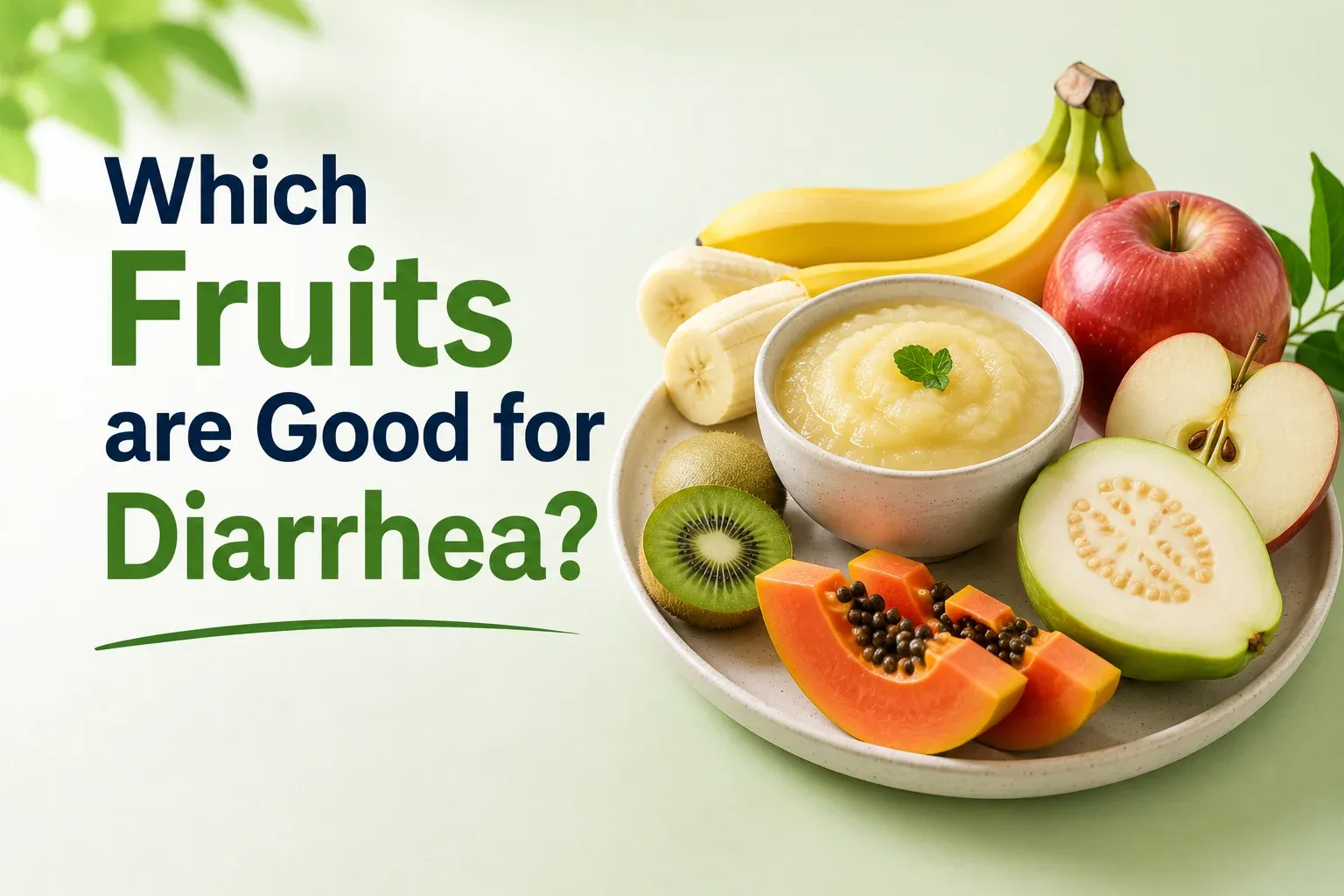
Not all fruits help during diarrhea. The wrong fruit can make loose motions worse. The safest fruits are ripe banana, cooked apple (or applesauce), and small amounts of pomegranate. These are rich in pectin, a soluble fibre that absorbs excess water in the gut and firms loose stools. Fruit supports nutrition during recovery, but ORS must always come first.
- Safe: Ripe banana (yellow with brown spots), cooked or stewed apple, small amounts of pomegranate, ripe papaya (Day 3-4 only)
- Avoid: Oranges, sweet lime, mosambi (acidic), grapes, watermelon (high fructose/water), raw mango, guava, pineapple
- The rule: Pectin-rich + low acid + low insoluble fibre = safe during diarrhea
Fruits are usually healthy, but during diarrhea some can significantly worsen loose motions while others actively support recovery. The difference comes down to fibre type, acidity, and sugar content. For a complete food and drink guide during loose motions, see our article on what to eat in diarrhea. To understand why certain foods worsen or improve digestion during illness, see our guide on causes of diarrhea.
How Pectin in Fruit Helps During Diarrhea: The Science
Pectin is a soluble fibre found naturally in the skin and flesh of certain fruits. Unlike insoluble fibre, which speeds up bowel transit, pectin dissolves in water inside the gut and forms a gel-like substance. This gel slows gut movement, absorbs excess water from loose stools, and helps bind stool material together. The result is firmer, less frequent stools within 24-48 hours of consistent intake.
Because diarrhea flushes water faster than the colon can absorb it, pectin acts as a natural buffer. It does not stop the underlying cause of diarrhea, but it reduces symptom severity while the gut heals.
| Fruit | Pectin Content | Best Form During Diarrhea | Notes |
|---|---|---|---|
| Ripe banana | Moderate to High | Whole, ripe (yellow with brown spots) | Also high in potassium (~422 mg per medium banana) |
| Cooked apple | High (increases on cooking) | Stewed, applesauce, baked, not raw | Heat breaks down cell walls, releasing more bioavailable pectin |
| Pomegranate | Moderate | Fresh seeds or diluted fresh juice | Tannins also reduce bowel frequency; limit quantity |
| Raw apple | Moderate (lower bioavailability) | Avoid during active diarrhea | Harder to digest; less effective pectin delivery than cooked |
Best Fruits to Eat During Diarrhea: A Detailed Guide
1. Ripe Banana, The Safest and Most Recommended
Banana is the most widely recommended fruit for diarrhea. It is easy to digest, contains meaningful amounts of pectin to help firm stools, and is high in potassium (approximately 422 mg per medium banana), an electrolyte lost rapidly during loose motions. It is also low in acid and low in insoluble fibre, making it gentle on an inflamed gut lining.
Critical detail on ripeness: Only eat ripe banana, yellow with brown spots. Green or firm banana contains higher resistant starch, which can cause significant gas and bloating in a sensitive gut.
When to start: From Day 1, even during mild active diarrhea, half a ripe banana is generally safe if vomiting has not started.
2. Cooked Apple / Applesauce, High Pectin, Gentle on Gut
Cooked apple (stewed, baked, or as plain applesauce with no added sugar) is the second most evidence-supported fruit during diarrhea. Cooking breaks down cell walls and releases pectin in a more bioavailable form than raw apple, making it more effective at absorbing excess gut fluid.
How to prepare: Core and peel one apple. Add a small amount of water and cook until soft. No sugar, no cinnamon, no butter. Mash or blend into applesauce. Serve at room temperature.
Avoid: Raw apple during active diarrhea. Packaged applesauce containing added sugar or preservatives.
3. Pomegranate (Small Amounts), Tannins Add a Binding Effect
Pomegranate contains tannins, plant compounds with a mild astringent effect on the gut lining. Tannins work by reducing fluid secretion and slightly slowing bowel movement, adding a second mechanism to pectin's water-absorption effect.
How to use: Eat small amounts of fresh pomegranate seeds (30-50 g), or drink 30-50 ml of fresh unsweetened pomegranate juice diluted with water. Avoid packaged, sweetened pomegranate juice. Not suitable for children under 5.
4. Ripe Papaya (Recovery Phase Only, Day 3-4)
Ripe papaya is easy to digest and gentle on the gut. It contains papain, a digestive enzyme that aids protein digestion. However, papain can also mildly stimulate bowel movement in larger amounts, which is why papaya should only be introduced once diarrhea is clearly settling, not during the acute phase.
Avoid: Unripe or semi-ripe papaya, which has a stronger laxative effect and should not be consumed during illness.
Fruits to Avoid During Active Diarrhea
| Fruit | Why It Worsens Diarrhea |
|---|---|
| Oranges, mosambi, sweet lime, citrus | High citric acid (pH 3.5-4.0) irritates the gut lining and increases gut motility |
| Grapes | High fructose and water content; fructose draws water into the gut through osmosis |
| Watermelon | Over 90% water and high in fructose; increases stool frequency in a sensitive gut |
| Raw mango (especially unripe) | Hard to digest when gut is inflamed; ripe sweet mango also spikes osmotic load |
| Guava | High insoluble fibre speeds up gut transit, the direct opposite of what pectin does |
| Pineapple | Bromelain enzyme stimulates bowel movement; high acidity irritates inflamed gut lining |
| Packaged fruit juices (all types) | High fructose, low fibre, osmotic load pulls water into gut |
Fruit vs ORS vs BRAT Diet: What Actually Works During Diarrhea?
| Intervention | What It Does | When to Start | Replaces Fluids? |
|---|---|---|---|
| ORS (Oral Rehydration Solution) | Replaces water, sodium, potassium, and glucose lost in loose stools | Day 1, immediately | Yes, essential |
| BRAT Diet (Banana, Rice, Applesauce, Toast) | Provides gentle, binding carbohydrates that firm stools and provide energy | Once vomiting stops (Day 1-2) | No |
| Fruit alone | Provides pectin, potassium, and easy-to-digest calories | Once appetite returns (Day 2+) | No |
| Curd rice | Probiotics from curd and stool-binding starch from rice | 12-24 hours after onset, once vomiting settles | No |
The BRAT diet deliberately includes two fruits, banana and applesauce, because their pectin content is the most evidence-supported dietary intervention for stool binding. Eating those fruits as part of a broader bland diet outperforms eating fruit alone, because rice and toast provide binding starch alongside the pectin. For probiotic support alongside fruit and bland food, see is curd good for diarrhea.
Day-by-Day Fruit Reintroduction Timeline
- Day 1 (Active diarrhea): Focus entirely on ORS. Avoid all solid food if vomiting is present. If appetite is present and diarrhea is mild, half a ripe banana is generally safe.
- Day 2-3 (Stools becoming less frequent, no vomiting): Introduce one ripe banana per day in small portions. If tolerated, add 2-3 tablespoons of plain applesauce or stewed apple. Continue ORS alongside fruit. Avoid mixing fruits , test one at a time.
- Day 3-5 (Recovery phase, stools firming up): Expand to cooked apple in slightly larger portions. Small amounts of pomegranate seeds or fresh unsweetened pomegranate juice can be introduced. Ripe, soft papaya in small portions is appropriate at this stage.
- After Day 5 (Diarrhea resolved): Return to normal varied fruit intake. Avoid raw mango, grapes, and acidic citrus for another 2-3 days if gut still feels sensitive.
Who Should Be Extra Careful with Fruit During Diarrhea?
| Group | Guidance |
|---|---|
| Infants under 12 months | Do not give fruit during diarrhea without paediatric advice; ORS is the only priority |
| Children aged 1-5 years | Small amounts of ripe banana are generally safe; avoid juice entirely |
| Elderly adults | Risk of dehydration is higher; ORS takes priority; fruit only once hydration is stable |
| Pregnant women | Ripe banana and stewed apple are safe; avoid large amounts of pomegranate juice without consulting a doctor |
| People with IBS or IBD | Individual triggers vary; some pectin-rich fruits may worsen bloating, introduce one fruit at a time |
| Diabetic patients | Banana has a moderate glycaemic index (~51); limit to half a banana per serving; monitor blood glucose |
What This Means for You
- Start ORS immediately, not fruit, not juice. ORS is the only intervention that prevents dehydration
- Introduce half a ripe banana within the first few hours if vomiting has not started, it is the safest, most widely available pectin source
- Add stewed apple or plain applesauce from Day 2, once appetite returns and vomiting has settled
- Avoid all citrus, grapes, watermelon, guava, raw mango, and pineapple until stools have been normal for at least 24 hours
- Remember: fruit supports nutrition during recovery, it does not treat diarrhea. ORS and rest are the treatment
For long-term gut health and preventing recurring diarrhea episodes, see our guide on how to avoid gastric problems.
Key Takeaways
Certain fruits may help improve hydration and support digestion during diarrhea. This guide explains the best fruits to eat and which ones to avoid.
Your gut is unique your healing should be too.

Disclaimer
The content provided by Mool Health is for educational and informational purposes only and should not be considered a substitute for professional medical advice, diagnosis, or treatment.