
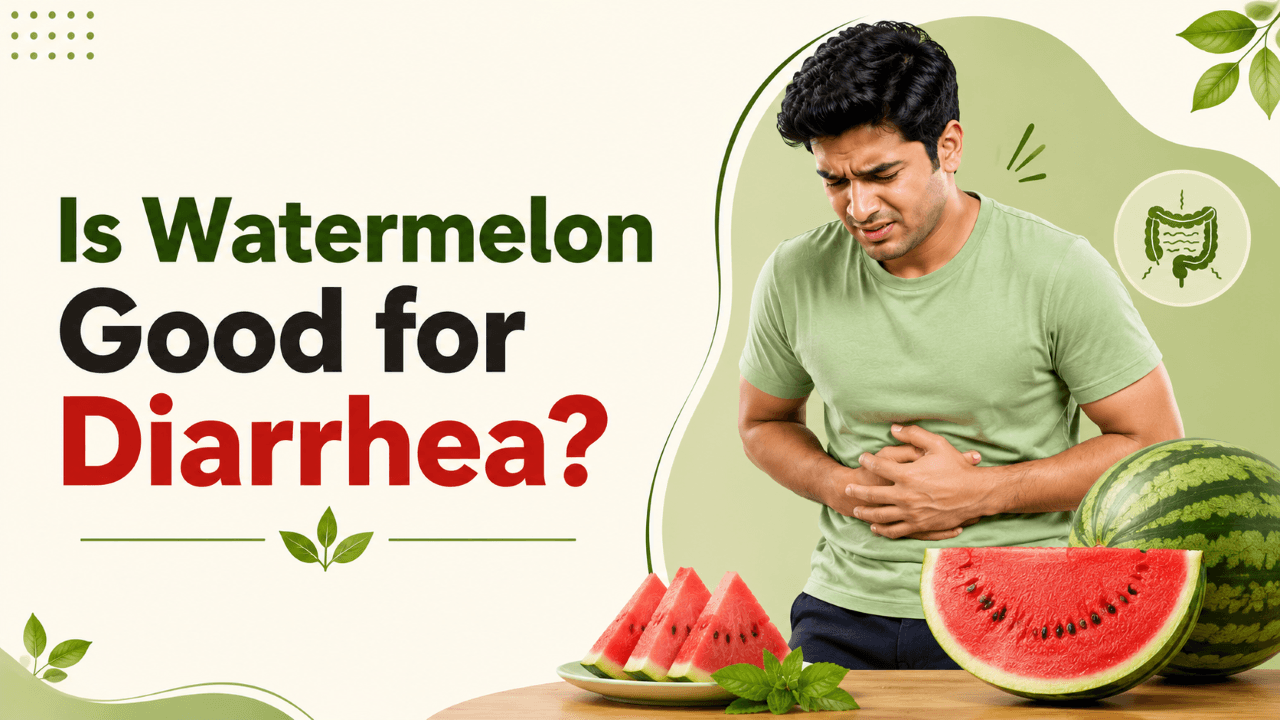
Is Watermelon Good for Diarrhea? Benefits, Risks & Tips
Learn whether watermelon is good for diarrhea, how it may affect loose stools, when to avoid it, and which fruits and hydration options are safer during recovery.
✏️ Quick Answer
Watermelon is generally not recommended during diarrhea, especially in the active phase.
Although watermelon is hydrating, it contains high water content and natural sugars that can worsen loose motions in many people.
In mild cases or during recovery, very small amounts may be tolerated by some adults, but it should be avoided in children and during severe diarrhea.
ORS remains the safest option for hydration.
Watermelon is often seen as a light, cooling fruit, especially during summer. When diarrhea occurs, many people assume that a watery fruit like watermelon will help with hydration.
However, digestion during diarrhea is very sensitive, and not all hydrating foods are suitable. Understanding how watermelon affects the gut helps prevent worsening symptoms.
Why Watermelon May Worsen Diarrhea
Watermelon has properties that can increase stool looseness:
- Very high water content, which can speed up bowel movement
- Natural sugars (fructose), which can pull water into the intestines
- Lack of binding fibre like pectin
Because of this, watermelon may increase stool frequency rather than reduce it.
What Watermelon Contains and Why It Matters During Diarrhea
Understanding the nutritional makeup of watermelon explains why it is poorly suited to a sensitive, inflamed gut. A 100g serving of watermelon contains approximately 91g of water, 6.2g of natural sugars (primarily fructose), 0.4g of fibre, and minimal sodium. This combination is problematic during diarrhea for three reasons.
First, the extremely high water content adds to an already fluid-overloaded gut, accelerating transit and worsening loose stools. Second, fructose — unlike glucose — is not fully absorbed in the small intestine when consumed in significant amounts, so excess fructose passes into the large intestine where gut bacteria ferment it, producing gas, bloating, and increased osmotic load that draws more water into the bowel. Third, the near-absence of soluble fibre (like pectin found in banana and apple) means watermelon provides no binding effect to help firm loose stools.
Is Watermelon Ever Okay During Diarrhea — Is Eating Watermelon Good for Diarrhea?
Watermelon may be tolerated only in limited situations:
- Diarrhea is very mild
- No vomiting or abdominal cramps
- During the recovery phase when stools are improving
- Only in very small portions
Even in these cases, watermelon should not be the main source of fluids.
How Much Watermelon Is Too Much During Diarrhea?
Even during the recovery phase, quantity matters significantly. More than 50–80g of watermelon (approximately 2–3 small cubes) in a single sitting is likely to worsen stool consistency in most people with a recovering gut. The safest approach is 2–3 small bites, waited 30 minutes, and stopped immediately if any loosening occurs. Watermelon juice — which concentrates the fructose and removes any remaining fibre — should be avoided entirely during and immediately after diarrhea.
Why ORS Is Better Than Watermelon for Hydration
While watermelon contains water, it does not contain enough sodium to correct dehydration.
- ORS provides the correct balance of water, sodium, and glucose
- Watermelon provides mostly water and sugar
Signs of Dehydration During Diarrhea — Why ORS Cannot Be Replaced
Diarrhea causes the rapid loss of water, sodium, potassium, and chloride — electrolytes essential for muscle function, nerve signalling, and gut motility. Watermelon replaces only water and some potassium. It provides almost no sodium (1mg per 100g vs the 20mmol/L that ORS contains) — and sodium is the primary electrolyte lost during diarrhea that drives dangerous dehydration. Signs that dehydration is worsening include dry mouth, dark urine, dizziness when standing, sunken eyes, and reduced urine output. At any of these signs, ORS is essential and watermelon is completely irrelevant as a hydration solution.
Better Fruit Choices Than Watermelon
If you want fruit during diarrhea, safer options include:
- Ripe banana
- Cooked apple or applesauce
- Stewed pear (small amount)
Why These Fruits Work Better Than Watermelon During Diarrhea
| Fruit | Why It Helps | Key Component | How to Eat |
|---|---|---|---|
| Ripe banana | Binds loose stools, replenishes potassium, gentle on inflamed gut | Pectin + potassium | 1 ripe banana, plain |
| Cooked apple / applesauce | Pectin becomes soluble when cooked — directly firms loose stools | Soluble pectin | Peeled, stewed, no sugar added |
| Stewed pear | Gentle, low-acid, softens gut irritation without increasing looseness | Mild pectin | Small amount, well cooked |
| Watermelon | High fructose + near-zero binding fibre — worsens loose stools | Fructose + water | Avoid during active diarrhea |
When to Avoid Watermelon Completely — Including Diarrhea and Vomiting
- Watery or frequent diarrhea
- Diarrhea with vomiting
- Abdominal cramps or bloating
- Diarrhea in children or elderly
Is Watermelon Good for Diarrhea in Pregnancy?
Watermelon during diarrhea in pregnancy requires particular caution. Pregnant women are more susceptible to dehydration from diarrhea because fluid demands are already elevated. Watermelon's high fructose content can worsen diarrhea at a time when the gut is already more sensitive due to hormonal changes and uterine pressure. Additionally, listeria contamination in cut watermelon is a documented pregnancy risk. The safest approach for diarrhea in pregnancy is ORS, small sips of coconut water, ripe banana, and plain rice — and medical consultation if diarrhea persists beyond 24 hours.
How to Reintroduce Watermelon After Diarrhea
- Wait until stools are near normal
- Start with a few small bites
- Do not eat on an empty stomach
- Stop if stools loosen again
How Mool Health Helps With Diarrhea
Mool Health focuses on understanding digestion and gut sensitivity during illness. Many people experience repeat stomach upsets because the gut remains weak even after symptoms reduce. Mool Health helps people understand:
- Which foods calm or irritate the gut
- How hydration supports gut recovery
- Daily habits that improve gut resilience
When Should You See a Doctor for Diarrhea?
Diarrhea is usually temporary, but you should see a doctor if it lasts more than 2 days, keeps getting worse, or is accompanied by blood or black stools, severe abdominal pain, high fever, persistent vomiting, or signs of dehydration such as very little urine, dizziness, excessive thirst, or unusual weakness.
Seek medical advice sooner if the person with diarrhea is an infant, older adult, pregnant, or has a weakened immune system. If you cannot keep fluids down or have severe dehydration or confusion, seek urgent medical care.
Conclusion
- Most cases of diarrhea improve with proper hydration, but persistent or severe symptoms should not be ignored.
- Eating light, easily tolerated foods and monitoring your symptoms can support a smoother recovery.
Related Blogs
References:
https://www.mayoclinic.org/diseases-conditions/diarrhea/in-depth/diarrhea-treatment/art-20046350
https://www.cdc.gov/diarrhea/index.html
https://www.nhp.gov.in/disease/digestive/diarrhoea
⚠️ Medical note: This content is for general awareness only and does not replace medical advice.
Key Takeaways
Learn whether watermelon is good for diarrhea, how it may affect loose stools, when to avoid it, and which fruits and hydration options are safer during recovery.
Your gut is unique your healing should be too.

Disclaimer
The content provided by Mool Health is for educational and informational purposes only and should not be considered a substitute for professional medical advice, diagnosis, or treatment.