
Sudden Loose Stools at Night: Causes, Types & When to Seek Help
Understand why sudden loose stools can wake you at night, from short-term food or infection-related triggers to conditions that need evaluation.
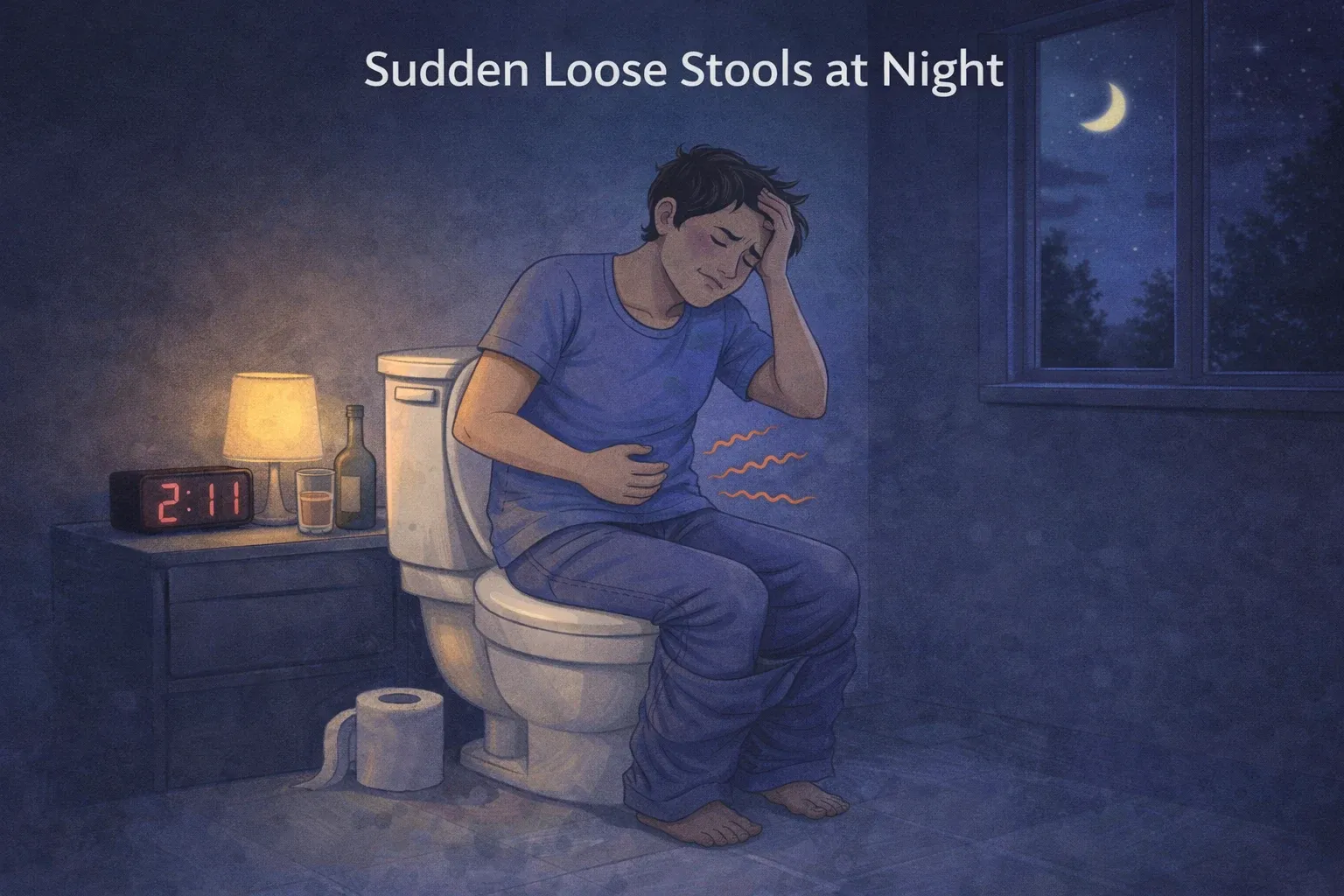
Quick Answer
Sudden loose stools at night can disrupt sleep and may happen with infection, diet or medication effects, or an ongoing digestive condition. Start with hydration, watch for warning signs, and seek medical advice if episodes repeat, are severe, or come with blood, fever, dehydration, or weight loss.
- Use oral rehydration solution or other suitable fluids to replace losses.
- Temporarily avoid alcohol, high-fat food, large late meals, and sugar alcohols.
- Keep a brief note of nighttime episodes, food, medicines, fever, pain, and stool changes.
- Do not rely on anti-diarrheal medicine when there is fever, blood in stool, or severe pain.
- Arrange prompt clinical review when loose stools repeatedly wake you from sleep.
Sudden loose stools at night, also called nocturnal diarrhea, refer to watery or unformed bowel movements that occur after you go to bed, often waking you from sleep. Unlike daytime diarrhea, nighttime episodes are clinically significant because the normal slowdown of gut motility during sleep means the digestive system should not be highly active. When it is, an underlying cause is typically responsible.
What Is Sudden Loose Stools at Night?
Sudden loose stools at night is a condition in which a person experiences urgent, watery, or unformed bowel movements during nighttime hours, typically between 10 pm and 6 am, that interrupt sleep. The medical term is nocturnal diarrhea.
Healthy bowel motility slows significantly during sleep due to reduced gut nerve activity. When this slowing does not occur, or when something actively accelerates gut movement at night, loose stools can result. This is why nocturnal diarrhea is treated differently from ordinary daytime diarrhea by gastroenterologists.
Persistent changes in bowel habits can also occur with other digestion problems, so a recurring pattern deserves medical review.
Key terms defined:
- Nocturnal diarrhea: Loose or watery stools that occur specifically during sleeping hours
- Gut motility: The speed at which contents move through the intestines
- Functional diarrhea: Loose stools without a structural or infectious cause, often linked to IBS
- Organic diarrhea: Loose stools caused by a structural, inflammatory, or infectious disease process
Sudden loose stools at night lasting more than 2-3 consecutive nights warrant clinical evaluation, as nocturnal timing can help distinguish functional bowel disorders from organic disease.
How Sudden Loose Stools at Night Works: The Mechanism Explained
Sudden loose stools at night occur because the colon fails to slow down, or actively speeds up, its muscular contractions during sleep. Here is the step-by-step process behind it:
-
Reduced overnight inhibition fails. Normally, the enteric nervous system (the gut's own nerve network) reduces peristalsis, the wave-like muscle contractions that push stool through the colon, by approximately 50% during sleep. In nocturnal diarrhea, this inhibition does not occur adequately.
-
Intestinal secretion increases. In conditions such as microscopic colitis or bile acid malabsorption, the gut secretes excess fluid into the intestinal lumen overnight, increasing stool water content above the normal threshold of 75-80% water.
-
Rectal urgency is triggered. As liquid stool accumulates in the rectum, stretch receptors fire signals that override sleep, producing the urgent need to defecate.
-
The sphincter may be compromised. In patients with diabetes-related neuropathy or inflammatory bowel disease (IBD), the internal anal sphincter may have reduced resting tone at night, lowering the threshold for urgency and leakage.
-
The cycle repeats. Depending on the underlying cause, this can happen once or multiple times per night.
Common misconception cleared up: Many people assume nocturnal diarrhea is simply an extension of a "bad stomach day." Clinically, however, nighttime loose stools that wake a person from sleep are rarely functional (i.e., stress- or IBS-related) and more often indicate an organic cause. This distinction matters for diagnosis and treatment.
Common Causes of Sudden Loose Stools at Night
Sudden loose stools at night can result from multiple distinct causes. The following are common and clinically significant:
Infectious causes:
- Bacterial infections (Salmonella, Campylobacter, Clostridioides difficile), responsible for approximately 20-30% of acute diarrhea episodes
- Viral gastroenteritis (norovirus, rotavirus), typically resolves within 1-3 days
- Parasitic infections (Giardia, Cryptosporidium), more common after travel or contaminated water exposure
Inflammatory causes:
- Inflammatory bowel disease (IBD), including Crohn's disease and ulcerative colitis, affects approximately 1.3% of adults in India and a higher proportion globally
- Microscopic colitis, often presents exclusively with nocturnal diarrhea in adults over 50
- Radiation-induced colitis following pelvic or abdominal radiation
Functional and metabolic causes:
- Irritable bowel syndrome with diarrhea (IBS-D), though IBS classically does not cause true nocturnal symptoms, severe IBS-D can occasionally disrupt sleep
- Bile acid malabsorption, excess bile acids reach the colon and trigger secretory diarrhea
- Diabetic autonomic neuropathy, disrupts normal gut nerve signalling, causing uncontrolled overnight bowel movements in approximately 20% of people with long-standing diabetes
Dietary and medication causes:
- High intake of caffeine, alcohol, artificial sweeteners (sorbitol, mannitol), or fatty foods close to bedtime
- Laxative overuse
- Metformin (a common diabetes medication) causes loose stools in up to 30% of users
- Antibiotics disrupt gut microbiome balance, often causing diarrhea within 2-7 days of starting a course
Types of Sudden Loose Stools at Night: Which Category Applies to You?
Sudden loose stools at night are not a single condition. They can be grouped into four clinically distinct types to help guide appropriate management:
| Type | Primary Driver | Key Feature | Typical Duration |
|---|---|---|---|
| Acute infectious | Virus, bacteria, or parasite | Sudden onset, often with fever or vomiting | 1-7 days |
| Secretory | Bile acid malabsorption, microscopic colitis | Large-volume, watery, persists even with fasting | Days to months |
| Inflammatory | Crohn's disease, ulcerative colitis | Blood or mucus in stool, pain, weight loss | Chronic, with flares |
| Functional/metabolic | IBS-D, diabetic neuropathy | No blood, variable pattern, often linked to diet or stress | Chronic, recurring |
Acute infectious nocturnal diarrhea is the most common type and typically resolves without medical treatment within 3-7 days. Secretory and inflammatory types require investigation and targeted treatment. Functional/metabolic nocturnal diarrhea is managed with lifestyle, diet, and in some cases medication over the long term.
How to Manage Sudden Loose Stools at Night: Step-by-Step Guide
Before using this guide
If your loose stools at night are accompanied by blood in the stool, fever above 38.5°C, signs of dehydration, or have persisted for more than 48-72 hours without improvement, seek medical attention before attempting self-management.
Step 1: Rehydrate immediately
Replace lost fluids and electrolytes as the first priority. Use an oral rehydration solution (ORS), either pharmacy-bought or made with 1 litre of clean water, 6 teaspoons of sugar, and ½ teaspoon of salt. Drink 200-400 ml after each loose stool episode.
For mild, short-lived symptoms, these home remedies for diarrhea can complement rehydration, but they do not replace medical care for warning signs.
Why this matters: Diarrhea causes rapid loss of sodium, potassium, and fluids. Dehydration can develop within hours in severe cases, particularly in children and older adults.
Step 2: Identify and remove dietary triggers
For the next 24-48 hours, avoid:
- Dairy products (lactose can worsen secretory diarrhea)
- High-fat meals
- Caffeinated drinks consumed after 4 pm
- Alcohol
- Foods containing sorbitol or mannitol (sugar-free gums, some fruit juices)
If dairy seems to be a repeated trigger, explore why some people get bloating after drinking milk and how lactose intolerance may affect digestion.
Why this matters: Removing dietary triggers can reduce gut stimulation overnight and interrupt the diarrhea cycle within 12-24 hours for dietary-cause cases.
Step 3: Follow a BRAT-adjacent diet temporarily
For 1-2 days, focus on easy-to-digest foods: rice, plain toast, boiled potatoes, bananas, and cooked carrots. Reintroduce normal foods gradually over 3-5 days as stools normalise.
For a simple food guide during recovery, see what to eat in loose motion.
Step 4: Monitor stool characteristics
Keep a brief log noting: time of episodes, stool consistency (use the Bristol Stool Scale, Type 6 or 7 indicates loose/watery stool), presence of blood or mucus, associated symptoms (pain, fever, bloating).
Why this matters: A stool log provides a clinician with useful pattern data to distinguish functional from organic causes more efficiently.
Step 5: Avoid spreading infection
If an infectious cause is suspected:
- Wash hands thoroughly with soap for at least 20 seconds after every bathroom visit
- Avoid preparing food for others
- Do not share towels or bedding
- Disinfect bathroom surfaces with a diluted bleach solution
Step 6: Seek medical evaluation if symptoms persist
If loose stools at night continue beyond 3 days without clear dietary cause, or if any red flag features appear (see the warning signs section below), consult a doctor for stool culture, blood tests, and where indicated, a colonoscopy.
Common mistakes to avoid:
- Taking antidiarrheal medications (loperamide) without diagnosis, this can worsen certain bacterial infections
- Stopping rehydration because you "feel okay", dehydration can recur quickly
- Attributing nocturnal diarrhea to stress alone, true nocturnal onset is rarely purely psychological
Why Is Nocturnal Diarrhea a Red Flag? Warning Signs to Know
Sudden loose stools at night are considered a clinical red flag, a term gastroenterologists use to indicate a symptom that significantly raises suspicion for organic disease.
The reason nocturnal diarrhea is a red flag is as follows: functional bowel disorders (like IBS) typically do not produce symptoms during sleep because gut motility is naturally suppressed at night. When diarrhea appears specifically at night, it suggests that an active pathological process, inflammation, infection, or nerve damage, is overriding this suppression.
Red flag features that require urgent evaluation:
- Blood or dark mucus visible in stool
- Unintentional weight loss of more than 5% body weight over 3 months
- Fever above 38°C persisting beyond 48 hours
- Nocturnal diarrhea in a person over 50 years of age with no prior bowel history
- Diarrhea waking you from sleep more than 3 nights per week
- Symptoms lasting more than 4 weeks
- Family history of colorectal cancer, IBD, or celiac disease
The combination of nocturnal diarrhea with any one of the above features should prompt same-week medical review rather than watchful waiting.
Sudden Loose Stools at Night: What to Expect and When
Outcomes from sudden loose stools at night depend on the underlying cause. The following timeline can help set realistic expectations:
| Timeframe | Acute Infectious | Dietary/Lifestyle Cause | Organic Cause (IBD, Microscopic Colitis) |
|---|---|---|---|
| Within 24 hours | Symptoms may peak then plateau | Improvement likely after removing trigger food | No significant change expected |
| Days 2-3 | Most viral cases begin resolving | Stools typically normalise | Symptoms persist; investigation needed |
| Days 4-7 | Full resolution expected for viral; bacterial may persist | Full resolution expected | Diagnosis workup underway |
| Week 2-4 | Persistent symptoms need stool culture | If persisting, dietary intolerance suspected | Treatment initiated after diagnosis; early response in 2-4 weeks |
| Month 1-3 | Resolved or diagnosed | Resolved with dietary changes | Symptom control with medication; may take 6-12 weeks for full remission |
Factors that affect recovery speed:
- Age (children and older adults recover more slowly from dehydration)
- Pre-existing gut conditions
- Promptness of treatment initiation
- Whether dietary triggers are correctly identified and removed
- Adherence to ORS and dietary rest
Sudden Loose Stools at Night vs. Daytime Diarrhea: Key Differences
| Feature | Nocturnal (Night) Diarrhea | Daytime Diarrhea |
|---|---|---|
| Sleep disruption | Yes, wakes person from sleep | No |
| Clinical significance | High, red flag for organic disease | Variable, often functional |
| Common causes | IBD, microscopic colitis, infection, neuropathy | IBS, dietary triggers, stress, infection |
| Self-resolution rate | Lower for persistent cases | Higher for mild/functional cases |
| Recommended action | Medical evaluation after 2-3 nights | Monitor; seek care if lasting >7 days |
| Functional disorder likelihood | Low | Moderate to high |
The primary distinction is that nocturnal diarrhea, sudden loose stools specifically at night, carries a higher probability of organic (structural or inflammatory) disease than daytime diarrhea. This distinction should guide how quickly you seek medical attention.
Research and Evidence: What Studies Say About Nocturnal Diarrhea
Several studies support the clinical significance of sudden loose stools at night:
-
A study published in The American Journal of Gastroenterology found that nocturnal diarrhea was present in approximately 38-44% of patients with inflammatory bowel disease during active flares, compared to fewer than 5% of IBS patients, supporting its use as a distinguishing feature .
-
Research in Gut (2015) found that microscopic colitis, a frequently missed diagnosis, presents with nocturnal diarrhea in over 60% of confirmed cases. Diagnosis is only possible via colonoscopy with biopsy, reinforcing the need for investigation when nocturnal loose stools persist .
-
A cross-sectional study in Diabetes Care found that diabetic autonomic neuropathy causes nocturnal diarrhea in approximately 20% of people with type 1 or type 2 diabetes of more than 10 years' duration .
-
The National Institute of Diabetes and Digestive and Kidney Diseases (NIDDK) notes that Clostridioides difficile infection, a bacterial cause of sudden loose stools, affects approximately 500,000 people annually in the US alone, with nocturnal symptoms being a common presentation in hospitalised patients .
Persistent nocturnal gastrointestinal symptoms should be assessed using current gastroenterology standards.
Mool Health Perspective on Sudden Loose Stools at Night
Sudden loose stools at night are worth taking seriously when they repeat, disturb sleep, or occur with pain, fever, blood in stool, dehydration, or weight loss. A simple symptom record can help identify patterns, but it should not delay medical evaluation for warning signs.
Supportive steps such as rehydration and temporary food adjustments may help with mild, short-lived symptoms. The right next step depends on the pattern, your medicines, recent food or travel exposure, and any other digestive symptoms.
Understand Your Digestive Symptoms Better
Take a short gut health test to understand your symptoms and identify the next steps for everyday digestive support.
Medical Disclaimer
This blog is for informational purposes only and does not substitute for professional medical advice, diagnosis, or treatment. Always consult a qualified healthcare provider with any questions you may have regarding a medical condition. Never disregard professional medical advice or delay seeking it because of something you have read here.
Key Takeaways
Understand why sudden loose stools can wake you at night, from short-term food or infection-related triggers to conditions that need evaluation.
Your gut is unique your healing should be too.

FAQs
Sudden nocturnal diarrhea can result from an infection you picked up earlier in the day, a food intolerance reaction, particularly to dairy, gluten, or high-fat meals, or the early stage of a gut infection. In a single isolated episode with no blood, fever, or other symptoms, a dietary trigger or mild viral infection is the most likely cause. If it recurs over 2-3 nights, consult a doctor.
During sleep, the gut naturally reduces its activity. Loose stools that wake you from sleep indicate that something is actively overriding this suppression, whether inflammation, infection, or nerve dysfunction. This distinguishes nocturnal diarrhea from functional bowel symptoms like IBS, which typically do not disrupt sleep, making it a clinical signal for organic disease.
Acute diarrhea lasting fewer than 7 days is usually infectious and self-limiting. Loose stools persisting beyond 7 days, especially those occurring at night, warrant medical evaluation. Diarrhea lasting more than 4 weeks is classified as chronic and requires full investigation including stool tests and possibly endoscopy.
A sudden, single nighttime episode with no prior symptoms is often caused by something eaten 4-8 hours earlier, particularly high-fat, spicy, or unfamiliar food. Food poisoning can cause symptoms within 2-6 hours of consumption. Viral gastroenteritis typically begins 12-48 hours after exposure. A single episode without accompanying symptoms is usually self-limiting.
True IBS-related diarrhea rarely wakes a person from sleep, because the functional nature of IBS means it is strongly tied to conscious gut-brain signalling. Occasional IBS-D sufferers may experience early-morning urgency, within 30 minutes of waking, but diarrhea occurring 2-4 hours into sleep is unlikely to be IBS alone and should be investigated.
The first priority is replacing fluids and electrolytes with ORS or other suitable fluids. Avoid alcohol, caffeine, fatty food, and large late meals while symptoms settle. Do not use anti-diarrheal medicine without advice if you have fever, blood in stool, severe pain, or possible infection. Recurring nighttime diarrhea needs medical assessment.
A large, high-fat, spicy, or unfamiliar meal close to bedtime can trigger loose stools in some people, especially when it contains alcohol, caffeine, or sugar alcohols. A repeated pattern is worth tracking, but persistent nighttime symptoms should not be assumed to be food-related without medical advice.
Seek urgent medical help for blood or black stool, severe abdominal pain, repeated vomiting, signs of dehydration, high fever, confusion, fainting, or a sudden worsening of symptoms. Children, older adults, pregnant people, and people with weakened immunity should seek advice sooner.
Disclaimer
The content provided by Mool Health is for educational and informational purposes only and should not be considered a substitute for professional medical advice, diagnosis, or treatment.