
Loose Motion After Drinking Alcohol: Causes, Risks & Relief
Loose motion after drinking alcohol can result from faster gut movement, reduced water absorption, and gut irritation. Learn the causes, recovery tips, prevention, and warning signs.
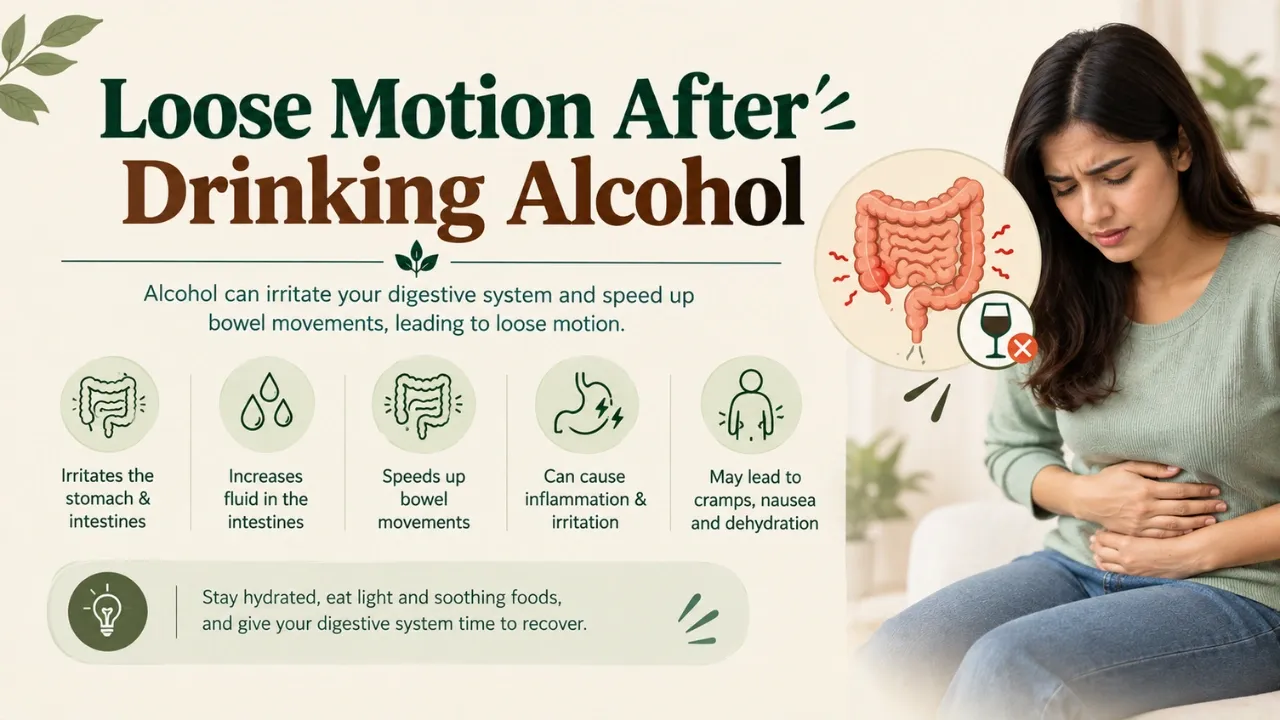
✏️ Quick Answer
Loose motion after drinking alcohol happens because alcohol irritates the intestinal lining, speeds up gut motility, and reduces the colon's water reabsorption window, producing watery stools within hours. For most people, symptoms resolve within 24 hours with hydration, rest, and light food.
- Alcohol increases gut motility, transit time drops from 30–40 hours to as little as 12–15 hours
- The colon loses its window to absorb water, leaving stool liquid
- Acetaldehyde (alcohol's toxic byproduct) independently irritates the gut lining
- Beer and sweet cocktails cause worse symptoms due to fermentable sugars and carbonation
- Symptoms beyond 48 hours need medical evaluation
Loose motion after drinking alcohol is a common gut reaction, especially after heavy or late-night drinking. Alcohol irritates the intestinal lining, speeds up bowel movement, and disrupts gut bacteria. If you get loose motion after drinking alcohol frequently, your digestive system may be signalling sensitivity or imbalance. Understanding gut health and digestion and how alcohol disrupts it is the foundation of lasting relief.
How Alcohol Triggers Loose Motion: The Exact Mechanism
Alcohol does not cause loose motion randomly, it follows a specific, predictable biological sequence in your gut every time you drink.
- Alcohol reaches the small intestine within 20–30 minutes. It directly irritates the intestinal lining (the mucosa), triggering an inflammatory response that increases gut sensitivity.
- It activates the enteric nervous system (ENS). Your gut has its own 500 million-neuron nervous system. Alcohol stimulates ENS activity, which speeds up myoelectric contractions, the rhythmic muscle squeezes that push food through your intestines. Transit time drops from the normal 30–40 hours to as little as 12–15 hours.
- The colon loses its window to absorb water. Normally, the large intestine reabsorbs 90% of the water from your stool over several hours. When transit accelerates, this absorption window shrinks sharply. Stool remains liquid rather than becoming formed.
- Acetaldehyde adds a second hit. When your liver breaks down alcohol, it produces acetaldehyde, a toxic byproduct. Acetaldehyde has its own direct irritant effect on the gut lining, independently worsening diarrhea risk even after the alcohol itself has cleared.
- Prostaglandins amplify inflammation. Alcohol increases prostaglandin production in the intestinal wall. Prostaglandins stimulate intestinal secretion of fluids and electrolytes into the gut lumen, the opposite of absorption, making stools even more watery.
How Alcohol Affects Your Digestive System
| Effect | What Happens in the Gut | Result |
|---|---|---|
| Increased motility | Faster bowel contractions | Loose stool |
| Irritated lining | Inflammation of intestine | Urgency and cramping |
| Microbiome imbalance | Reduced good bacteria | Gas and diarrhea |
| Dehydration | Electrolyte imbalance | Weakness and headache |
Why Some People Are More Sensitive
- Existing IBS or sensitive gut
- Drinking on an empty stomach
- High-sugar cocktails with artificial sweeteners (sorbitol)
- Late-night heavy meals combined with alcohol
- Frequent antibiotic use reducing protective gut bacteria
Understanding causes of gas and bloating helps identify whether gut microbiome imbalance is amplifying your reaction to alcohol.
How Long Does Loose Motion After Alcohol Last? | Timeline and Recovery
| Timeframe | What's Happening | What to Do |
|---|---|---|
| 0–2 hours after drinking | Gut motility is highest; urgent loose stool most likely | Hydrate with water or ORS; rest |
| 2–8 hours (overnight / early morning) | Peak acetaldehyde effect; watery stool continues | Sip electrolyte fluids; avoid solid food until urgency eases |
| 8–24 hours (next day) | Gut motility normalises; stool firms up for most people | Light, easy-to-digest foods (rice, banana, toast) |
| 24–48 hours | Symptoms should be mostly resolved | Resume normal diet gradually; continue hydrating |
| 48+ hours (still symptomatic) | Signals gut barrier disruption, possible infection, or underlying sensitivity | Consult a doctor, this is no longer a routine alcohol response |
- Blood or mucus in stool
- Fever above 38°C
- Severe abdominal pain (not just cramping)
- Burning sensation during bowel movements persisting after 24 hours
- Diarrhea continuing for more than 48 hours
- Symptoms that happen every single time you drink, regardless of quantity
Does Alcohol Type Matter? | Beer, Wine, and Spirits: Which Is Worst
| Drink Type | Key Gut Irritants | Relative Risk | Why |
|---|---|---|---|
| Beer | Gluten, malt sugars, CO₂, hops | High | Fermentable sugars + carbonation = fastest gut transit; gluten worsens sensitivity in susceptible people |
| Sweet cocktails / alcopops | High sugar, artificial sweeteners (sorbitol/maltitol), mixers | High | Sorbitol is an osmotic laxative; high sugar load draws water into the gut |
| Red wine | Tannins, histamines, sulphites | Moderate to High | Histamines trigger gut inflammation; sulphites affect gut bacteria |
| White / sparkling wine | Lower tannins, some residual sugars, carbonation | Moderate | Less inflammatory than red, but carbonation in sparkling wine adds motility stimulus |
| Clear spirits (vodka, gin) | Fewer congeners | Moderate (lowest) | Pure alcohol effect without added sugars, lower risk if consumed without sugary mixers |
| Whiskey / dark spirits | Higher congener load (fusel oils) | Moderate to High | Congeners directly irritate the gut lining and worsen digestive symptoms |
How to Stop Loose Motion After Drinking Alcohol | Step-by-Step Recovery Plan
- Rehydrate immediately and correctly. Alcohol is a diuretic and your gut is actively secreting fluid. Plain water alone is not enough, you are losing sodium and potassium too. Oral rehydration solution (ORS) or a homemade version (1 litre water + 6 teaspoons sugar + ½ teaspoon salt) replaces electrolytes more effectively. Aim for at least 500 ml in the first hour after symptoms begin.
- Do not eat anything heavy for 2–4 hours. Giving your gut a short rest allows motility to slow down. Eating a large meal immediately stimulates the gastrocolic reflex, which worsens diarrhea urgency. If hungry, a plain banana for diarrhea or a few plain crackers are safe.
- Eat the BRAT diet when hunger returns. Bananas, rice, applesauce, and toast are low-fibre, low-fat foods that are easy for an irritated gut to process. These slow bowel transit and help firm up stools. See our full guide on what to eat in diarrhea.
- Avoid these the next morning: Coffee (stimulates gut motility), dairy (alcohol temporarily reduces lactase), fatty or fried food (triggers the gastrocolic reflex strongly), and more alcohol ("hair of the dog" continues the gut damage cycle).
- Rest and protect sleep. Your gut repair processes happen primarily during sleep. Alcohol already disrupts circadian rhythm and suppresses restorative sleep stages. Prioritising 7–8 hours significantly reduces recovery time.
- Consider probiotics for recovery. Curd for diarrhea containing Lactobacillus and Bifidobacterium strains the morning after drinking may help restore gut bacteria disrupted by alcohol. Research suggests heavy alcohol intake reduces these protective strains for up to 72 hours. Probiotics do not prevent diarrhea during drinking but may shorten recovery time with consistent use.
How to Avoid Loose Motion After Drinking Alcohol
- Do not drink on an empty stomach. Eat a balanced meal with protein and fibre 60–90 minutes before drinking, food slows alcohol absorption and buffers gut irritation
- Hydrate consistently. Alternate one glass of water for every alcoholic drink; drink water before sleep
- Limit high-sugar drinks. Avoid sweet cocktails and artificial mixers, their fermentable sugars independently accelerate gut transit
- Limit to 1–2 standard units for lower gut risk
- Manage stress around drinking events. Stress + alcohol is a double trigger, both independently worsen gut motility and permeability
- Maintain regular meal timing and sleep. Circadian rhythm disruption from late-night drinking significantly increases morning diarrhea risk
Is Alcohol a Laxative? | An Honest Comparison
| Factor | Alcohol | True Laxative (e.g., senna, lactulose) |
|---|---|---|
| Primary mechanism | Speeds gut motility + reduces water absorption + irritates lining | Stimulates colon muscle / draws water into gut / softens stool |
| Onset | 30 min to 2 hours | 6–12 hours (stimulant) or 24–48 hours (osmotic) |
| Controlled dose? | No, effect varies with drink type, quantity, and food intake | Yes, prescribed dose produces predictable effect |
| Safe for regular use? | No, damages microbiome, gut barrier, and liver with frequency | Some are safe short-term; consult a doctor for ongoing use |
| Dehydration risk | High, alcohol is a diuretic AND causes fluid secretion into gut | Low to moderate depending on type |
Bottom line: Alcohol is not a safe or reliable laxative. Using it as one damages the gut lining, disrupts microbiome balance, and creates a dehydration cycle that worsens the very problem you are trying to relieve.
What the Research Says | Evidence on Alcohol and Gut Health
- Gut permeability: Research in Alcohol and Alcoholism found that even moderate alcohol intake significantly increases intestinal permeability, the "leaky gut" effect, within 24 hours, allowing bacterial toxins to cross the gut lining and worsen inflammation.
- Microbiome disruption: Research published in Gut Microbes documented that a single heavy drinking episode (4+ standard drinks) measurably reduces Lactobacillus and Bifidobacterium populations, the gut's primary protective bacteria, for up to 72 hours afterward.
- Prevalence: A review in The American Journal of Gastroenterology noted that up to 40% of regular alcohol consumers report chronic gastrointestinal symptoms including diarrhea, bloating, and abdominal pain, with the risk rising significantly with daily drinking.
- Mechanism: The accelerated intestinal transit is attributed to alcohol's effect on the interstitial cells of Cajal (the gut's "pacemaker cells") that regulate normal rhythmic contractions.
What This Means for You
If you experience occasional loose motion the morning after drinking, your gut is doing exactly what it is designed to do, clearing an irritant. For most people, symptoms resolve within 24 hours with hydration, rest, and light food.
But if loose motion happens every time you drink, even after small amounts, or if symptoms persist beyond 48 hours, your gut is signalling something more important: that its barrier, microbiome, or motility regulation is compromised in a way that alcohol is merely exposing.
- Rehydrate with ORS or electrolyte fluids, not plain water alone, within the first hour of symptoms
- Follow BRAT diet (banana, rice, applesauce, toast) when hunger returns
- Avoid coffee and dairy the morning after, both stimulate gut motility further
- Track your pattern: which drink type, what quantity, whether you ate beforehand, this data is diagnostic
- If symptoms recur consistently or last beyond 48 hours, book an assessment with a gut health professional rather than managing it drink by drink
Key Takeaways
Loose motion after drinking alcohol can result from faster gut movement, reduced water absorption, and gut irritation. Learn the causes, recovery tips, prevention, and warning signs.
Your gut is unique your healing should be too.

Disclaimer
The content provided by Mool Health is for educational and informational purposes only and should not be considered a substitute for professional medical advice, diagnosis, or treatment.