
Constipation in Elderly: Causes, Treatment & Best Practices
Learn why constipation becomes more common in older adults, including the role of medicines, mobility, food, fluids, and health conditions.
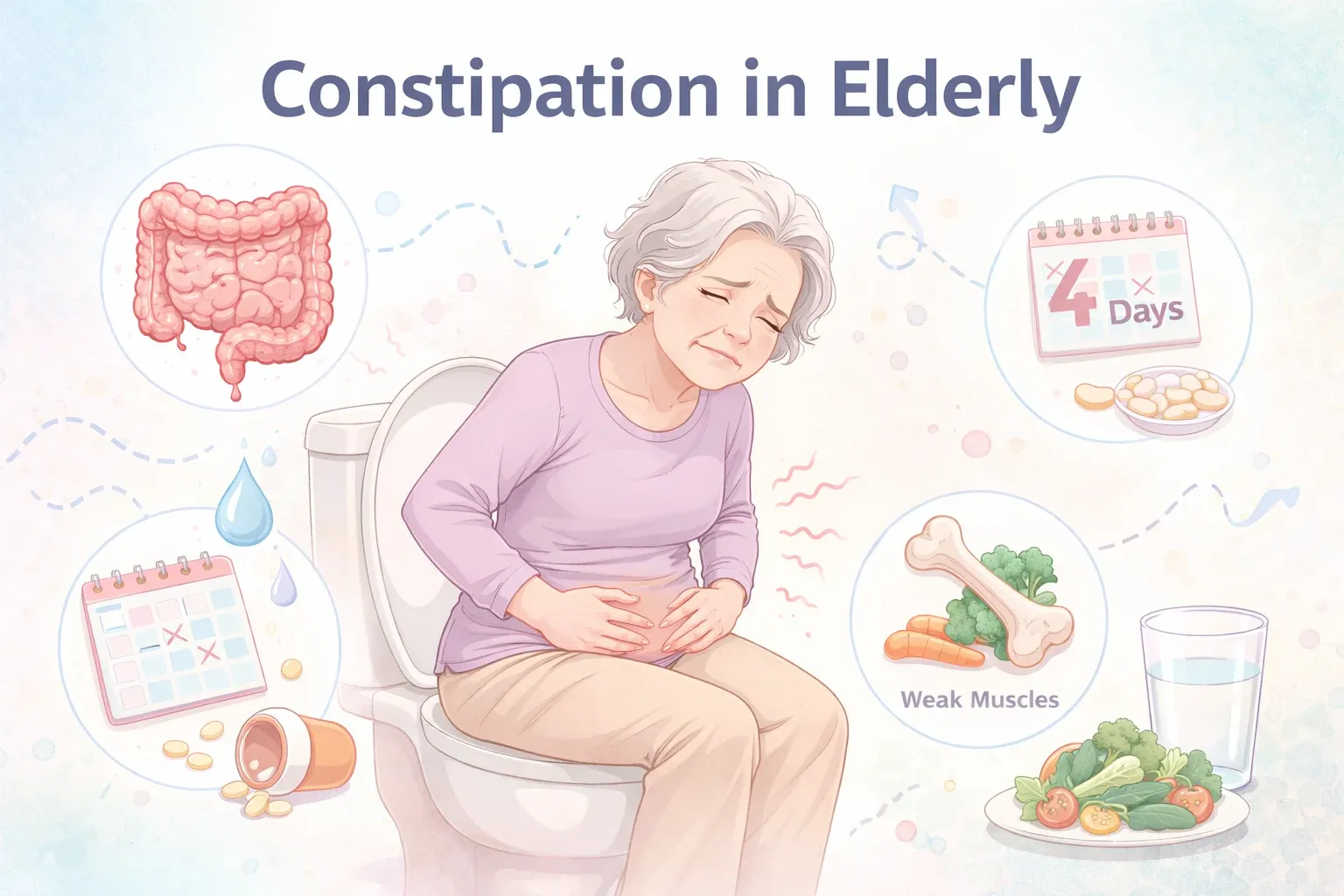
Quick Answer
Constipation is common in older adults, but a new or worsening bowel change should not be dismissed as a normal part of ageing. It may be linked to lower fluid intake, less movement, food choices, medicines, pelvic floor changes, or another health condition. The safest first step is to keep stool soft, review triggers with a clinician or pharmacist, and watch for warning signs.
- Offer fluids regularly when the person is allowed to drink normally, especially if fibre intake increases.
- Build movement into the day when mobility and medical conditions allow.
- Use a consistent, unhurried toilet routine and avoid straining.
- Ask a doctor or pharmacist to review medicines that may worsen constipation.
- Seek prompt medical advice for rectal bleeding, black stool, vomiting, severe pain, a swollen abdomen, weight loss, or inability to pass stool or gas.
Constipation in elderly adults can include fewer bowel movements than usual, hard or lumpy stool, straining, or a feeling that the bowel has not emptied fully. It is common in later life, but it still deserves attention because an older adult may have several contributing factors at the same time, including medicines, reduced mobility, low fluid intake, and an underlying health condition.
What Is Constipation in Elderly? A Complete Guide
Constipation in elderly individuals occurs when stool moves too slowly through the large intestine, allowing extra water to be absorbed. This can make stool hard, dry, and more difficult to pass. Constipation can be chronic when it continues or keeps returning over a longer period.
Older adults may be less likely to mention bowel changes, especially when symptoms build gradually. However, an important change in bowel habits is not something to ignore simply because of age.
Key facts at a glance:
- Constipation may involve infrequent bowel movements, hard stool, straining, or incomplete emptying.
- Older adults are more likely to have several contributors at once, including health conditions and regular medicines.
- Reduced mobility, dehydration, and low fibre intake can make stool harder to pass.
- Some people need a clinician-led plan rather than repeated self-treatment.
Why constipation in elderly adults matters: Untreated constipation can lead to faecal impaction, haemorrhoids, anal fissures, appetite changes, and a noticeable fall in comfort or daily functioning. In a frail older adult, severe constipation can also make other health problems harder to manage.
Older adult safety note: Contact a healthcare professional promptly if constipation is new and persistent, or if the person has blood in the stool, rectal bleeding, vomiting, fever, worsening confusion, severe pain, a swollen abdomen, or cannot pass stool or gas.
How Constipation in Elderly Works: The Complete Breakdown
Constipation in elderly adults can develop through a combination of slower bowel movement, reduced sensation of needing to pass stool, and difficulty relaxing or coordinating the pelvic floor muscles. Understanding the normal stages of digestion can make it easier to see why stool becomes harder when it stays in the colon for too long.
Step-by-step mechanism:
- Food enters the colon. After digestion in the stomach and small intestine, waste reaches the large intestine.
- The colon absorbs water. The colon normally absorbs enough water to form a soft, shaped stool.
- Muscle contractions move stool forward. Regular contractions push stool towards the rectum.
- Stool stays longer in the colon. When movement is slower, more water is absorbed and stool becomes harder and drier.
- The urge can be weaker or delayed. Some older adults do not notice the urge to pass stool until they are already uncomfortable.
- Passing stool becomes effortful. Reduced mobility, pelvic floor changes, pain, or fear of straining can make evacuation more difficult.
Why this matters: A single measure may not be enough. A useful plan usually combines food, fluids, movement, toilet routine, medicine review, and medical assessment where needed.
Causes of Constipation in Elderly: Why It Happens
Constipation in elderly adults often has overlapping causes. Looking at the pattern helps identify the safest next step and can point to wider digestive problems that need assessment.
Primary (Functional) Causes
- Reduced physical activity: Less movement can slow bowel transit and reduce the urge to use the toilet.
- Low dietary fibre intake: A diet low in fruit, vegetables, legumes, and whole grains may produce smaller, drier stools.
- Inadequate fluid intake: Dehydration can make stool harder. Fluid targets should be individualised for people with heart, kidney, or fluid restriction concerns.
- Delaying the urge to defecate: Waiting repeatedly can make stool drier and more difficult to pass.
- Changes in routine: Travel, hospital stays, reduced privacy, unfamiliar toilets, and illness can all affect bowel habits.
Medical Causes of Chronic Constipation in Elderly Adults
- Hypothyroidism: Low thyroid hormone can slow body processes, including bowel movement.
- Diabetes: Nerve changes can affect the gut in some people.
- Parkinson's disease and other neurological conditions: These can influence bowel movement and pelvic floor coordination.
- Pelvic floor or structural conditions: Rectocele, prolapse, strictures, and other conditions can make evacuation difficult.
- Depression, anxiety, or cognitive changes: These may alter eating, drinking, routine, mobility, or the gut-brain connection.
Medication-Related Causes
Medicines are among the most important reversible causes of constipation in elderly adults. A pharmacist or doctor can review whether a medicine is contributing and whether the plan can be adjusted safely.
| Medication Class | Examples | How It May Contribute |
|---|---|---|
| Opioid pain medicines | Morphine, codeine | Can slow bowel movement and reduce gut secretions. |
| Anticholinergic medicines | Some bladder, allergy, and nausea medicines | Can reduce bowel activity and dry stool. |
| Calcium channel blockers | Amlodipine, verapamil | May contribute to slower bowel movement in some people. |
| Iron supplements | Ferrous salts | Can make stool harder or more difficult to pass. |
| Diuretics | Water tablets | May contribute to dehydration when fluid balance is not maintained. |
| Some antidepressants | Tricyclic antidepressants and others | May have anticholinergic effects that slow bowel movement. |
Types of Constipation in Elderly: Which Applies to You?
Constipation in elderly adults is not a single condition. The pattern can help a clinician decide whether the main issue is slow movement through the colon, difficulty emptying the rectum, an underlying condition, or a combination.
Slow Transit Constipation
Slow transit constipation happens when the colon moves stool forward less often or less effectively. Stool may remain in the colon longer, becoming dry and hard. This can be more likely with reduced mobility, some neurological conditions, and medicines that slow bowel movement.
Normal Transit (Functional) Constipation
In normal transit constipation, stool may move through the colon at a usual speed but the person still experiences difficult or unsatisfactory bowel movements. Straining, a feeling of incomplete emptying, and discomfort can be prominent.
Outlet Obstruction Constipation (Dyssynergic Defecation)
This pattern occurs when the pelvic floor muscles do not relax as needed during defecation. The person may strain a lot, feel blocked, or need to return to the toilet repeatedly. Pelvic floor assessment and targeted therapy may be considered when this pattern is suspected.
Constipation-Predominant IBS (IBS-C)
Some older adults have constipation as part of irritable bowel syndrome, with abdominal discomfort, bloating, and a changing bowel pattern. This needs a different plan from constipation caused mainly by medicines or reduced mobility.
| Type | Key Feature | Common Contributors | Usual Next Step |
|---|---|---|---|
| Slow transit | Very infrequent, hard stools | Reduced mobility, neurological conditions, medicines | Clinician review of food, fluids, medicines, and bowel plan |
| Normal transit (functional) | Straining or incomplete emptying | Routine, diet, stress, bowel habits | Consistent toilet routine and individualised self-care |
| Outlet obstruction | Blocked feeling and difficult evacuation | Pelvic floor coordination or structural changes | Medical assessment and possible pelvic floor support |
| IBS-C | Bloating or pain with constipation | Gut-brain interaction and food triggers | Individualised symptom and dietary plan |
Causes of Chronic Constipation in Elderly: Long-Term Drivers
Chronic constipation in elderly adults can develop over time when several factors continue together. A long-term plan works best when it identifies the drivers rather than relying only on an occasional laxative.
- Long-term medicine burden: Older adults may take multiple medicines, some of which can slow bowel movement or affect hydration.
- Reduced mobility or prolonged bed rest: Less movement can reduce bowel stimulation and make toilet access more difficult.
- Low fibre intake over time: A low-fibre pattern may reduce stool bulk and make regular bowel movement harder.
- Changes in appetite, chewing, swallowing, or meal routine: These can reduce food and fluid intake without the person noticing.
- Neurological or pelvic floor changes: These may affect the urge to pass stool or the ability to empty the bowel fully.
Constipation in Elderly Treatment: A Step-by-Step Guide
Effective constipation in elderly treatment starts with the cause. Some people improve with food, fluids, movement, and routine. Others need a medicine review, a prescribed laxative plan, or assessment for impaction or another medical condition.
Step 1: Dietary Modification
Increase fibre gradually if it is appropriate for the person. A sudden large increase can worsen gas, bloating, or discomfort, especially when fluid intake is low.
- Add soluble fibre gradually through foods such as oats, cooked vegetables, fruit, pulses, and psyllium when tolerated.
- Choose softer, easier-to-chew high-fibre foods when dental or swallowing concerns are present.
- Discuss a tailored food plan with a clinician or dietitian when appetite is low, weight loss is present, or kidney, heart, or swallowing conditions affect food choices.
Step 2: Increase Fluid Intake
Drinking enough liquids can help fibre work better and may make stool easier to pass. The right amount differs for each person, particularly when heart failure, kidney disease, or another condition requires fluid limits. Do not force extra fluids without checking the care plan when a restriction is in place.
Step 3: Increase Physical Activity
Gentle movement, such as short walks or chair-based activity, can support bowel regularity when it is safe. Read more about how walking can support digestion and adapt activity to the person's balance, pain, and mobility needs.
Step 4: Review Medications
A doctor or pharmacist can check whether pain medicines, supplements, blood-pressure medicines, or other prescriptions are contributing. Never stop a prescribed medicine without professional advice.
Step 5: Establish a Toilet Routine
- Choose a regular time, often after a meal, when the bowel is naturally more active.
- Use a footstool or a comfortable raised toilet setup only when it is safe and does not increase fall risk.
- Allow privacy and enough time, but avoid prolonged sitting and forceful straining.
- Make sure the person can reach the toilet safely and ask for help if mobility is limited.
Step 6: Laxative Therapy (if dietary measures are insufficient)
A clinician or pharmacist may recommend a bulk-forming, osmotic, stimulant, stool-softening, or rectal treatment depending on stool consistency, hydration, medicines, and the possibility of faecal impaction. Laxative choice and dose should be personalised for elderly adults, especially when there is kidney disease, heart failure, swallowing difficulty, frailty, or multiple medicines.
Step 7: Specialist Referral
If constipation in elderly patients keeps returning despite a well-followed plan, or if the pattern suggests a pelvic floor, neurological, or structural cause, referral to a gastroenterologist, colorectal clinician, or pelvic floor specialist may be appropriate.
Red flag symptoms requiring urgent medical advice include:
- Rectal bleeding, blood in stool, or black stool
- Unexplained weight loss, appetite loss, or fatigue
- Severe or worsening abdominal pain, vomiting, or a swollen abdomen
- New constipation with alternating diarrhoea or a major new bowel change
- Inability to pass stool or gas, particularly with pain or vomiting
Foods to Prevent Constipation in Elderly Adults
Foods to prevent constipation in elderly adults should be practical, comfortable to eat, and paired with enough fluids when appropriate. Texture matters for people with dental, chewing, or swallowing difficulties.
Best foods to include when tolerated:
- Prunes or prune juice: These may help some people and can be added in a small amount to see how the gut responds.
- Oats, barley, and psyllium: Soluble fibre can help hold water in stool.
- Cooked vegetables: Cooked leafy greens, carrots, gourds, and beans can be easier to chew and digest than raw foods.
- Fruit: Kiwis, pears, oranges, berries, and ripe bananas can add fibre, depending on personal tolerance and dietary needs.
- Legumes and whole grains: Add gradually to minimise gas and bloating.
- Yoghurt or fermented foods: These may suit some people, but tolerance differs. The guide on whether milk is good for constipation can help with dairy-related questions.
Foods or habits to review: Processed low-fibre foods, frequent dehydration, and foods that repeatedly worsen bloating or discomfort can all make constipation harder to manage. A simple food and stool diary can make patterns clearer.
Best Remedy for Constipation in Elderly Adults: Evidence-Based Options
The best remedy for constipation in elderly adults depends on the cause, severity, mobility, medical history, and current medicines. There is no single remedy that is safe or effective for every person.
Dietary Remedies (First-Line)
Fibre-rich foods, gradual dietary changes, and enough fluid can help many people with mild constipation. The plan should be adjusted when fibre worsens bloating, when the person has poor appetite, or when a fluid restriction applies.
Osmotic Laxatives (Best Pharmacological Option)
Osmotic laxatives may be appropriate for some people because they draw water into the bowel. A pharmacist or clinician should decide which medicine is suitable, especially for older adults with other health conditions or regular prescriptions.
Biofeedback Therapy (Best for Outlet Obstruction)
When difficulty emptying the bowel is linked to pelvic floor coordination, a specialist may consider biofeedback or pelvic floor therapy. This is not a do-it-yourself treatment and needs assessment first.
Probiotics (Adjunctive Option)
Some people ask about probiotics or other digestive supplements. Evidence and tolerance vary by product and person. Discuss supplements with a clinician or pharmacist before starting them, especially if the person is frail, immunocompromised, or takes several medicines.
Treatment for Chronic Constipation in Elderly: Long-Term Management
Treatment for chronic constipation in elderly individuals needs a sustained, personalised plan rather than repeated short-term fixes. The goal is comfortable, regular bowel movement without straining, unnecessary restriction, or unsafe medicine use.
Evidence-Based Chronic Management Protocol
- Keep a bowel record: Note stool frequency, consistency, pain, straining, medicines, and food changes.
- Maintain an individualised food and fluid plan: Adjust fibre slowly and ensure the plan fits appetite, chewing, swallowing, kidney, heart, and diabetes needs.
- Support safe daily movement: A little regular activity can be more realistic and useful than an occasional strenuous effort.
- Review medicines regularly: Ask whether a constipating medicine can be adjusted or whether a prevention plan is needed alongside it.
- Use clinician-guided bowel medicines when needed: Follow the prescribed plan rather than escalating doses independently.
- Reassess persistent symptoms: Ongoing constipation, a new pattern, or red flags need medical review to rule out impaction, bowel obstruction, or another cause.
Mool Health Perspective
Constipation in later life is often a combination problem, not a failure of one food or habit. The most useful approach is to look at mobility, hydration, meal pattern, toileting access, medicines, and symptoms together.
For an older adult, the safest improvement plan is one that protects comfort and dignity while knowing when a healthcare professional needs to look for a medical cause.
Understand Your Digestive Health Better
Recurring constipation can have more than one contributor. Take the Free Gut Health Test to get a clearer starting point for your digestive health.
Medical Disclaimer
This article is for informational purposes only and does not replace professional medical advice, diagnosis, or treatment. Older adults with new, persistent, severe, or changing constipation should speak with a qualified healthcare professional. Seek urgent medical help for rectal bleeding, black stool, severe abdominal pain, vomiting, abdominal swelling, inability to pass stool or gas, fainting, confusion, or signs of dehydration.
Key Takeaways
Learn why constipation becomes more common in older adults, including the role of medicines, mobility, food, fluids, and health conditions.
Your gut is unique your healing should be too.

FAQs
Yes. Constipation becomes more common with age, partly because older adults may have lower mobility, reduced fluid intake, diet changes, more medicines, or health conditions that affect bowel movement. A new or persistent change should still be discussed with a clinician.
Age itself is only one factor. Reduced activity, difficulty reaching the toilet, lower appetite or thirst, dental issues, medicines, neurological conditions, and pelvic floor changes can all contribute to constipation in later life.
Opioid pain medicines, some bladder and allergy medicines, iron supplements, calcium channel blockers, diuretics, and some antidepressants can contribute. Do not stop a prescribed medicine on your own. Ask a doctor or pharmacist for a medication review.
The best treatment depends on the cause. A plan may include gradual fibre changes, appropriate fluids, safe movement, a regular toilet routine, medicine review, and a clinician-guided laxative plan when needed. Persistent symptoms should be assessed rather than repeatedly self-treated.
When tolerated, options can include oats, cooked vegetables, fruit, legumes, whole grains, prunes, and other sources of fibre. Add fibre gradually and pair it with fluids when appropriate. The plan should be adjusted for chewing, swallowing, diabetes, kidney, heart, or food-tolerance needs.
Seek urgent medical advice for severe or worsening abdominal pain, vomiting, a swollen abdomen, blood in stool, black stool, fever, inability to pass stool or gas, fainting, new confusion, or signs of dehydration. These symptoms may point to impaction, bowel obstruction, bleeding, or another condition that needs prompt care.
Some older adults need a regular bowel medicine plan, especially when a medicine or chronic condition causes constipation. The product, dose, and frequency should be chosen by a clinician or pharmacist because health conditions, fluid balance, and other medicines affect what is safe.
Disclaimer
The content provided by Mool Health is for educational and informational purposes only and should not be considered a substitute for professional medical advice, diagnosis, or treatment.