
Constipation Meaning in Bengali | কোষ্ঠকাঠিন্য কী?
কোষ্ঠকাঠিন্য কী, কেন হয় এবং কীভাবে দৈনন্দিন খাদ্য ও অভ্যাসে আরাম পাওয়া যায় তা সহজ বাংলায় জানুন.
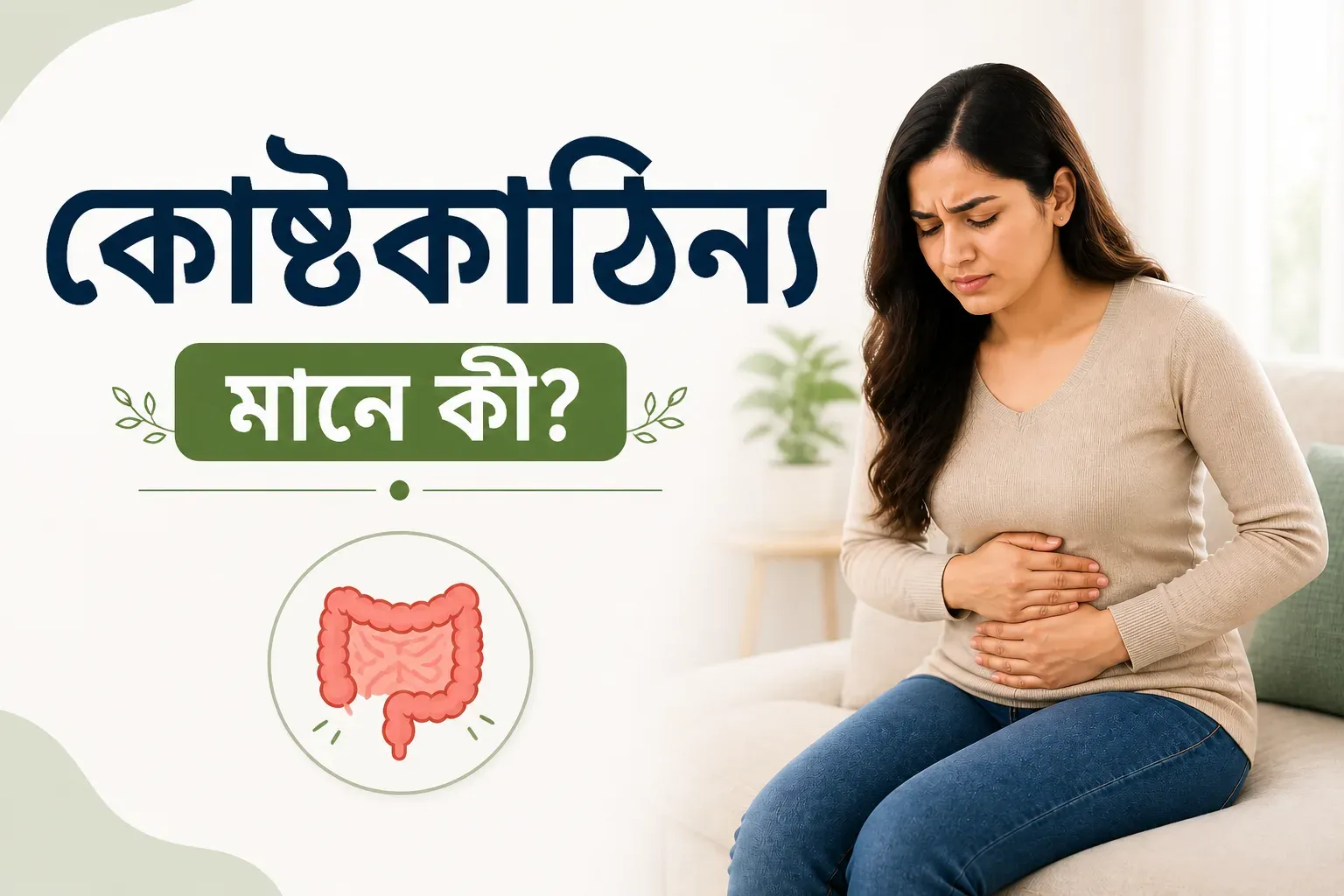
Quick Answer
Constipation in Bengali is কোষ্ঠকাঠিন্য. It describes stool that is hard, dry, difficult to pass, or less frequent than is usual for you. The everyday phrase পেট পরিষ্কার হচ্ছে না is also commonly used to describe the same discomfort.
- Hard, lumpy stools and straining are common constipation symptoms.
- Not everyone needs to pass stool every day to be healthy.
- Water, fibre, regular meals, and movement can support bowel regularity.
- Make fibre changes gradually because a sudden increase can worsen bloating.
- Blood in stool, black stool, vomiting, severe pain, fever, or inability to pass gas needs prompt medical advice.
Constipation in Bengali is কোষ্ঠকাঠিন্য, pronounced Koshthakathhinyo. It usually means that stool is hard, dry, difficult to pass, or appears less often than normal for the person. In everyday Bangla, people may say পেট পরিষ্কার না হওয়া, meaning that the stomach is not clearing properly.
What Is the Meaning of Constipation in Bengali?
কোষ্ঠকাঠিন্য is the standard Bengali word for constipation. It refers to difficulty passing stool, a feeling that the bowel has not emptied fully, or stools that are hard and infrequent. Bowel frequency varies, so the pattern and discomfort matter as much as the number of times a person goes to the toilet.
The word is often understood as a combination of কোষ্ঠ, referring to the bowel, and কাঠিন্য, meaning hardness. That reflects what happens when stool stays in the large intestine for longer and becomes drier.
| English Term | Bengali (বাংলা) | Pronunciation |
|---|---|---|
| Constipation | কোষ্ঠকাঠিন্য | Koshthakathhinyo |
| Mild constipation | হালকা কোষ্ঠকাঠিন্য | Halka Koshthakathhinyo |
| Chronic constipation | দীর্ঘস্থায়ী কোষ্ঠকাঠিন্য | Dirghasthaayi Koshthakathhinyo |
| Hard stool | শক্ত মল | Shokto mol |
| Bowel movement | পায়খানা / মলত্যাগ | Paikhaana / Moltyaag |
| Bloating | পেট ফোলা | Pet phola |
| Gas | গ্যাস / বায়ু | Gas / Bayu |
| Digestion | হজম / পাচন | Hojom / Pachon |
| Loose motion | পাতলা পায়খানা | Patla paikhaana |
Constipation Meaning in Bengali with Everyday Examples
The medical word কোষ্ঠকাঠিন্য is useful in a clinic, but many people use simpler phrases at home. These examples help explain the meaning naturally in Bangla conversation.
| English Sentence | Bengali Example |
|---|---|
| I have had constipation for three days. | আমার তিন দিন ধরে কোষ্ঠকাঠিন্য হচ্ছে। |
| My stomach is not clearing properly. | আমার পেট পরিষ্কার হচ্ছে না। |
| Constipation is causing bloating and discomfort. | কোষ্ঠকাঠিন্যের কারণে পেট ফোলা ও অস্বস্তি হচ্ছে। |
| Please drink fluids regularly. | নিয়ম করে পানি ও তরল পান করুন। |
| The stool has become hard. | মল শক্ত হয়ে গেছে। |
Bowel Movement and Digestive Terms in Bengali
In everyday Bengali, পায়খানা is commonly used for a bowel movement. In formal or medical settings, মলত্যাগ is more common. Knowing both can make it easier to describe symptoms clearly to a healthcare professional.
| English Term | Bengali (বাংলা) | What It Means |
|---|---|---|
| Bowel movement | পায়খানা / মলত্যাগ | Passing stool |
| Stool | মল | Waste passed from the bowel |
| Large intestine | বৃহদন্ত্র | Part of the bowel that absorbs water from stool |
| Intestine | অন্ত্র | The digestive tube after the stomach |
| Dietary fibre | আঁশ | Plant-based roughage in foods |
| Laxative | বিরেচক | A medicine that helps bowel movements |
| Stool softener | মল নরম করার ওষুধ | A medicine that helps make stool easier to pass |
How Does Constipation Develop?
After food is digested, the remaining material moves into the large intestine. The large intestine absorbs water from this material. When movement through the bowel is slower than usual, more water can be absorbed, making stool harder and more difficult to pass.
- Food is digested in the stomach and small intestine.
- The remaining material enters the large intestine.
- Water is absorbed as stool moves through the bowel.
- Slow bowel movement can leave stool in the colon longer, making it drier and firmer.
- Straining or delaying the urge can make the next bowel movement more uncomfortable.
Constipation may occur on its own or alongside broader digestive concerns. Understanding common digestion problems can help you notice patterns such as bloating, food triggers, or irregular meal timing.
What Causes Constipation?
Constipation can have more than one cause. A short-term change in food, routine, travel, or activity may be enough to trigger it. Some people also develop constipation because of a medicine or an underlying health condition.
- Low fibre intake: A diet with few fruits, vegetables, pulses, and whole grains may make stool harder to pass.
- Not drinking enough fluids: Lower fluid intake can contribute to dry stools, especially when weather is hot or activity is high.
- Low physical activity: Long periods of sitting may slow bowel movement for some people.
- Ignoring the urge: Repeatedly delaying a bowel movement may make stool harder and the urge less clear.
- Changes in routine: Travel, shift work, sleep disruption, and irregular meal timing can affect bowel habits.
- Medicines or supplements: Iron, some antacids, pain medicines, and other medicines can contribute to constipation.
- Health conditions: Thyroid problems, diabetes, pelvic-floor issues, and irritable bowel syndrome may need individual medical assessment.
Constipation, Pregnancy, and Children
Pregnancy can change bowel habits because hormonal changes can slow the digestive tract. Iron supplements may also contribute. During pregnancy, it is best to ask an obstetrician or doctor before taking any laxative or herbal product.
In infants and children, constipation needs age-appropriate guidance. Hard, pellet-like stools, pain during stool passage, a swollen tummy, vomiting, poor feeding, or persistent symptoms should be discussed with a paediatrician. Adult remedies and adult doses should not be used for children.
Constipation vs Dysentery in Bengali
কোষ্ঠকাঠিন্য and আমাশয় are not the same problem. Constipation usually involves hard or infrequent stool. Dysentery refers to diarrhoea with blood in the stool and needs medical assessment rather than constipation treatment.
| Feature | কোষ্ঠকাঠিন্য | আমাশয় |
|---|---|---|
| Stool pattern | Hard, dry, or difficult to pass | Loose stools, sometimes with blood or mucus |
| Frequency | Often less frequent than usual | Usually more frequent than usual |
| Typical discomfort | Straining, fullness, bloating | Cramps, urgency, weakness |
| First priority | Routine, fluids, gradual fibre, and medical review if persistent | Hydration and timely medical advice, especially for blood in stool or fever |
What Can Help Mild Constipation at Home?
For mild, occasional constipation without warning signs, simple routine changes may help. Give changes time and make them gradually rather than trying many remedies at once.
- Drink fluids regularly: Choose water and other suitable fluids through the day, unless a clinician has advised you to limit fluids.
- Add fibre slowly: Include vegetables, fruit, pulses, oats, and whole grains in amounts your body tolerates. A sudden increase may add gas or bloating.
- Move gently: A short daily walk can support regular bowel habits. Read more about whether walking helps digestion as part of a sustainable routine.
- Follow the urge: Try not to delay when you feel the need to pass stool. A regular toilet routine after breakfast may suit some people.
- Use comfortable posture: A small footstool that raises the knees slightly can make it easier to pass stool without straining.
Food tolerance varies. Some people wonder whether milk is good for constipation, but the answer can depend on the person, their overall diet, and whether milk causes bloating or discomfort.
When Should You See a Doctor?
Arrange medical advice when constipation does not improve with self-care, keeps returning, or changes your usual bowel pattern without a clear reason. Seek prompt medical care for any of the following:
- Blood in the stool, bleeding from the rectum, or black stool
- Constant or severe abdominal pain
- Vomiting, fever, or marked abdominal swelling
- Inability to pass stool or gas
- Unexplained weight loss
- Constipation that is new, persistent, or concerning for you
Medical Disclaimer
This article is for general health education and does not replace medical advice, diagnosis, or treatment. Seek urgent medical care for blood in stool, black stool, severe or constant abdominal pain, vomiting, fever, marked swelling, inability to pass stool or gas, or unexplained weight loss. Consult a qualified healthcare professional for persistent or recurring constipation.
Key Takeaways
- কোষ্ঠকাঠিন্য is the Bengali term for constipation.
- Hard stools, straining, incomplete emptying, and bloating can all be signs of constipation.
- Daily bowel movements are not required for everyone. A change from your normal pattern is often more useful to notice.
- Gradual fibre, adequate fluids, regular meals, and gentle movement can support mild constipation.
- Blood in stool, black stool, vomiting, fever, severe pain, or inability to pass gas requires prompt medical advice.
Understand the Pattern Behind Recurring Constipation
Recurring hard stools, bloating, or incomplete emptying may be connected to everyday food, hydration, activity, and digestive patterns. Take a closer look at your gut-health routine.
Your gut is unique your healing should be too.

FAQs
Constipation in Bengali is কোষ্ঠকাঠিন্য. It can describe hard, dry, difficult-to-pass stool, a feeling of incomplete emptying, or bowel movements that are less frequent than usual.
না। কোষ্ঠকাঠিন্যে মল সাধারণত শক্ত বা কম হয়। আমাশয় বলতে রক্তযুক্ত ডায়রিয়াকে বোঝানো হয়, যা চিকিৎসার পরামর্শ প্রয়োজন করতে পারে।
অবশ্যই নয়। স্বাভাবিক পায়খানার অভ্যাস ব্যক্তি ভেদে আলাদা। শক্ত মল, বেশি চাপ দিতে হওয়া, ব্যথা বা অস্বস্তি থাকলে সেটি বেশি গুরুত্বপূর্ণ লক্ষণ হতে পারে।
পর্যাপ্ত তরল পান করা, ধীরে ধীরে আঁশযুক্ত খাবার বাড়ানো, হালকা হাঁটা এবং পায়খানার বেগ চেপে না রাখা কিছু মানুষের উপকার করতে পারে. লক্ষণ থাকলে চিকিৎসকের পরামর্শ নিন।
মলে রক্ত, কালো মল, তীব্র পেটব্যথা, বমি, জ্বর, পেট ফুলে যাওয়া, গ্যাস না হওয়া, ওজন কমে যাওয়া বা দীর্ঘদিনের সমস্যা থাকলে দ্রুত চিকিৎসকের পরামর্শ নিন।
Disclaimer
The content provided by Mool Health is for educational and informational purposes only and should not be considered a substitute for professional medical advice, diagnosis, or treatment.