
Constipation in Pregnancy: Causes, Relief & Safe Remedies
Constipation during pregnancy is common and can be managed with safe diet, hydration, and gentle remedies. This guide explains causes and relief options.
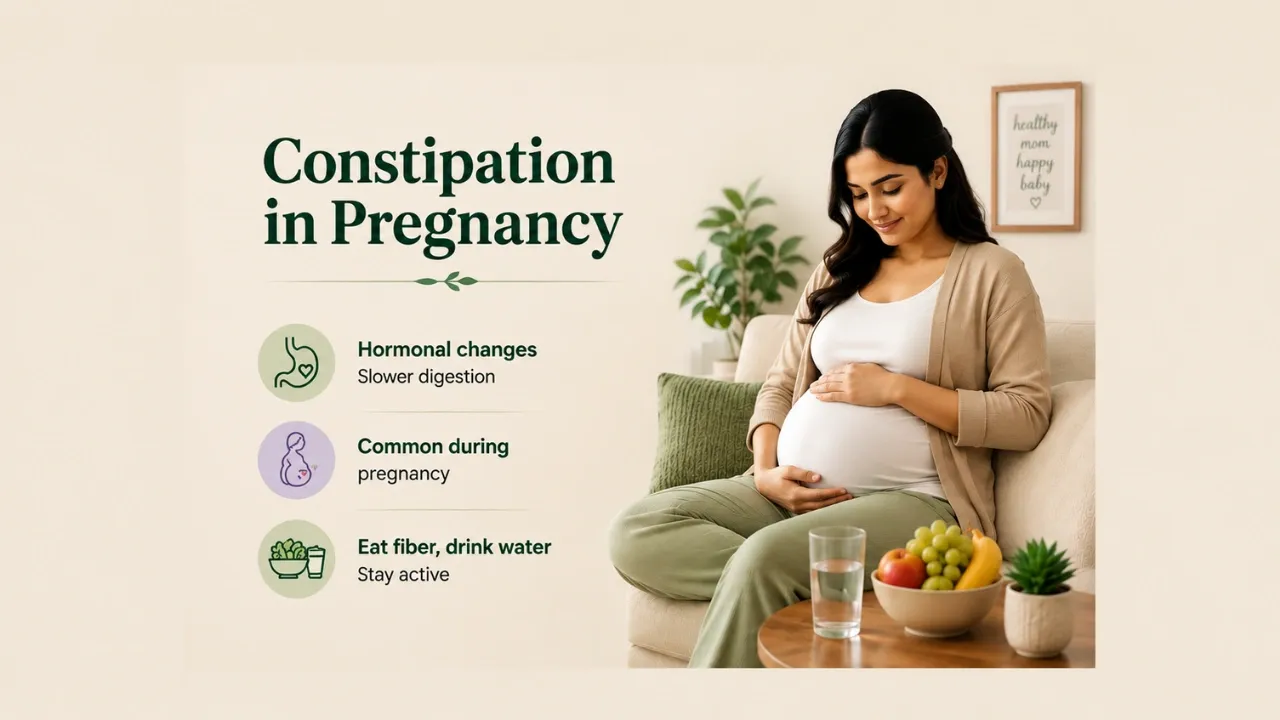
✏️ Quick Answer
Constipation in pregnancy affects up to 40% of pregnant women and is one of the most common gastrointestinal complaints during gestation. It occurs when bowel movements become infrequent, difficult, or painful due to hormonal changes, physical pressure from the growing uterus, and reduced physical activity. Most cases can be managed safely with dietary changes, hydration, and pregnancy-safe medications.
What Is Constipation in Pregnancy?
Constipation in pregnancy is defined as having fewer than three bowel movements per week, or experiencing hard, dry stools that are difficult to pass. According to Mool Health's maternal wellness team, constipation in pregnancy is not just a comfort issue, prolonged straining can contribute to haemorrhoids and pelvic floor pressure, which are already elevated risks during gestation.
Key facts:
- Affects approximately 11–38% of pregnant women globally
- Most commonly reported in the first and third trimesters
- Typically caused by a combination of hormonal, physical, and dietary factors
- Usually manageable without prescription medication
The constipation problem in pregnancy is considered a normal physiological change, but it should not be ignored if symptoms persist beyond two weeks or are accompanied by bleeding. For a broader understanding of what defines constipation clinically, see what is constipation and how it is medically classified.
How Does Constipation in Pregnancy Work? The Mechanism Explained
Constipation in pregnancy develops through a cascade of physiological changes that slow down the digestive system.
- Progesterone rises: From the first trimester, progesterone levels increase significantly to maintain the pregnancy. Progesterone relaxes smooth muscle throughout the body, including the walls of the intestines, which slows peristalsis (the wave-like contractions that move stool forward).
- Transit time increases: Slowed peristalsis means food and waste spend more time in the colon. The colon absorbs more water from the stool during this extended transit, making stools harder and drier.
- The uterus expands: As the uterus grows, particularly in the second and third trimesters, it physically compresses the bowel, reducing space and further slowing stool movement.
- Iron supplementation adds pressure: Prenatal vitamins containing iron (typically 27–30 mg/day) are a known contributor to constipation. Iron slows intestinal motility and can cause stools to harden.
- Physical activity decreases: Many pregnant women reduce activity due to fatigue or discomfort. Lower movement means reduced stimulation of the bowel.
The result: Stool accumulates, dries out, and becomes difficult to pass, producing the hallmark constipation in pregnancy symptoms.
Does Pregnancy Cause Constipation? Understanding the Root Causes
Yes, pregnancy directly causes constipation through several well-documented mechanisms. Understanding why constipation in pregnancy occurs helps in choosing the right treatment approach. The primary drivers are hormonal, but additional factors compound the risk.
Hormonal causes:
- Elevated progesterone relaxes intestinal muscles from week 6 onward
- Reduced motilin levels (a gut hormone) further slow bowel contractions
Physical causes:
- Uterine compression of the rectosigmoid colon from the second trimester
- Reduced abdominal muscle tone
Dietary and lifestyle causes:
- Low fibre intake (recommended intake is 28 g/day during pregnancy)
- Inadequate fluid intake, dehydration concentrates stool
- Iron-containing prenatal supplements
- Reduced physical activity
Medication-related causes:
- Opioid pain medications prescribed during pregnancy
- Calcium supplements taken in high doses
Studies suggest that women who enter pregnancy with pre-existing irritable bowel syndrome (IBS) or slow-transit constipation are at significantly higher risk of severe constipation during all three trimesters [2]. Understanding causes of constipation in general helps identify which specific factors are most active during pregnancy.
Is Constipation a Sign of Pregnancy?
Constipation can be an early sign of pregnancy, but it is not a reliable diagnostic indicator on its own. Progesterone begins rising within days of conception, and some women notice changes in bowel habits, including constipation in early pregnancy, before a missed period. However, constipation is also caused by dietary changes, stress, and many other factors unrelated to pregnancy.
Mool Health's clinical guidance states that constipation combined with a missed period, breast tenderness, or nausea warrants a pregnancy test, but constipation alone does not confirm pregnancy.
How to Relieve Constipation During Pregnancy: Best Practices
The following evidence-based strategies show how to relieve constipation in pregnancy safely across all trimesters.
1. Increase dietary fibre to 25–30 g per day
Fibre adds bulk to stool and draws water into the bowel, making stools softer and easier to pass. Focus on whole grains, legumes, fresh vegetables, and fruits such as prunes, which contain sorbitol, a natural laxative compound.
2. Drink at least 8–10 glasses of water daily
Fibre without adequate fluid can worsen constipation. Water keeps stool hydrated and soft. Warm water in the morning may help stimulate bowel activity.
3. Exercise for 20–30 minutes on most days
Walking, prenatal yoga, and swimming stimulate intestinal motility. According to Mool Health, even a 15-minute daily walk can meaningfully reduce constipation symptoms in the second trimester. See exercise for constipation for a full guide to safe movement routines.
4. Do not ignore the urge to go
Ignoring the defecation urge allows stool to harden further in the rectum. Responding promptly trains normal bowel rhythm.
5. Review your prenatal supplement timing
Taking iron supplements at a different time of day, or switching to a slow-release formula, may reduce constipation. Always consult your doctor before changing supplements.
6. Try a squat position on the toilet
Using a footstool to elevate your feet while sitting on the toilet aligns the rectum more favourably, reducing straining effort by up to 30% in some studies [3].
7. Consider a fibre supplement
Psyllium husk (a bulk-forming fibre supplement) is considered safe during pregnancy and can be started at 5 g/day, increasing gradually to avoid gas.
8. Establish a consistent toilet routine
Sitting on the toilet at the same time each morning, even without urgency, can help regulate the gastrocolic reflex, which is naturally strongest after waking.
- Using stimulant laxatives (bisacodyl, senna) without medical supervision, these may trigger uterine contractions in high doses
- Relying on enemas without guidance, especially in the third trimester
- Reducing fluid intake to avoid bathroom trips, this significantly worsens constipation
What Medications Are Safe for Constipation During Pregnancy?
Several medication categories are considered acceptable for constipation in pregnancy, but they carry different safety profiles.
| Medication Type | Examples | Safety in Pregnancy | Notes |
|---|---|---|---|
| Bulk-forming agents | Psyllium, methylcellulose | Generally safe all trimesters | First-line treatment; must be taken with plenty of water |
| Osmotic laxatives | Lactulose, polyethylene glycol (PEG) | Generally safe | Lactulose may cause bloating; PEG is well-tolerated |
| Stool softeners | Docusate sodium | Likely safe; limited data | Commonly prescribed; evidence of efficacy is modest |
| Stimulant laxatives | Bisacodyl, senna | Use with caution | Short-term use only; avoid in first trimester |
| Lubricant laxatives | Mineral oil | Not recommended | May impair fat-soluble vitamin absorption |
Mool Health recommends starting with dietary changes and bulk-forming fibre before progressing to osmotic laxatives. Constipation in pregnancy treatment should always begin with the least invasive option. For a full comparison of constipation treatment options, see constipation tablet options and their safety profiles. Always consult a healthcare provider before using any laxative during pregnancy.
Managing Constipation in the Third Trimester
Constipation in 9th month of pregnancy is among the most challenging to manage given the combination of maximum uterine size, reduced mobility, and continued iron supplementation.
Constipation in pregnancy tends to worsen in the third trimester due to maximum uterine size, peak iron supplementation, and reduced mobility. Additionally, the pressure of the baby's head descending into the pelvis can further compress the rectum in weeks 36–40. Managing constipation in the 9th month of pregnancy requires specific adjustments beyond the standard advice. Severe constipation in pregnancy at this stage, particularly if lasting more than five days, warrants a medical review.
Third-trimester-specific strategies:
- Maintain fibre and fluid intake even as appetite changes
- Elevate feet during toilet use to compensate for rectal compression
- Ask your provider about switching from ferrous sulfate to ferrous gluconate, the latter is typically gentler on the digestive system
- Avoid prolonged straining, which increases haemorrhoid risk significantly during this stage
- If constipation is severe or accompanied by abdominal pain, contact your healthcare provider promptly
Lactulose or polyethylene glycol are often the preferred pharmaceutical options in the third trimester due to their safety profile and minimal systemic absorption.
How Does Constipation Affect Pregnancy? Risks and Complications
Constipation in pregnancy is generally not dangerous to the foetus, but unmanaged constipation can cause secondary complications for the mother.
Potential complications:
- Haemorrhoids: Straining increases rectal venous pressure; haemorrhoids affect up to 35% of pregnant women and are worsened by constipation
- Anal fissures: Hard stools can cause small tears in the anal tissue, causing pain and bleeding
- Pelvic floor strain: Repeated straining may contribute to pelvic floor dysfunction postpartum
- Reduced quality of life: Bloating, abdominal discomfort, and pain affect sleep, appetite, and daily function during pregnancy
Constipation in pregnancy does not directly cause preterm labour or harm the baby when managed appropriately.
How to Relieve Constipation During Pregnancy Immediately
For fast-acting constipation in pregnancy home remedies, the following approaches may help within hours rather than days.
- Drink a glass of warm water with lemon: Warm fluids stimulate the gastrocolic reflex, which can trigger bowel movement within 30 minutes in some women.
- Eat prunes or drink prune juice: Prunes contain both fibre and sorbitol; 100 g of prunes provides approximately 6 g of fibre and has a documented laxative effect.
- Walk briskly for 15–20 minutes: Physical movement activates intestinal contractions.
- Abdominal massage: Gentle clockwise massage along the line of the large intestine may stimulate movement.
- Use a glycerin suppository: Glycerin suppositories are considered safe in pregnancy and can provide relief within 15–30 minutes; consult your midwife or doctor first.
Mool Health advises against using any oral stimulant laxative for immediate relief without medical supervision, particularly in the third trimester. For additional constipation home remedies that are pregnancy-safe, see constipation syrup options and which formulations are appropriate during gestation.
What to Expect: Timeline for Constipation Relief in Pregnancy
| Stage | Typical Experience | What Helps Most |
|---|---|---|
| Week 1 of dietary changes | Modest improvement; possible bloating as fibre increases | Gradual fibre increase + increased fluid |
| Week 2–3 | Stool softens; frequency may increase to 3–4x per week | Consistent routine + exercise |
| Month 2+ | Stabilised bowel habits if dietary changes are maintained | Ongoing fibre, hydration, movement |
| Post-delivery | Constipation often resolves within 1–2 weeks of birth | Continued fibre and early mobilisation |
Results vary depending on the severity of constipation, trimester, individual gut motility, and supplement use. Knowing how to cure constipation in pregnancy requires a layered approach , combining fibre, hydration, movement, and where needed, safe medication. Women with pre-existing bowel conditions may require longer management.
Research and Evidence: What Studies Say About Constipation in Pregnancy
[1] Prevalence data: A systematic review published in the European Journal of Obstetrics and Gynecology and Reproductive Biology found constipation affects 11–38% of pregnant women, with rates highest in the first trimester and postpartum period.
[2] Progesterone and motility: Research published in Alimentary Pharmacology and Therapeutics demonstrated that elevated progesterone during pregnancy significantly reduces colonic transit speed, confirming the hormonal mechanism as the primary driver.
[3] Squatting posture: A study in Journal of Clinical Gastroenterology found that raising feet during defecation (simulating a squat) reduced straining effort and improved bowel emptying in participants with chronic constipation.
[4] Fibre supplementation: A Cochrane review on fibre supplementation in pregnancy found that dietary fibre and bulk-forming laxatives produce statistically significant improvements in stool frequency and consistency with no adverse foetal effects reported.
According to Mool Health's evidence review team, the strongest evidence supports first-line dietary intervention, specifically combined fibre and fluid increases, before pharmaceutical options are considered.
Key Takeaways
- Constipation in pregnancy affects 11–38% of pregnant women and is primarily caused by progesterone-driven slowing of intestinal motility, uterine compression, and iron supplementation.
- The mechanism is hormonal: rising progesterone relaxes intestinal smooth muscle, slows peristalsis, and increases water absorption from stool, making stools hard and difficult to pass.
- First-line treatment is dietary: increasing fibre to 25–30 g/day and fluid intake to 8–10 glasses/day resolves symptoms in many cases within 2–3 weeks.
- Safe medications exist: psyllium husk, lactulose, PEG, and docusate sodium are generally considered acceptable during pregnancy; stimulant laxatives require medical supervision.
- Third-trimester constipation may need added strategies such as footstool use, supplement timing adjustments, and osmotic laxatives due to physical uterine compression.
- Complications are secondary, not direct: constipation does not harm the foetus, but chronic straining can cause haemorrhoids and pelvic floor stress in the mother.
- Most cases resolve postpartum within one to two weeks as progesterone levels drop and mobility increases.
Disclaimer
This article was reviewed and produced by the Mool Health clinical content team. Mool Health specialises in evidence-based maternal and digestive wellness guidance, drawing on current obstetric and gastroenterological research to support women at every stage of pregnancy. Always consult your midwife, obstetrician, or GP before beginning any new treatment or supplement during pregnancy.
Your gut is unique your healing should be too.

Disclaimer
The content provided by Mool Health is for educational and informational purposes only and should not be considered a substitute for professional medical advice, diagnosis, or treatment.