
Constipation Before Period: Causes, Hormonal Reasons and What Helps
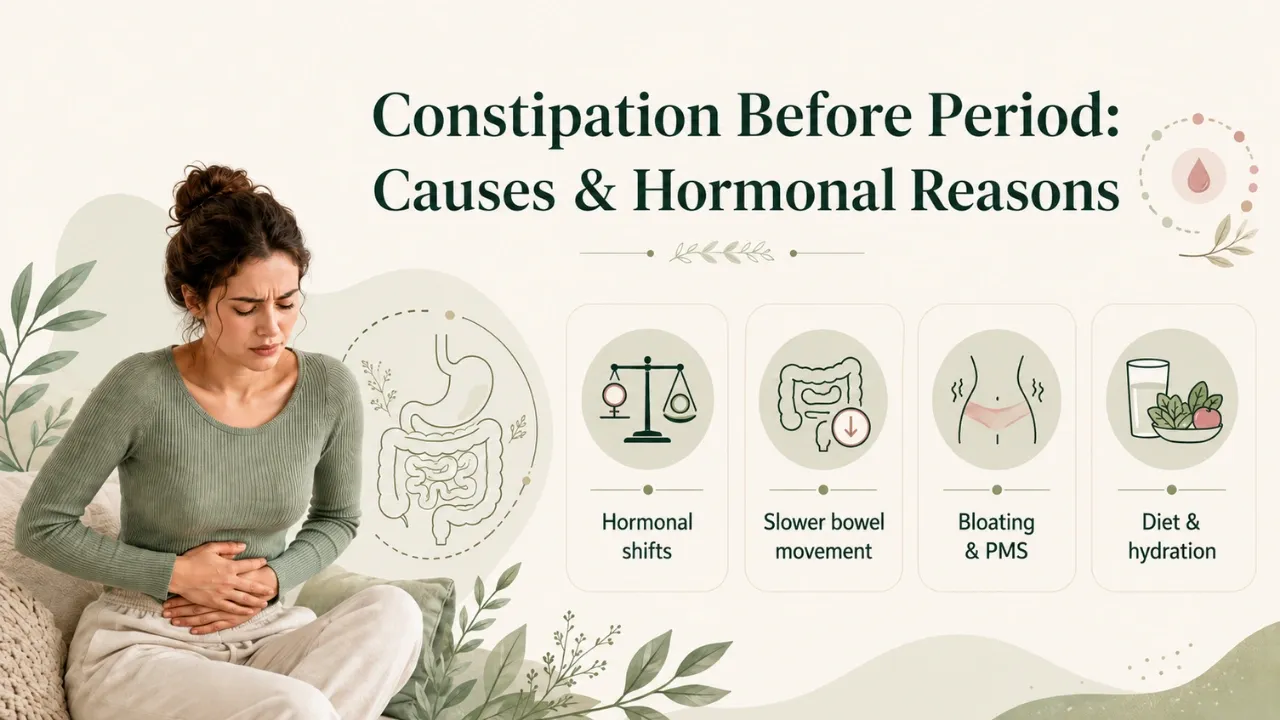
Constipation before periods is usually caused by hormonal shifts, especially rising progesterone, which slows gut movement and dries out stool.
Quick Answer
Constipation before period is caused primarily by rising Progesterone in the luteal phase, which relaxes intestinal smooth muscle, slows bowel transit, and causes stool to become drier. It typically begins 3–7 days before bleeding. Bloating and constipation before period, gas, and headache are common companions. To manage: increase water and fibre 7–10 days before your expected period, eat dinner earlier, and walk 10–15 minutes after meals.
That heavy, dry, "nothing moves" feeling before your period is often hormonal, not just "something you ate." In the days before bleeding, progesterone rises and can slow gut movement, while shifting prostaglandins and stress hormones change water balance and gut sensitivity. The result can be constipation, gas, and bloating right when you already feel uncomfortable.
- Progesterone can slow bowel movement, so stool stays longer and gets drier.
- Stress, poor sleep, and travel-style routines before periods can worsen constipation in urban life.
- Low fibre, low water, high tea/coffee, and less movement can turn mild slowing into 3–5 days of constipation.
- Persistent constipation with severe pain, bleeding, or weight loss needs medical evaluation.
Constipation Before Period — Why It Happens
Many people notice constipation 3–7 days before their period, sometimes described as "constipation 5 days before period." This timing matches the late luteal phase, when hormones prepare the body for a possible pregnancy. If pregnancy doesn't occur, hormones drop and bleeding starts. Your gut has hormone receptors too, so these shifts can change how fast food moves through the intestines, how much water stays in the stool, and how sensitive the gut feels.
For some, it's mild and "constipation before period normal." For others, it can feel intense: gas and constipation before period, bloating and gas, headache and constipation before period, and a tight lower belly that makes it hard to eat comfortably.
The Hormonal Reasons: What Exactly Changes in Your Gut
Progesterone Slows Gut Motility
Progesterone tends to rise after ovulation and stays higher in the second half of the cycle (luteal phase). One of its effects is relaxing smooth muscle. That helps the uterus stay calm, but the intestines are also smooth muscle. When the bowel moves more slowly, stool sits longer in the colon, more water is absorbed out of it, and constipation can show up.
This is why you may feel "stuck" even if you're eating a normal amount. The stool may become harder, smaller, and more difficult to pass.
Oestrogen Shifts Fluid Balance and Gut Sensitivity
Oestrogen changes across the cycle and can influence water retention, bile flow, and gut barrier function. In some people, these shifts increase bloating and make the gut more reactive to foods that normally feel fine. If stool is already moving slowly, even normal gas production can feel louder and more painful.
Prostaglandins Can Affect Bowel Pattern
Prostaglandins are chemical messengers involved in cramps. Around the time bleeding starts, prostaglandins rise in the uterus. For some people this triggers looser stools or diarrhoea during periods. But before the period, the balance of messengers can be mixed, and if motility is already slow from progesterone, constipation can dominate first.
Stress Hormones Can Tighten the Gut
Many people feel more stress, irritability, or anxiety before periods. Cortisol and adrenaline can change gut movement and reduce blood flow to digestion during "fight-or-flight." In India's hustle pattern — late nights, long commutes, irregular meals — this effect can be stronger. Constipation becomes more likely when stress piles onto hormone-driven slowing.
What Pre-Period Constipation Looks Like Inside the Body
Constipation is not only "not going daily." It can also mean hard stool, straining, a feeling of incomplete emptying, or going fewer than three times a week. Before periods, the root problem is often slower transit plus drier stool.
When stool stays longer in the colon:
- Water absorption increases, making stool harder and more difficult to pass.
- Gas can get trapped behind slow-moving stool, causing pressure, cramps, and distension.
- Gut sensitivity rises, so normal stretching feels like pain or tightness.
- Appetite may drop, leading to lower fibre intake and worsening the cycle.
Constipation Before Period or Pregnancy — How to Tell the Difference
This is a common worry: "constipation before period or pregnancy." Early pregnancy can also slow digestion because progesterone rises and stays high, similar to the luteal phase. So constipation before missed period can happen in both situations.
Practical clues that lean toward PMS-related constipation:
- Timing pattern: it happens most cycles in the week before bleeding and improves after your period starts.
- Typical PMS signs: breast tenderness, mild cramps, mood changes, acne flare, or water retention.
Practical clues that could lean toward early pregnancy (not a diagnosis):
- Missed period or bleeding that is unusual for you.
- New nausea, stronger smell sensitivity, or unusual fatigue.
If there is a chance of pregnancy and your period is late, a home pregnancy test after a missed period is a sensible next step. If constipation is severe, persistent, or combined with concerning symptoms, it's safer to speak with a clinician.
Causes of Constipation Before Period — Lifestyle Factors That Worsen It
Hormones may start the problem, but daily habits often decide how bad it gets. Modern urban living can quietly push the gut toward constipation — especially in the late luteal phase when your gut is already slower.
Circadian Disruption and Late Dinners
Digestive movement follows your body clock. Late nights, late dinners, and irregular meal timing can reduce the strong morning bowel reflex. If your sleep is short or shifted, constipation becomes more likely before periods.
Low Water Intake and Inconsistent Water Quality
When you drink less, the colon pulls more water from stool. Some people also limit water outside home due to toilet access or water-quality concerns, especially during travel or long office days. The result is drier stool.
Low Fibre Intake During Cravings
Pre-period cravings often shift meals toward refined carbs, fried snacks, bakery items, and sweets. These are tasty but low in fibre. Without enough fibre, stool has less bulk and can move more slowly.
Tea/Coffee, Nicotine, and Dehydration Loops
Tea and coffee can be part of a healthy routine, but in excess they can replace water, reduce appetite for fibre-rich foods, and worsen dehydration in some people. If stress increases before periods, these habits often increase too.
Urban Pollution and Inflammatory Load
Air pollution exposure is linked with higher inflammation and oxidative stress in the body. In people already sensitive in the premenstrual phase, that extra inflammatory load can make bloating, reflux, and gut discomfort feel worse, even if hormones are the main trigger.
Antibiotic Over-Reliance and Microbiome Shifts
Repeated antibiotic use (often for coughs, fevers, or acne) can change the gut microbiome. A disrupted microbiome can affect stool consistency and gas production. Over time, this can make pre-period constipation more intense and less predictable.
Vitamin D and B12 Gaps
Low Vitamin D is common with indoor work and sun avoidance, and B12 gaps can happen in people with low animal-food intake or absorption issues. These don't directly "cause" PMS constipation in everyone, but they can add to fatigue, low activity, and nerve-gut signaling issues that make constipation harder to manage.
Hormones vs Habits: Cycle Timing and Constipation
This table helps you connect cycle timing with symptoms so you can plan earlier, not on day 4 of constipation.
| Cycle Phase | What may rise/fall | Common Gut Effect | What Helps Most |
|---|---|---|---|
| After ovulation (early luteal) | Progesterone rises | Slower bowel movement begins | Water + fibre consistency |
| Late luteal (3–7 days before period) | Progesterone high, stress sensitivity higher | Constipation, gas, bloating, incomplete emptying | Earlier dinner, walking, warm fluids |
| Period starts | Hormones drop, prostaglandins rise | Some shift to looser stools; others still constipated | Gentle movement, hydration, iron-rich foods if needed |
Why Some People Feel Pre-Period Constipation More
Not everyone gets pre-period constipation. A few factors make it more likely:
- History of constipation or IBS-C: baseline slow transit gets amplified in the luteal phase.
- Low pelvic floor coordination: straining patterns can worsen around PMS due to pain and tension.
- Endometriosis or fibroids: pelvic pain and inflammation can change bowel habits and increase constipation.
- Thyroid imbalance or iron deficiency: can slow metabolism and reduce energy for activity (needs medical testing).
Metabolic Red Flags That Often Travel With PMS Constipation
Constipation before periods is usually benign, but your body may be showing wider metabolic stress. Watch for patterns that suggest insulin resistance or glucose spikes, which can increase inflammation and cravings.
- Strong sugar cravings and afternoon crashes
- Sleepiness after carb-heavy meals
- Central weight gain with low energy
- Skin tags, persistent acne, or darkening around neck folds
If these are common, lifestyle work is still the foundation, but clinical evaluation may help you understand thyroid function, iron status, Vitamin D/B12, glucose markers, and overall gut health.
How to Relieve Bloating and Constipation Before Period — Foundational Fixes
These steps aim at the real drivers: gut movement, stool moisture, microbiome balance, and the nervous system. Start them 7–10 days before your expected period, not after constipation has already settled in.
Circadian Alignment: Make Mornings Do the Work
Your gut has a strong morning rhythm. Support it consistently.
- Fixed wake time: keep it within a 60-minute range even on weekends.
- Morning light exposure: 10–15 minutes near a window or balcony soon after waking.
- Breakfast timing: eat within 1–2 hours of waking to trigger the gastrocolic reflex.
- Toilet routine: sit at the same time daily without straining; a footstool can help posture.
Hydration That Actually Reaches the Stool
- Water target: aim for pale-yellow urine most of the day.
- Warm fluids: warm water or light soups can feel easier on a sluggish gut.
- Electrolyte balance: if you sweat a lot, a clinician can guide safe electrolyte use rather than guessing.
Fibre Strategy: Increase Gently to Avoid Extra Gas
- Soluble fibre: oats, soaked chia, psyllium (if tolerated), cooked apples/guava.
- Vegetable base: add cooked sabzi, lauki, tinda, spinach, carrots; cooked is often easier pre-period.
- Legumes mindfully: start with small portions of moong dal or well-cooked rajma/chana if you tolerate them.
Movement: The Simplest Motility Medicine
- Post-meal walk: 10–15 minutes after lunch or dinner.
- Gentle yoga: twists and forward folds can reduce the "stuck" sensation for some people.
- Strength training: long-term, it improves insulin sensitivity and supports better gut rhythms.
Stress Downshift: Calm the Gut-Brain Axis
- Breathing reset: 5 minutes of slow breathing before meals can reduce gut spasm.
- Screen cut-off: reducing late-night scrolling supports sleep and morning bowel movement.
- Caffeine timing: keep tea/coffee earlier in the day if sleep is affected.
Foods That Commonly Worsen Constipation Before Periods
- Refined carbs: white bread, biscuits, noodles without enough vegetables.
- Deep-fried snacks: can slow digestion and worsen bloating.
- Low-fibre protein-only meals: increase constipation risk if vegetables and water are low.
- High salt: increases water retention but does not hydrate stool.
Ayurveda-Informed View
In Ayurveda, constipation often relates to Vata aggravation — dryness, irregular routines, travel, stress, and cold/raw foods can increase this pattern. Premenstrual days can naturally feel more "Vata-like" in some people due to sleep disruption, cravings, and stress sensitivity. A practical, safe takeaway is to support warmth, regularity, and moisture through routine, cooked foods, and adequate hydration.
This perspective can be used alongside modern gut science: warm cooked meals are often easier to digest, regular meal timing supports circadian rhythm, and hydration supports stool softness.
When Lifestyle Changes Are Not Enough
If constipation is frequent, severe, or affects your daily life, it deserves a deeper look. Sometimes the "before period" pattern is the visible tip of an ongoing constipation issue.
Consider medical evaluation if you notice:
- Blood in stool, black stool, or severe pain
- Unexplained weight loss, persistent vomiting, or fever
- Constipation lasting more than 2–3 weeks or progressively worsening
- New constipation after age 40, especially with family history of colon disease
- Symptoms of anaemia, thyroid problems, or persistent fatigue
A Root-Cause Approach: Mool Health's Perspective
Mool Health's approach looks at pre-period constipation as a pattern, not a one-time problem. The first step is a Gut Test (gut assessment) to understand digestion markers, microbiome signals, and possible inflammation patterns. Alongside this, a Prakruti analysis and lifestyle review help map triggers like sleep timing, stress load, meal rhythms, water intake, and food tolerance.
From there, the focus stays 360°: diet adjustments that suit your tolerance, circadian alignment for better motility, and supportive habits for the gut ecosystem. If red flags show up, the responsible step is to involve a qualified clinician for diagnostic testing and evidence-based care. No approach can guarantee outcomes, because hormones, gut function, and stress biology vary from person to person.
How to Plan Your Week Before Periods: A Simple Action Plan
Use this as a practical routine starting 7–10 days before your expected period.
- Set a consistent wake time and get morning light exposure for 10–15 minutes.
- Eat breakfast within 1–2 hours of waking, with a fibre source and protein.
- Drink water steadily through the day; aim for pale-yellow urine.
- Add cooked vegetables to lunch and dinner; keep refined snacks limited.
- Walk 10–15 minutes after one main meal daily.
- Keep dinner earlier when possible and reduce late-night screen time.
- If gas increases with fibre, reduce the jump and build slowly with more water.
Key Takeaways
Constipation before periods is usually caused by hormonal shifts, especially rising progesterone, which slows gut movement and dries out stool.
Your gut is unique your healing should be too.

Disclaimer
The content provided by Mool Health is for educational and informational purposes only and should not be considered a substitute for professional medical advice, diagnosis, or treatment.