Food Allergy Symptoms and Causes: A Complete Guide
Food allergy occurs when the immune system reacts to a food protein, causing symptoms such as hives, or breathing difficulties. Learn its causes, symptoms, diagnosis, treatment, and gut health connection.
Ayurvedic Physician & Medical Operations Lead at Mool
Published on 13,November 2026
Updated on 29,October 2026
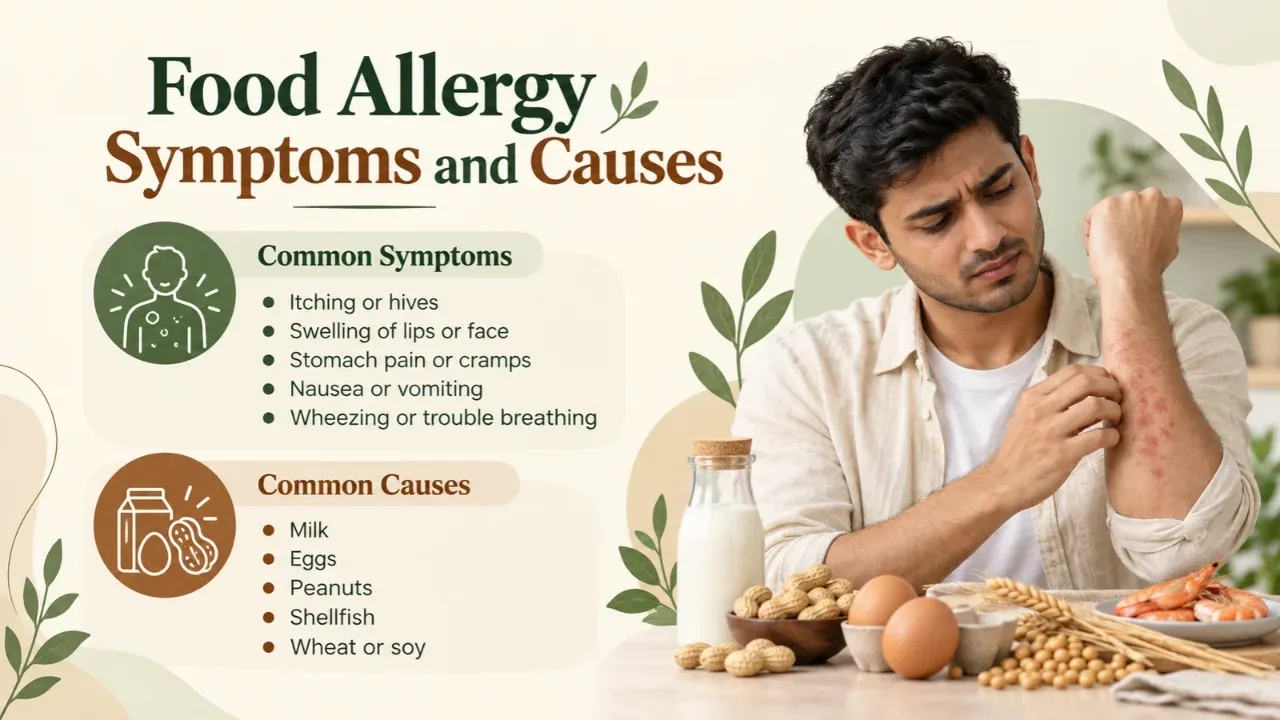
Quick Answer: What Is a Food Allergy?
A food allergy occurs when the immune system mistakenly identifies a food protein as harmful and triggers an allergic reaction. Food allergy symptoms can include itchy skin, hives, swelling of the lips or face, vomiting, diarrhoea, coughing, wheezing and difficulty breathing. Common triggers include milk, eggs, peanuts, tree nuts, wheat, soy, fish and shellfish. Symptoms often begin within minutes to a few hours after eating the trigger food, although some food-allergy conditions cause delayed symptoms. A severe reaction called anaphylaxis is a medical emergency.
What Is a Food Allergy?
A food allergy is an immune-system reaction to a particular food. The immune system normally protects the body against harmful substances, but in someone with a food allergy, it reacts to a food protein that is usually harmless to other people.
This reaction can affect different parts of the body, including the skin, mouth, digestive system and respiratory system. Symptoms may be mild in one episode and severe in another, so a previous mild reaction does not guarantee that future reactions will also be mild.
Food allergies can develop during childhood or adulthood. Some childhood allergies may eventually be outgrown, while others can persist into adulthood. Whether an allergy resolves depends on the individual and the specific food involved.
What Are the Symptoms of Food Allergy?
Food allergy symptoms vary depending on the person, the food involved, the amount eaten and the type of allergic reaction. In many immediate, IgE-mediated food allergies, symptoms begin within minutes to two hours after eating the trigger food.
Some non-IgE-mediated food-allergy conditions can cause delayed symptoms, particularly digestive symptoms. The timing and pattern depend on the specific condition.
Common food allergy symptoms include:
1. Skin Symptoms
Skin symptoms are common during allergic reactions and may include:
- Hives: Raised, itchy bumps or welts that can appear on different parts of the body.
- Itching: The skin may feel itchy even before a visible rash develops.
- Redness or flushing: Areas of the skin may become red or warm.
- Swelling: The lips, eyelids, face or other tissues may swell. This is known as angioedema.
2. Mouth and Throat Symptoms
Some people experience symptoms soon after a trigger food touches the mouth. These may include:
- Tingling or itching of the lips, tongue or mouth.
- Swelling of the lips or tongue.
- An itchy or uncomfortable throat.
- Difficulty swallowing if swelling affects the throat.
Throat tightness or swelling, especially when accompanied by breathing difficulties, should be treated as a potential emergency.
3. Digestive Symptoms
Food allergies can affect the digestive system and cause:
- Abdominal pain or stomach cramps.
- Nausea.
- Vomiting.
- Diarrhoea.
Some allergic conditions cause digestive symptoms that appear later rather than immediately after eating. Persistent or recurrent digestive symptoms should be assessed by a healthcare professional instead of being automatically attributed to a food allergy.
4. Respiratory Symptoms
An allergic reaction may affect the airways and cause:
- Coughing.
- Wheezing.
- Shortness of breath.
- Noisy or difficult breathing.
- A hoarse voice.
Respiratory symptoms can indicate a serious reaction, particularly when they occur alongside swelling, hives, vomiting or dizziness.
5. Cardiovascular and General Symptoms
More serious reactions may cause:
- Dizziness or lightheadedness.
- Sudden weakness.
- Confusion.
- A drop in blood pressure.
- Fainting or loss of consciousness.
These symptoms may occur during anaphylaxis, a severe allergic reaction that can affect several body systems.
When Are Food Allergy Symptoms an Emergency?
If an adrenaline (epinephrine) auto-injector has been prescribed for the person, use it promptly according to their allergy action plan and device instructions. Call your local emergency service even if symptoms begin to improve after using it.
Antihistamines are not a substitute for adrenaline in anaphylaxis. Do not wait to see whether symptoms will pass when serious warning signs are present.
What Causes Food Allergy?
Food allergies occur when the immune system reacts abnormally to a protein in a food. In many immediate food allergies, the immune system produces an antibody called immunoglobulin E (IgE) against the food allergen. On subsequent exposure, this can trigger the release of chemicals such as histamine, causing allergic symptoms. To understand this immune response more broadly, read about allergies, their causes and symptoms.
Not all food allergies follow this pathway. Some are non-IgE-mediated or involve more than one immune mechanism and may produce delayed symptoms.
Researchers do not fully understand why some people develop food allergies while others can eat the same foods without a reaction. Several factors may influence a person's likelihood of developing one.
1. Immune-System Sensitisation
Food allergy can develop when the immune system becomes sensitised to a food protein. Once sensitised, exposure to that food may trigger an allergic response.
Sensitisation detected through a test does not always mean a person has a clinical food allergy. Test results must be interpreted alongside the person's history and symptoms.
2. Genetic and Family Factors
A family history of allergic conditions may increase the likelihood of developing a food allergy. However, having a relative with an allergy does not mean that a person will definitely develop one.
Genetics are only one part of the picture; environmental exposures and other factors may also contribute.
3. Other Allergic Conditions
People with conditions such as eczema, asthma or allergic rhinitis may have a higher risk of food allergy. The relationship varies by condition and individual, and these conditions do not automatically mean that a person has a food allergy.
4. Age and Early-Life Factors
Food allergies often begin in childhood, although they can appear at other ages. Early-life immune development and environmental exposures are areas of ongoing research.
Some food allergies, such as certain milk or egg allergies in children, may resolve with age. Peanut, tree-nut and some other allergies are more likely to persist, although individual outcomes vary.
5. Gut Microbiome and Immune Development
The gut microbiome is the community of microorganisms living in the digestive tract. These microorganisms interact with the immune system and are being studied for their potential role in immune tolerance—the process by which the body learns not to react harmfully to certain substances.
Research suggests that differences in gut microbial communities may be associated with food-allergy development. However, the relationship is complex, and current evidence does not mean that a food allergy can be explained simply by an “unhealthy gut.”
Food allergies should not be self-treated with probiotics, supplements or restrictive diets. These approaches are not established substitutes for allergy assessment and appropriate medical management.
Also Read: How to Improve Gut Health
References
- National Health Service (NHS). Food Allergy: Symptoms, Causes and Treatment.
- National Health Service (NHS). Anaphylaxis.
- Food Allergy Research & Education (FARE). Recognizing and Responding to an Allergic Reaction.
Key Takeaways
- A food allergy occurs when the immune system reacts to a food protein that is normally harmless to most people.
- Common symptoms include hives, itching, swelling, nausea, vomiting, diarrhoea, coughing and wheezing.
- Food allergy is different from food intolerance, which usually involves difficulty digesting a food or reacting to one of its components.
- Many immediate food-allergy reactions begin within minutes to two hours, while some non-IgE-mediated conditions cause delayed symptoms.
- Anaphylaxis is a medical emergency. Difficulty breathing, throat swelling, collapse or sudden severe dizziness requires immediate action.
- Adrenaline (epinephrine) is the first-line emergency treatment for anaphylaxis. Antihistamines do not replace it.
- Common food allergens include milk, eggs, peanuts, tree nuts, wheat, soy, fish, shellfish and sesame.
- Diagnosis involves medical history and appropriately selected tests. Skin-prick and specific IgE blood tests cannot independently confirm every food allergy.
- Managing a diagnosed food allergy involves avoiding confirmed triggers, reading ingredient labels, preventing cross-contact and following an allergy action plan.
- Gut microbiome research suggests possible associations with food-allergy development, but gut imbalance alone has not been established as the cause of food allergies.
- Probiotics, supplements, gut tests and restrictive diets should not replace specialist allergy assessment or treatment.
Your gut is unique your healing should be too.

FAQs
Food allergy symptoms can include hives, itching, swelling of the lips or face, tingling in the mouth, stomach cramps, vomiting, diarrhoea, coughing and wheezing. Severe reactions may cause difficulty breathing, dizziness, fainting or anaphylaxis.
Food allergy is caused by an immune response to a food protein. The reasons why some people develop this response are not fully understood, but genetic factors, other allergic conditions, age and early-life immune development may contribute.
Many immediate food-allergy reactions begin within minutes to two hours after eating the trigger food. Some non-IgE-mediated food-allergy conditions can cause symptoms later, so timing depends on the type of reaction.
Common food allergens include milk, eggs, peanuts, tree nuts, wheat, soy, fish, shellfish and sesame. However, almost any food can trigger an allergy in a susceptible person.
No. A food allergy involves the immune system and can cause symptoms such as hives, swelling and breathing difficulties. Food intolerance often causes digestive symptoms such as gas, bloating or abdominal discomfort. The two can overlap in symptoms, so professional assessment may be needed.
Some childhood food allergies may resolve over time, while others persist. There is no universal cure that works for every food allergy. Specialist treatments may be appropriate for selected patients, but they do not mean that a person can safely eat the allergen without medical guidance.
The gut microbiome is being studied for its role in immune development and food-allergy risk. Current evidence shows associations and possible mechanisms, but it does not establish that gut imbalance alone causes food allergy or that probiotics can reliably prevent or treat it.
Disclaimer
The content provided by Mool Health is for educational and informational purposes only and should not be considered a substitute for professional medical advice, diagnosis, or treatment.