Allergic Conjunctivitis: Symptoms, Causes & Common Triggers
Allergic conjunctivitis is an eye allergy causing itchy, red, watery eyes and swollen eyelids. Learn its symptoms, causes, types, duration, treatment, prevention, and possible gut–eye connection.
Ayurvedic Physician & Medical Operations Lead at Mool
Published on 13,November 2026
Updated on 29,October 2026
Quick Answer
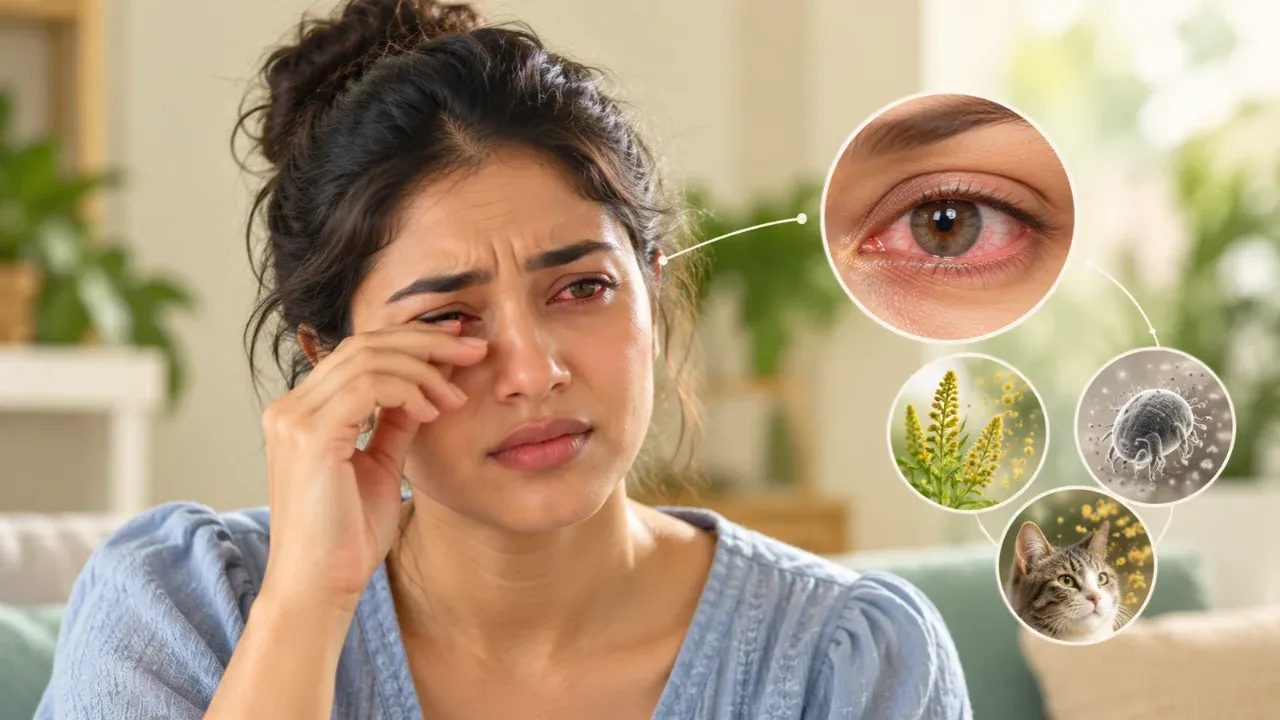
Allergic conjunctivitis is inflammation of the conjunctiva—the thin, transparent membrane covering the white of the eye and lining the inside of the eyelids—caused by exposure to an allergen. Common symptoms include itchy, red, watery eyes and swollen eyelids. Triggers may include pollen, dust mites, mould and pet dander. Allergic conjunctivitis is not contagious.
What Is Allergic Conjunctivitis?
Allergic conjunctivitis is an eye condition that occurs when the immune system reacts to a substance that triggers an allergy. This reaction releases inflammatory chemicals, including histamine, which can cause itching, redness, watering and swelling.
The conjunctiva helps protect the surface of the eye and keep it moist. When it becomes inflamed, the eyes may feel irritated or gritty and may water more than usual.
Allergic conjunctivitis often affects both eyes, although symptoms can vary in severity. It may occur during particular seasons or continue throughout the year, depending on the allergen involved.
Unlike viral or bacterial conjunctivitis, allergic conjunctivitis is not caused by an infection and does not spread from person to person.
What Are the Symptoms of Allergic Conjunctivitis?
The most characteristic symptom of allergic conjunctivitis is itching in the eyes, often accompanied by redness and watering. Symptoms may begin soon after exposure to an allergen and can recur when exposure continues.
Common symptoms include:
- Itchy eyes: Persistent itching is a typical feature and may lead to frequent eye rubbing.
- Redness: The white of the eye or the inner eyelids may look pink or red.
- Watery eyes: The eyes may produce more tears than usual.
- Swollen eyelids: The eyelids or surrounding tissues may appear puffy.
- Burning or irritation: Some people experience a stinging or gritty sensation.
- Mucous discharge: A small amount of clear or stringy discharge may occur.
- Other allergy symptoms: Sneezing, a runny nose or nasal itching may occur alongside eye symptoms.
Symptoms may be more noticeable outdoors during periods of high pollen exposure or indoors when allergens such as dust mites or pet dander are present.
When Should You Seek Medical Attention?
Not every red or watery eye is caused by an allergy. Seek urgent medical assessment if you experience eye pain, significant sensitivity to light, reduced or blurred vision that does not clear, or a change in the appearance of the cornea. Sudden or severe symptoms should not be assumed to be allergic conjunctivitis.
Contact lens users should remove their lenses and seek prompt eye-care advice if they develop a red or painful eye.
What Causes Allergic Conjunctivitis?
Allergic conjunctivitis develops when the immune system reacts to an allergen that contacts the eye. The reaction can release histamine and other inflammatory substances, leading to itching, redness and swelling. You can learn more about allergies, their causes and symptoms to understand the wider immune response.
Common triggers include:
- Pollen: Pollen from trees, grasses and weeds can cause seasonal symptoms.
- Dust mites: These microscopic organisms are commonly found in household dust, bedding and upholstered furniture.
- Mould spores: Mould growing indoors or outdoors may trigger symptoms in people who are sensitive to it.
- Pet dander: Proteins associated with animals' skin flakes, saliva or other secretions may trigger an allergic response.
- Cosmetics and personal-care products: Certain ingredients in makeup, fragrances or skincare products may cause an allergic reaction or irritation around the eyes.
- Environmental exposure: Wind, smoke, dust and air pollution may worsen eye irritation. These are not all allergens; some act as irritants rather than causing a true allergic response.
People with other allergic conditions, such as allergic rhinitis, asthma or eczema, may be more likely to experience eye allergies. A personal or family history of allergies can also be relevant.
Identifying the trigger can help reduce repeated episodes, although the exact allergen is not always obvious.
What Are the Types of Allergic Conjunctivitis?
Allergic conjunctivitis can be classified by when symptoms occur and by the type or severity of the eye inflammation.
1. Seasonal Allergic Conjunctivitis
Seasonal allergic conjunctivitis is associated with allergens that are more prevalent at certain times of the year, particularly pollen. Symptoms may flare during periods of high pollen exposure and improve when exposure decreases.
People may experience itchy, red and watery eyes along with sneezing or a runny nose.
2. Perennial Allergic Conjunctivitis
Perennial allergic conjunctivitis can occur throughout the year because the triggers are present in the person's environment on an ongoing basis. Dust mites, pet dander and indoor mould are common examples.
Symptoms may be persistent or recur frequently, depending on exposure and individual sensitivity.
3. Vernal Keratoconjunctivitis
Vernal keratoconjunctivitis is a more severe, recurrent allergic eye condition that often affects children and young people. It can cause intense itching, significant inflammation and sensitivity to light. In some cases, the cornea can be affected.
It requires assessment and management by an eye specialist, especially if symptoms are severe or vision is affected.
4. Atopic Keratoconjunctivitis
Atopic keratoconjunctivitis is a chronic inflammatory eye condition associated with atopic diseases, particularly eczema. It can affect the eyelids, conjunctiva and cornea.
Because this condition may cause complications involving the cornea, specialist care is important.
Also Read: एलर्जी क्या है? कारण, लक्षण और बचाव
How Long Does Allergic Conjunctivitis Last?
The duration of allergic conjunctivitis depends on the type of allergy, the trigger and how long exposure continues.
- Short-lived episodes: Symptoms after a brief allergen exposure may improve within hours after the trigger is removed.
- Seasonal symptoms: Symptoms may recur over several weeks or months while the relevant pollen remains in the environment.
- Year-round symptoms: Ongoing exposure to dust mites, pet dander or indoor mould may cause persistent or recurring symptoms.
- Severe allergic eye conditions: Conditions such as vernal or atopic keratoconjunctivitis may need longer-term specialist management.
Reducing exposure to the trigger and following an appropriate treatment plan can help control symptoms. If symptoms persist, worsen or repeatedly return, consult an eye-care professional to confirm the diagnosis and review treatment.
Is Allergic Conjunctivitis Contagious?
No. Allergic conjunctivitis is not contagious because it is caused by an allergic reaction, not by a virus or bacterium. You cannot catch allergic conjunctivitis from another person through normal contact.
However, viral and bacterial conjunctivitis can spread between people. These conditions may also cause redness and watering, so symptoms alone do not always establish the cause.
Itching in both eyes, especially with sneezing or other allergy symptoms, can suggest an allergic cause. Thick or sticky discharge, recent contact with someone who has an eye infection, or other unusual symptoms may indicate a different condition. These clues are not definitive, so seek medical advice if you are unsure.
How Is Allergic Conjunctivitis Diagnosed?
An eye-care professional usually diagnoses allergic conjunctivitis by reviewing symptoms, asking about potential triggers and examining the eyes.
The assessment may include:
- Medical history: The clinician may ask when symptoms began, whether both eyes are affected, whether symptoms recur seasonally and whether you have other allergies.
- Eye examination: The clinician checks for redness, swelling, discharge and signs that could suggest an infection or another eye condition.
- Review of exposures: Recent contact with pollen, dust, animals, cosmetics, contact lens products or other possible triggers may help identify the cause.
- Allergy testing when appropriate: Skin-prick testing or blood tests may be considered if the trigger is unclear, symptoms persist or identifying the allergen would change management.
Allergy testing is not necessary for every case. The clinician decides whether it is useful based on the symptoms and examination.
Because infectious conjunctivitis and other eye conditions can resemble an allergy, avoid relying on self-diagnosis when symptoms are severe, unusual or persistent.
How Do You Treat Allergic Conjunctivitis?
Treatment aims to reduce inflammation and discomfort, limit exposure to triggers and prevent recurring symptoms. The best approach depends on symptom severity, age, medical history and whether the cornea is involved.
1. Avoid the Trigger
Reducing contact with the allergen is an important part of management. Depending on the suspected trigger, you may be able to:
- Keep windows closed when outdoor pollen levels are high.
- Wash your hands and face after spending time outdoors.
- Change clothes after activities that expose you to pollen or dust.
- Wash bedding regularly to help reduce dust mites.
- Clean indoor spaces to limit dust accumulation and address visible mould.
- Avoid close exposure to pets if pet allergens trigger your symptoms.
- Stop using a suspected cosmetic or personal-care product until you receive appropriate advice.
2. Apply a Cool Compress
A clean, cool compress placed gently over closed eyelids may help relieve itching and swelling. Use a clean cloth each time and avoid rubbing or pressing on the eyes.
3. Consider Lubricating Eye Drops
Artificial tears or lubricating eye drops may help wash away allergens and relieve irritation. Preservative-free products may be preferable for some people, particularly when drops are used frequently.
Ask a pharmacist or eye-care professional which product is suitable for you.
4. Use Allergy Eye Drops When Recommended
Antihistamine eye drops can help reduce itching and other allergy symptoms. Some products combine antihistamine effects with mast-cell stabilisation, which can help control the allergic response.
A healthcare professional may recommend a suitable over-the-counter or prescription product based on your symptoms and medical history.
5. Consider Oral Allergy Medicines When Needed
Oral antihistamines may be useful when eye symptoms occur alongside sneezing, nasal itching or a runny nose. However, some oral antihistamines can worsen eye dryness in certain people.
Ask a healthcare professional or pharmacist for advice about the appropriate medicine, especially for children, during pregnancy or breastfeeding, or if you take other medicines.
6. Get Specialist Treatment for Severe Symptoms
Severe or persistent allergic eye conditions may require prescription treatment and monitoring by an ophthalmologist. Steroid eye drops can be appropriate in selected cases, but they must be prescribed and monitored by an eye specialist because they can increase eye pressure and contribute to other complications.
Do not self-start steroid eye drops or use leftover antibiotic drops. Antibiotics do not treat an allergic reaction, and the wrong eye medication can delay appropriate care.
Can Allergic Conjunctivitis Be Prevented?
Allergic conjunctivitis cannot always be prevented, but reducing exposure to known triggers may lower the likelihood or severity of flare-ups.
Practical steps include:
- Track your symptoms: Note when symptoms occur and possible links with outdoor exposure, cleaning, pets or particular products.
- Reduce pollen exposure: Keep windows closed when pollen levels are high, and consider wearing glasses or sunglasses outdoors.
- Limit indoor allergens: Wash bedding regularly, clean dusty surfaces and address mould or dampness.
- Practise good eye hygiene: Wash your hands before touching your eyes and avoid rubbing them.
- Take care with contact lenses: Follow the recommended cleaning and wearing instructions. Stop wearing lenses if your eyes become irritated and seek advice if redness or discomfort persists.
- Review cosmetics and skincare: Avoid products that appear to trigger symptoms, and do not share eye makeup.
- Follow a treatment plan: If symptoms recur, ask an eye-care professional whether preventive allergy treatment is appropriate.
These steps can help reduce exposure, but they cannot eliminate every allergen or guarantee that symptoms will not return.
Allergic Conjunctivitis and Gut Health: Is There a Connection?
The gut microbiome—the community of microorganisms living in the digestive tract—plays a role in immune-system function. Researchers are investigating how the gut microbiome may interact with immune responses and conditions affecting parts of the body beyond the digestive system.
A broader area of research known as the gut–eye axis explores possible relationships between gut microbes, immune regulation and eye health. A 2025 review of the ocular surface microbiome discusses these potential connections, while also noting that important questions remain unanswered.
However, this does not establish that an unhealthy gut causes allergic conjunctivitis. Nor does it show that probiotics, supplements, a specific diet or a gut-health programme can prevent or treat allergic eye symptoms.
For now, the best-supported management of allergic conjunctivitis remains identifying and reducing exposure to triggers, using suitable symptom-relief treatments and seeking medical care when needed. A balanced diet supports general health, but it should not replace appropriate eye care or prescribed treatment.
Also Read: How to Improve Gut Health
References
- American Academy of Ophthalmology. Eye Allergies: Why Are My Eyes Itchy?
- American Optometric Association. Conjunctivitis (Pink Eye).
- Association of Optometrists. Allergic Conjunctivitis: Patient Advice.
- National Institutes of Health. Conjunctivitis.
Key Takeaways
- Allergic conjunctivitis is inflammation of the conjunctiva caused by an allergic reaction to substances such as pollen, dust mites, mould or pet dander.
- Common symptoms include itchy, red, watery eyes, swollen eyelids and irritation.
- Allergic conjunctivitis is not contagious because it is not caused by a viral or bacterial infection.
- Seasonal allergic conjunctivitis is often linked to pollen, while perennial allergic conjunctivitis may be triggered by allergens present throughout the year.
- More severe conditions, including vernal and atopic keratoconjunctivitis, may affect the cornea and require specialist treatment.
- Diagnosis usually involves reviewing symptoms, possible triggers and an eye examination. Allergy testing may be useful in selected cases.
- Treatment may include reducing exposure to allergens, applying cool compresses, using lubricating eye drops and taking suitable antihistamine medicines.
- Steroid eye drops should only be used under medical supervision because they can cause serious complications.
- Eye pain, significant light sensitivity, reduced vision or a red eye in a contact lens wearer requires prompt medical assessment.
- Research into the gut–eye axis is ongoing, but gut-health supplements, probiotics and diets have not been established as treatments for allergic conjunctivitis.
Your gut is unique your healing should be too.

FAQs
Allergic conjunctivitis is inflammation of the conjunctiva caused by exposure to an allergen. It commonly produces itchy, red and watery eyes and may occur seasonally or throughout the year.
The main symptoms are itchy eyes, redness, watering and swollen eyelids. Some people also experience burning, mild discharge, sneezing or a runny nose.
A brief episode may improve within hours after the allergen is removed. Seasonal or year-round allergies can cause symptoms for weeks, months or longer, depending on exposure and the condition's severity.
No. Allergic conjunctivitis does not spread from person to person. Viral and bacterial conjunctivitis can be contagious, so an eye examination may be needed when the cause is uncertain.
Common triggers include pollen, dust mites, mould spores and pet dander. Some cosmetics or personal-care products may also trigger an allergic reaction or irritate the eyes.
Mild symptoms may improve with trigger avoidance, a clean cool compress and suitable lubricating eye drops. Seek professional advice if symptoms persist, worsen or are accompanied by pain, light sensitivity or vision changes.
Seek urgent assessment for eye pain, light sensitivity, reduced vision or changes affecting the cornea. You should also consult an eye-care professional if symptoms persist, recur frequently or do not respond to appropriate treatment.
Disclaimer
The content provided by Mool Health is for educational and informational purposes only and should not be considered a substitute for professional medical advice, diagnosis, or treatment.