
Difference Between Diarrhea and Dysentery: Symptoms, Causes & Care
A clear comparison of diarrhea and dysentery, covering stool signs, causes, symptoms, treatment, red flags, prevention and when to seek medical care.
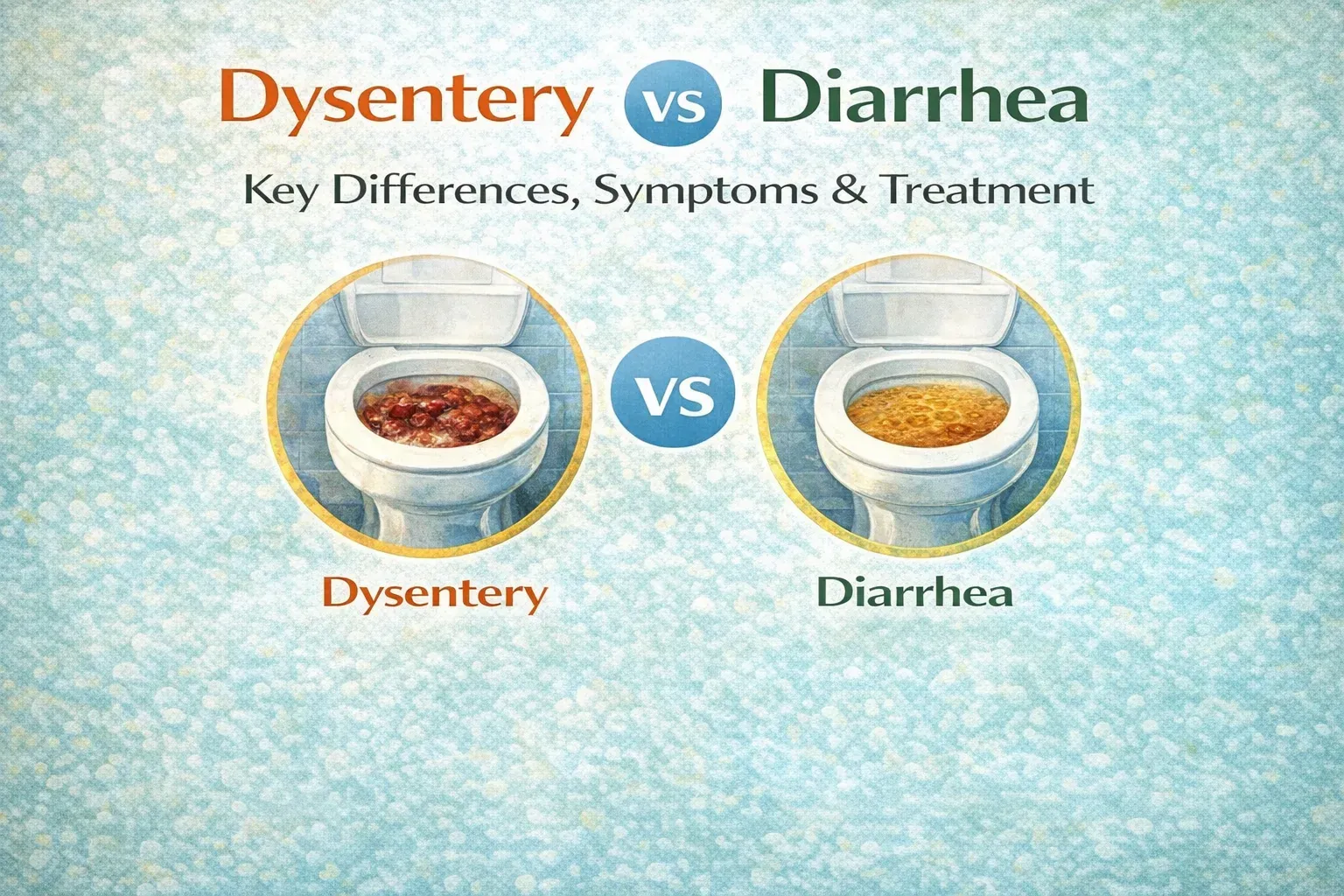
Quick Answer
Dysentery and diarrhea are not the same condition. Diarrhea means passing loose, watery stools frequently, while dysentery is a more serious intestinal infection that causes bloody or mucus-filled stools, often with severe cramping. Knowing the dysentery vs diarrhea difference can help you choose the right treatment faster and avoid complications.
What Is the Difference Between Dysentery and Diarrhea?
The core diarrhea vs dysentery difference comes down to cause and severity. Diarrhea is a symptom - loose or watery stools occurring three or more times in 24 hours - and can be triggered by viruses, food intolerance, stress, or mild bacterial infections. Dysentery is a specific infectious disease of the large intestine, almost always caused by bacteria (Shigella) or parasites (Entamoeba histolytica), and it produces inflammation, ulceration, and visible blood or mucus in stools.
Key Definitions at a Glance
- Diarrhea: Three or more loose or watery stools per day. May or may not involve infection.
- Dysentery: An intestinal infection with inflammation of the colon. Always involves pathogens. Stools contain blood and/or mucus.
- Loose motion: A colloquial term used interchangeably with diarrhea in South Asian contexts. Medically equivalent to non-bloody diarrhea.
When people ask about dysentery vs diarrhea vs loose motion, the distinction is: loose motion = mild diarrhea, diarrhea = broader symptom category, dysentery = a diagnosable disease within that category.
Types of Dysentery
There are two main types of dysentery:
- Bacillary dysentery (Shigellosis): Caused by Shigella bacteria. The most common form globally, responsible for approximately 80-85% of dysentery cases. Onset is rapid - symptoms appear within 1-4 days of exposure.
- Amoebic dysentery (Amoebiasis): Caused by the parasite Entamoeba histolytica. More common in tropical regions. Can progress to liver abscess if untreated. Incubation period ranges from 2-4 weeks.
Dysentery vs Diarrhea: Side-by-Side Comparison
The table below covers the primary clinical differences to help you identify which condition may apply.
| Feature | Diarrhea | Dysentery |
|---|---|---|
| Stool appearance | Watery, loose, unformed | Bloody, mucus-filled, small volume |
| Primary cause | Virus, bacteria, food, stress | Shigella, E. histolytica |
| Fever | Mild or absent | Common, can exceed 38.5°C |
| Abdominal cramps | Mild to moderate | Severe, persistent |
| Tenesmus (straining urge) | Rarely | Very common |
| Dehydration risk | Moderate to high | High |
| Contagious | Depends on cause | Yes, highly contagious (especially bacillary) |
| Requires antibiotics | Usually not | Often yes |
| Self-limiting | Typically 1-3 days | Typically 5-7 days minimum |
| Stool frequency | High volume, frequent | Low volume, very frequent |
According to the Mool Health clinical advisory team, the single most reliable distinguishing sign in the field is the presence of blood or mucus in stool - this points toward dysentery over common diarrhea in the majority of cases.
How Dysentery and Diarrhea Work: The Mechanism Explained
Understanding how each condition operates at the gut level explains why they require different treatments.
How Diarrhea Develops
- A trigger (virus, contaminated food, antibiotic use, stress) disrupts normal gut function.
- The small intestine either secretes excess fluid (secretory diarrhea) or fails to absorb water properly (osmotic diarrhea).
- Stool moves through the colon too quickly, exiting as loose or watery matter.
- The colon lining remains largely intact - this is why diarrhea stools are watery but not bloody.
Diarrhea works because the transport mechanism in the intestinal wall is overwhelmed or bypassed, not because tissue is damaged.
How Dysentery Develops
- Pathogens (Shigella bacteria or E. histolytica parasites) are ingested via contaminated water or food.
- The pathogen invades the mucosal lining of the large intestine (colon), not just the small intestine.
- This invasion causes ulceration and inflammation of the colon wall - visible as blood and mucus in stools.
- The immune response triggers fever, cramping, and tenesmus (the painful urge to pass stool even when the bowel is empty).
Dysentery produces bloody stools because the colon lining is physically damaged - this is the mechanism that separates dysentery from diarrhea at the tissue level.
Symptoms Compared: How to Tell Them Apart
Both dysentery and diarrhea share some overlapping symptoms, but several signs point clearly toward one condition.
Symptoms of Diarrhea
- Watery or loose stools (3+ per day)
- Mild abdominal cramps or bloating
- Nausea, occasionally vomiting
- Low-grade fever (in infectious cases)
- Dehydration signs: thirst, dry mouth, fatigue
Symptoms of Dysentery
- Blood and/or mucus in stools (the defining sign)
- Severe abdominal cramping
- Tenesmus - persistent, painful straining with little output
- High fever (38-40°C)
- Nausea and vomiting
- Significant fatigue and weakness
The key clinical rule from the Mool Health team: if stools are watery and clear or yellow, suspect diarrhea. If stools are small-volume, painful to pass, and contain visible blood or slime, suspect dysentery.
Causes of Dysentery vs Diarrhea: What Triggers Each
Common Causes of Diarrhea
- Viral infections: Rotavirus, Norovirus (account for ~70% of acute diarrhea cases globally)
- Bacterial infections: E. coli, Salmonella, Campylobacter
- Food intolerances: Lactose intolerance, fructose malabsorption
- Medications: Antibiotics disrupt gut flora in approximately 10-25% of users
- Inflammatory bowel conditions: Crohn's disease, IBS
- Traveller's exposure: Contaminated food or water in new environments
Common Causes of Dysentery
- Bacillary dysentery: Shigella dysenteriae, S. flexneri, S. sonnei - transmitted via the faecal-oral route; as few as 10-100 bacterial cells can cause infection
- Amoebic dysentery: Entamoeba histolytica - transmitted through contaminated water; affects an estimated 50 million people globally per year
- Poor sanitation and hygiene: The primary environmental risk factor in both types
- Travel to endemic regions: Southeast Asia, Sub-Saharan Africa, Central America
Who Is at Higher Risk?
Dysentery and diarrhea affect different populations with different severity levels.
Higher risk for severe diarrhea:
- Children under 5 years (diarrhea is a leading cause of death in this group globally - approximately 525,000 deaths per year)
- Elderly individuals (reduced immune response)
- People on long-term antibiotics
- Those with IBS or IBD
Higher risk for dysentery:
- Travellers to endemic regions
- People in areas with limited clean water access
- Anyone in close contact with an infected person
- Immunocompromised individuals
Not at higher risk: Generally healthy adults in developed countries with access to clean water are at relatively low risk for dysentery specifically, though they remain susceptible to common viral diarrhea.
How to Treat Dysentery vs Diarrhea: Step-by-Step Guide
Treating Diarrhea at Home
- Rehydrate immediately. Drink oral rehydration solution (ORS) - 200-400 ml after each loose stool. Water alone is insufficient as it doesn't replace electrolytes.
- Eat small, bland meals. The BRAT diet (Bananas, Rice, Applesauce, Toast) helps firm stools. Resume normal eating within 24-48 hours.
- Avoid triggers. Stop dairy, caffeine, alcohol, and fatty foods until stools normalise.
- Use OTC support only if needed. Loperamide (Imodium) may reduce stool frequency in adults but is not recommended if fever or blood in stool is present.
- Monitor for 48 hours. Most viral diarrhea resolves within 1-3 days without medical intervention.
Treating Dysentery
- See a doctor promptly. Dysentery typically requires a confirmed diagnosis before treatment.
- Confirm with stool test. A stool culture identifies Shigella; microscopy or antigen test detects E. histolytica.
- Take prescribed antibiotics. Bacillary dysentery is commonly treated with ciprofloxacin or azithromycin for 3-5 days. Amoebic dysentery requires metronidazole for 7-10 days.
- Maintain aggressive hydration. IV fluids may be needed in severe cases.
- Do not self-medicate with antidiarrheals. Drugs like loperamide may worsen dysentery by trapping bacteria in the colon.
- Isolate and practise strict hygiene. Dysentery is highly contagious. Wash hands thoroughly after every toilet visit.
Common mistake to avoid: Using antidiarrheal medications for dysentery. This is one of the most frequent errors seen by the Mool Health clinical team - it reduces stool frequency but allows the infection to progress.
When to See a Doctor: Recovery Timeline and Red Flags
Expected Recovery Timeline
| Condition | Typical Duration | Medical Care Needed |
|---|---|---|
| Mild viral diarrhea | 1-3 days | Usually not |
| Bacterial diarrhea | 3-7 days | If fever persists >48 hrs |
| Bacillary dysentery | 5-10 days with antibiotics | Yes - antibiotics required |
| Amoebic dysentery | 10-14 days with treatment | Yes - antiparasitic required |
See a Healthcare Provider If You Notice:
- Blood or mucus in stool at any point
- Fever above 38.5°C lasting more than 24 hours
- Diarrhea persisting beyond 3 days in adults, or 24 hours in children under 2
- Signs of dehydration: no urination for 8+ hours, sunken eyes, extreme thirst
- Severe or worsening abdominal pain
- Symptoms after returning from travel to a high-risk region
According to Mool Health's gastroenterology advisory team, blood in stool should always be investigated clinically - it should never be assumed to be haemorrhoids or dietary without professional assessment.
Prevention: Best Practices for Both Conditions
Mool Health recommends the following evidence-based prevention strategies:
For diarrhea:
- Wash hands with soap for at least 20 seconds before eating and after using the toilet
- Store and cook food at correct temperatures (above 75°C kills most pathogens)
- Avoid raw or undercooked shellfish, eggs, and meat
- Use a probiotic supplement during and after antibiotic courses - studies suggest this reduces antibiotic-associated diarrhea by approximately 42%
- Stay hydrated to maintain healthy gut motility
For dysentery specifically:
- Drink only boiled or bottled water in endemic regions
- Avoid raw salads, unpeeled fruit, and ice made from tap water when travelling
- Get vaccinated where available (typhoid vaccine, though not specific to dysentery, reduces overall enteric infection risk)
- Report household cases promptly to prevent transmission
Key Takeaways
- Diarrhea is a symptom; dysentery is a disease. Diarrhea can have dozens of causes. Dysentery is always caused by Shigella bacteria or Entamoeba histolytica parasite.
- Blood or mucus in stool is the defining sign of dysentery. Watery stools without blood strongly suggest diarrhea, not dysentery.
- Loose motion, diarrhea, and dysentery exist on a severity spectrum. Loose motion is mild diarrhea; dysentery is its most serious infectious form.
- Dysentery usually needs medical care. Antibiotics or antiparasitic medicines may be required after diagnosis, while most mild diarrhea improves with ORS, bland food, and rest.
- Do not use loperamide if blood, mucus, or fever is present. Antidiarrheal medicines can worsen dysentery by trapping infection in the colon.
- Hydration is essential in both conditions. ORS is more useful than plain water because it replaces salts and fluids lost through frequent stools.
- Children, elderly adults, travellers, and immunocompromised people need faster medical attention because dehydration and infection can progress quickly.
Understand Your Stool Pattern Better
If loose stools, cramps, mucus, or blood keeps recurring, identify the gut pattern early instead of relying only on home remedies.
Your gut is unique your healing should be too.

FAQs
Mild bacillary dysentery may resolve in 5-7 days without antibiotics in otherwise healthy adults, but this is not recommended. Without treatment, the infection can spread to others and, in some cases, progress to complications like reactive arthritis or haemolytic uraemic syndrome. Amoebic dysentery rarely resolves without antiparasitic medication and can cause liver abscess if left untreated.
The five most common symptoms of dysentery are: (1) blood and mucus in stools, (2) severe abdominal cramping, (3) tenesmus - the painful urge to strain without productive output, (4) high fever above 38°C, and (5) nausea or vomiting. The presence of blood in stool is the single most distinguishing symptom from ordinary diarrhea.
The treatment depends on the type. Bacillary (bacterial) dysentery is treated with antibiotics - ciprofloxacin or azithromycin for 3-5 days. Amoebic dysentery is treated with metronidazole for 7-10 days, followed by diloxanide furoate to eliminate any remaining cysts. Hydration with ORS is essential in both types. Self-medication should be avoided.
Dysentery is confirmed through a stool test. A stool culture identifies Shigella species in bacillary dysentery. Microscopy or a rapid antigen detection test identifies Entamoeba histolytica in amoebic dysentery. Blood tests may show elevated white cell count indicating bacterial infection. A clinical diagnosis based on symptoms alone (bloody stools, fever, tenesmus) is often sufficient to begin treatment while tests are pending.
In children, dysentery tends to cause more severe dehydration and higher fever than simple diarrhea. Children under 5 with dysentery require medical attention within 24 hours, as the condition can deteriorate rapidly. Diarrhea in children can often be managed at home with ORS if the child remains alert and is able to drink.
Early-stage amoebic dysentery may occasionally present without visible blood initially. However, blood in stool typically appears within the first 1-2 days of symptomatic dysentery. If stool remains entirely watery without blood or mucus, the diagnosis is more likely bacterial or viral diarrhea rather than dysentery.
No. In the dysentery vs diarrhea vs loose motion comparison, loose motion refers to soft or semi-liquid stools - essentially mild diarrhea. Dysentery is a separate condition involving intestinal infection, inflammation, and bloody stools. All dysentery involves loose stools, but not all loose motion is dysentery.
Common viral diarrhea typically lasts 1-3 days. Bacterial diarrhea may last 3-7 days. Dysentery, if untreated, can last 2-4 weeks and cause ongoing complications. With appropriate antibiotic or antiparasitic treatment, dysentery symptoms typically improve within 48-72 hours of starting medication.
Disclaimer
The content provided by Mool Health is for educational and informational purposes only and should not be considered a substitute for professional medical advice, diagnosis, or treatment.