
Acidity Treatment at Home: Safe Relief and When to Seek Care
Home care can help with occasional acidity when it focuses on safe routines, personal trigger awareness, and better night-time habits.
Quick Answer
For occasional acidity, heartburn, or sour reflux, home care can focus on smaller meals, staying upright after eating, avoiding personal triggers, and changing the evening routine when symptoms occur at night. A pharmacist can help you choose a suitable short-term medicine for occasional symptoms, but frequent or worsening reflux needs medical assessment rather than repeated self-treatment.
- Eat a comfortable portion and avoid lying down after a meal.
- Notice whether rich food, alcohol, caffeine, smoking, or late meals repeatedly trigger symptoms for you.
- For night-time symptoms, elevate the head and upper body during sleep rather than lying flat.
- Ask a pharmacist before using an antacid with other medicines, supplements, or herbal products.
- Seek urgent care for severe or unexplained chest pain, breathing difficulty, bleeding, black stool, or persistent vomiting.
“Acidity” is a common term people use for heartburn, acid reflux, upper-abdominal burning, sour burps, or indigestion. These symptoms can feel similar but do not always have the same cause. Home care is most useful for mild, occasional symptoms and works best when you recognise your own pattern.
What Is Acidity and When Can Home Care Help?
In everyday use, acidity often refers to discomfort caused when stomach contents move back into the food pipe, also called the oesophagus. This can lead to a burning feeling in the chest or throat, a sour taste, or regurgitation. Some people mainly notice upper-abdominal burning or indigestion instead.
Occasional reflux can happen after a large meal, a late meal, alcohol, smoking, or a food or drink that does not suit you. Frequent symptoms may be linked to gastro-oesophageal reflux disease, often shortened to GERD, or another digestive condition. The aim of home treatment is to reduce the things that worsen reflux and to recognise when self-care is no longer enough.
Important: New or severe chest pain should never be assumed to be acidity. Chest pain with sweating, fainting, breathlessness, pain spreading to the arm, jaw, back, or shoulder, or a feeling of pressure needs urgent medical attention.
Identify Your Acidity Pattern Before Trying Remedies
Symptoms can point to different next steps. The table below helps separate occasional post-meal discomfort from patterns that deserve medical advice.
| Pattern | What You May Notice | Helpful First Step | When to Get Advice |
|---|---|---|---|
| Occasional after a meal | Burning or sour taste after a large, rich, or late meal | Stay upright, reduce the next meal size, and note the trigger | If it keeps recurring or medicine is needed often |
| Night-time reflux | Burning or regurgitation after lying down, disturbed sleep, morning throat discomfort | Finish eating early enough to remain upright, then elevate the head and upper body during sleep | If it occurs regularly or interrupts sleep repeatedly |
| Gas and bloating with discomfort | Fullness, belching, pressure, or altered bowel habits | Slow down meals, review carbonated drinks and portion size, and keep a symptom diary | If symptoms are persistent, painful, or accompanied by bowel changes |
| Frequent symptoms | Symptoms on two or more days each week, or most days | Book a clinician or gastroenterology review instead of increasing self-treatment | Promptly |
| Warning signs | Bleeding, black stool, swallowing trouble, weight loss, persistent vomiting, or severe pain | Do not rely on home remedies | Urgently |
A closer look at the common causes of acidity can help you understand why a symptom returns, especially when meal timing, body position, medicines, or stress play a role.
Safe At-Home Steps for Occasional Acidity
These measures are designed for mild, occasional symptoms. They are not a substitute for a diagnosis when symptoms are frequent, severe, or changing.
1. Stay upright after eating
Sitting or standing upright after a meal gives stomach contents time to move onward and can reduce reflux that is triggered by lying down. Avoid deep forward bending, strenuous exercise, and positions that compress the abdomen soon after eating.
2. Adjust meal size and timing
Large meals can increase pressure in the stomach, while a late meal can make symptoms worse once you lie down. Try a smaller evening meal and leave enough time to remain upright before bed. Eat at a steady pace, chew well, and avoid overeating when you are very hungry.
3. Use a short trigger diary
There is no single acidity diet that suits everyone. For one week, note the time of symptoms, meal size, foods and drinks, stress, sleep, and medicines. This can reveal whether symptoms consistently follow coffee, alcohol, fried food, spicy food, carbonated drinks, chocolate, mint, or another personal trigger.
4. Support a reflux-friendly sleep routine
When symptoms occur at night, elevate the head and upper body during sleep with a foam wedge or by raising the head of the bed. Stacking pillows under only the neck can be uncomfortable and may not keep the upper body inclined. Avoid eating or drinking large volumes immediately before bed.
5. Reduce other reflux pressures
Smoking can worsen reflux symptoms. Tight waistbands may also increase abdominal pressure after meals. If weight is a contributing factor, gradual weight management with a clinician can reduce symptoms for some people.
Persistent upper-abdominal discomfort, bloating, nausea, or altered bowel habits can have causes beyond reflux. Our guide to digestive problems explains when a broader digestive assessment may be useful.
Food and Drinks for Acidity Treatment at Home
Food can be part of symptom management, but no kitchen remedy reliably treats every cause of acidity. The most useful approach is to choose simple foods that you tolerate well, avoid very large portions, and remove only the items that repeatedly worsen your symptoms.
| At-Home Choice | How It May Help | Use It Thoughtfully |
|---|---|---|
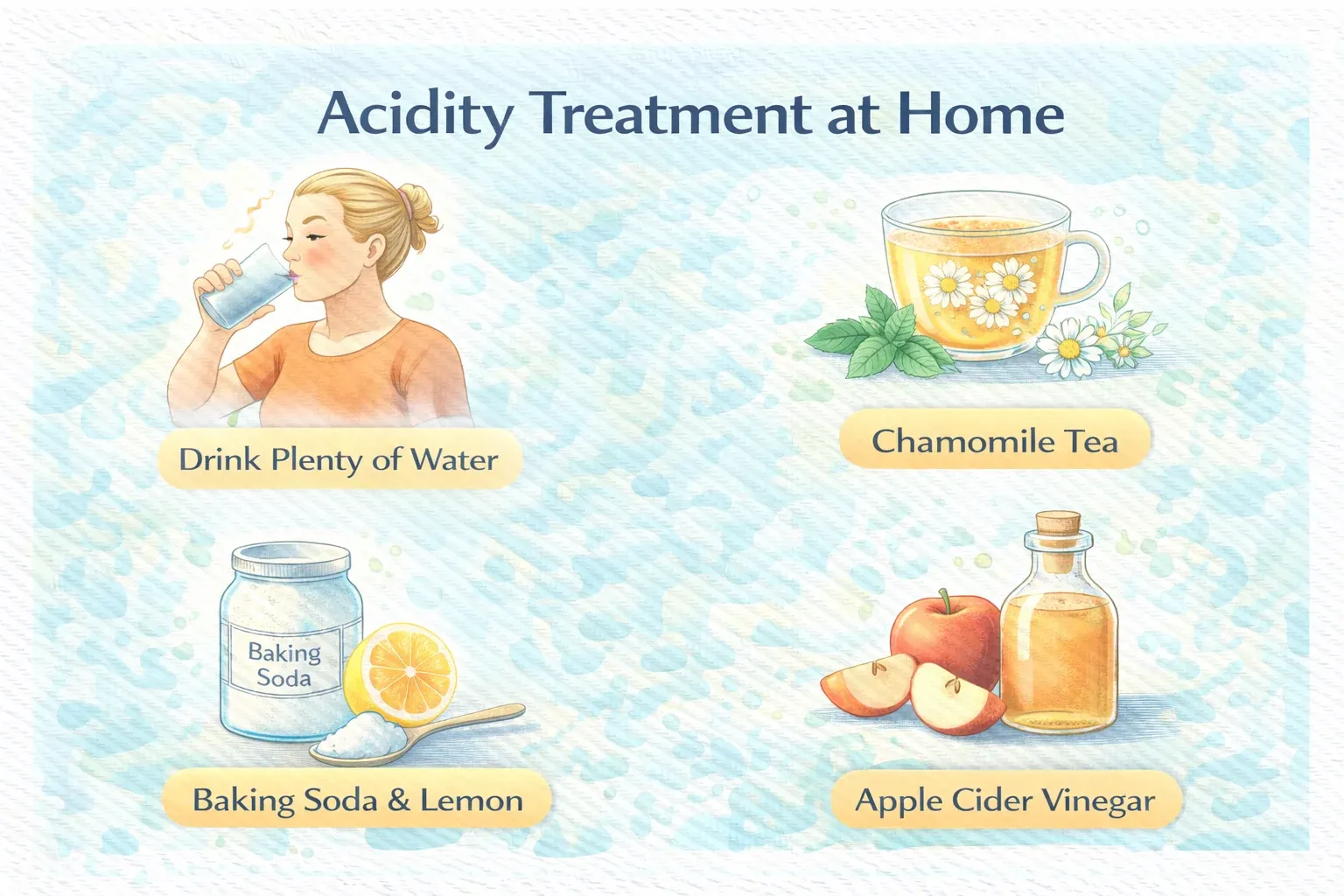
| Plain water, sipped slowly | Can feel soothing for some people with a dry or irritated throat | Avoid forcing large volumes at once, especially with meals |
| Smaller, familiar meals | May reduce stomach fullness and pressure | Choose foods you tolerate well rather than following a restrictive diet |
| Low-fat or lighter choices, when rich food is a trigger | Some people have fewer reflux symptoms when they reduce high-fat meals | Do not remove whole food groups unless they clearly worsen symptoms or a clinician advises it |
| Milk or coconut water | May feel temporarily soothing to some people | Milk can worsen reflux for some people, especially if it is high fat or if dairy triggers symptoms |
| Fennel, cumin, ginger, or other household herbs | May be pleasant for some forms of indigestion | Evidence and tolerance vary. Stop if symptoms worsen and check for medicine or pregnancy-related precautions |
Do not force a home remedy because it is popular. In particular, avoid any drink, supplement, or spice blend that makes burning, regurgitation, loose stools, or bloating worse. For more general food-based comfort measures, see our article on indigestion home remedies.
Can Antacids Be Part of Home Treatment?
Over-the-counter antacids may provide short-term relief from occasional heartburn or acid indigestion. They work by neutralising stomach acid that is already present. Other non-prescription products may reduce acid production, but choosing between them depends on symptom frequency, other medicines, pregnancy status, and medical history.
- Follow the product label and do not exceed the stated dose.
- Ask a pharmacist about spacing an antacid from prescription medicines, iron, thyroid medicine, antibiotics, or supplements, because absorption can be affected.
- Do not start a long course of a proton pump inhibitor, H2 blocker, or other acid medicine without asking a clinician or pharmacist whether it is appropriate for you.
- Repeated reliance on short-term medicine is a reason to look for the cause of symptoms, not a reason to keep increasing the dose.
Medicine safety: Antacids, acid reducers, and herbal remedies are not interchangeable. Ask a healthcare professional before combining products, using them during pregnancy, or using them for a child.
Acidity Treatment at Home During Pregnancy
Heartburn and reflux are common during pregnancy, but medicine and supplement choices need extra care. Smaller meals, staying upright after eating, and avoiding foods that personally trigger symptoms are often sensible starting points. Speak to an obstetrician, midwife, pharmacist, or doctor before taking any medicine or herbal product, including products described as natural.
Get prompt medical advice if reflux is severe, persistent, associated with vomiting, or makes it difficult to eat and drink normally. Pregnancy symptoms should not be dismissed when they are new, intense, or different from your usual pattern.
A Simple 7-Day Home Plan for Occasional Acidity
This plan is designed to help you recognise triggers and build safer habits. It is not a promise of cure and should be stopped in favour of medical advice when symptoms are frequent or concerning.
- Day 1: Record when symptoms occur, what you ate or drank, and whether you had already lain down.
- Day 2: Make portions more comfortable and slow down your eating pace.
- Day 3: Stay upright after meals and avoid deep bends or abdominal compression straight after food.
- Day 4: Remove one clear trigger, such as a late meal, alcohol, a carbonated drink, or a high-fat snack, and observe the change.
- Day 5: Review any medicines or supplements with a pharmacist if you need an antacid or acid reducer.
- Day 6: Adjust the evening routine by finishing dinner earlier and elevating the head and upper body if night symptoms are a problem.
- Day 7: Review your diary. If symptoms remain frequent, worsen, or interrupt sleep, arrange a clinician appointment.
When Home Treatment Is Not Enough
Book a medical review when symptoms happen regularly, return as soon as treatment stops, or are not improving with simple lifestyle measures. A clinician can consider reflux disease, indigestion, medicine effects, a stomach ulcer, H. pylori infection, a hiatal hernia, or another condition that needs a different plan.
| Situation | What to Do |
|---|---|
| Heartburn or reflux occurs on two or more days a week | Arrange a routine medical review rather than self-treating indefinitely. |
| Symptoms do not improve, are getting worse, or repeatedly disturb sleep | Speak to a doctor or qualified healthcare professional. |
| Difficulty swallowing, pain on swallowing, persistent vomiting, unexplained weight loss, severe abdominal pain, blood in vomit, blood in stool, or black stool | Seek prompt medical advice. |
| Severe or unexplained chest pain, breathing difficulty, sweating, fainting, or pain spreading to the arm, jaw, shoulder, or back | Seek emergency care immediately. Do not treat this as acidity at home. |
Understand Your Gut Symptoms Better
Get a clearer view of your digestive pattern and explore practical next steps for recurring acidity, bloating, or discomfort.
Medical Disclaimer
This article is for general health education only and does not replace medical advice, diagnosis, or treatment. Seek urgent medical care for severe or unexplained chest pain, breathing difficulty, fainting, bleeding, black stool, persistent vomiting, difficulty swallowing, severe abdominal pain, or unexplained weight loss.
Key Takeaways
Home care can help with occasional acidity when it focuses on safe routines, personal trigger awareness, and better night-time habits.
Your gut is unique your healing should be too.

FAQs
Mild, occasional heartburn or reflux may improve with smaller meals, staying upright after food, avoiding personal triggers, and a pharmacist-guided short-term medicine if appropriate. Home care is not enough for frequent, worsening, or alarm symptoms.
Milk may feel temporarily soothing for some people, but it can worsen symptoms in others, especially when it is high fat or dairy is a personal trigger. Use it only if you tolerate it and do not rely on it for recurring symptoms.
Regular antacid use without advice is not a long-term plan. Antacids can interact with other medicines, and frequent heartburn may need assessment for reflux disease or another cause. Ask a pharmacist or doctor about the safest next step.
For night-time reflux, elevating the head and upper body during sleep can help some people. It is also useful to avoid eating close to bedtime and to discuss persistent night symptoms with a clinician.
See a doctor for recurring symptoms, symptoms that do not improve with lifestyle changes or pharmacy treatment, or symptoms that occur two or more days each week. Seek urgent care for chest-pain warning signs, trouble swallowing, bleeding, black stool, severe pain, persistent vomiting, or unexplained weight loss.
Disclaimer
The content provided by Mool Health is for educational and informational purposes only and should not be considered a substitute for professional medical advice, diagnosis, or treatment.