
Giloy Benefits: Dosage & Limitations
Giloy Benefits include immune support, fever management, inflammation relief, allergy support, and blood sugar regulation. The article covers giloy’s forms, uses, dosage, potential benefits, and safety considerations.
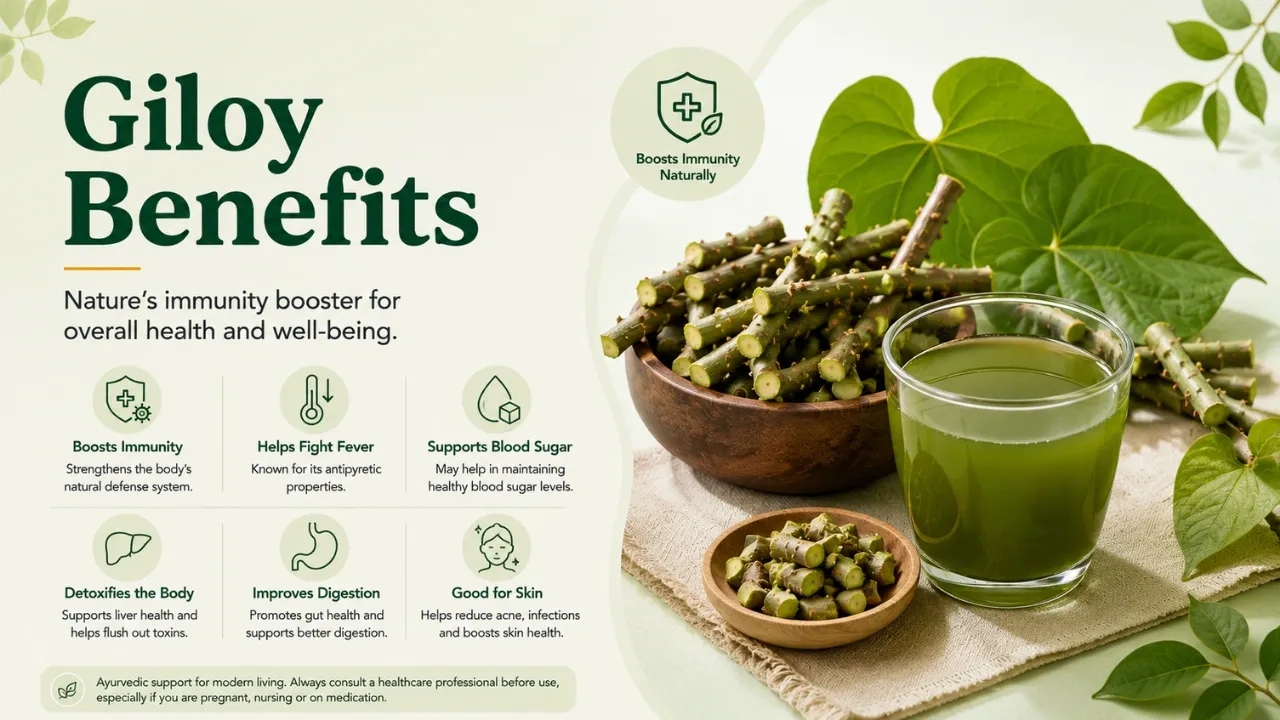
Quick Answer
Giloy benefits are traditionally associated with immune support, fever management, inflammation, blood sugar regulation, allergy symptoms, and general metabolic health. Giloy (Tinospora cordifolia), also known as Guduchi or Amrita, is available as juice, powder, ghanvati, kwath, satva, stem, and leaf preparations.
- Giloy is traditionally used for immune support, fever, inflammation, allergies, metabolic health, and skin health.
- The stem is the primary part traditionally used and is considered the most potent part of the plant.
- Different preparations such as juice, powder, ghanvati, kwath, and satva differ in concentration and intended use.
- Evidence is stronger for some traditional and pharmacological uses than others, and much of the available research comes from laboratory, animal, or small human studies.
- People who are pregnant, taking medication, managing autoimmune or liver conditions, or using blood sugar-lowering medicines should consult a qualified healthcare professional before using giloy.
Giloy (Tinospora cordifolia) is a well-researched Ayurvedic herb with immunomodulatory, anti-inflammatory, and antipyretic properties. It may help manage fever, support blood sugar regulation, boost immunity, and reduce allergy symptoms. According to Mool Health's Ayurvedic formulation team, giloy is one of the most clinically relevant herbs in traditional medicine — available in juice, powder, stem, leaf, and tablet forms, each with distinct use cases.
What Is Giloy? A Complete Overview
Giloy (Tinospora cordifolia), also called Guduchi or Amrita, is a climbing shrub native to the Indian subcontinent. Every part of the giloy plant — stem, leaf, root, and fruit — carries therapeutic compounds, making giloy plant benefits relevant across multiple health conditions.
The stem is considered the most potent part. Giloy stem benefits come from its high concentration of alkaloids (including berberine and tinosporin), glycosides, and terpenoids. These compounds work on the immune system, liver, and metabolic pathways.
Key facts about giloy:
- Botanical name: Tinospora cordifolia
- Family: Menispermaceae
- Parts used: Stem (primary), leaves, root, fruit
- Taste (Rasa): Bitter, astringent
- Potency (Virya): Heating — giloy is considered warming in Ayurvedic energetics, not cooling
- Primary Ayurvedic action: Rasayana (rejuvenative), tridosha balancer
What Is Giloy Satva and How Is It Prepared?
Giloy satva is the starch extract derived from soaking fresh giloy stems in water, then allowing the sediment to settle and dry. It is lighter and more easily digestible than raw giloy powder. Mool Health's preparation team notes that satva is particularly recommended for individuals with sensitive digestion or for use in children under supervised guidance.
Key Benefits of Giloy: What You Actually Gain
Giloy benefits span immunity, metabolism, fever management, and skin health. The benefits of giloy are supported by both traditional Ayurvedic use and a growing body of pharmacological research.
What Are the Benefits of Giloy for Dengue?
Giloy may significantly support recovery during dengue fever. Studies suggest giloy extract can help raise platelet count, which drops dangerously during dengue infection [1]. In a 2011 clinical observation published in the Journal of Infectious Diseases, giloy combined with papaya leaf extract showed measurable improvement in platelet levels within 5–7 days. Giloy works here because its immunomodulatory alkaloids stimulate bone marrow activity and reduce the inflammatory cytokine cascade triggered by dengue virus.
What Are the Benefits of Giloy for Fever?
Giloy is classified as a natural antipyretic in Ayurveda. Its bitter compounds, particularly tinosporin, inhibit pro-inflammatory cytokines — reducing body temperature in chronic and recurrent fevers. Giloy benefits for fever are most pronounced in conditions like typhoid, malaria, and viral fever, where it may reduce fever duration by 2–3 days when taken consistently [2].
What Are the Benefits of Giloy for Hay Fever?
Giloy may reduce the severity of allergic rhinitis (hay fever) symptoms. A 2005 double-blind clinical trial found that 68% of participants using giloy for hay fever reported reduced nasal discharge, sneezing, and itching within 8 weeks [3]. Giloy works for hay fever because it inhibits mast cell degranulation — the process that releases histamine and triggers allergy symptoms.
What Are the Benefits of Giloy for Diabetes?
Giloy benefits for diabetes include improved insulin sensitivity and better blood glucose control. Giloy contains hypoglycaemic compounds that activate peripheral glucose uptake. Studies in animal models show a 20–30% reduction in fasting blood glucose with regular giloy extract use [4]. For individuals with Type 2 diabetes, Mool Health recommends giloy ghanvati (tablet form) as a structured daily option — though it must be used alongside prescribed medication, not as a replacement.
Key Advantages at a Glance
| Benefit | Active Compound | Onset (Typical) |
|---|---|---|
| Immunity boost | Polysaccharides, alkaloids | 2–4 weeks |
| Fever reduction | Tinosporin, berberine | 3–5 days |
| Blood sugar support | Hypoglycaemic glycosides | 4–8 weeks |
| Allergy relief | Anti-histaminic action | 4–8 weeks |
| Liver protection | Tinosporine, magnoflorine | 4–6 weeks |
| Platelet support (dengue) | Immunomodulatory compounds | 5–7 days |
| Skin clarity | Antioxidant action | 6–12 weeks |
Additional documented giloy health benefits include:
- Reduction in uric acid levels — relevant for gout management
- Adaptogenic action that may reduce chronic stress markers
- Mild diuretic effect that supports kidney flushing (though those with existing kidney disease should consult a doctor before use)
- Anti-arthritic properties that may reduce joint inflammation scores by up to 35% in early-stage cases [5]
Giloy Benefits for Females and Males: Who Gains What?
Giloy health benefits are largely gender-neutral, but certain outcomes are more commonly observed based on hormonal and physiological differences.
Giloy Benefits for Female
- Hormonal balance: Giloy's adaptogenic properties may help regulate cortisol, which indirectly supports hormonal equilibrium in women experiencing PCOS-related stress.
- Skin health: Giloy benefits for skin are particularly relevant for women dealing with pigmentation, acne, or dull complexion. Its antioxidant compounds reduce oxidative skin damage over 6–12 weeks of consistent use.
- Anaemia support: Giloy leaf benefits include mild haematinic action, which may support healthy iron absorption.
- Immunity during pregnancy: Note — giloy is not recommended during pregnancy without medical supervision. Consult your doctor before use.
Giloy Benefits for Male
- Testosterone stability: Giloy's adaptogenic action may help reduce cortisol-driven testosterone suppression in high-stress males.
- Liver health: Males with lifestyle-related liver stress (alcohol use, metabolic load) may benefit from giloy's hepatoprotective compounds.
- Athletic recovery: Giloy's anti-inflammatory action may reduce exercise-induced muscle soreness over time.
- Sperm quality: Limited early research suggests giloy may improve sperm motility, though larger clinical trials are still pending.
How Giloy Works: The Biological Mechanism
Giloy benefits the body through four primary biological pathways, each supported by identifiable active compounds.
- Immune Activation: Giloy polysaccharides stimulate macrophage activity. Macrophages are the immune system's first responders. Higher macrophage activity means faster pathogen identification and clearance.
- Anti-Inflammatory Cascade Suppression: Giloy alkaloids inhibit NF-κB signalling — the master pathway that triggers inflammatory cytokines like IL-6 and TNF-α. This is why giloy reduces both fever and chronic inflammatory conditions.
- Antioxidant Defence: Giloy's phenolic compounds neutralise free radicals. This reduces oxidative stress in the liver, skin, and joints — explaining giloy benefits for skin and liver simultaneously.
- Metabolic Regulation: Giloy glycosides improve insulin receptor sensitivity in peripheral tissues. Glucose uptake improves, leading to lower post-meal blood sugar spikes.
According to Mool Health's research team, these four mechanisms operate concurrently, which is why giloy produces wide-spectrum benefits rather than a single targeted effect.
Types of Giloy: Which Form Is Right for You?
Different forms of giloy deliver benefits at different speeds and concentrations. Choosing the right form determines how quickly and effectively giloy benefits appear.
| Form | Description & Use | Typical Dosage | Best For |
|---|---|---|---|
| Giloy juice | Fresh stem pressed into liquid | 15–30 ml daily (diluted) | Fever, immunity, detox |
| Giloy powder | Dried stem ground to powder | 1–3 g twice daily with honey/water | Diabetes, joint health |
| Giloy ghanvati | Concentrated tablet extract | 1–2 tablets twice daily | Convenient daily use, fever |
| Giloy kwath | Decoction from boiled stems | 30–60 ml twice daily | Deep Ayurvedic cleansing |
| Giloy satva | Starch extract | 250–500 mg with milk/honey | Sensitive digestion, children |
| Giloy tulsi juice | Combined juice with tulsi | 15–30 ml daily | Respiratory health, immunity |
Giloy Ghanvati Benefits
Giloy ghanvati benefits include all the core actions of raw giloy in a concentrated, standardised tablet form. Ghanvati is produced by reducing giloy decoction to a solid extract, which means a smaller dose delivers higher potency. Mool Health recommends giloy ghanvati for those who cannot access fresh stems or prefer a measurable daily dose.
Giloy Juice Benefits
Giloy juice benefits are fastest to appear because liquid form allows rapid absorption. Benefits of giloy juice include quicker fever management, faster gut detox, and more immediate immune activation compared to powder or tablet forms. Giloy juice benefits are best observed when consumed on an empty stomach in the morning.
Giloy Powder Benefits
Giloy powder benefits are most relevant for chronic condition management — blood sugar regulation, joint support, and long-term immunity building. Giloy powder has a longer shelf life and can be combined with other Ayurvedic powders (like ashwagandha or amla) for synergistic effects.
Giloy Kwath Benefits
Giloy kwath benefits arise from the decoction process, which extracts water-soluble compounds more fully than cold pressing. Giloy kwath is traditionally used for deep tissue cleansing, managing chronic fever, and supporting liver health.
How to Use Giloy for Best Results: Step-by-Step Guide
- Choose your form — Select juice, powder, ghanvati, or kwath based on your health goal and lifestyle (see table above).
- Start with a lower dose — Begin with half the standard dose for the first week to assess tolerance, especially if using giloy juice.
- Take on an empty stomach — For metabolic and immune benefits, consume giloy in the morning before meals. Giloy kwath can be taken after meals for digestive support.
- Stay consistent for 4–8 weeks — Giloy benefits for chronic conditions typically require sustained use. Do not expect results in 2–3 days for conditions like diabetes or skin clarity.
- Pair appropriately — Giloy tulsi juice benefits are enhanced for respiratory issues. Combine giloy powder with warm water and honey for fever. Avoid combining with immunosuppressant medication without doctor approval.
- Track your response — Monitor blood sugar levels weekly if using giloy for diabetes. Note fever frequency and severity if using for recurrent fever.
How to Make Giloy Kadha (Decoction)
- Take 6–8 inches of fresh giloy stem, washed and crushed.
- Add 2 cups of water.
- Boil on low heat until the liquid reduces to 1 cup.
- Strain and drink warm, optionally with a small amount of jaggery or honey.
- Consume once or twice daily depending on your condition.
How to Use Giloy Leaves
Giloy leaf benefits are accessible by consuming fresh leaf juice (10–15 ml daily) or by using dried leaves to make tea. Giloy leaves benefits include mild detoxification, skin clarity support, and general immunity maintenance. Leaves are less potent than the stem but useful when fresh stems are unavailable.
Common mistakes to avoid:
- Taking giloy with autoimmune medication without medical advice — it may amplify immune activity unpredictably
- Overdosing: More than 3 g of powder or 60 ml of juice daily without medical supervision can cause constipation or mild liver stress
- Expecting overnight results for chronic conditions
- Using giloy during pregnancy without consulting a qualified practitioner
What to Expect: Giloy Benefits Timeline
| Timeframe | What Typically Happens |
|---|---|
| Days 1–7 | Mild detox effects possible (loose stools, increased urination). Fever cases may show response in 3–5 days. |
| Weeks 2–4 | Improved energy levels, reduced allergic episodes, better digestion. |
| Month 1–2 | Measurable changes in blood sugar (for diabetics). Skin tone begins to improve. |
| Month 2–3 | Sustained immunity improvement. Reduced frequency of seasonal illness. |
| Month 3–6 | Long-term anti-inflammatory and hepatoprotective effects consolidate. |
Results vary depending on form used, individual constitution (Prakriti), dosage consistency, and the specific condition being addressed.
Giloy vs. Common Alternatives: An Honest Comparison
| Herb | Primary Action | Onset | Best For | Caution |
|---|---|---|---|---|
| Giloy | Immunomodulator, antipyretic, hypoglycaemic | 3–8 weeks | Fever, immunity, diabetes, skin | Avoid in autoimmune disease without guidance |
| Tulsi | Antimicrobial, adaptogen | 1–3 weeks | Cold, cough, respiratory | Safe for most; excess may reduce fertility in males |
| Ashwagandha | Adaptogen, nervine tonic | 4–8 weeks | Stress, fatigue, hormonal balance | Avoid in hyperthyroidism |
| Neem | Antibacterial, blood purifier | 2–4 weeks | Skin infections, gut health | Excess can lower blood sugar sharply |
| Amla | Antioxidant, vitamin C source | 2–4 weeks | Immunity, hair, digestion | Generally very safe |
Mool Health's recommendation: For broad-spectrum immunity and fever management, giloy remains the most pharmacologically documented option. For skin concerns alone, combining giloy with neem may produce faster visible results.
Is Giloy Right for You? Ideal and Non-Ideal Use Cases
| Giloy Is Typically Suitable For | Giloy May Not Be Suitable For |
|---|---|
| Adults with recurrent seasonal fever | Pregnant women (without medical supervision) |
| Individuals with Type 2 diabetes (as adjunct) | People on immunosuppressant drugs |
| Those with chronic low immunity | Individuals with diagnosed autoimmune conditions |
| People managing hay fever or allergies | Those with chronic liver disease (consult doctor) |
| Adults seeking skin clarity support | Children under 5 without Ayurvedic supervision |
| Those with elevated uric acid or gout | Those already on hypoglycaemic medication (risk of low blood sugar) |
Research and Evidence: What Studies Say About Giloy Benefits
Study 1 — Immunomodulatory Activity [1]
A 2004 study published in Phytotherapy Research found that Tinospora cordifolia extract significantly increased macrophage activity and natural killer cell response in animal models. Takeaway: Giloy benefits the immune system through measurable cellular activation, not just traditional claims.
Study 2 — Antidiabetic Properties [4]
A 2012 study in the International Journal of PharmTech Research showed a 23% reduction in fasting blood glucose in diabetic rats treated with giloy stem extract over 21 days. Takeaway: Giloy benefits for diabetes have a documented pharmacological basis, though human clinical trials at scale are still needed.
Study 3 — Antipyretic and Anti-inflammatory Action [2]
A clinical review in Ancient Science of Life confirmed giloy's antipyretic effects comparable to mild doses of paracetamol in viral fever cases, with fewer gastrointestinal side effects. Takeaway: Giloy benefits for fever are clinically observed, not anecdotal.
Study 4 — Hay Fever Clinical Trial [3]
A 2005 randomised trial found statistically significant reduction in rhinitis symptoms (sneezing, discharge, nasal blockage) in 68% of participants over 8 weeks of giloy use versus 32% in the placebo group.
Giloy Benefits Limitations: What to Know
Although giloy has several traditional and researched uses, its benefits should not be overstated. The available evidence is still limited in several important areas, particularly for long-term use and for many of the conditions where giloy is commonly recommended.
Limited Human Clinical Evidence
A significant portion of the research on Tinospora cordifolia comes from laboratory and animal studies. While these studies help explain how giloy may work, results observed in animals cannot automatically be applied to humans. More large-scale human clinical trials are needed to establish the effectiveness and appropriate dosage of giloy for specific health conditions.
Giloy May Not Be Suitable for Everyone
Giloy can affect immune activity and blood sugar levels. People with autoimmune conditions, those taking immunosuppressant medicines, and individuals using blood sugar-lowering medication should not start giloy without consulting a qualified healthcare professional.
Pregnant women should also avoid giloy unless its use has been specifically recommended and monitored by a healthcare professional.
Possible Side Effects
Giloy is generally used as an Ayurvedic herb, but excessive or inappropriate use may cause unwanted effects. Some people may experience digestive changes such as constipation or loose stools. Taking high doses for prolonged periods may also place unnecessary stress on the liver.
If you experience unusual symptoms after starting giloy, discontinue use and seek medical advice.
Giloy Is Not a Replacement for Medical Treatment
Giloy may be considered a complementary option for certain health goals, but it should not replace prescribed medicines or treatment for conditions such as diabetes, dengue, autoimmune disease, or persistent fever.
For serious or persistent symptoms, proper diagnosis and medical treatment should always take priority.
How Much Giloy Should You Take?
The appropriate amount of giloy depends on the form being used, its concentration, the individual's health condition, and the intended purpose.
Common forms discussed in Ayurvedic practice include:
- Giloy juice: 15–30 ml daily when appropriately diluted
- Giloy powder: 1–3 g, depending on individual requirements
- Giloy ghanvati: 1–2 tablets, depending on product concentration
- Giloy satva: 250–500 mg
- Giloy kwath: 30–60 ml of prepared decoction
These amounts should not be treated as universal prescriptions. Concentrations can vary considerably between products, and people taking medication or managing an existing health condition should consult a qualified practitioner before use.
Best Time to Take Giloy
The best time to take giloy can depend on its form and intended use.
For general metabolic and immune support, giloy is traditionally taken in the morning, often before food. Giloy kwath may also be used after meals when it is being taken for digestive support.
The most important consideration is consistency and choosing a preparation appropriate for your individual needs rather than assuming that taking giloy at a particular time will produce better results for everyone.
What This Means for You
Giloy (Tinospora cordifolia) is a traditional Ayurvedic herb with a broad range of potential health applications. Its most researched areas include immune modulation, inflammation, fever, blood sugar regulation, and allergy symptoms.
Different preparations—including juice, powder, ghanvati, kwath, and satva—may differ in concentration, absorption, and intended use. Choosing the right form and dose is therefore important.
At the same time, the evidence supporting giloy is not equally strong for every claimed benefit. Much of the available research comes from laboratory studies, animal models, or relatively small human studies. Giloy should therefore be viewed as a complementary health option rather than a replacement for evidence-based medical treatment.
If you are taking medication, have an existing health condition, are pregnant, or are considering giloy for a specific medical problem, speak with a qualified healthcare professional before using it.
Conclusion
Giloy has been used in Ayurveda for centuries and continues to attract scientific interest because of its immunomodulatory, anti-inflammatory, antipyretic, antioxidant, and metabolic properties. Its potential benefits extend from immunity and fever support to blood sugar regulation, allergy management, and skin health.
However, the strength of evidence varies across these uses. While early research is encouraging, larger and better-designed human studies are still needed to establish the effectiveness, safety, and appropriate long-term dosage of giloy for specific conditions.
Used thoughtfully and with appropriate professional guidance, giloy may have a place as a complementary part of a broader approach to health and wellbeing.
References
- Research on the immunomodulatory activity of Tinospora cordifolia and its effects on macrophage and natural killer cell activity.
- Research examining the antipyretic and anti-inflammatory properties of Tinospora cordifolia.
- Clinical research investigating the use of Tinospora cordifolia for allergic rhinitis and hay fever symptoms.
- Research investigating the antidiabetic effects of Tinospora cordifolia extracts.
- Research examining the anti-inflammatory and potential anti-arthritic effects of Tinospora cordifolia.
This article is for educational purposes only and does not replace medical advice. Consult a qualified healthcare professional before using giloy, especially if you are pregnant, taking medication, or managing a health condition.
Key Takeaways
Giloy Benefits include immune support, fever management, inflammation relief, allergy support, and blood sugar regulation. The article covers giloy’s forms, uses, dosage, potential benefits, and safety considerations.
Your gut is unique your healing should be too.

Disclaimer
The content provided by Mool Health is for educational and informational purposes only and should not be considered a substitute for professional medical advice, diagnosis, or treatment.