
Bloating Meaning in Malayalam: What It Is and How to Manage It
A Malayalam-focused guide explaining bloating meaning, വയർ വീർക്കൽ causes, types, symptoms, relief steps and when to seek medical help.
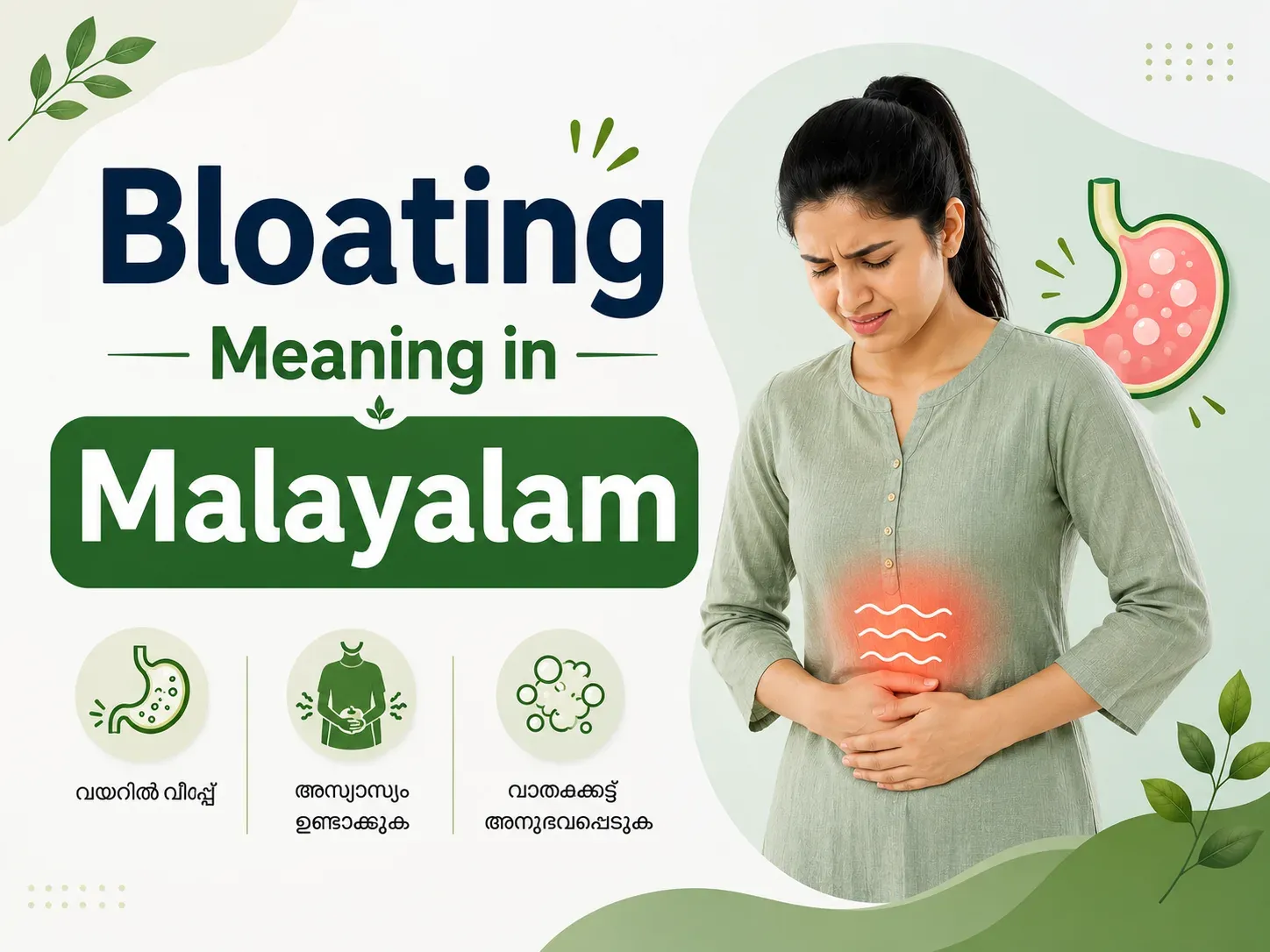
Quick Answer
Bloating, known as വയർ വീർക്കൽ (vayar veerkkal) in Malayalam, refers to a condition where the abdomen feels full, tight, or swollen - typically due to excess gas or fluid in the digestive tract. Stomach bloating meaning in Malayalam is commonly expressed as വയറ് ഉബ്ബൽ (vayaru ubbal), and it affects an estimated 10-30% of adults globally, making it one of the most frequently reported digestive complaints.
- Malayalam meaning: വയർ വീർക്കൽ, വയറ്റിലെ വീക്കം, or വയറ് ഉബ്ബൽ
- Common feeling: Fullness, tightness, swelling, pressure, or visible belly distension
- Common causes: Gas-producing foods, food intolerance, IBS, swallowed air, stress, and slow gut movement
- Relief steps: Food diary, slower eating, smaller meals, water between meals, and walking after meals
- Doctor needed: Persistent bloating beyond 4 weeks, severe pain, weight loss, vomiting, or blood in stool
Bloating, known as വയർ വീർക്കൽ (vayar veerkkal) in Malayalam, refers to a condition where the abdomen feels full, tight, or swollen - typically due to excess gas or fluid in the digestive tract. Stomach bloating meaning in Malayalam is commonly expressed as വയറ് ഉബ്ബൽ (vayaru ubbal), and it affects an estimated 10-30% of adults globally, making it one of the most frequently reported digestive complaints.
What Is Bloating Meaning in Malayalam? A Complete Guide
Bloating meaning in Malayalam - വയർ വീർക്കൽ - describes the sensation of abdominal fullness, pressure, or visible swelling caused by gas, fluid, or digestive slowdown in the stomach and intestines.
Abdominal bloating meaning in Malayalam is also written as വയറ്റിലെ വീക്കം (vayattile veekam), which more specifically refers to visible abdominal distension. Bloating stomach meaning in Malayalam covers both the physical sensation and visible puffiness around the belly.
Key terms to know:
- വയർ വീർക്കൽ (vayar veerkkal) - bloating or stomach swelling
- വയറ്റിലെ വീക്കം (vayattile veekam) - abdominal bloating / distension
- വാതക്കെട്ട് (vaatakkettu) - gas trapped in the digestive system
- ദഹന പ്രശ്നം (dahana prashnam) - digestive problem
- അജീർണ്ണം (ajeernnam) - indigestion
Bloating may be temporary and harmless, or it may signal an underlying digestive condition that requires attention.
How Does Stomach Bloating Work? The Complete Breakdown
Stomach bloating meaning in Malayalam - വയറ് ഉബ്ബൽ - occurs when the digestive system accumulates excess gas, fluid, or undigested food, creating internal pressure that stretches the abdominal wall.
The mechanism works in four steps:
- Food enters the stomach - Certain foods, especially those high in fermentable carbohydrates (FODMAPs), are broken down slowly.
- Bacteria ferment undigested matter - Gut bacteria in the large intestine produce hydrogen, methane, and carbon dioxide gases as byproducts.
- Gas accumulates faster than it can be expelled - When gas production exceeds the body's ability to absorb or release it, pressure builds in the intestines.
- The abdominal wall stretches - This creates the swollen, tight feeling described as bloating or वायर वीर्क्कल् in Malayalam.
Abdominal bloating meaning in Malayalam - വയറ്റിലെ വീക്കം - can also result from water retention, slow gut motility, or visceral hypersensitivity, where the gut nerve endings react more strongly to normal gas levels.
Common misconceptions:
- Bloating is not always caused by overeating. Even small meals can trigger it in people with irritable bowel syndrome (IBS).
- Visible distension and the sensation of bloating do not always occur together.
What Are the Common Causes of Bloating (വയർ വീർക്കൽ)?
Bloating meaning in Malayalam can be triggered by dietary, lifestyle, or medical factors. According to Mool Health's digestive wellness team, identifying the root cause is essential before choosing a management strategy.
Dietary causes:
- High-FODMAP foods: onions, garlic, beans, lentils, wheat
- Carbonated drinks - introduce CO₂ directly into the gut
- Dairy products - affect individuals with lactose intolerance, estimated at 65% of adults worldwide
- Swallowing air while eating quickly (aerophagia)
Lifestyle causes:
- Eating large meals in one sitting
- Lying down immediately after eating
- Chronic stress - slows gut motility by up to 40% in some studies
- Sedentary habits - physical inactivity reduces digestive transit time
Medical causes:
- Irritable bowel syndrome (IBS) - affects 10-15% of the global population
- Small intestinal bacterial overgrowth (SIBO)
- Celiac disease or non-celiac gluten sensitivity
- Gastroparesis (delayed stomach emptying)
- Hormonal fluctuations, particularly around menstruation
Who Is Affected by Bloating Stomach Issues?
Bloating stomach meaning in Malayalam - വയർ വീർക്കൽ - can affect people of all ages and backgrounds, but some groups are more susceptible.
Most commonly affected:
- Women - up to 2x more likely than men to experience bloating, particularly linked to hormonal cycles
- Adults aged 30-60 - digestive enzyme production naturally decreases with age
- People with IBS or IBD - bloating is a primary symptom in 80% of IBS cases
- Individuals with high-stress lifestyles - cortisol directly impacts gut function
- Those consuming a high-processed-food diet - low-fibre diets disrupt the gut microbiome
Mool Health's nutrition team notes that individuals in South Asian populations - including Malayalam-speaking communities - may experience bloating more frequently due to high consumption of lentils, rice, and fermented foods, which, while nutritious, can be gas-producing for sensitive digestive systems.
How to Reduce Bloating: Step-by-Step Management Guide
Managing bloating meaning in Malayalam - വയർ വീർക്കൽ - involves dietary changes, lifestyle adjustments, and targeted support. Results typically begin to show within 1-2 weeks of consistent changes.
Step 1 - Identify trigger foods Keep a 7-day food diary. Note which meals cause bloating stomach symptoms within 2-4 hours of eating. Common triggers include beans, onions, garlic, and carbonated drinks.
Step 2 - Adjust eating habits Eat slowly and chew each bite 20-30 times. This reduces the amount of air swallowed and initiates digestive enzyme activity in the mouth.
Step 3 - Modify meal size and timing Switch from 2-3 large meals to 4-5 smaller meals per day. Avoid lying down for at least 2 hours after eating.
Step 4 - Increase water intake gradually Drink 6-8 glasses of water per day, spaced between meals rather than with food. This supports digestive motility without diluting stomach acid.
Step 5 - Incorporate gentle movement A 10-15 minute walk after meals can reduce post-meal bloating by improving gut motility. Studies suggest regular walking reduces transit time by approximately 20%.
Step 6 - Consider a probiotic or digestive enzyme Probiotics containing Lactobacillus acidophilus or Bifidobacterium longum may reduce bloating frequency in 4-8 weeks. Consult a healthcare provider before starting supplementation.
Step 7 - Seek medical evaluation if bloating persists If abdominal bloating meaning in Malayalam persists beyond 4 weeks, or is accompanied by pain, weight loss, or blood in stool, consult a gastroenterologist for diagnostic evaluation.
Types of Bloating in Malayalam: What Kind Do You Have?
Not all bloating is the same. Abdominal bloating meaning in Malayalam - വയറ്റിലെ വീക്കം - can be classified by cause, timing, and presentation.
| Type | Malayalam Term | Primary Cause | Duration |
|---|---|---|---|
| Gas bloating | വാതക്കെട്ട് (vaatakkettu) | Fermentation, swallowed air | Hours |
| Food intolerance bloating | ഭക്ഷണ അസഹിഷ്ണുത (bhakshana asahishnutha) | Lactose, gluten, FODMAPs | 2-6 hours post-meal |
| Hormonal bloating | ഹോർമോൺ വീർക്കൽ | Menstrual cycle fluctuations | Days |
| IBS-related bloating | IBS വയർ പ്രശ്നം | Gut hypersensitivity | Recurring, chronic |
| Water retention bloating | ജല നിലനിർത്തൽ (jala nilanirthal) | Sodium, hormones, inactivity | Days to weeks |
Identifying which type of bloating stomach issue you have - bloating meaning in Malayalam translated accurately - helps determine the most effective management approach.
Bloating vs. Other Digestive Symptoms: Key Differences
Bloating meaning in Malayalam is frequently confused with related digestive conditions. Mool Health's clinical team outlines the key distinctions below.
| Symptom | Malayalam | Key Feature | Duration |
|---|---|---|---|
| Bloating | വയർ വീർക്കൽ | Fullness, pressure, distension | Hours to days |
| Indigestion | അജീർണ്ണം | Upper abdominal discomfort after eating | 1-3 hours |
| Flatulence | അനിലം (anilam) | Excess gas expelled rectally | Short episodes |
| Constipation | മലബന്ധം (malabandham) | Difficulty passing stool | Days |
| Gastritis | ഗ്യാസ്ട്രൈറ്റിസ് | Stomach lining inflammation, burning pain | Days to weeks |
Stomach bloating meaning in Malayalam specifically refers to abdominal distension and pressure - it is distinct from sharp pain, burning, or nausea, which may indicate separate conditions requiring medical evaluation.
What Does the Research Say About Bloating?
Several studies support evidence-based approaches to managing bloating meaning in Malayalam.
- Dietary modification (Low-FODMAP diet): A 2017 systematic review published in Gastroenterology found that a low-FODMAP diet reduced bloating symptoms in approximately 76% of IBS patients within 4-6 weeks.
- Probiotics: A 2014 meta-analysis in Alimentary Pharmacology & Therapeutics found that probiotic supplementation reduced bloating severity by 20-30% compared to placebo over 8 weeks.
- Physical activity: Research in the World Journal of Gastroenterology found that 30 minutes of moderate exercise, five days per week, significantly improved bloating and gut transit time.
- Stress management: A 2020 review found that gut-directed cognitive behavioural therapy (CBT) reduced functional bloating symptoms in 61% of participants.
According to Mool Health's research review team, the strongest evidence supports a combined approach: dietary adjustment, probiotic support, and stress reduction used together produce better outcomes than any single intervention alone.
Mool Health’s Perspective on Bloating Meaning in Malayalam
Mool Health views bloating as a digestive signal, not just a temporary stomach issue. The cause may be food fermentation, lactose intolerance, constipation, IBS-like symptoms, slow gut movement, stress, or an imbalance in gut bacteria.
The best first step is to track meals, bloating timing, bowel movement pattern, stress levels, and food triggers for 7 days. This helps separate occasional gas from recurring bloating that needs a more personalised gut-health approach.
Disclaimer
This article is for general educational purposes only and does not replace medical advice, diagnosis, or treatment. If bloating is severe, persistent, painful, associated with vomiting, fever, blood in stool, black stools, unexplained weight loss, ongoing diarrhoea, pregnancy-related concern, or sudden bowel changes, consult a qualified healthcare professional.
Key Takeaways
- Bloating meaning in Malayalam is വയർ വീർക്കൽ (vayar veerkkal) - a condition of abdominal fullness, pressure, or swelling caused by gas, fluid, or digestive slowdown.
- Stomach bloating meaning in Malayalam (വയറ് ഉബ്ബൽ) affects an estimated 10-30% of adults and is among the most common digestive complaints globally.
- Abdominal bloating meaning in Malayalam (വയറ്റിലെ വീക്കം) refers to visible distension - clinically distinct from the sensation of fullness alone.
- Common causes include gas-producing foods, food intolerances, IBS, swallowed air, and hormonal fluctuations - all identifiable through a structured food diary.
- Management typically begins showing results within 1-2 weeks of dietary modification, and probiotic support may reduce bloating frequency within 4-8 weeks.
- A low-FODMAP diet reduces bloating in approximately 76% of IBS patients, based on published clinical evidence.
- Persistent bloating lasting more than 4 weeks, or bloating with pain, weight loss, or blood in stool, requires medical evaluation.
Recommended next step: Track your meals and symptoms for 7 days using a food diary. Share the results with a registered dietitian or gastroenterologist for personalised guidance.
Your gut is unique your healing should be too.

Disclaimer
The content provided by Mool Health is for educational and informational purposes only and should not be considered a substitute for professional medical advice, diagnosis, or treatment.