
Eno Side Effects: What Daily Use Does to Your Stomach
Eno Side Effects may include gas, bloating, nausea, stomach discomfort, and electrolyte imbalance with frequent use. Learn how daily Eno use can affect digestion, when it may become risky, and safer ways to manage acidity.
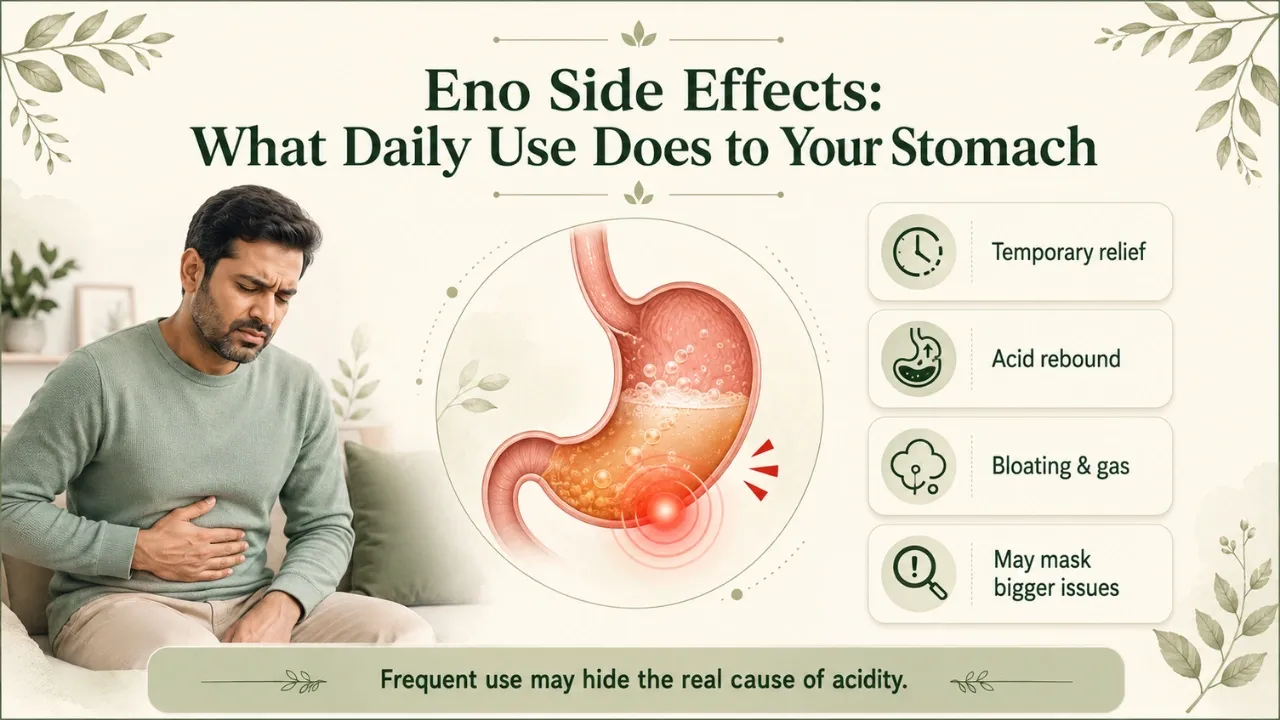
Quick Answer
Eno can provide rapid relief from acidity, but common side effects include bloating, belching, and increased sodium intake. Frequent or excessive use may cause rebound acidity and, rarely, metabolic alkalosis, so it is intended for occasional rather than routine use.
Eno fruit salt can cause side effects including gas and bloating, increased sodium intake, and — with overuse — a rebound effect where acid returns more intensely. Most side effects of Eno are mild and temporary when the product is used correctly. Understanding how Eno works, who should avoid it, and when to seek medical advice helps you use it safely.
What Is Eno and What Are Its Side Effects?
Eno is an over-the-counter antacid fruit salt used to relieve symptoms of acidity, heartburn, and indigestion. It contains sodium bicarbonate, citric acid, and sodium carbonate as its active ingredients. When dissolved in water, these compounds react to produce carbon dioxide, which neutralises excess stomach acid rapidly — typically within 2 to 3 minutes.
The side effects of Eno arise primarily from its high sodium content and the carbon dioxide gas it produces. Common side effects include:
- Bloating and belching — caused by CO₂ gas released during the neutralisation reaction
- Increased sodium load — one sachet (5g) of Eno contains approximately 1.08g of sodium, which is relevant for people managing blood pressure or heart disease
- Acid rebound — when used frequently, the stomach may compensate by producing more acid once the effect wears off
- Nausea — reported in some users, particularly when taken on a full stomach
- Alkalosis — a rare but serious condition when Eno is overused, causing the blood to become too alkaline
According to Mool Health's clinical review team, most side effects of Eno are dose-dependent and resolve once use is discontinued.
How Does Eno Work? The Mechanism Explained
Eno fruit salt works through an acid-base neutralisation reaction that reduces stomach acidity within minutes. Here is the step-by-step process:
- Dissolution — You dissolve one sachet of Eno powder in 150ml of water. The citric acid and sodium bicarbonate begin reacting immediately, producing visible fizzing.
- CO₂ release — Carbon dioxide gas is produced as a byproduct of the reaction. This gas is responsible for the burping sensation many users experience after taking Eno.
- Neutralisation — The resulting alkaline solution — primarily sodium carbonate — enters the stomach and neutralises hydrochloric acid (HCl), raising stomach pH.
- Symptom relief — As stomach pH rises, the burning sensation caused by excess acid decreases. Relief typically occurs within 2 to 5 minutes of ingestion.
- Effect duration — The effect is short-acting, lasting approximately 20 to 40 minutes in most individuals, because the stomach continues producing acid.
Eno works because sodium bicarbonate is a base that directly reacts with stomach acid (HCl) to form sodium chloride, water, and CO₂ — a well-established chemical neutralisation. This mechanism is effective for immediate, short-term relief but does not address the underlying cause of chronic acidity.
What Are the Benefits of Eno Fruit Salt?
Eno fruit salt offers several short-term digestive benefits when used appropriately. Mool Health's nutrition and gastroenterology advisory team identifies the following key benefits:
Short-Term Benefits:
- Rapid acidity relief — Eno typically reduces heartburn and acidity within 2 to 5 minutes, making it one of the fastest-acting over-the-counter antacids available
- Indigestion relief — helps ease the discomfort of bloating and fullness after heavy meals by neutralising excess gastric acid
- Affordable and accessible — available without a prescription at most pharmacies across India at a low cost per sachet
- Multiple flavour options — available in original, orange, lemon, and other flavours, improving palatability
Practical Advantages:
- Easy to prepare and consume — requires only water, no tablet swallowing
- Works across a broad range of acidity-related symptoms: flatulence, sour stomach, nausea from acidity
Limitations on Long-Term Benefits:
- Eno does not heal gastric ulcers, reduce H. pylori infection, or treat gastroesophageal reflux disease (GERD) structurally
- Long-term use does not reduce acid production — it only neutralises acid already present
| Benefit | Onset | Duration |
|---|---|---|
| Acidity relief | 2–5 minutes | 20–40 minutes |
| Heartburn reduction | 2–5 minutes | 20–40 minutes |
| Bloating/gas relief | 5–10 minutes | Variable |
What Are the Types of Eno Side Effects?
The side effects of Eno can be classified into three categories based on severity and frequency. Understanding which type applies to your situation helps you decide whether to continue use or seek medical advice.
Common Side Effects of Eno (Mild, Self-Resolving)
These occur in a significant proportion of users and typically resolve without intervention:
- Belching and flatulence — CO₂ gas produced during the reaction exits through the digestive tract
- Temporary bloating — most users experience mild abdominal distension for 10 to 20 minutes post-consumption
- Altered taste — the alkaline nature of dissolved Eno may cause a mildly salty or bitter aftertaste
Less Common Side Effects of Eno (Moderate, Monitor)
These side effects of Eno require monitoring, particularly in individuals with pre-existing conditions:
- Sodium retention — each sachet adds ~1,080mg of sodium; individuals on sodium-restricted diets (recommended intake: under 2,300mg/day) may exceed limits with multiple doses
- Hypokalemia risk — prolonged or excessive use may reduce potassium levels in some individuals
- Rebound hyperacidity — the stomach may increase acid secretion as a compensatory response after repeated use
Rare but Serious Side Effects of Eno (Seek Medical Attention)
These are infrequent but clinically significant:
- Metabolic alkalosis — characterised by muscle twitching, hand tremors, confusion, or irregular heartbeat; results from excess bicarbonate intake
- Milk-alkali syndrome — occurs if Eno is taken with large amounts of dairy or calcium supplements
- Allergic reaction — rare; symptoms include rash, itching, swelling, or difficulty breathing
| Category | Examples | Action Required |
|---|---|---|
| Common | Belching, bloating, aftertaste | None — usually self-resolving |
| Less Common | Sodium retention, rebound acidity | Reduce dose; consult doctor if persistent |
| Rare/Serious | Metabolic alkalosis, allergic reaction | Stop use immediately; seek medical care |
How to Use Eno Correctly: Dosage and Administration Guide
Using Eno correctly minimises the risk of side effects. Mool Health recommends following these steps closely:
Prerequisites before taking Eno:
- Confirm that your symptoms are related to acidity, heartburn, or indigestion — not chest pain of cardiac origin
- Check sodium intake for the day if you have hypertension, heart failure, or kidney disease
- Review any medications you are taking for potential interactions (see limitations section)
Step-by-Step Administration:
- Pour the contents of one Eno sachet (5g) into a glass
- Add 150ml (approximately half a glass) of water — use cold or room-temperature water
- Stir until the powder dissolves completely and the fizzing subsides
- Drink the solution immediately — do not let it sit, as potency reduces after CO₂ escapes
- Wait 2 to 5 minutes for symptom relief to begin
Dosage guidance:
- Adults: one sachet up to three times daily, or as directed by a physician
- Do not exceed three sachets in 24 hours
- Do not use for more than 14 consecutive days without medical supervision
Common Mistakes to Avoid:
- Taking Eno with milk — increases the risk of milk-alkali syndrome
- Taking multiple sachets at once — does not increase effectiveness and raises sodium load significantly
- Using Eno as a daily preventive rather than a symptomatic treatment
- Giving Eno to children under 6 years of age without a doctor's recommendation
Who Should and Should Not Use Eno?
Eno fruit salt is suitable for most healthy adults experiencing occasional acidity. However, certain groups face elevated risk from the side effects of Eno.
| Profile | Suitable for Eno? | Reason |
|---|---|---|
| Healthy adults (occasional acidity) | ✅ Yes | Safe at standard doses; rapid relief |
| Individuals with hypertension | ⚠️ Use with caution | High sodium per sachet (~1,080mg) |
| Pregnant women | ⚠️ Consult doctor first | High sodium content may worsen oedema; some studies flag risk in third trimester |
| People with kidney disease | ❌ Not recommended | Impaired ability to excrete bicarbonate and sodium increases risk of alkalosis |
| People with liver disease | ⚠️ Consult doctor | Sodium retention may worsen fluid accumulation (ascites) |
| Children under 6 | ❌ Not recommended without prescription | Dosing safety not established |
| People on sodium-restricted diets | ❌ Not recommended | Single sachet may exceed daily sodium limits |
| Those with GERD (chronic) | ⚠️ Not a long-term solution | Does not treat underlying reflux; may worsen with rebound acidity |
Eno Side Effects in Pregnancy
The side effects of Eno in pregnancy deserve specific attention. While sodium bicarbonate can relieve acidity, the high sodium content in Eno may contribute to fluid retention and elevated blood pressure in pregnant women — conditions that are already common during pregnancy. Some clinical guidelines advise pregnant women to consult their obstetrician before using any sodium-containing antacid. In general, lower-sodium antacid options may be more appropriate during pregnancy, particularly in the second and third trimesters.
Eno vs. Alternative Antacids: An Honest Comparison
Several alternatives to Eno exist for managing acidity. Mool Health's clinical team outlines the key differences below:
| Feature | Eno Fruit Salt | Antacid Tablets (e.g., Gelusil) | H2 Blockers (e.g., Famotidine) | PPIs (e.g., Omeprazole) |
|---|---|---|---|---|
| Onset of action | 2–5 minutes | 5–15 minutes | 30–60 minutes | 1–4 days |
| Duration of effect | 20–40 minutes | 1–3 hours | 6–12 hours | 24+ hours |
| Sodium content | High (~1,080mg/sachet) | Low to moderate | Negligible | Negligible |
| OTC availability | Yes | Yes | Yes | Yes (low dose) |
| Suitable for daily use | No | Short-term only | Short-term only | Under medical supervision |
| Treats root cause | No | No | Partially | Partially |
| Best for | Occasional acidity | Mild-moderate acidity | Frequent heartburn | Chronic GERD/ulcers |
What Does the Evidence Say About Eno Side Effects?
Published research and pharmacological data provide a clear picture of the side effect profile of sodium bicarbonate-based antacids like Eno.
Key findings:
- A review published in the American Journal of Gastroenterology notes that sodium bicarbonate antacids are effective for immediate acid neutralisation but are associated with CO₂-mediated bloating and belching in a majority of users [1].
- The British National Formulary (BNF) flags that sodium bicarbonate-containing preparations should be used with caution in patients with renal impairment, cardiac failure, or hypertension due to the high sodium load [2].
- Research on metabolic alkalosis indicates that excessive intake of sodium bicarbonate — equivalent to more than 5g per day for extended periods — can raise blood pH above 7.45, potentially causing muscle weakness, confusion, and cardiac arrhythmias [3].
- A 2019 review in Clinical Pharmacokinetics confirmed that rebound hyperacidity is a clinically observed phenomenon with short-acting antacids, though it is typically mild and self-limiting [4].
According to Mool Health's health information team, the safety profile of Eno is well-established for occasional use. The concern arises primarily with daily or excessive use, which falls outside the product's intended indication.
Important Limitations of Eno: What It Cannot Do
Eno fruit salt has clear limitations that users should understand before relying on it.
Eno cannot:
- Cure or treat the underlying cause of chronic acidity, GERD, or peptic ulcers
- Provide lasting acid suppression — it only neutralises acid already present in the stomach
- Replace prescription medications for conditions such as Helicobacter pylori infection, Barrett's oesophagus, or erosive oesophagitis
- Be used safely in high doses — the risk of metabolic alkalosis increases with doses above the recommended daily limit
Situations where Eno is not the right choice:
- Acidity symptoms occurring daily or more than twice per week — indicates a need for medical evaluation
- Chest pain that could be cardiac in origin — this is a medical emergency, not a case for an antacid
- Symptoms in individuals with kidney disease, liver cirrhosis, or severe heart failure
- Pregnancy, unless cleared by a healthcare provider
Ingredients to note: Eno contains sodium bicarbonate, citric acid, and sodium carbonate. There are no antihistamines, H2 blockers, or proton pump inhibitors in its formulation — meaning it has no effect on acid production, only on acid already secreted.
Key Takeaways
Eno Side Effects may include gas, bloating, nausea, stomach discomfort, and electrolyte imbalance with frequent use. Learn how daily Eno use can affect digestion, when it may become risky, and safer ways to manage acidity.
Your gut is unique your healing should be too.

Disclaimer
The content provided by Mool Health is for educational and informational purposes only and should not be considered a substitute for professional medical advice, diagnosis, or treatment.