
Pooping Right After Eating? Causes of Sudden Diarrhea
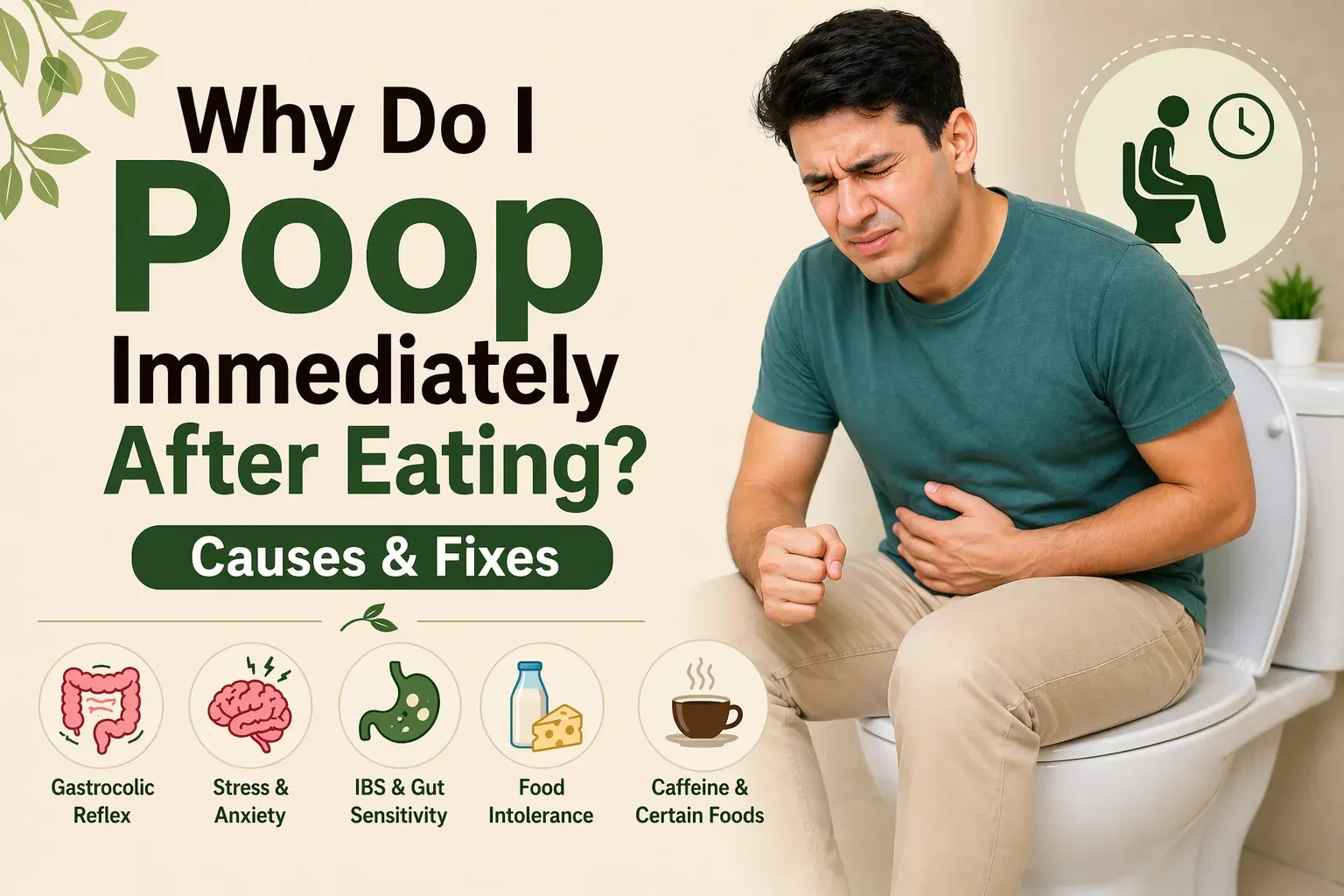
Diarrhea right after eating is usually caused by an overactive gastrocolic reflex, stress, IBS, or food intolerance rather than the food you just ate.
✏️ Quick Answer
Why do I poop diarrhea right after I eat? Most commonly due to an overactive gastrocolic reflex — a normal body response where eating triggers colon movement. In some people, this reflex is exaggerated, moving stool too fast and without enough water absorption. Other causes include stress, IBS, food intolerance, caffeine, and post-infection gut sensitivity.
Summary
Passing loose stools immediately after eating is a common problem and is usually linked to an overactive digestive reflex rather than the food itself. The most common reasons include a strong gastrocolic reflex, stress or anxiety, gut sensitivity, food intolerances, or conditions like IBS. While occasional episodes are usually harmless, frequent diarrhea after meals should not be ignored.
Introduction: Why Do I Poop Diarrhea Right After I Eat?
Many people feel the urge to use the toilet soon after eating. But when this urge turns into diarrhea every time you eat, it can feel alarming and disruptive.
This symptom often points to how your gut reacts to eating, not how fast food is digested. Understanding the cause helps you manage it better and know when to seek medical advice.
The Gastrocolic Reflex: The Most Common Cause
What Is the Gastrocolic Reflex?
The gastrocolic reflex is a normal body response where eating triggers movement in the colon to make space for incoming food.
Why It Can Cause Diarrhea
In some people, this reflex is exaggerated. When that happens:
- The colon contracts too strongly
- Stool moves too fast
- Water is not absorbed properly
This leads to loose stools shortly after eating — even though the food you ate is not what came out.
Other Common Reasons for Diarrhea After Eating
1) Stress or Anxiety
Stress activates the brain–gut connection and can strongly stimulate bowel movement after meals. This is common during work pressure, exams, or emotional stress. Stress causing diarrhea is well-documented through the gut-brain axis.
2) Irritable Bowel Syndrome (IBS)
IBS with diarrhea often causes urgent loose stools soon after eating. Trigger foods, stress, or irregular eating habits can worsen symptoms.
3) Food Intolerance
Certain foods may trigger diarrhea soon after eating, such as:
- Dairy (lactose intolerance)
- Artificial sweeteners
- Very fatty or spicy foods
4) Coffee or Caffeine Intake
Caffeine strongly stimulates the gastrocolic reflex and may cause diarrhea immediately after meals. Avoid coffee, strong tea, or energy drinks — especially with meals.
5) Gut Sensitivity After Infection
After a stomach infection, the gut can remain sensitive for weeks. This is called post-infectious gut sensitivity and can cause diarrhea after meals.
Is This Normal or a Problem?
Occasional urgency after eating can be normal. However, it may be a concern if:
- It happens after most meals
- Stools are consistently watery
- There is abdominal pain or cramping
- It affects daily activities
How to Reduce Diarrhea Right After Eating
1) Eat Smaller, Slower Meals
Large meals overstimulate the gut. Eating slowly and in smaller portions can reduce bowel urgency.
2) Identify Trigger Foods
Keep note of foods that worsen symptoms and reduce them temporarily.
3) Reduce Caffeine
Avoid coffee, strong tea, or energy drinks — especially with meals.
4) Manage Stress
- Practice deep breathing
- Maintain regular sleep
- Reduce meal-time stress
5) Support Gut Recovery
Gentle foods and regular meal timing help calm an overactive gut. Understanding what to eat during diarrhea helps your gut recover faster.
When to See a Doctor
- Diarrhea occurs daily for weeks
- Blood or mucus in stool
- Unexplained weight loss
- Night-time diarrhea
- Severe abdominal pain or fever
How Mool Health Helps With Post-Meal Diarrhea
Mool Health focuses on understanding digestion beyond symptoms. Diarrhea right after eating is often linked to gut sensitivity, stress, and disrupted digestive rhythms. Mool Health helps people understand:
- How the brain–gut connection affects bowel habits
- Why meals trigger urgency in some people
- Lifestyle and food patterns that calm the gut
Related Blogs
Medical note: This content is for general awareness only and does not replace medical advice.
Key Takeaways
Diarrhea right after eating is usually caused by an overactive gastrocolic reflex, stress, IBS, or food intolerance rather than the food you just ate.
Your gut is unique your healing should be too.

Disclaimer
The content provided by Mool Health is for educational and informational purposes only and should not be considered a substitute for professional medical advice, diagnosis, or treatment.