
Is Milk Good for Diarrhea? Benefits, Risks & Better Options
Milk may worsen diarrhea in some people due to lactose sensitivity or poor digestion. This guide explains the benefits, risks, and better alternatives.
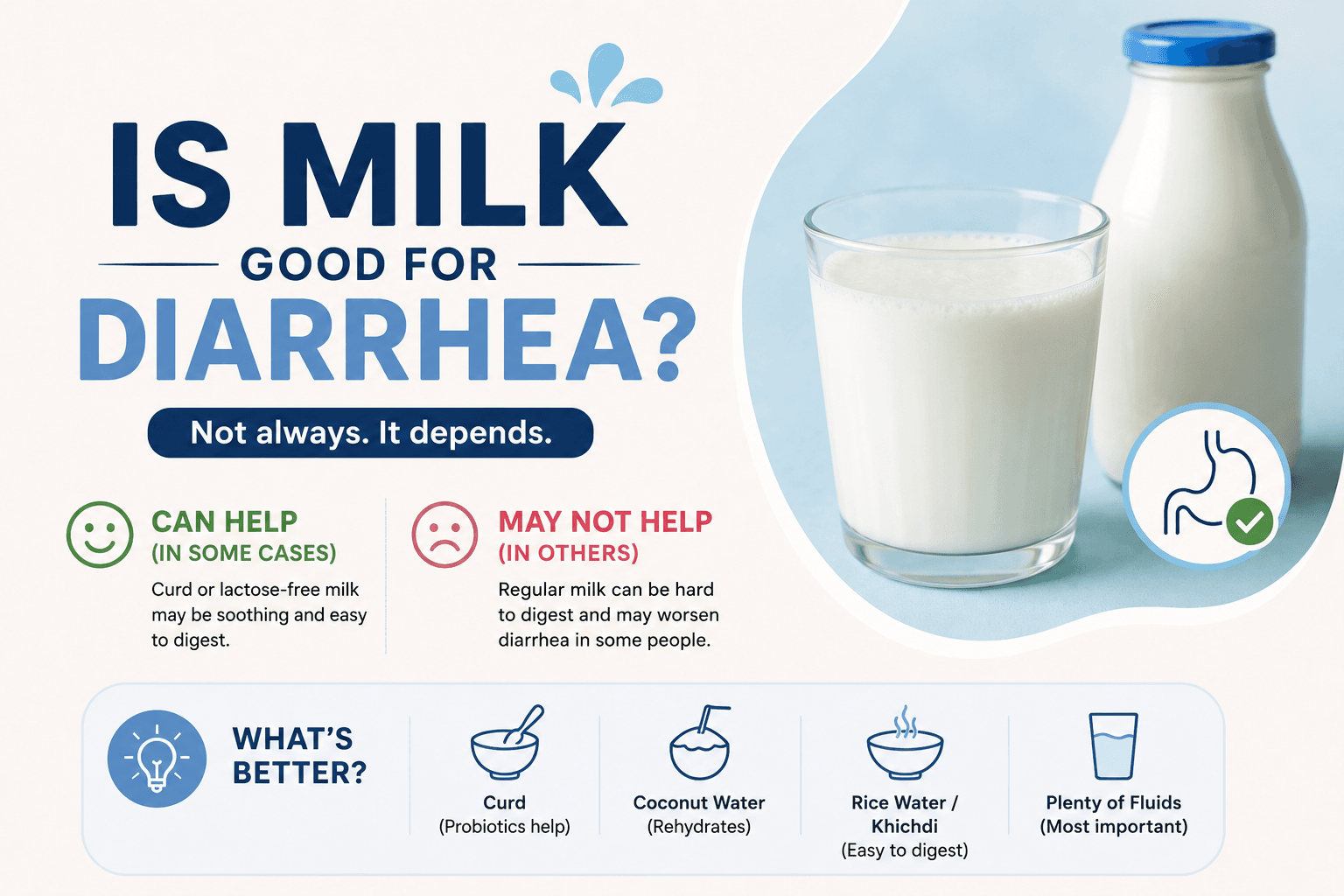
✏️ Quick Answer
No, milk is not good for diarrhea and in most cases makes things worse. The gut temporarily loses the ability to digest lactose during diarrhea, which means drinking milk can pull more water into the intestine, increase cramping, and prolong loose stools.
The short rule: Avoid milk during active diarrhea. Reintroduce it only after stools have been formed for at least 24 hours. ORS first, plain water, rice water, and soft foods, milk comes much later, and only if you tolerate it.
Milk does not help diarrhea. It cannot replace the electrolytes your body loses, and it does not soothe the gut the way most people expect. The belief that warm milk settles an upset stomach comes from a general association between milk and comfort, but during active diarrhea, the gut's ability to process milk is specifically and temporarily impaired, making that glass of milk a setback rather than a remedy.
Whole milk (regular), damages enzyme causes undigested lactose to worsen symptoms
Cold milk, stimulates bowel contractions, speeds up loose stools
Flavoured milk / milkshakes, high sugar increases osmotic draw, worsens diarrhea
ORS (priority one), replaces electrolytes lost in every loose stool
Rice water / kanji, gentle on the gut, helps firm stools
Coconut water, natural electrolytes, mild and safe
Plain curd (recovery only), probiotics help restore gut bacteria
Why Milk Is Usually Not Good During Diarrhea
Milk is not recommended during active diarrhea for three connected reasons, and they all trace back to the same root cause: a damaged gut lining.
1. Temporary Lactose Intolerance
Diarrhea damages the cells that produce lactase, the enzyme needed to digest milk sugar (lactose). Without enough lactase, lactose passes undigested into the large intestine, where it pulls water inward and worsens loose stools. This happens even in people who are normally fine with dairy.
2. Gas, Bloating, and Cramping
Because undigested lactose is fermented by gut bacteria, it produces gas. This leads to bloating, abdominal cramps, and further loosening of stools, on top of an already-irritated digestive system.
3. Milk Can Speed Up Bowel Movement
In a gut that is already hyperactive, milk, especially cold milk or large quantities, can stimulate bowel contractions, pushing stools through faster. This reduces the gut's ability to absorb water and prolongs the episode.
How Milk Affects Your Gut During Diarrhea: The Full Mechanism
- The gut lining becomes inflamed: During diarrhea, whether caused by a viral infection, food poisoning, or bacterial gut infection, the cells lining the small intestine become inflamed and damaged. These same cells produce lactase, the enzyme the body uses to break down lactose (the natural sugar in milk).
- Lactase production drops sharply: Because the gut lining is damaged, lactase activity can fall significantly during acute gastroenteritis. Research published in the Journal of Pediatric Gastroenterology and Nutrition has documented that transient lactase deficiency is common during and immediately after intestinal infections, particularly in children but also in adults [1].
- Undigested lactose draws water into the gut: When lactose is not broken down, it passes into the large intestine undigested. Gut bacteria ferment it, and this fermentation pulls water into the intestine through osmotic diarrhea. The result: more watery stools, more cramping, and more bloating. This is why milk can worsen diarrhea even in people who are normally lactose-tolerant.
- The gut stays irritated longer: Continuing to consume milk while the gut is trying to heal leads to repeated irritation of the already-damaged gut lining, extending the recovery period. Most people improve faster when dairy is removed for at least 48–72 hours during an acute episode.
Is Milk Ever Okay During Diarrhea?
Milk may be tolerated in limited situations, but these are the exceptions rather than the rule:
- Diarrhea is very mild (slightly loose stools, not watery, no vomiting)
- No bloating or cramps occur after drinking milk
- During the recovery phase when stools are already improving and approaching normal consistency
Even then, milk should be taken in small quantities (100ml or less) and stopped immediately if symptoms worsen. The risk of triggering a setback outweighs the nutritional benefit of milk specifically during an active episode.
Milk vs ORS vs Curd vs Rice Water: An Honest Comparison
| Drink | Safe During Active Diarrhea? | Replaces Electrolytes? | Gut-Friendly? | Best Used When |
|---|---|---|---|---|
| ORS | ✅ Yes | ✅ Yes | ✅ Yes | Active diarrhea, priority one |
| Rice water | ✅ Yes | Partially | ✅ Yes | Active diarrhea and early recovery |
| Plain water | ✅ Yes | ❌ No | ✅ Yes | Throughout illness |
| Curd (plain) | ⚠️ Small amounts | ❌ No | ✅ Probiotics help | Mid to late recovery |
| Lassi (plain) | ⚠️ Small amounts | ❌ No | ✅ Usually | Recovery phase only |
| Milk (whole) | ❌ Avoid | ❌ No | ❌ May worsen | After full recovery only |
| Lactose-free milk | ⚠️ May be tolerated | ❌ No | ⚠️ Better than regular | Recovery phase, test in small amounts |
The key difference between milk and ORS: ORS is formulated to match the salt and sugar concentrations the body needs to absorb fluids efficiently. Milk provides neither the right sodium balance nor the glucose-sodium co-transport that makes ORS effective at correcting dehydration. Milk is nutrition, ORS is medicine for dehydration.
For details on fermented dairy alternatives, see our guides on whether curd is good for diarrhea and whether lassi helps in diarrhea.
What Should You Drink Instead of Milk During Diarrhea?
If milk is out, here are the drinks that actually help, ranked by priority:
- ORS (Oral Rehydration Solution), Priority one. This is the single most important fluid during diarrhea. It replaces the sodium, potassium, and glucose the body loses with every loose stool. Make it at home: 1 litre of clean water + 6 teaspoons of sugar + ½ teaspoon of salt. Sip continuously, do not gulp.
- Plain water, Always. Sip plain water throughout the day in small amounts. Gulping large amounts at once can trigger nausea.
- Rice water (kanji). The starch from boiled rice forms a light, easily absorbed fluid that is gentle on the gut. It has been used traditionally across India and is supported by clinical experience as a soothing gut drink during diarrhea.
- Coconut water. Naturally contains electrolytes including potassium. Not a replacement for ORS but a useful supplement, especially for mild cases.
- Plain, unsweetened curd (in recovery). Once diarrhea is easing, curd introduces live probiotic cultures that help restore the balance of gut bacteria disrupted by infection.
- Diluted clear vegetable soup. Light and warm, easy to digest, provides some minerals. Avoid spicy or cream-based soups.
What to eat in diarrhea, our complete food guide covers soft foods, BRAT diet, and what to avoid. For a broader view of what damages gut health long-term, see our guide on worst foods for gut health.
How Long Should You Wait Before Drinking Milk Again After Diarrhea?
| Day | Stool Status | What to Eat / Drink | Milk? |
|---|---|---|---|
| Day 1–2 | Watery or very loose | ORS, plain water, clear fluids only | ❌ No dairy at all |
| Day 2–3 | Beginning to firm | Rice, bananas, plain toast, rice water | ❌ Still no milk; small curd only if tolerated |
| Day 3–4 | Formed but soft | Curd, lassi in small amounts, soft foods | ⚠️ Lactose-free milk may be tried |
| Day 4–5 | Normal for 24+ hours | Gradual return to normal diet | ⚠️ 100–150ml warm milk; monitor for 2–3 hours |
| Day 5+ | Full recovery | Normal diet | ✅ Milk tolerated as usual |
Who Should Be Extra Careful? Milk and Diarrhea by Population
Children Under 5
Children are more vulnerable to transient lactase deficiency during gut infections. WHO and UNICEF guidelines recommend continuing breastfeeding during diarrhea but advise caution with cow's milk. If a child is formula-fed, a lactose-free formula may be recommended by a doctor during severe episodes. Whole cow's milk should generally be paused until stools are formed.
Adults with Existing Lactose Intolerance
If you are already lactose-intolerant, diarrhea makes the situation considerably worse, your baseline lactase levels are already low. Avoid all regular dairy until at least 48 hours after stools have normalised. Lactose-free milk or small amounts of curd may be introduced first.
Adults with IBS
For people with irritable bowel syndrome, dairy is often already a trigger. An acute episode of diarrhea is not the time to test tolerance. Stick to ORS, plain rice, and bananas until the gut has clearly settled, typically 3–5 days. Explore causes of diarrhea to understand whether IBS may be driving your pattern.
Elderly Adults
Older adults are at higher risk of dehydration during diarrhea and may also have reduced lactase activity. Milk should be avoided during acute illness, and ORS should be prioritised. Reintroduction should be gradual, starting with curd rather than milk.
Pregnant Women
Milk is nutritionally valuable during pregnancy, but during active diarrhea it should be temporarily paused. A doctor or gynaecologist should be consulted if diarrhea persists for more than 24–48 hours during pregnancy.
What This Means for You
By avoiding milk during active diarrhea and following the ORS-first approach, most people see significant improvement within 24–48 hours. The gut usually recovers enough to tolerate curd and soft foods by day 3–4, and milk can typically be reintroduced by day 4–5, starting small and warm.
Here is what to do right now:
- Stop milk immediately if diarrhea is active, even one glass can set recovery back.
- Start ORS within the first hour, sip continuously, not in large gulps.
- Try rice water or coconut water as a gentle complement to ORS.
- Reintroduce curd first, not milk, it is easier to digest and the probiotics help restore gut bacteria.
- Watch for warning signs, if diarrhea persists beyond 48 hours, stools contain blood, or you feel severely dehydrated, see a doctor the same day.
If your gut is sensitive beyond this episode, repeated bouts of loose motions, bloating after dairy, or consistent discomfort after eating, that pattern is worth looking into more deeply. Understanding specific digestive triggers is where long-term relief begins. You can also explore how to avoid gastric problems for broader digestive support.
Key Takeaways
Milk may worsen diarrhea in some people due to lactose sensitivity or poor digestion. This guide explains the benefits, risks, and better alternatives.
Your gut is unique your healing should be too.

Disclaimer
The content provided by Mool Health is for educational and informational purposes only and should not be considered a substitute for professional medical advice, diagnosis, or treatment.