
Is Idli Good for Diarrhea? Benefits, Risks & Best Ways to Eat
Idli is light, soft, and easy to digest, which may make it suitable during diarrhea recovery. This guide explains benefits, risks, and the best way to eat it.
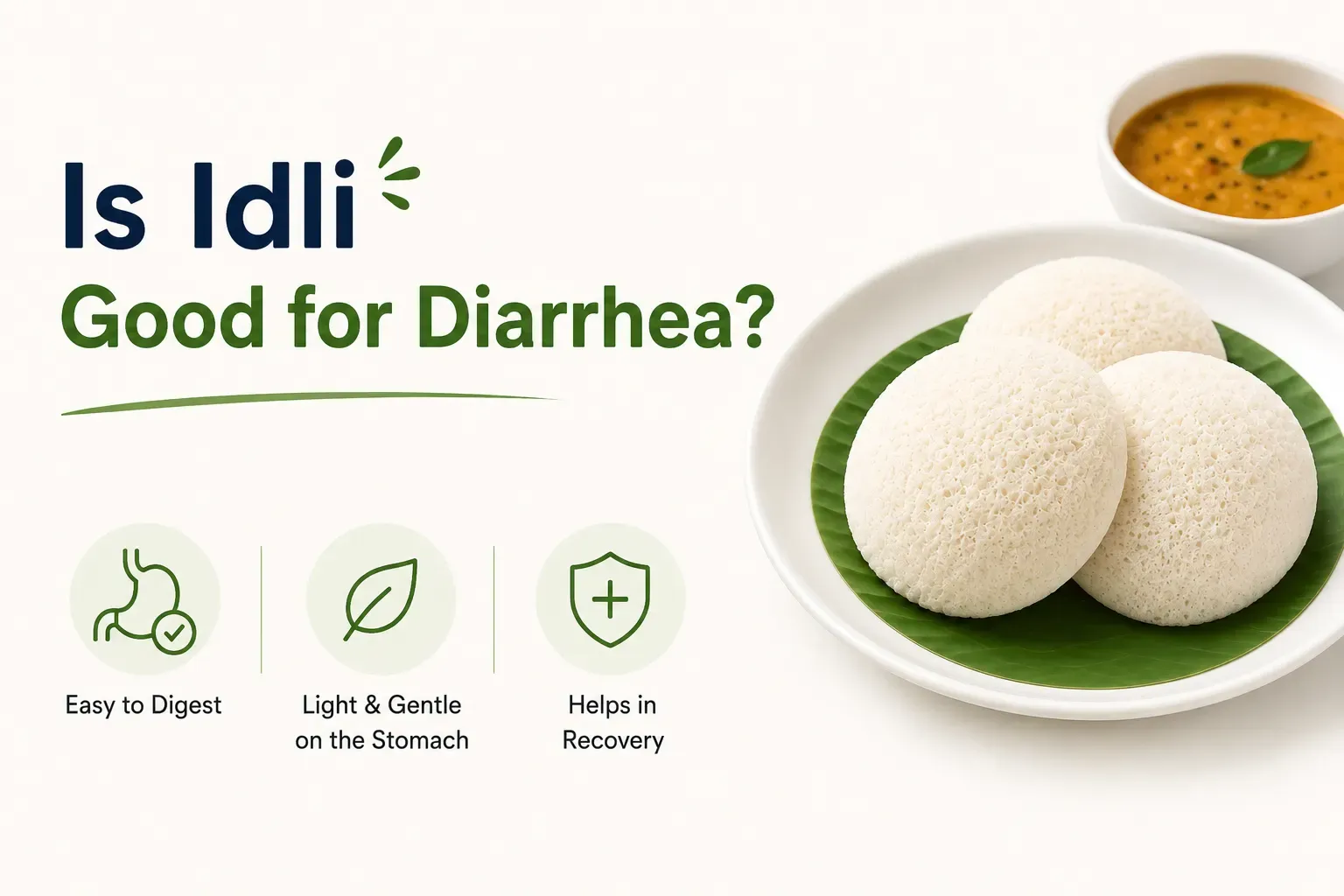
✏️ Quick Answer
Plain idli is generally safe to eat during diarrhea, but only if eaten plain, warm, and in small amounts. It is not a cure and will not stop loose motions. What it does is give your body easy, low-fat carbohydrate energy without further irritating a sensitive gut.
- Plain idli: generally safe from Day 2 of loose motions onward
- Idli with sambhar or spicy chutney: avoid entirely during diarrhea
- Idli does not replace ORS, hydration comes first, always
- Most people tolerate 1–2 plain idlis once stools begin to firm up
Idli is a steamed, lightly fermented food made from rice and urad dal. Because it contains almost no fat and requires minimal digestive effort, it suits the bland diet most doctors recommend during diarrhea and loose motion recovery. The key variables are what you eat with idli and which phase of diarrhea you are in. For a broader guide on what to eat in diarrhea, see our complete food guide.
Why Is Idli Easy to Digest? The Mechanism Explained
Idli's digestive gentleness is not accidental, it comes from three specific properties of how the food is made and what it contains.
- Steaming breaks down complex starches. When batter is steamed, heat converts complex rice starches into simpler, more absorbable carbohydrates. This means your digestive tract does less mechanical work to break down each bite. During diarrhea, when gut motility is already disturbed, this reduction in digestive effort is meaningful.
- Fermentation increases nutrient bioavailability. The overnight fermentation of idli batter partially pre-digests proteins and reduces the phytic acid content of the lentils. Research published in the Journal of Food Science and Technology (2014) suggests fermentation of urad dal batter improves protein digestibility by up to 10–12%. This means the gut absorbs nutrients more easily, which matters when you are already depleted from fluid and nutrient loss.
- Near-zero fat content keeps gut motility stable. Dietary fat stimulates the gastrocolic reflex, the signal that makes your colon contract after you eat. During diarrhea, high-fat food amplifies this problem. Plain idli, with less than 2 grams of fat per piece, does not trigger this reflex significantly.
Which Phase of Diarrhea Is Idli Safe For? A Day-by-Day Guide
| Phase | Timing | Idli Safe? | Best Foods | What to Avoid |
|---|---|---|---|---|
| Acute | 0–24 hours | No | ORS, clear fluids | All solids if possible |
| Early Recovery | Day 2–3 | Yes, 1 at a time | Plain idli, plain rice, banana | Sambhar, chutney, ghee |
| Reintroduction | Day 4–7 | Yes, 2–3/meal | Idli + mild coconut chutney, khichdi | Spicy chutneys, oily foods |
Best Way to Eat Idli During Diarrhea
Eating idli correctly during diarrhea matters as much as choosing to eat it at all.
- Eat it plain. No chutney, no sambhar, no ghee, no podi. Each addition introduces fat, spice, or fibre that a sensitive gut may not handle well.
- Eat it warm and fresh. Freshly steamed idli is softer and easier to digest than cold or leftover idli. Cold idli contains more retrograded starch, which the gut processes less efficiently during illness. If reheating, steam gently.
- Start with one. Eat one idli and wait 20–30 minutes before deciding to eat more. This gives your gut time to signal whether it is tolerating the food.
- Chew slowly. Digestion begins in the mouth. Chewing idli thoroughly reduces the mechanical work your stomach and small intestine need to do, especially important when gut function is already compromised.
Idli vs Other Foods During Diarrhea: Which Is Better?
| Food | Fat Content | Ease of Digestion | Safe: Acute Phase? | Safe: Recovery? | Notes |
|---|---|---|---|---|---|
| Plain idli | Very low (~2g/piece) | High | No | Yes | Best once stools start settling |
| Plain rice (soft) | Very low | Very high | Yes | Yes | Most soothing; best in acute phase |
| Moong dal khichdi | Low | High | No | Yes | Adds protein; good from Day 3 onward |
| Banana | Negligible | Very high | Yes | Yes | Pectin helps firm stools |
| Dosa | Medium (needs oil) | Moderate | No | No | Too much fat; avoid during diarrhea |
| Idli with sambhar | Medium | Low | No | No | Sambhar spices irritate a sensitive gut |
| Curd rice | Low-medium | High | Marginal | Yes | Probiotics in curd for diarrhea may help gut flora |
Idli vs dosa: Dosa requires oil on the tawa and produces a higher-fat, crisper product. The fat content alone makes dosa more likely to stimulate gut contractions. Plain idli is the safer choice. Idli vs sambhar: Sambhar contains tamarind, multiple spices, and high fibre from vegetables, all three can worsen diarrhea. The combination of idli and sambhar during loose motions is not recommended even in recovery. Understanding the causes of diarrhea helps clarify why these food combinations matter.
Is Idli Part of the BRAT Diet? Understanding Bland Diet Principles
The BRAT diet, Bananas, Rice, Applesauce, Toast, is the most widely recommended bland diet framework for diarrhea recovery. Idli does not appear in the BRAT acronym, but it shares every property that makes BRAT foods suitable:
- Low fat: Plain idli has less than 2g of fat per piece
- Low insoluble fibre: Steamed idli is soft and its fibre is minimal
- Easy to absorb: The starch is already partially broken down by steaming and fermentation
- Bland: Plain idli without accompaniments is a neutral, non-irritating food
For an Indian household, plain idli is a practical, culturally familiar equivalent to toast or plain rice in the BRAT framework. The NHS and Mayo Clinic both advise a gradual return to bland, low-fat, starchy foods after diarrhea, idli fits comfortably within that guidance. For more on worst foods for gut health during recovery, see our full guide.
Is Idli Safe for Children During Diarrhea?
Plain idli is generally considered safe for children during diarrhea, but the approach differs slightly from adults.
- Children under 2 years: ORS is the first priority, as recommended by WHO and IAP (Indian Academy of Pediatrics). If solids are being reintroduced, offer very small portions, half an idli at a time, softened with a few drops of warm water. Avoid all accompaniments.
- Children aged 2–10 years: One plain idli every few hours is a reasonable starting point in the early recovery phase. Watch for signs of gas or bloating, which can indicate the fermentation is not sitting well.
Idli vs ORS: An Important Distinction
Idli helps with nutrition but does not prevent dehydration. ORS replaces fluids and electrolytes lost during loose motions; idli provides only energy. The best approach is ORS for hydration alongside plain idli as supportive food. Never substitute idli for ORS, especially in children or elderly adults who dehydrate faster.
What This Means for You
For most adults and children experiencing diarrhea, plain idli is a safe, practical, and culturally familiar food to reintroduce from Day 2 onward. The steaming process, low fat content, and mild fermentation make it one of the more gut-friendly cooked foods available in an Indian household, provided it is eaten plain, fresh, and in small portions.
- Day 1, prioritise hydration: ORS, coconut water, or electrolyte drinks. Do not force solid food
- Day 2–3, start plain idli: 1 idli at a time, warm, no accompaniments; watch your response
- Day 3–5, increase gradually: 2 idlis per meal; mild white coconut chutney may be added if tolerated
- Day 5–7, reintroduce normally: Return to your regular meals, starting with lower-spice versions of usual food
- If symptoms worsen or persist beyond 5 days: Consult a doctor
Also see our complete guide on how to avoid gastric problems for long-term digestive health.
Key Takeaways
Idli is light, soft, and easy to digest, which may make it suitable during diarrhea recovery. This guide explains benefits, risks, and the best way to eat it.
Your gut is unique your healing should be too.

Disclaimer
The content provided by Mool Health is for educational and informational purposes only and should not be considered a substitute for professional medical advice, diagnosis, or treatment.