
Is Bread Good for Diarrhea? What You Should Actually Eat
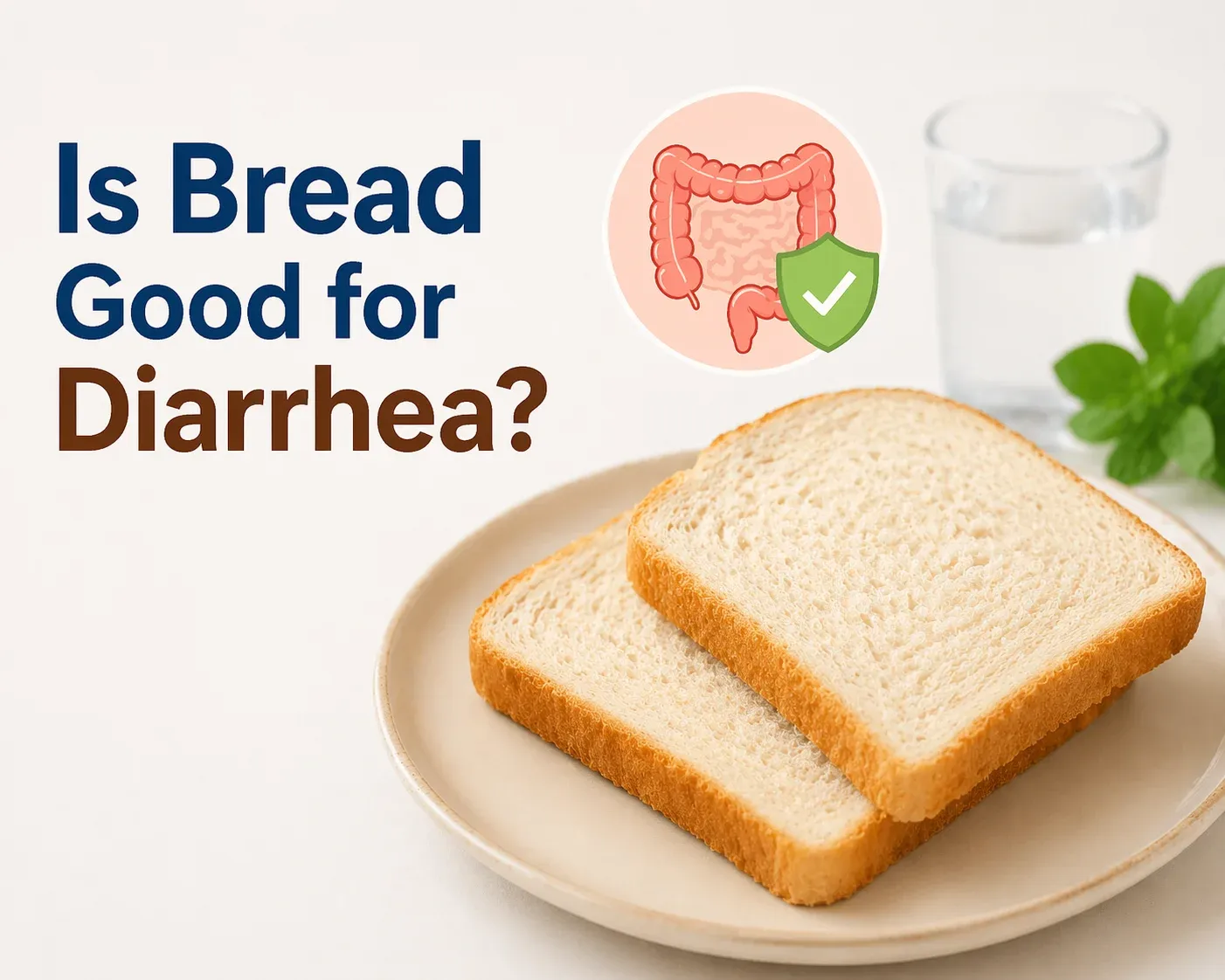
This guide answers whether bread is good for diarrhea covering which types help (white, toast) versus which worsen symptoms (whole wheat, brown, garlic, sourdough, bread and jam, bread and butter).
✏️ Quick Answer
Yes, plain white bread can be good during diarrhea when eaten in the right form. Bread is easy to digest, low in fibre, and helps provide energy without irritating the gut.
However, not all types of bread are suitable. Whole wheat, multigrain, or heavily processed breads can worsen symptoms.
Choosing the right bread and portion size is important.
During diarrhea, many people feel weak and unsure about what foods are safe. Bread is often one of the first foods people consider because it feels light and filling.
Whether bread helps or harms depends on the type of bread, how it is eaten, and the severity of diarrhea.
Why Bread Is Good for Diarrhea — 3 Key Reasons
1) Easy to Digest
Plain white bread is low in fibre and does not overstimulate the intestines. This allows the gut to absorb nutrients without increasing stool movement.
2) Helps Bind Stools
Bread absorbs excess fluid in the gut, which may help firm up loose stools slightly.
3) Provides Quick Energy
Diarrhea often causes fatigue. Bread provides simple carbohydrates that help maintain energy levels.
Which Bread Is Good for Diarrhea — Best and Worst Types
Best Options
- Plain white bread
- Lightly toasted bread
- Simple bread without seeds or grains
Bread Types to Avoid
- Whole wheat bread
- Multigrain or seeded bread
- Brown bread
- Bread with added sugar, butter, or spices
Is Sourdough Bread Good for Diarrhea?
Sourdough bread is fermented and contains some probiotic-like compounds, but it also has a chewy texture and can be harder to digest than plain white bread during active diarrhea. It is better avoided during the acute phase and can be reintroduced cautiously during recovery.
Is Garlic Bread Good for Diarrhea?
No. Garlic bread contains butter, oil, and garlic — all of which can irritate an already sensitive gut during diarrhea. The fat content slows digestion and garlic can trigger cramping in sensitive individuals. Garlic bread should be avoided completely during active diarrhea.
Bread vs Chapati During Diarrhea
Chapati is made from whole wheat and contains more fibre.
- Bread: Lower fibre, easier to digest
- Chapati: Higher fibre, may worsen diarrhea
During active diarrhea, bread is usually better tolerated than chapati.
How to Eat Bread Safely During Diarrhea
- Eat plain or lightly toasted bread
- Avoid butter, jam, cheese, or spreads
- Eat small portions
- Combine with gentle foods like banana or rice
When Bread May Not Be Suitable
- Severe or watery diarrhea
- Diarrhea with vomiting
- Gluten sensitivity or celiac disease
- Abdominal bloating or cramps after eating bread
Bread vs ORS: Important Difference
Bread helps with energy but does not prevent dehydration.
- ORS replaces fluids and electrolytes
- Bread only provides calories
How Mool Health Helps With Diarrhea
Mool Health focuses on understanding digestion during illness and recovery. Many people unknowingly worsen diarrhea by choosing foods that irritate the gut. Mool Health helps people understand:
- Which foods calm the gut during diarrhea
- How to reintroduce normal foods safely
- Daily habits that support gut recovery
Related Blogs
References:
https://www.mayoclinic.org/diseases-conditions/diarrhea/in-depth/diarrhea-treatment/art-20046350
https://www.nhs.uk/conditions/diarrhoea-and-vomiting/
https://www.nhp.gov.in/disease/digestive/diarrhoea
⚠️ Medical note: This content is for general awareness only and does not replace medical advice.
Key Takeaways
This guide answers whether bread is good for diarrhea covering which types help (white, toast) versus which worsen symptoms (whole wheat, brown, garlic, sourdough, bread and jam, bread and butter).
Your gut is unique your healing should be too.

Disclaimer
The content provided by Mool Health is for educational and informational purposes only and should not be considered a substitute for professional medical advice, diagnosis, or treatment.