
Sabja Seeds Benefits: A Complete Guide
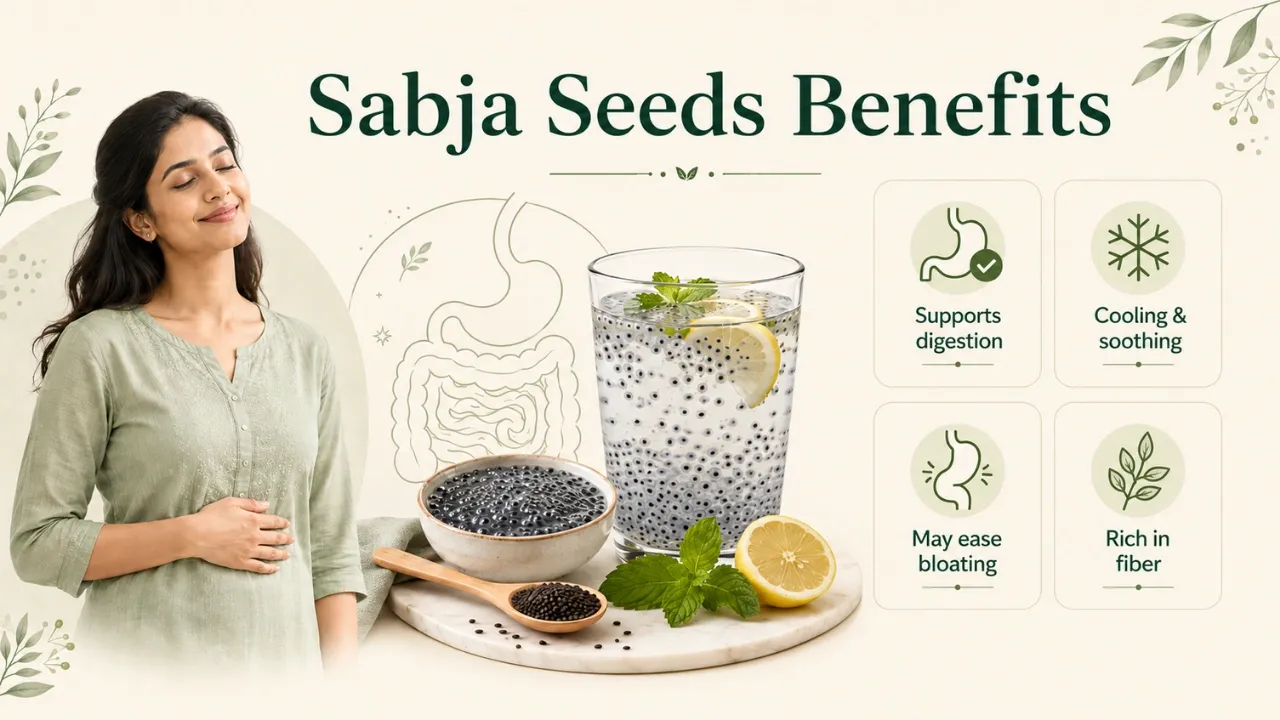
Sabja Seeds Benefits may include better digestion, improved bowel movement, hydration support, and increased satiety. Discover how to use sabja seeds, when to consume them, their nutritional benefits, and precautions to keep in mind.
Quick Answer
Sabja seeds, also called basil seeds, are small black seeds from sweet basil (Ocimum basilicum) that become gel-like after soaking in water. They provide dietary fibre and plant fats and may support bowel regularity and fullness, but stronger claims around weight loss, diabetes, cholesterol, skin health, or other conditions still require better human research.
Sabja seeds are small edible seeds obtained from Ocimum basilicum, commonly known as sweet basil. In India, they are widely used in falooda, sherbet, lemon drinks and other cooling beverages because they rapidly develop a translucent, gel-like coating when soaked in water.
Sabja seeds are especially interesting nutritionally because they contain dietary fibre, seed mucilage, plant protein, minerals and fats that include alpha-linolenic acid, a plant-based omega-3 fatty acid. Their nutritional composition varies depending on the variety, growing conditions and processing method.
Although sabja seeds have a long history of culinary and traditional use, not every popular health claim associated with them has been confirmed in large, high-quality human trials. The strongest practical reason to include them in a balanced diet is their fibre-rich, water-absorbing nature.
What Are Sabja Seeds?
Sabja seeds are the edible seeds of sweet basil (Ocimum basilicum). They are also known as basil seeds, falooda seeds or tukmaria in different regions. They should not be confused with tulsi seeds from holy basil or with chia seeds, although sabja and chia look similar after soaking.
What happens when sabja seeds are soaked?
When sabja seeds come into contact with water, the outer layer absorbs water and forms a gelatinous coating called mucilage. This water-binding property explains their distinctive texture and contributes to their usefulness as a source of dietary fibre.
Key Benefits of Sabja Seeds: What You Actually Gain
Sabja seeds have a useful nutritional profile, but it is important to separate well-supported nutritional properties from benefits that remain preliminary.
1. Provides Dietary Fibre
Basil seeds can contain substantial amounts of dietary fibre, although reported values vary considerably between samples. Fibre contributes to stool bulk and can support normal bowel regularity when consumed with adequate fluids.
2. May Support Constipation Management
The seed's mucilage absorbs water and increases the water-holding capacity of the food or drink in which it is used. For some people, adding fibre-rich foods such as soaked sabja to an otherwise low-fibre diet may help make bowel movements easier.
This does not mean sabja is a treatment for every type of constipation. Persistent constipation, severe abdominal pain, vomiting, bleeding or inability to pass stool or gas needs medical evaluation rather than simply adding more fibre.
3. May Help With Fullness
Foods containing fibre and water can increase meal volume and may promote satiety or fullness. Soaked sabja may therefore be a useful addition to meals or drinks when someone is trying to build a more filling diet.
However, there is not enough high-quality evidence to conclude that sabja seeds themselves produce meaningful or sustained weight loss.
4. Contains Plant-Based Fats
Studies analysing basil seed composition have found that the seed oil can contain a high proportion of alpha-linolenic acid (ALA), a plant-derived omega-3 fatty acid. The exact amount available in a serving of whole sabja seeds varies by seed variety and origin.
5. Contains Plant Protein and Minerals
Sabja seeds contain plant protein and minerals including calcium, magnesium and potassium. Their exact nutrient concentration can vary substantially, so sabja should be viewed as one component of a varied diet rather than a replacement for other nutrient-rich foods.
6. May Influence Blood Lipids
Small human studies have reported improvements in some cholesterol or triglyceride measures after basil seed supplementation. These findings are encouraging but not strong enough to use sabja seeds as a replacement for prescribed cholesterol treatment, dietary therapy or other cardiovascular care.
7. Blood Sugar Effects Are Still Being Studied
The fibre and mucilage in sabja may slow digestion and nutrient absorption, providing a plausible mechanism for reducing rapid rises in glucose after a meal. Small studies involving people with diabetes have reported changes in glucose-related measures, but the evidence remains limited.
People taking glucose-lowering medication should therefore not use concentrated amounts of sabja specifically to lower blood sugar without discussing it with their healthcare professional.
Key Advantages at a Glance
| Potential Benefit | Why It May Help | Current Evidence |
|---|---|---|
| Bowel regularity | Fibre and water-binding mucilage | Biologically plausible; fibre benefit well established generally |
| Fullness | Fibre and absorbed water increase volume | Plausible; direct sabja-specific evidence limited |
| Plant omega-3 intake | Seed oil contains ALA | Supported by composition studies |
| Cholesterol and triglycerides | Possible effects from fibre and seed lipids | Small human studies; more research needed |
| Blood sugar | Fibre may slow nutrient absorption | Preliminary human evidence |
| Antioxidant activity | Contains phenolic compounds | Mainly laboratory/composition evidence |
How Do Sabja Seeds Work?
The main useful physical property of sabja seeds is their ability to absorb water and form mucilage around the seed.
- The dry seed comes into contact with water. Its outer layer begins absorbing liquid.
- A gel-like mucilage forms. The seed develops a translucent coating that holds a considerable amount of water.
- The fibre reaches the digestive tract. Much of dietary fibre is not digested like starch or sugar.
- Stool bulk and water retention may increase. In an adequately hydrated person, this can support normal bowel movement.
- Digestion may become slower. Soluble, gel-forming fibres can affect how quickly nutrients move through and are absorbed from the digestive tract.
Do sabja seeds detox the body?
There is no good evidence that sabja seeds remove unspecified "toxins" from the body. The liver, kidneys, lungs and gastrointestinal system perform the body's normal waste-processing functions. Sabja can be part of a healthy diet, but detox claims should not be confused with proven medical effects.
How to Consume Sabja Seeds: Step-by-Step Guide
Sabja seeds are generally easier to consume after soaking because they expand significantly in contact with liquid.
What You Need
- Sabja or sweet basil seeds intended for food use
- Clean drinking water
- A glass or bowl with enough room for the seeds to expand
Step-by-Step Preparation
- Start with a small food portion. If you do not regularly eat a high-fibre diet, begin gradually rather than adding a large amount at once.
- Add plenty of water. Place the seeds in enough liquid to allow them to expand freely.
- Allow them to soak fully. Wait until a visible gelatinous coating forms around the seeds before consuming them.
- Add to food or drinks. Soaked sabja can be mixed into water, lemon water, unsweetened beverages, curd, smoothies or other foods.
- Continue drinking fluids normally. Increasing fibre without adequate hydration can worsen digestive discomfort or constipation in some people.
What is the best time to take sabja seeds?
There is no well-established scientific evidence showing that sabja works better at a particular time of day. The best time is usually when it fits comfortably into your eating pattern and does not cause bloating or fullness that interferes with meals.
If you are using it primarily as a fibre-containing food, consistency and overall diet quality matter more than taking it at a specific hour.
Sabja Seeds for Weight Loss: Do They Really Work?
Sabja is frequently promoted as a weight-loss food because soaked seeds expand and fibre may increase fullness. This mechanism is reasonable, but a food making you feel fuller is not the same as proving that it independently causes long-term weight loss.
Body weight is influenced by total calorie intake, food quality, physical activity, sleep, metabolic health and many other factors. Sabja may be a convenient high-fibre addition to an appropriate eating pattern, but it should not be presented as a standalone fat-burning ingredient.
How to use sabja if weight management is your goal
- Add soaked sabja to an otherwise balanced meal or snack rather than a high-sugar drink
- Avoid assuming more seeds will produce faster results
- Keep overall calorie intake and meal quality in mind
- Use whole foods, protein, vegetables and physical activity as the foundation of weight management
- Judge progress over weeks and months rather than expecting an immediate change from one ingredient
Sabja Seeds for Constipation and Bloating
Because sabja contains fibre and water-absorbing mucilage, it may support regular bowel movements in people whose diet is low in fibre. However, the effect is not identical for everyone.
Increasing fibre too quickly can temporarily cause gas, abdominal fullness or bloating, particularly in people who previously consumed little fibre.
Sabja Seeds vs Chia Seeds: Which Is Better?
Sabja and chia seeds are frequently compared because both form a gel when soaked. They are nevertheless different seeds from different plants.
| Feature | Sabja Seeds | Chia Seeds |
|---|---|---|
| Plant | Ocimum basilicum | Salvia hispanica |
| Common Indian use | Falooda, sherbet, drinks | Breakfast bowls, smoothies, puddings |
| Gel formation | Develops prominent outer mucilage after soaking | Forms gel after absorbing water |
| Dietary fibre | Good source; values vary by sample | Good source |
| Plant omega-3 | Contains ALA-rich oil | Contains ALA |
| Human research | Relatively limited | More extensively studied |
Which should you choose? Neither is universally "better." Sabja is useful when you enjoy its texture, availability and traditional Indian uses. Chia may be preferable when you want an ingredient with a larger body of published human nutrition research. Both should be considered foods rather than treatments.
Sabja Seeds Best Practices: Expert Tips & Strategies
- Use food-grade seeds: Buy sabja intended for human consumption rather than seeds sold for gardening.
- Soak before eating: Allow the seeds to become fully hydrated rather than swallowing a large quantity of dry seeds.
- Start gradually: A sudden increase in fibre can lead to gas, bloating or abdominal discomfort.
- Pair fibre with fluids: Adequate hydration is especially important when increasing gel-forming fibre.
- Avoid high-sugar combinations: Adding sabja to a drink does not make a heavily sweetened beverage automatically healthy.
- Use it as part of a varied diet: Sabja should complement fruits, vegetables, legumes, whole grains, nuts and other fibre sources.
- Watch your individual tolerance: Reduce the amount if it consistently causes excessive fullness, cramps or diarrhoea.
- Do not replace treatment: Sabja is not a substitute for medicines prescribed for diabetes, high cholesterol or gastrointestinal disease.
Common Mistakes to Avoid
- Eating a large amount of dry seeds without adequate liquid
- Increasing fibre dramatically in a single day
- Using sabja in sugary drinks while expecting weight-loss benefits
- Treating it as a cure for diabetes, cholesterol or digestive disease
- Assuming traditional use automatically proves a medical benefit
- Ignoring persistent digestive symptoms because you are trying a home remedy
Who May Benefit From Sabja Seeds?
| May Be Useful For | Needs Extra Caution |
|---|---|
| Adults wanting more variety in dietary fibre sources | People with swallowing difficulties |
| People who enjoy sabja in drinks or foods | People with known intestinal narrowing or obstruction risk |
| People trying to replace low-fibre toppings with a fibre-containing option | People with severe or unexplained gastrointestinal symptoms |
| People looking for plant-based foods containing ALA | Anyone with a suspected basil-seed allergy |
| People wanting a filling addition to a balanced meal | People using it specifically to alter blood glucose while taking diabetes medicines |
Sabja Seeds Side Effects and Safety
Sabja seeds are used as food by many people, but increasing any fibre-rich food too quickly can cause gastrointestinal symptoms.
Possible problems include:
- Gas
- Bloating
- Abdominal fullness
- Cramping
- Changes in stool frequency
Because sabja seeds expand significantly after contact with water, people with swallowing problems should be particularly careful. People with intestinal strictures or a history of bowel obstruction should discuss substantial increases in fibre with their healthcare professional.
Human safety data for concentrated or medicinal use during pregnancy and breastfeeding are limited. Using ordinary food amounts is different from taking large quantities for a claimed therapeutic effect, so individual medical advice is appropriate when there is uncertainty.
What Results Can You Expect?
The expected outcome depends on why you are using sabja seeds.
| Goal | Realistic Expectation |
|---|---|
| Increasing dietary fibre | Immediate increase in the fibre content of the diet |
| Bowel regularity | May improve as overall fibre and hydration become adequate |
| Fullness | May be noticeable around meals because soaked seeds hold water |
| Weight loss | No guaranteed result from sabja alone |
| Blood sugar | Should not be expected to replace medical or dietary diabetes management |
| Cholesterol | Preliminary research exists, but clinically meaningful effects are not established for everyone |
If your goal is long-term metabolic health, the overall dietary pattern matters much more than any single seed.
Research & Evidence: What Does the Science Say About Sabja Seeds?
Sabja seeds have attracted increasing research interest because of their fibre, mucilage, fatty-acid profile and plant compounds. However, different types of evidence need to be interpreted differently.
Nutritional Composition Research
Studies of Ocimum basilicum seeds consistently show that they contain fibre, protein, fats and minerals. Researchers have also identified substantial alpha-linolenic acid in basil seed oil and strong water-absorption properties in the seed and its mucilage.
Metabolic Health Research
A small clinical study in adults with diabetes and dyslipidaemia examined raw, roasted and steamed basil seed supplementation over 45 days and reported changes in glucose and lipid measures. These results provide a reason for further study but do not establish sabja seeds as a treatment for diabetes.
Another study involving 60 adults with elevated cholesterol evaluated 5 g and 10 g of basil seeds daily over 90 days and reported reductions in total cholesterol and triglycerides. Because this is a relatively small study and the findings have not yet been confirmed by large independent trials, the results should be considered preliminary.
Laboratory and Food-Science Evidence
A substantial part of sabja research focuses on the physical and chemical properties of basil seed mucilage rather than clinical outcomes. These studies demonstrate impressive water absorption, gel formation and food-processing properties, but a laboratory property does not automatically translate into a proven health benefit in humans.
Limitations of Current Research
Current research supports the conclusion that sabja seeds are a nutritionally interesting, fibre-containing food. It does not yet support many of the strong therapeutic claims commonly made online.
Important limitations include:
- Few large human trials: Many proposed benefits are based on laboratory, food-science or animal research rather than large randomized clinical trials in humans.
- Small sample sizes: Human studies that do exist often include relatively few participants, making it harder to generalize the results.
- Short study durations: Some studies last only several weeks or a few months, so long-term benefits and risks remain unclear.
- Different preparations: Studies may use whole seeds, processed seeds, seed extracts, mucilage or basil from different varieties. These products are not necessarily equivalent.
- Variable nutrient composition: Basil seed composition changes according to cultivar, geography, soil, environmental conditions and processing.
- Limited dose standardisation: There is no universally established therapeutic dose of sabja seeds for weight loss, diabetes, cholesterol or constipation.
- Many claims are indirect: Some benefits are inferred from the known effects of dietary fibre or ALA rather than demonstrated specifically for sabja seeds.
- Safety evidence is less extensive than food use suggests: Traditional dietary use is reassuring, but detailed long-term safety data for large or medicinal quantities are limited.
What This Means for You
If you enjoy sabja seeds, they can be included as one of several fibre-rich plant foods in a balanced diet. Their ability to absorb water and form mucilage makes them a practical addition to beverages, curd, smoothies and other foods, especially when you are trying to diversify your fibre intake.
You do not need to consume sabja seeds to be healthy, and there is no evidence that taking increasingly large amounts produces increasingly large benefits. Fruits, vegetables, legumes, whole grains, nuts and other seeds remain important sources of fibre and nutrients.
If your goal is better bowel regularity, focus on your total fibre intake, hydration, physical activity and overall eating pattern rather than relying on sabja alone. Increase fibre gradually so your digestive system has time to adapt.
If your goal is weight loss, diabetes management or cholesterol reduction, sabja can be a food within the plan, but it should not replace evidence-based nutrition, prescribed medication or professional care.
Key Takeaways
Sabja Seeds Benefits may include better digestion, improved bowel movement, hydration support, and increased satiety. Discover how to use sabja seeds, when to consume them, their nutritional benefits, and precautions to keep in mind.
Your gut is unique your healing should be too.

Disclaimer
The content provided by Mool Health is for educational and informational purposes only and should not be considered a substitute for professional medical advice, diagnosis, or treatment.