
Gut Health Gummies, Juice, Powders & Supplements: What Helps?
Published on Thu Mar 05 2026
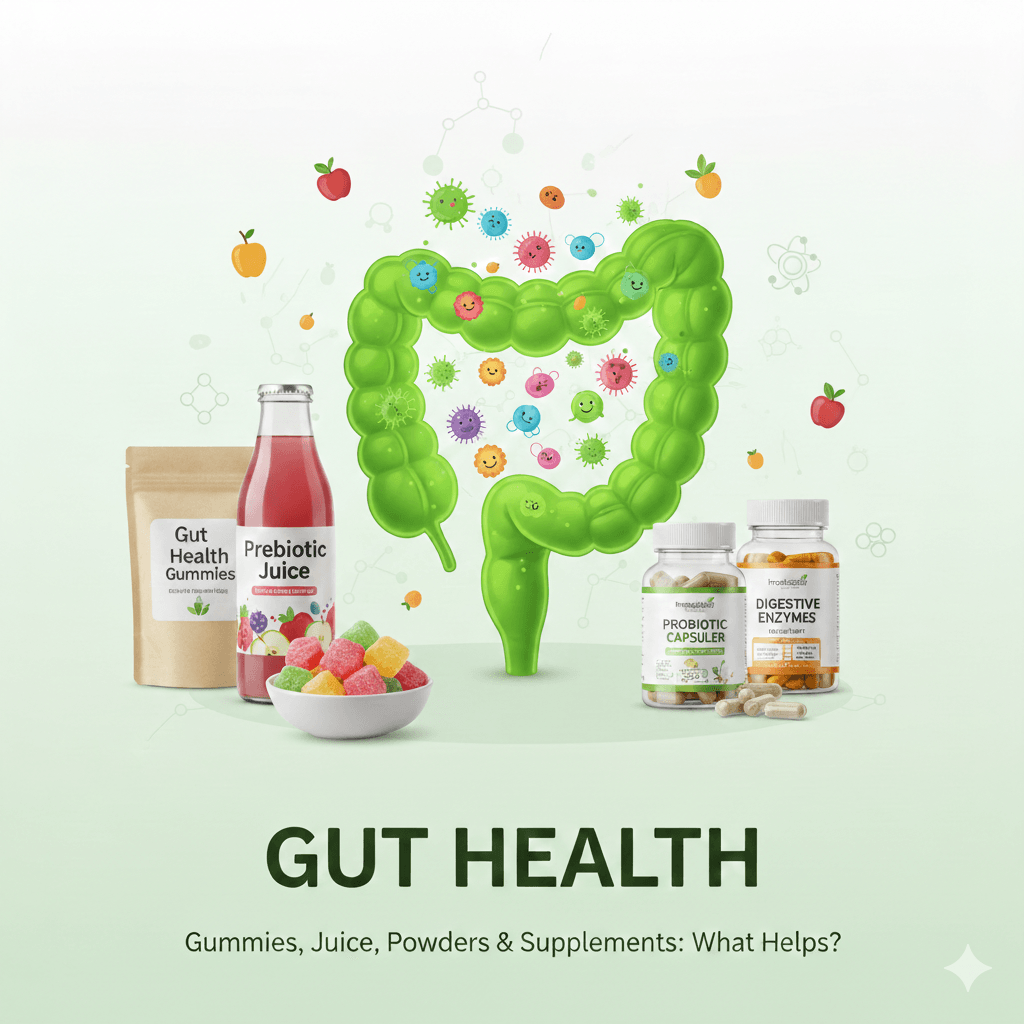
In today’s fast-paced lifestyle, many people deal with bloating and gas, indigestion, constipation, gas, and tiredness. It’s easy to brush it off as “normal”, but these symptoms can be linked to gut health. When your gut feels off, daily life feels harder—meals feel scary, clothes feel tight, and your energy dips.
What does gut health actually mean?
Gut health refers to how well your digestive system works. Food should break down properly, nutrients should be absorbed, and bowel movements should be regular. Your gut bacteria and gut lining should also stay balanced.
What are good bacteria in the gut?
Your gut contains trillions of microbes called the gut microbiome. Many of these bacteria help digestion, produce vitamins, protect the gut lining, and support your immune system.
Why is gut health important?
A healthy gut helps your body absorb nutrients, improves digestion, and supports energy levels. Poor gut health may lead to bloating, fatigue, irregular bowel movements, and discomfort.
Common signs of poor gut health
- Frequent bloating
- Gas or discomfort
- Indigestion
- Constipation or loose stools
- Low energy or tiredness
Common causes of poor gut health
- Low fibre diet
- High processed food intake
- Poor sleep
- Stress
- Lack of physical activity
- Frequent antibiotic use
Gut health gummies: do they work?
Gut health gummies may contain probiotics, prebiotics, or both. They can support gut health, but they are not a replacement for a healthy diet. Always check ingredients and avoid high-sugar products.
Gut health juice: helpful or not?
Fresh juices may feel light but often lack fibre. Fermented drinks like buttermilk may support gut health. Avoid sugary packaged gut drinks.
Gut health powder
Gut health powders often contain fibre like psyllium husk. They can help with constipation. Start with a small amount and drink enough water.
Supplements for gut health
Common supplements include probiotics, prebiotics, and digestive enzymes. They can help in some cases, but improving diet and lifestyle is most important.
Skin and gut health connection
Better gut health may improve skin in some people. You may notice fewer breakouts and better skin over time. However, results vary from person to person.
Simple ways to improve gut health
Eat more fibre
Include vegetables, fruits, oats, and whole grains in your diet.
Eat fermented foods
Curd and buttermilk can support gut bacteria.
Drink enough water
Water helps digestion and prevents constipation.
Exercise regularly
Walking daily supports digestion.
Sleep and manage stress
Good sleep and low stress improve gut function.
When to see a doctor
See a doctor if you have severe pain, blood in stool, weight loss, or persistent symptoms.
Conclusion
Gut health plays an important role in digestion, energy, and overall health. Focus on fibre, hydration, exercise, and good sleep for long-term gut health.
You can also take a quick Gut Test to understand possible digestive root causes and get guidance for improving gut health.
Note: This content is for educational purposes only and not medical advice.
Your gut is unique your healing should be too.

Disclaimer
The content provided by Mool Health is for educational and informational purposes only and should not be considered a substitute for professional medical advice, diagnosis, or treatment.